 Background
WSIS action line C7 on e-environment included three specific goals, which were jointly supported by the UN Environment Programme (UNEP), the International Telecommunications Union (ITU) and the World Meteorological Organization (WMO) acting as the coordinating agencies for this action line:
- Goal 1: Use and promote information and communications technologies (ICTs) for environmental protection and sustainable natural resource use.
- Goal 2: Support sustainable production, consumption and environmentally safe disposal and recycling of ICT hardware.
- Goal 3: Establish ICT-based monitoring systems for disaster risk reduction forecasting and monitoring, particularly in developing countries, least developed countries (LDCs) and small economies.
Establishing a collective vision and framework to govern this digital landscape was the goal of the Global Digital Compact (GDC). Within the GDC, environmental sustainability has been adopted as one of the key guiding principles “8 (e) Digital technologies unlock new capabilities and opportunities for advancing environmental sustainability. Our cooperation will leverage digital technologies for sustainability while minimizing their negative environmental impacts.” To address this challenge, UNEP, ITU and WMO co-organized a high-level side event during the WSIS+20 High Level Forum under Action Line C7 on e-environment. For more information, visit the WSIS+20 High-Level Event 2025 website here.
Date and Location
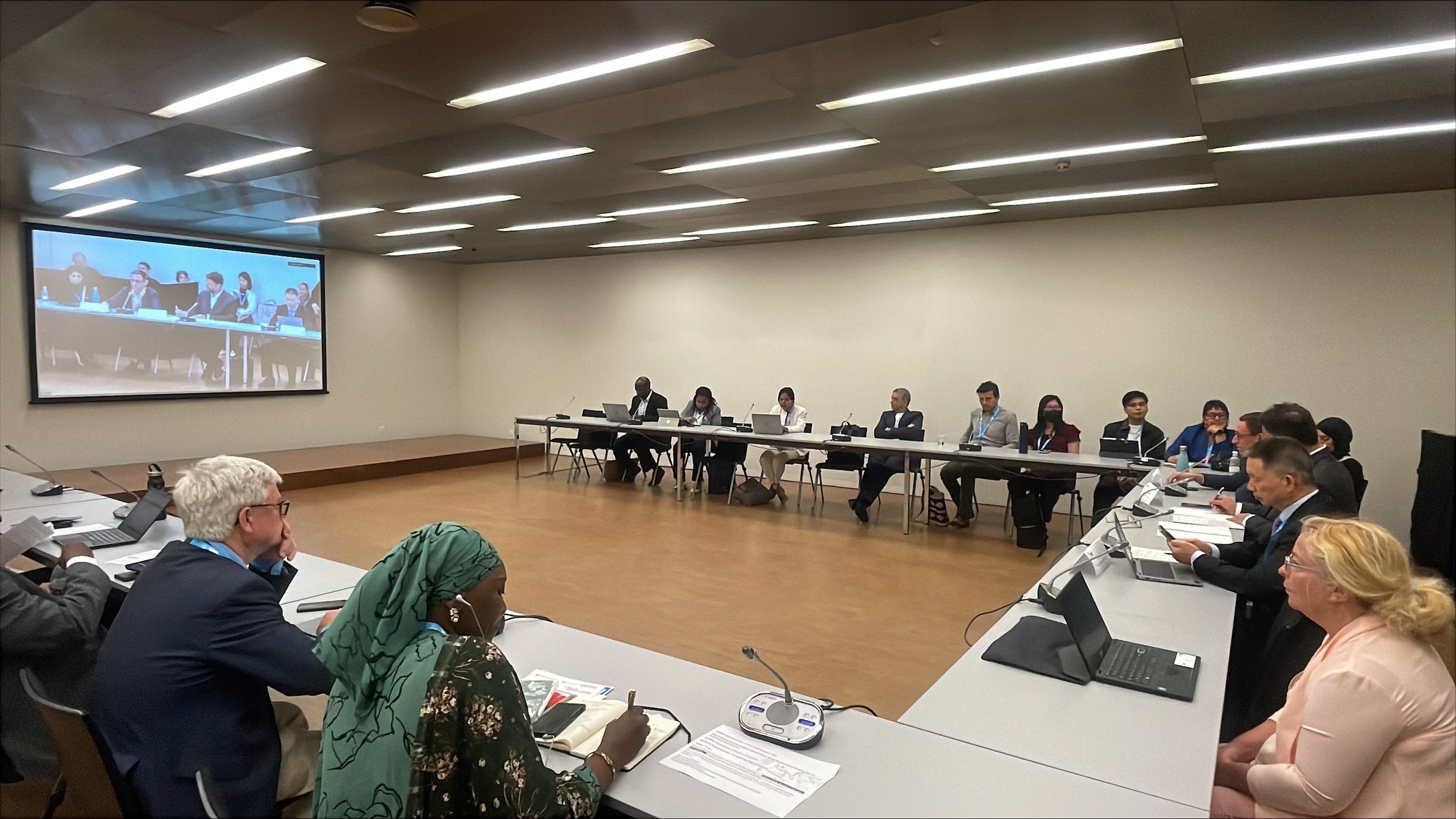
08 July 2025, 11:00 - 11:45; Room G, Palexpo, Geneva, Switzerland
Organizers
UNEP, ITU, and WMO
Panel Composition
Moderator: Mr David Jensen, Regional Digital Transformation Programme Coordinator, UNEP
Reflecting on the Past – Achievements of Action Line C7 on e-environment: This opening segment highlighted the key accomplishments, initiatives, and partnerships that have emerged under Action Line C7 on e-environment since its inception.
- Speaker 1: Dr Archana G. Gulati, Deputy to the Director, Telecommunication Development Bureau (BDT), ITU
Country and Regional Perspectives – Lessons and Innovations: This session presented real-world case studies that exemplify how digital tools and governance frameworks are being used to advance sustainability goals.
- Speaker 2: Mr Thomas Ebert, Policy Analyst, DG CONNECT, European Commission
- Speaker 3: Ms Anita Batamuliza Hodari, Senior Officer of ICT Projects, Rwanda Utilities Regulatory Authority (RURA)
- Speaker 4: Dr George Patrick Ah-Thew, Senior Programme Officer, Directorate of Infrastructure, ICT Sector, SADC Secretariat.
Co-Designing a Shared Vision for the Future: This segment provided strategic inputs from key UN agencies to articulate a future vision for the environmental dimension of global digital governance.
- Speaker 5: Mr Garam Bel, Circular Economy Coordinator, BDT/ITU
- Speaker 6: Mr Peiliang Shi, Director, Data and Prediction Systems Division, Infrastructure Department
See the list of panellists and speakers here.
Outcomes
Co-designed vision and updated indicators for Action Line C7 on e-environment: Participants collaboratively shaped a forward-looking vision and developped new outcomes and indicators addressing the environmental dimensions of digital governance under WSIS+20.
Reflection on progress and sharing of innovations: The session provided a platform to assess two decades of progress and exchanged practical experiences and policy innovations from Member States and stakeholders.