23 March 2026

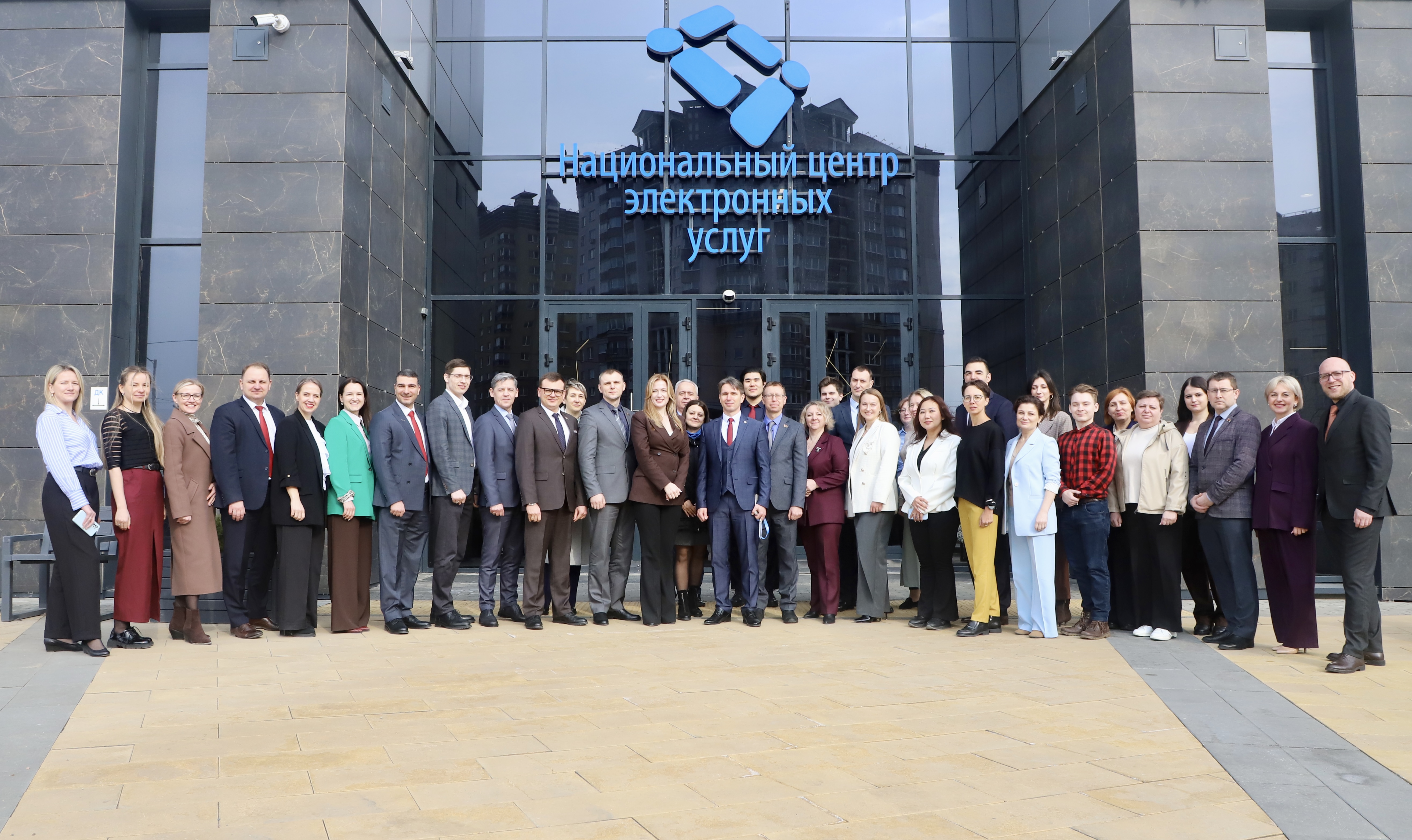
On March 11-12, experts from the International Telecommunication Union conducted training "From E-Government to Digital State" at the National Center for Electronic Services (NCES) of the Republic of Belarus. The purpose of the training was to exchange experience and build capacity among representatives of Belarusian government agencies and organizations involved in digitalizing public services and the infrastructure developing.
Promoting digital transformation in states is one of ITU's priority areas as a UN specialized agency in the field of ICT. The ITU Regional Office for the CIS Region conducts regional forums, training sessions, and student hackathons for this purpose.
On the first day of the training, experts from countries in the region shared their experiences in government digitalization ( presentations).
Mr. Vusal Azizov, Head of the Digital Product Design Department at the Innovation and Digital Development Agency (IDDA) under the Ministry of Digital Development and Transport of Azerbaijan, spoke about providing electronic services in the context of life and business situations.
Mr. Adilet Aisautov, Head of the Big Data Project at the Big Data and Smart Data Ukimet Department of National Information Technologies JSC (NITEC, Kazakhstan), discussed approaches to data quality management and building a national data management strategy.
Mr. Firuz Safayev, Chief Specialist at the Digital Government Services Development Department of the E-Government Project Management Center under the Ministry of Digital Technologies Development of Uzbekistan, elaborated on the technical and organizational aspects of implementing proactive and composite digital public services. The day concluded with a panel discussion titled "Digital State: Strategic Vision for the Period up to 2030."
On the second day of the training experts from Azerbaijan, Uzbekistan, and Kazakhstan conducted a practical session was held on digitizing life situations — childbirth and bereavement.
More than 50 experts from various government bodies and organizations involved in planning and technically implementing digital state infrastructure in Belarus participated in the training ( photos).
State Program "Digital Belarus" for 2026-2030
The foundation for building digital public administration is the legal framework — these are necessary prerequisites for various components of the entire system. This category includes framework documents in the field of e-governance: programs, strategies, concepts that describe the coordination of efforts for digital transformation at the national level.
In Belarus, one such fundamental document is the state program "Digital Belarus" for 2026-2030. Previously, the state program "Digital Development of Belarus" for 2021-2025 was in effect.
The new state program "Digital Belarus" aims to transition from the e-government model to the digital state model. The state program itself consists of three subprograms: "Data Economy," "Digital State," and "Digital Sovereignty." In both the first and second subprograms, significant attention is paid to optimizing state information systems (SIS), as well as state digital platforms (SDP) — the plan is to connect them into a unified data space.
The operator of interdepartmental information systems that form the basis of e-government in the country is the National Center for Electronic Services of the Republic of Belarus. Ahead of the training, an expert from the National Center for Electronic Services of the Republic of Belarus spoke to ITU about the operation of information systems, plans to replace paper versions of documents with digital ones, and approaches used in developing the new state program.
– How many republican and regional SIS and SDP are there in Belarus?
As of March 10, 2026, 503 active information systems are functioning in Belarus, as well as 40.6 thousand information resources (SIR). The state registers of information systems and resources are placed on the "Digital Projects Showcase" platform for posting, studying, and analyzing the results of projects implemented for the digital development of the state, industries, and organizations.
– What is the plan for connecting them and ensuring integration?
Information exchange between SIRs (SIS) occurs using a unified bus — the State Automated Information System (SAIS). SIRs (SIS) interact with each other through SAIS and consume the information necessary for effective operation.
– What approach will be taken when creating new information systems and digital platforms?
For new SIRs (SIS), requirements have been established for their integration with SAIS according to unified formats and interaction protocols, complying with the principles of interoperability.
– Which countries' experiences did Belarus draw upon when developing the new state program?
The experience of our closest neighbors, adapted to national realities.
– Another priority area of the "Digital State" subprogram is reducing the circulation of paper documents. It is planned that digital versions of documents and data from SIS could, in some situations, replace the use of paper insurance certificates, driver's licenses, birth/marriage certificates, and even passports. However, a complete transition to digital versions of documents is not being discussed.
The regulatory legal framework for the use in Belarus of digital images of documents, formed based on information from SIRs (SIS) integrated with SAIS, is currently being developed.
– In which scenarios, in your opinion, is the use of digital versions of documents possible? And in which cases is it absolutely impossible?
The use of digital versions of documents is advisable in life situations that do not entail legally significant consequences. For example, confirming age when selling alcohol products. Implementation in other life or business situations is also possible.
– How do you see ITU's role in facilitating the achievement of public administration digitalization goals? What support could ITU offer in the future?
In our view, ITU could involve international experts regarding programs and projects being implemented in Belarus.
ITU, together with Nitec (Kazakhstan) and with the support of the Eurasian Development Bank, as well as the ITU global initiative GovStack, is implementing the regional project "Cooperation on Digital Government Issues for Central Asian and Caucasus Countries." The project serves as a platform for cross-country experience exchange in the region and prompt monitoring of global trends in the digitalization of the economy and public administration. More details are available on the project
website. |