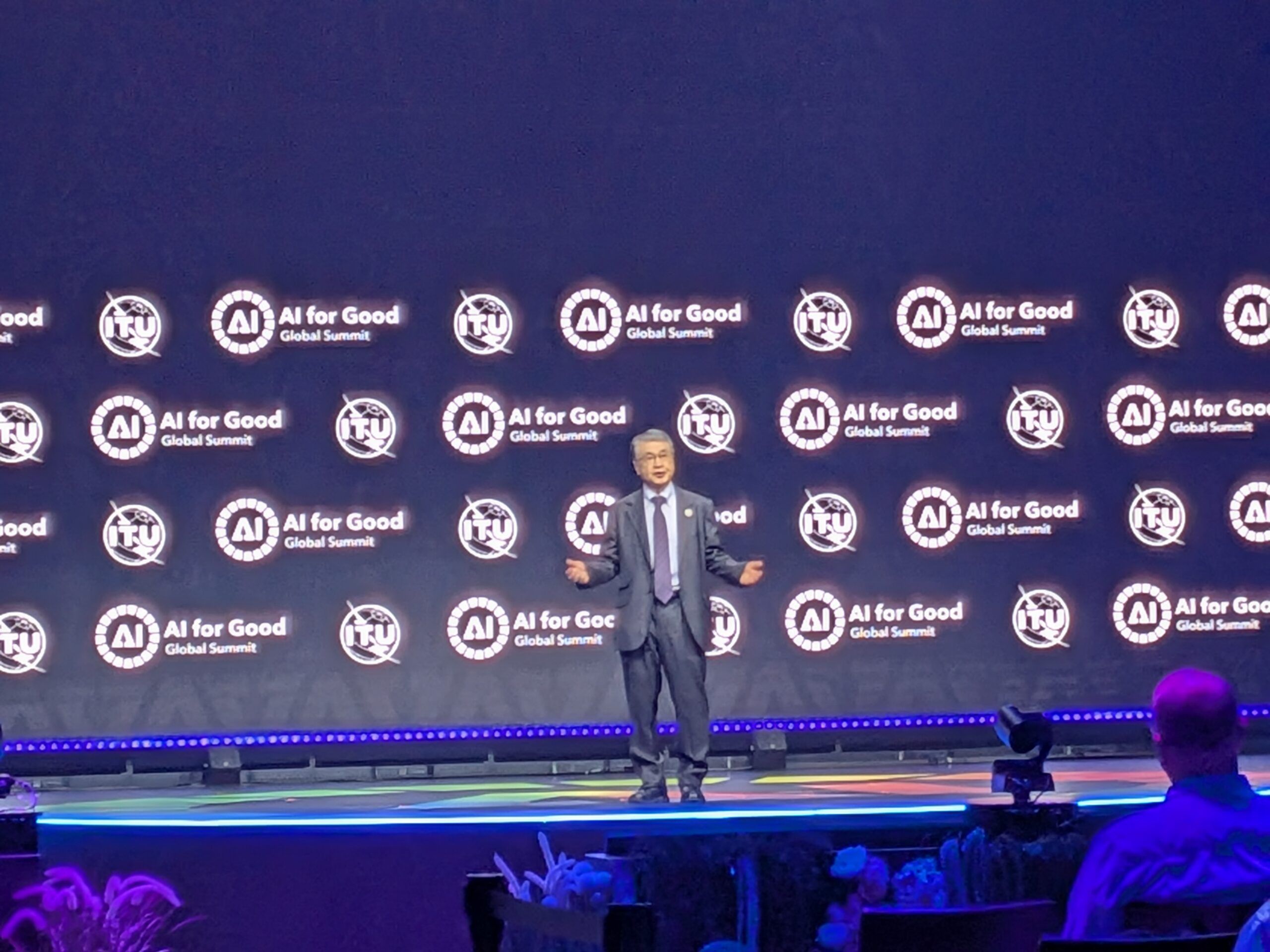
AI for Good 2026: My key takeaways


By Seizo Onoe, Director of the ITU Telecommunication Standardization Bureau
How can all countries, at all levels of economic development, create foundations for everyone to benefit from trusted artificial intelligence (AI)?
We started the latest annual AI for Good Global Summit by posing this question to a roundtable welcoming ministers, industry leaders, and academics from all regions of the world.
It set the tone for the coming week, with the question driving every conversation at the summit and reinforcing our commitment at the International Telecommunication Union (ITU) to advancing responsible AI solutions, along with critical AI skills and standards.
Keeping up with agents
Agentic AI is moving very fast. Standards need to keep pace.
Automated traffic now accounts for more than 50 per cent of all Internet traffic globally. This happened much sooner than anyone expected.
We need solutions for trusted AI behaviour and identity. Technologies and institutions alike will depend on global standards as AI agents increasingly operate across platforms, sectors, and national borders.
The broad agreement emerging on key principles is encouraging, especially as ITU launches a new focus group to ensure identity and trust frameworks are ready for agentic AI. Learn more about it in the press release.
Connectivity remains fundamental
Just 32 countries have AI-specialized data centres. Developing countries other than China are home to half of the world’s Internet users, but less than 10% per centof global data centre capacity. For example, 90 per cent of Africa’s data is stored on other continents.
Globally, as proponents of technical standards, we need to stay focused on the digital divides that existed before AI.
An estimated 2.2 billion people are still not using the Internet, many people cannot afford smartphones, and unreliable electricity remains a major barrier to progress in many developing countries.
Countries need to continue investing in broadband networks, data centres, and cloud and edge capabilities to achieve universal connectivity. Of course, another reason to do so is that this could be the most cost-efficient route for many countries to build AI capacity.
Cooperation creates choices
No country can build the entire AI value chain alone, and very few can put together all the chips, models, data, and applications needed to build the entire AI stack at home.
While every country would prefer to use AI on its own terms, in service of its own people, that doesn’t need to mean isolation and fragmentation. It can mean international collaboration and shared progress on AI with open standards, as well as autonomy to make good choices about who to buy from, who to partner with, and on what terms.
And just as our own intelligence helps us solve problems, so should AI.
AI must make meaningful contributions to global prosperity.
Partnerships produce synergies
At ITU, we know how to facilitate better contributions from digital technologies.
We need to keep building synergies among tech experts, data owners, and experts in areas foundational to sustainable development.
That’s one of the core aims of our AI for Good programme and our partnerships with fellow UN agencies and standards bodies.
Our partnerships advance technical collaboration and global standards in areas from embodied AI and multimedia authenticity to AI innovations for better health, agri-food systems, disaster risk reduction, road safety, and urban innovation.
But for new solutions to take root and grow, standards and skills are key.
Your standardization community
Standards help industries grow and evolve, cost-effectively and sustainably, and they help companies of all sizes access global markets.
Today’s challenges call for new innovation ecosystems built on common understandings and trust – and that’s what consensus-based standards are all about.
Our AI Standards Exchange Database brings together standards from ITU, ISO, IEC, IEEE, IETF, ETSI and TTA to provide a full picture of emerging AI standards.
And with our new AI for Good Lab, we are helping developing countries connect solutions, skills, standards and policy for long-term success with AI.
I welcome you to join us.
Images: ITU
