From August 13 to 14, 2026, Kostanay, Kazakhstan, hosted the Smart City Hackathon 2026, an event focused on creating smart city solutions. The hackathon was organised by the International Telecommunication Union (ITU) and Qostanai Hub, with the support of the Akimat of Kostanay Region and the Akimat of Kostanay City. The event brought together talented young people in IT, engineering, architecture, and urban studies to develop digital solutions based on specific case challenges.
The first case, from the Kostanay City Akimat and iKomek, was dedicated to developing a prototype of a digital service using artificial intelligence technologies to monitor the condition of green spaces. The task included creating a computer vision model for analysing photographs of trees, a system for recording landscaping objects, and a user‑friendly interface for a mobile application or web service.
The second case, from the Kostanay Technical and Operational Complex (KTEC), involved developing a prototype of a digital platform for monitoring and analysing heating networks using a pilot neighbourhood as an example. The platform was to feature an interactive map based on OpenStreetMap, along with tools for parameter analysis and situation modelling.
The winner of Case 1 was the GreenSight team from Astana IT University –
Sayan Aukatov, Nikita Tsybus, and Bogdan Shakaryan. The winner of Case 2 was the KTEC Info team – 12th‑grade students from the Nazarbayev Intellectual School of Physics and Mathematics in Kostanay:
Baurzhan Amirgaliyev, Aibar Karbuzov, and Tamirlan Akhonov.
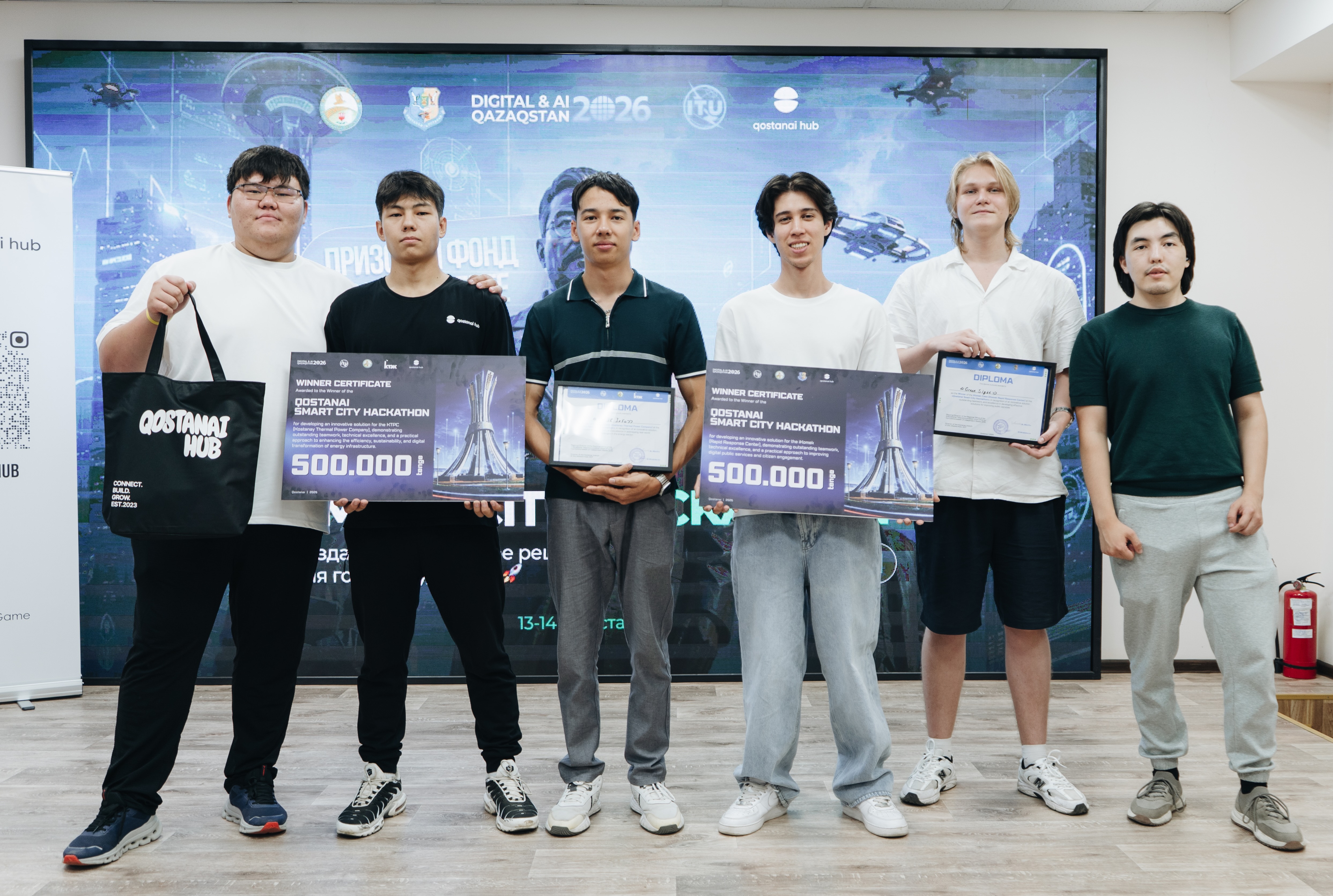
Baurzhan Amirgaliyev noted that this was not the first time his team had taken part in hackathons organised by the ITU and Qostanai Hub. In his view, the most valuable aspect of such events is the opportunity to work with thematic mentors. For example, during a consultation with KTEC mentor Artem Zinenko, the team was able to clarify all aspects of the task and determine the direction for further work. The materials provided by ITU experts also helped them structure their pitch deck and successfully defend their project.
In turn, the GreenSight team members shared that this was their first experience participating in a hackathon. For one of them, a fourth‑year student at Astana IT University, the project developed during the competition will become the basis for his graduation thesis, as the task involved working with real‑world data and the proposed solution has practical applicability.
The hackathon took place over two days in person at the Kostanay College of Digital Industry. On the first day, 13 August, the participants were introduced to the cases, rules, and evaluation criteria. The same day featured a training session titled "Smart City Solutions: What to Consider When Creating and Implementing Them," delivered by
Yevgeny Solovyov, an ITU expert and Head of the Digitalisation Office at the Republican Scientific and Practical Centre for Medical Technologies in Belarus. Participants also took part in the business game "Smart City Coalition," led by
Zhanat Dzhabasova, a startup tracker and Project Planner at HOTEZA LIMITED, as well as a training session on building a business model and MVP for a startup.
On the same day, mentoring sessions were held with ITU experts and invited specialists. During 20‑minute meetings, teams were able to discuss case details with the case provider, receive advice on how best to present their product, refine the solution architecture, and build the business logic. Over the course of two days, the teams developed concepts, created product prototypes, and prepared presentations with the support of experts and mentors. On 14 August, the final Demo Day took place.
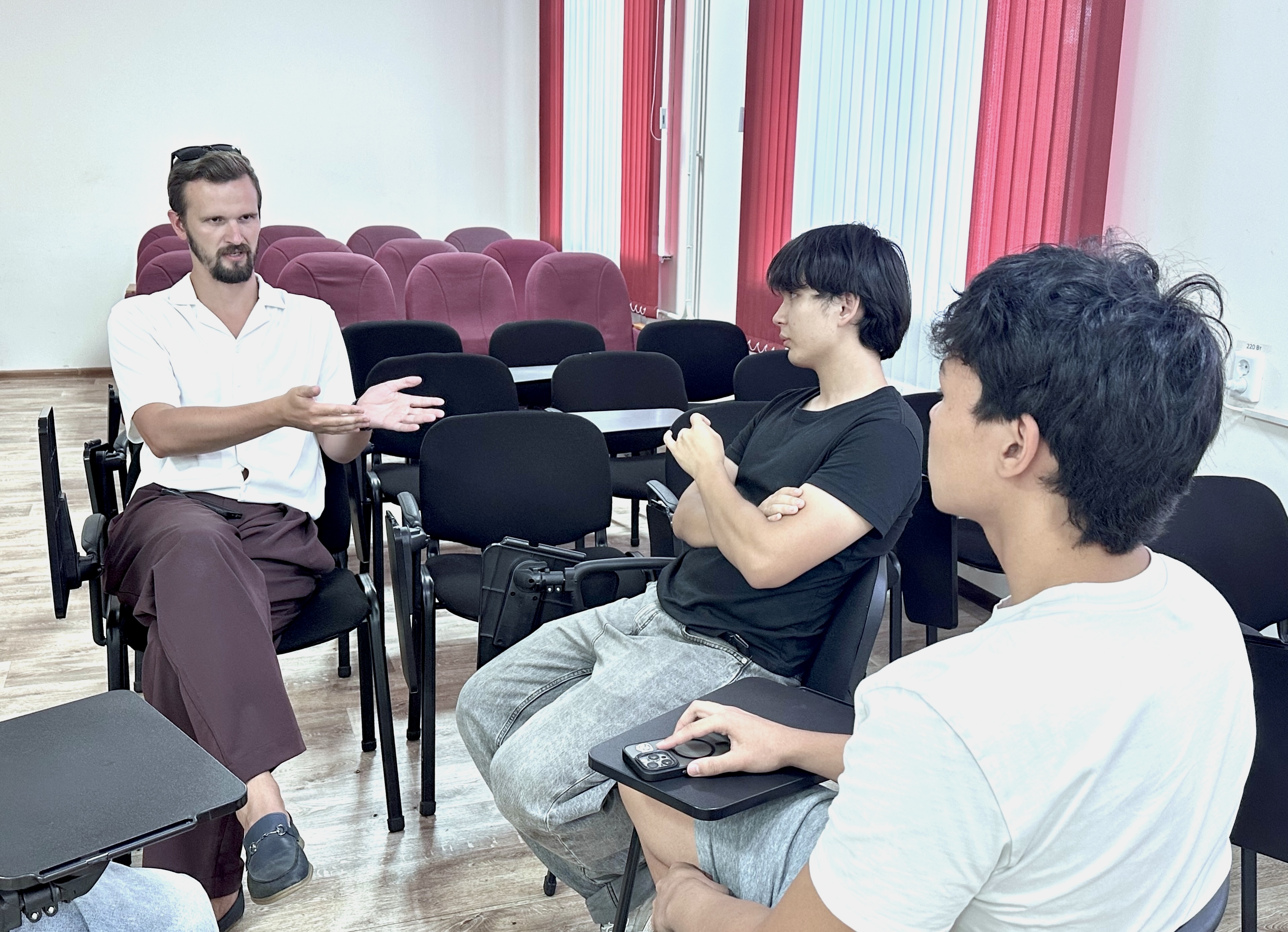
Yevgeny Solovyov, ITU expert, Head of the Digitalisation Office at the Republican Scientific and Practical Centre for Medical Technologies in Belarus, said:
"For smart city startup projects to actually work, it is important to integrate them into Kazakhstan’s national system of smart city and smart region metrics. It is necessary to study the regulatory framework, master the methodology for calculating indicators, and build on already implemented pilot projects."
The expert added that in practice, teams should refer to the Smart City portal, which collects methodologies and best regional practices, consolidates information systems for urban digital development, and compiles the ranking of smart cities – an annual assessment conducted by the Ministry of Artificial Intelligence and Digital Development of Kazakhstan.
Projects were evaluated according to criteria such as relevance to the case, technical implementation quality, originality of the idea, potential for implementation, and quality of the presentation. The prize fund of the hackathon was 1,000,000 tenge – 500,000 tenge for the winners of each case.