AMS Emergency Telecommunications
The Americas region decided that the first regional initiative in the
WTDC-17 should be "Disaster risk reduction and management
communications".
Therefore, BDT, through its services and particularly through its field
offices in the Americas organizes events, designs and implements
projects, builds and publishes deliverables, promotes partnerships among
membership, regional telecomm organizations (e.g. CITEL, COMTELCA, CTU)
and other relevant actors, increases awareness on ICTs 4 Disaster
Management (e.g. events, studies, publications, study group
developments) and is ready to assist State members when a cathastrophe
occurs.
As per projects, the "pilot project for the use
of ICT for emergencies and disasters in the region of the Americas"
was conceived after the signing of the
letter
of intent between ITU, CITEL, COMTELCA and CTU during
WTDC
2017.
The project implemented the technology solution known as WINKINK (www.winlink.org),
developed and maintained by Radio Amateur with a proven track record of
success in various emergencies. The project is a reality thanks to the
commitment of the ITU with its member States on the topic and the
willingness to cooperate of the Federación Mexicana de Radio
Experimentadores (FMRE), the International Union of Radio Amateur (IARU)
and Comisión Técnica Regional de Telecomunicaciones (COMTELCA).
The beneficiary countries of this project were: Guatemala, El Salvador,
Honduras, Nicaragua, Costa Rica, Panama and Dominican Republic.
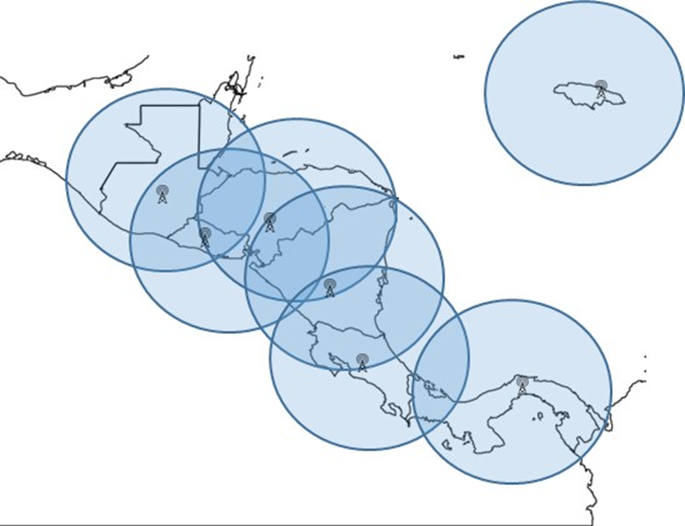
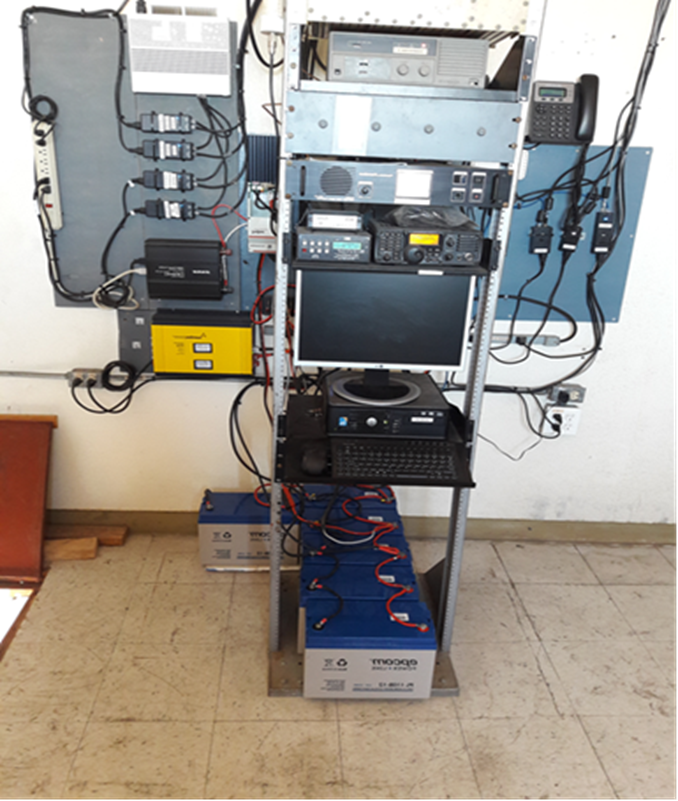
The solution consists on the installation of servers of radio messages
(RMS) that will be part of the global network composed by common
messages Servers (CMS) placed in various locations around the world,
connected via the Internet to servers of radio messages (RMS) in many
geographical locations forming a network configuration in Star. Radio
messages servers are gateway of RF VHF, UHF or HF on the WINLINK system.
The final component of the global network is the client (i.e., your
computer) that runs software to send / receive messages via radio
equipment.

The biggest challenge in the implementation of the project was the
coordination between the telecommunications authorities, the emergency
response and the associations of radio amateur at the national level and
achieve synergies between organizations working in these same areas at
the regional and international levels, such as the ITU, IARU, COMTELCA,
CEPREDENAC, among others.
The work began in January 2018 with the definition of the technical
specifications of the equipment, with the cooperation of IARU and
COMTELCA. Today (June 2019), ITU has finalized implementation of the
project.
Additionally, in 2019, ITU is implementing the 1st phase project for
Caribbean countries, where the same solution will be implemented. The
beneficiary countries will be Antigua & Barbuda, Barbados, Dominica,
Grenada, Guyana, Jamaica and Saint Kitts and Nevis.
In relation to deliverables, in December 2017, ITU
completed an "Assessment
of Emergency Telecommunication plans and systems in the Caribbean
Region”. The document presents the assessment of legislation,
regulations and policies that relate to emergency communications, with
particular emphasis on the role and responsibilities of the designated
National Disaster Organizations (NDOs). It also takes into
consideration the impact of the recent hurricane season and the
lessons learnt with regard to emergency communications capability and
makes recommendations for addressing key issues identified.
draft National Emergency Plans of Telecommunication (NEPTs)
During 2014, ITU worked with COMTELCA member countries to elaborate 7
draft NEPTs.
ITU examined the experience and existing documentation of Peru,
Spain, Colombia, United States, United Kingdom, United Arab Emirates,
Argentina, Samoa, ECLAC and ITU to produce a framework and gather
additional information from the beneficiary countries to produce their
respective NEPT draft.
Besides delivering a draft NEPT to each of the aforementioned
countries, ITU can share the NEPT framework used to develop them.
As of 2019, with additional work and cooperation between ITU and
beneficiary countries, the final draft NEPTs for Guatemala and
Dominican Republic has been delivered.
EOC Assessment in Central America gave birth to different
deliverables
During 2014, ITU performed an assessment on the Emergency Operation
Centers in Central America. As a direct consequence, ITU can make
available the following:
- Instrument to make an Inventory of EOC AND their communication
capabilities [ES];
- Checklist of the ideal funcionality of an EOC [ES];
COMTELCA member countries requested individually and collectively
through resolution 4 CXXXVIII of its Board, the elaboration of a
project that could provide them a scalable solution for
telecommunications and expanding facilities, methodologies,
procedures, taking into account international best practices and the
international recommendations. As an answer to that request, ITU
desgined the project "Technical solutions for communications in
emergency (SCTE)", available below:
- Project Document (STCE)
Regarding events, for example, ITU held the Second
Multi-stakeholder Forum on the Role of Telecommunications/ICT in
Disaster Management for the Americas Region, 29-31 August 2017
The Second Multi-stakeholder Forum on the Role of
Telecommunications/ICT in Disaster Management, was jointly organized
by the ITU Telecommunication Development Bureau (BDT) and the
Ministry of Information Technologies and Communications (MINTIC) of
Colombia. The event took place from 29 to 31 August 2017,
in Bogotá, Colombia.
The Second Multi-stakeholder Forum on the Role of
Telecommunications/ICT in Disaster Management was built
on the first Multi-stakeholder Forum that took place in Bogotá,
Colombia from 24 to 26 July 2012, which aimed at paving the way for
enhancing the use of ICTs for disaster management in the region.
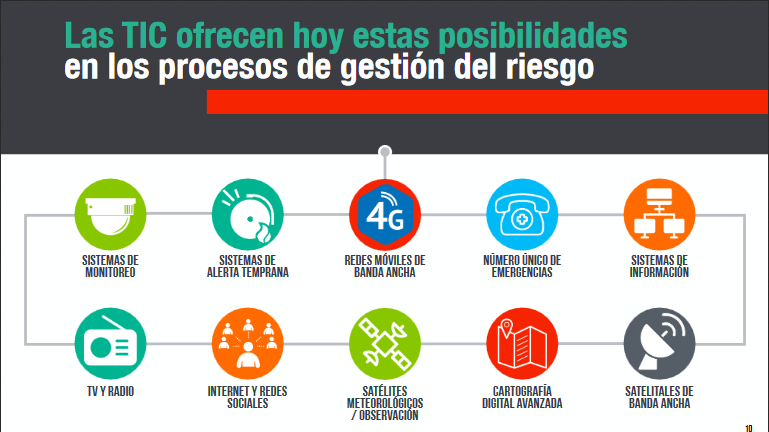
The 2017 Forum had different sessions addressing key questions
related to the best use of ICTs for disaster risk reduction and
management. It has also served as a platform to exchange new
experiences and best practices in the use of modern technologies for
monitoring and early warning. It provided an opportunity for policy
makers and other participants to debate and adopt concrete
strategies on how information and communication technologies support
disaster risk reduction and management activities, contributing this
way to the implementation of the Sendai Framework and the 2030
Agenda for Sustainable Development.
Related information on the Forum is also available in the
website of the Ministry of Information
Technologies and Communications (MINTIC) of Colombia.
The Forum was attended by about 400 participants, including heads
of the telecommunication regulatory authorities, executive directors
of private sector entities, United Nations agencies,
non-governmental organizations and other
high-level participants from humanitarian organizations, regional
disaster management organizations, academic institutions and
media.
Partnerships
ITU and IARU
have been collaborating in the implementation of a emergency
telecommunications project during 2018.
The project is implementing the Winlink (www.winlink.org)
solution in 7 countries in the Americas region (Central America) and
most likely there will be follow-up actions and projects to expand its
scope.
Winlink is a radio amateur solution mantained and operated also by
radio amateur. As such, the cooperation among Telecommunication,
Disaster response and radio amateur communities is fundamental for the
success of the project.
ITU, CITEL,
COMTELCA and CTU signed a letter of intention during WTDC-2017 in
Argentina, committing to develop a cooperation mechanism for the
implementation of projects on the use of ICT for emergency and
disaster situations in the Americas region.
The International Telecommunication Union, the Interamerican
Commission for Telecommunications, the "Comisión Técnica Regional de
Telecomunicaciones" and the Caribbean Telecomunication Union committed
during WTDC-2017 to develop a cooperation mechanism for the
implementation of projects on the use of ICT for emergency and
disaster situations in the Americas region.
ITU and all other signatories acknowledge that disasters disrupt
national economies, and severely weaken the poor and vulnerable
communities. Disasters are recognized as major impediments to
sustainable development and the reduction of poverty.
Emergency Telecommunication has figured as a top priority for our
member States in the Americas Region. During WTDC-2017 in Buenos
Aires, member States put once again "Disaster risk
reduction and management communications" among the 5
regional initiatives for the period 2020-2023. This letter of
intention is one step ahead in improving continuously our preparation
for disasters and emergencies.
The signed letter of intent is available here.
And when disaster has taken place in the Americas, ITU has
responded
Caribbean Islands
In September 2017, ITU deployed emergency telecommunication
equipment to the Caribbean as a response effort after the massive
devastation caused by Category 5 Hurricanes Irma and Maria. Many
Caribbean countries suffered extensive damages from some of the
strongest storms to hit the region in a decade. They affected
telecommunication networks, power and water infrastructure, leaving
many communities without water, food, power or communications.
Several Member States, including Haiti, Dominica and Antigua and
Barbuda, received emergency telecommunications equipment,
including satellite phones, BGANs and VSAT to support
humanitarian relief and recovery efforts.
Haiti
In October 2016, ITU deployed emergency telecommunication equipment
in response to the devastation caused by Category 4 Hurricane
Matthew, classified as the most powerful Caribbean Hurricanes in the
last decade. Matthew caused many loss of lives and affected power
and communication networks as well as transport roads, water and
healthcare infrastructure. The government of Haiti used the
equipment to support relief and coordination efforts as well as in
assisting many communities that were totally affected.
Ecuador
Emergency telecommunications equipment was deployed to Ecuador
after the devastation caused by the 7.8 earthquake that struck the
country on 26 April 2016. The ITU satellite
equipment was delivered directly to the Manabi
Province, the most affected area of the coast of Ecuador. The
strong quake caused a lot of destruction to infrastructure
including telecommunication networks, powerlines and roads.
The emergency telecommunications equipment provided include
satellite phones, satellite broadband terminals and accessories,
which are being used to support search and rescue efforts as well
as recovery and reconstruction activities .