Connectivity for Refugees: Digital access for displaced people and communities


For people uprooted by conflict, access to digital networks is essential. It enables education, healthcare, and protection for those forced to flee.
As refugees settle and resume life in a new host community, digital access lets them participate in the economy and rebuild their livelihoods.
But millions of refugees, along with their host communities, face significant connectivity challenges. Digital access barriers can be especially acute in remote and underserved regions.
Infrastructure, affordability, and financing gaps continue to limit digital opportunities for some of the world’s most vulnerable people. Many refugees also lack digital skills or devices.
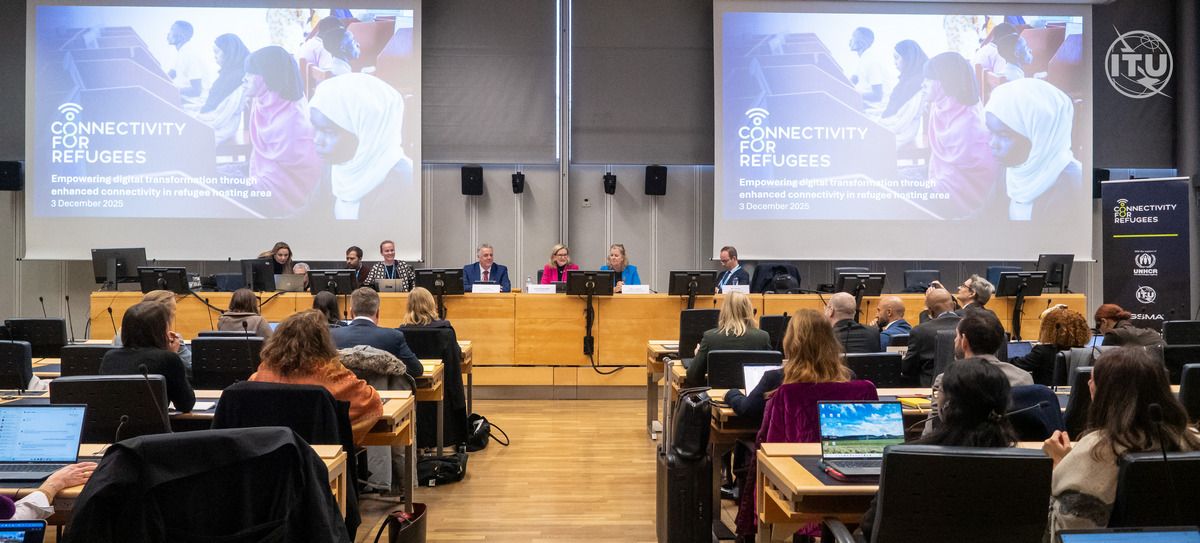
Governments, the private sector, civil society and United Nations agencies came together on 3 December at a high-level roundtable discussion in Geneva, Switzerland, to tackle the refugee connectivity challenge.
Young people from a refugee community in Chad, joining online from the country’s Farchana Connected Centre, also shared their insights and experiences.
Key actions to connect refugees
The session identified the most urgent actions required to boost digital inclusion for displaced populations. It also highlighted recent progress under the Connectivity for Refugees initiative by the International Telecommunication Union (ITU), the UN Refugee Agency (UNHCR), mobile telecom industry association GSMA, and the Government of Luxembourg.
ITU Secretary-General Doreen Bogdan-Martin noted the transformative impact of connectivity for refugees and the importance of collaborative action.
“For people forced to flee – and for billions of people throughout the world – meaningful connectivity is not a luxury,” she said. “It is a lifeline… to family and friends, to education, to a livelihood, to better health and a brighter future.”
Bogdan-Martin identified four key action areas where governments, companies and other partners can make an immediate, measurable contribution:
- Expanding access to devices, enabling more families to get online.
- Making connectivity more affordable, so displaced people are not forced to choose between data and basic needs.
- Building digital infrastructure, extending coverage to rural, remote, and crisis-affected areas.
- Strengthening digital skills, safety, and trust, so that access translates into real opportunity and online safety is assured.
Aiming to connect 20 million by 2030
The partners have set out to advance meaningful, affordable connectivity for 20 million forcibly displaced people and host community members by 2030.
John Giusti, President of the GSMA Foundation, added: “Connectivity is one of the first things people ask for when crossing a border seeking safety.”
Launched in 2023, the initiative has started delivering results that can help build more resilient communities, said Kelly T. Clements, Deputy High Commissioner of UNHCR.
On a recent field mission to Chad, the same officials from ITU, UNHCR and GSMA witnessed first-hand the impact of digital access at the Farchana refugee settlement. Read the press release.
A partnership to deliver dignity
Max Lamesch, Director of Humanitarian Affairs at Luxembourg’s Ministry of Foreign Affairs, reiterated the duty of humanitarian operations to bridge the connectivity gap for displaced people.
Partners are needed to supply devices, lower the cost of connectivity, invest in infrastructure, and support digital skills and safety programmes. The Connectivity for Refugees initiative aims to deliver opportunity and dignity – one connection, one community, and one future at a time.
“Achieving this goal is bigger than any one organization, one business, one government,” Bogdan-Martin said.
“The families we met in Ethiopia and Chad – and many others throughout the world – are counting on us.”
