Towards the harmonization of data collection - A baseline study for e-waste in East Africa
| Access to the Report
|
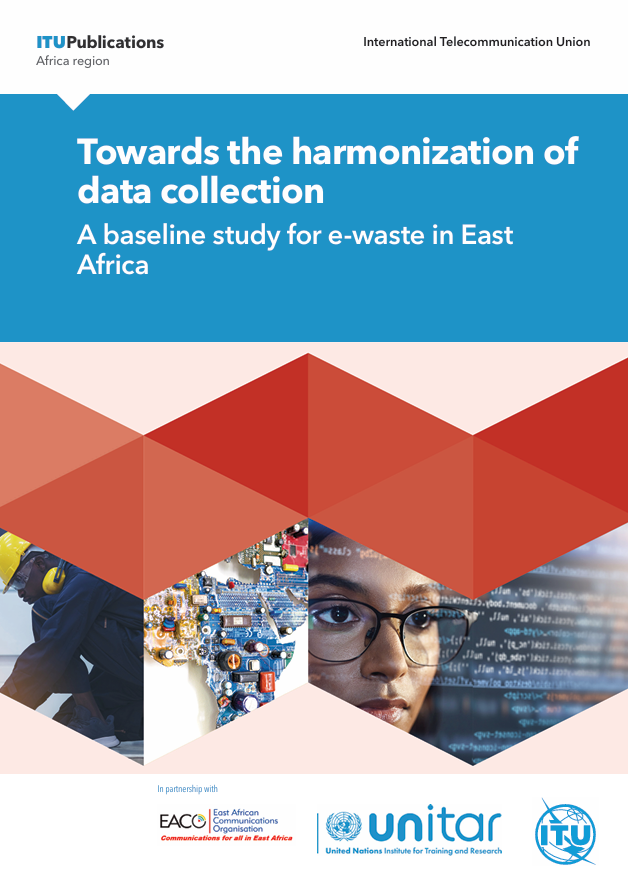
| The report aims to enhance the quality, collection, and interpretation of e-waste data in East Africa, specifically in Burundi, Kenya, Rwanda, South Sudan, Tanzania, and Uganda. These countries have made strides in addressing e-waste management issues through regional strategies and policies. However, the need for improved data and statistics persists. This study is an output of the
EACO Regional E-waste Data Harmonization project.
| 2023
|
Greening Digital Companies 2023: Monitoring Emissions and Climate Commitments
|
Access to the Report
| 
| The second edition of the joint report between the International Telecommunication Union and the World Benchmarking Alliance documents the greenhouse gas (GHG) emissions and energy use of 200 of the world's leading digital companies.
| 2023
|
Green data centers: towards a sustainable digital transformation - A practitioner's guide
| Access to the Report
| 
| ITU and the
World Bank guide covers six dimensions that practitioners can consider to green data centers: climate-resilient data centers, sustainable design and buildings, sustainable ICT, sustainable energy, sustainable cooling, and e-waste management. This guide targets a wide range of practitioners, from policymakers to data center technicians and stresses the importance of contextualized strategies that address local conditions and focus on challenges faced by low-and-middle-income countries.
| 2023
|
Circular and sustainable public procurement – ICT equipment guide
| Access to the Report
| 
| This is a guide for governments and other public sector organizations that procure information and communications technology (ICT) equipment, systems and services. It sets out the systems and process requirements for ICT procurement in a way that supports the transition to circular and sustainable system solutions. It considers the need for policy and strategy, setting the conditions for and building circular and sustainable design into procurement processes.
| 2023
|
Scope 3 Guidance for Telecommunication Operators
| Access to the Report
| 
| This guidance harmonises methods for telecommunication operators to assess and report their Scope 3 GHG emissions, and to increase its coverage, and transparency.
| 2023
|
Greening Digital Companies: Monitoring Emissions and Climate Commitments
| Access to the Report
(available in
English)
| 
| The report documents the emissions and energy use of 150 of the world's leading tech companies. Beyond assessing corporate climate data and targets, the report highlights best practices for digital companies to slash their emissions and achieve carbon-neutral operations.
| 2022
|
Regional E-waste Monitor for Latín America 2022
| Access to the Monitor
(available in
English and
Spanish)
| 
| The Regional E-waste Monitor is a result of the ‘Strengthening of National Initiatives and Enhancement of Regional Cooperation for the Environmentally Sound Management of POPs in Waste of Electronic or Electrical Equipment (WEEE)’ project activities, known primarily as the PREAL (Proyecto Residuos Electrónicos America Latina Project).
| 2022
|
Implementation of ITU-T Standards on sustainable management of waste electrical and electronic equipment: The path to a Circular Economy in Costa Rica
| Access to the flipbook
(available in Spanish)
| 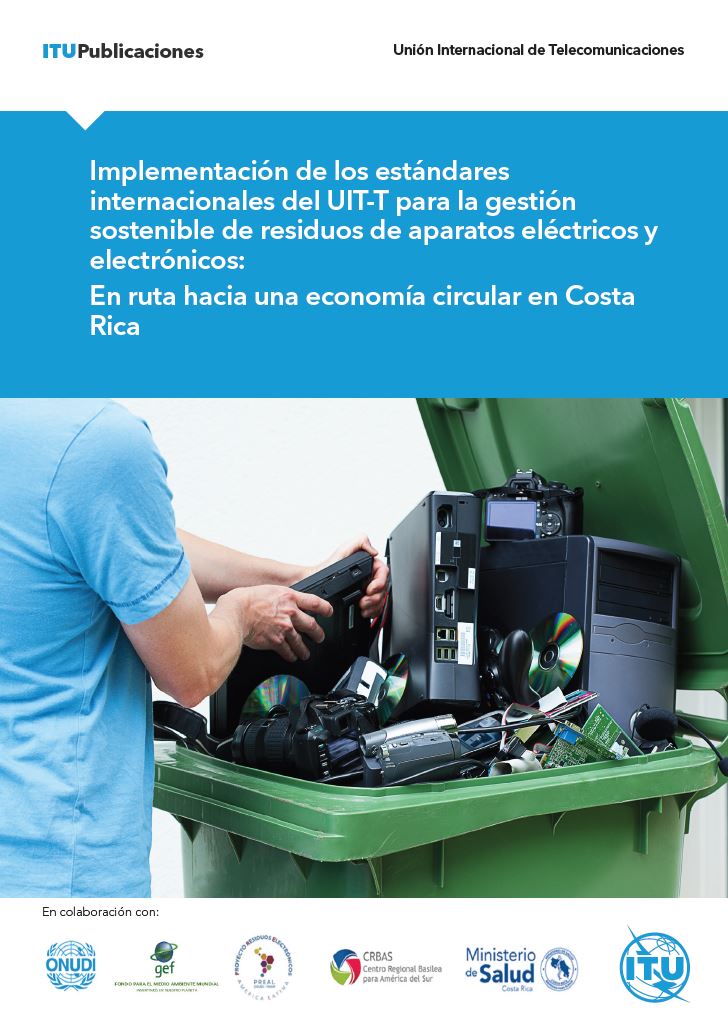
| The case study "Implementation of ITU-T Standards on sustainable management of waste electrical and electronic equipment: Towards a Circular Economy in Costa Rica", details Costa Rica's experience in the implementation of Recommendations ITU-T L.1031 "Guideline for achieving the e-waste targets of the Connect 2030 Agenda" and ITU-T L.1032 "Guidelines and certification schemes for e-waste recyclers".
| 2021
|
Regional E-waste Monitor for the CIS +Georgia 2021
| Access to the Monitor
(available in
English)
| 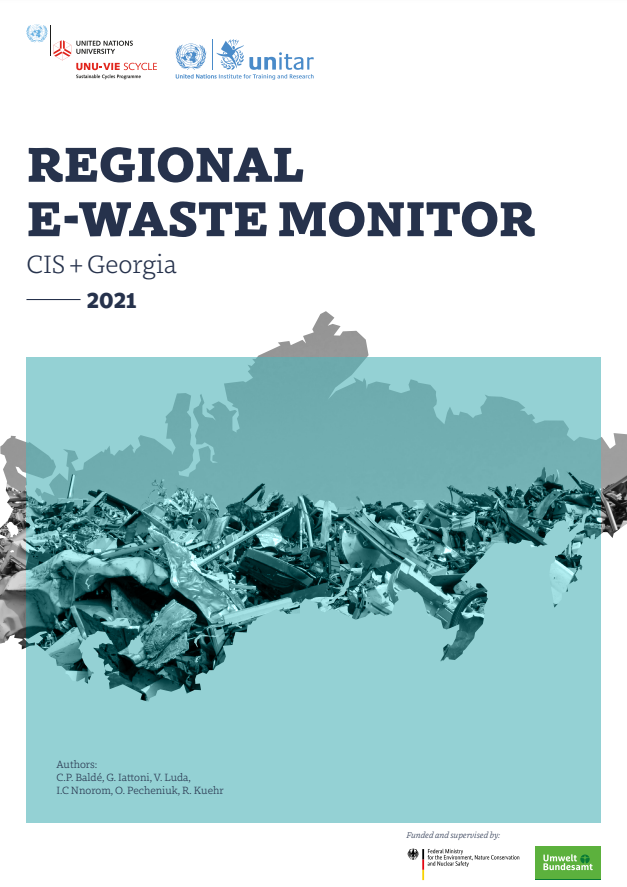
| The Regional E-waste Monitor for the CIS + Georgia, (REM CIS+) was implemented by the Sustainable Cycles (SCYCLE) Programme and co-hosted by the United Nations University (UNU) and the United Nations Institute for Training and Research (UNITAR), in partnership with the United Nations Environment Programme (UNEP).
| 2021
|
Regional E-waste Monitor for the Arab States 2021
| Access to the Monitor
(available in
English)
| 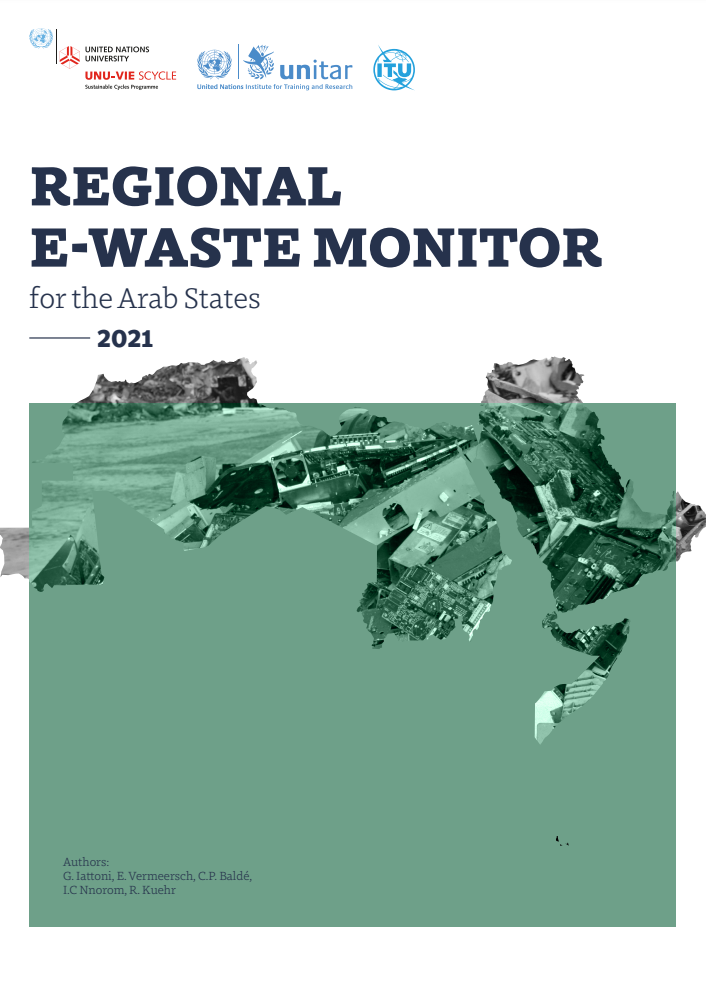
| The Regional E-waste Monitor provides an assessment of statistics, legislation, and management infrastructure of e-waste for 22 Arab States.
| 2021
|
|
ITU Smart Sustainable
Cities
| Access to the flipbook
(available in English)
| 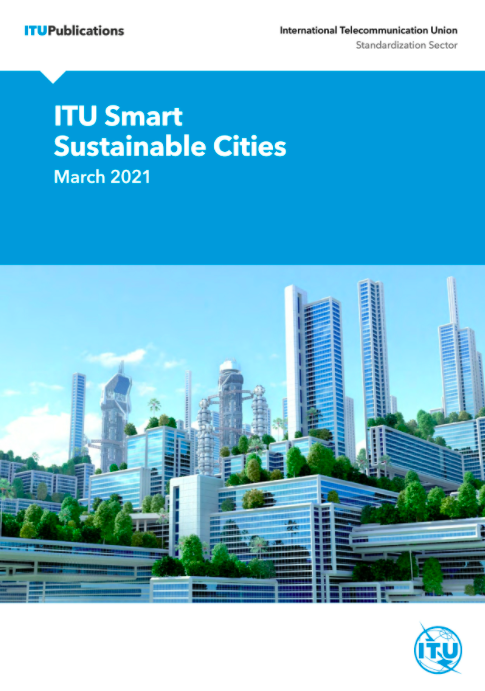
| This brochure contains insight into how ITU standardization work and supporting collaboration initiatives are enabling shared progress towards smart sustainable cities and communities.
| 2021
|
|
UNEP DTU-ITU Policy Brief on Innovative Data-Centre Cooling Technologies in China - Liquid Cooling Solution | PDF version
| 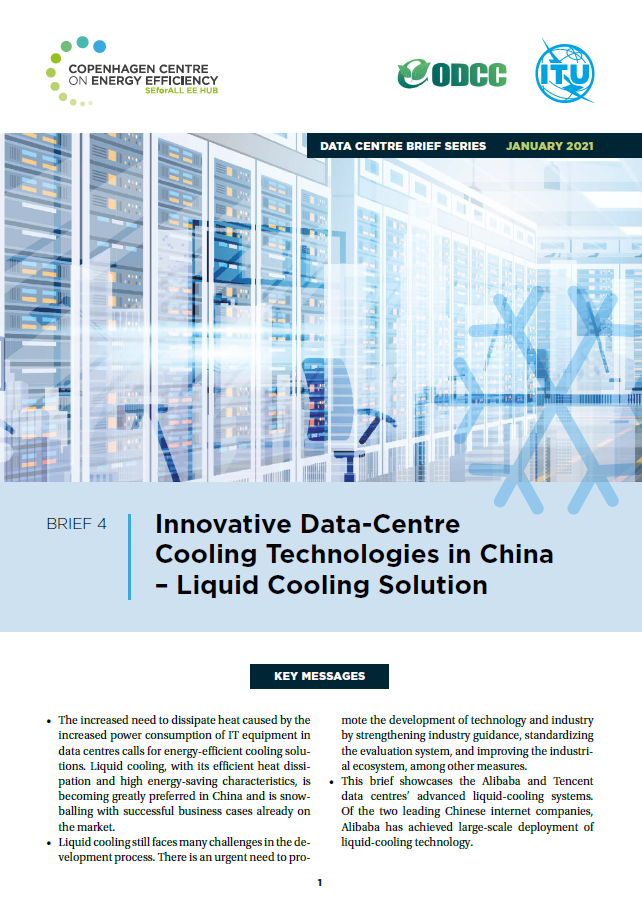
| This briefing paper shares insight into China’s experience with the application of liquid-cooling technology to improve datacentres’ energy efficiency and environmental sustainability.
| 2021
|
Global E-waste Monitor 2020
| Access to the Monitor
(available in
Arabic,
Chinese,
English,
French,
Russian and
Spanish)
| 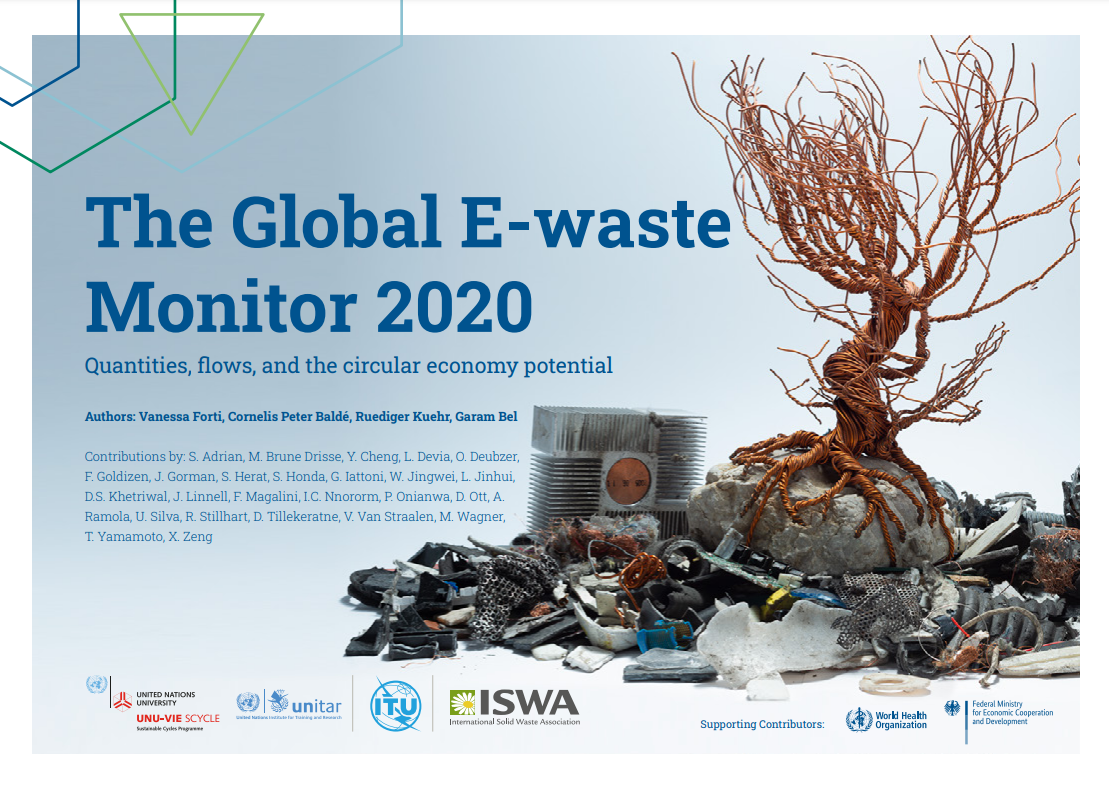
| The third edition of the Global E-waste Monitor 2020 launched in July 2020 by the Global E-waste Statistics Partnership, provides comprehensive insight to address the global e-waste challenge.
| 2020
|
Radiocommunications and climate change 2020 edition
| PDF version
| 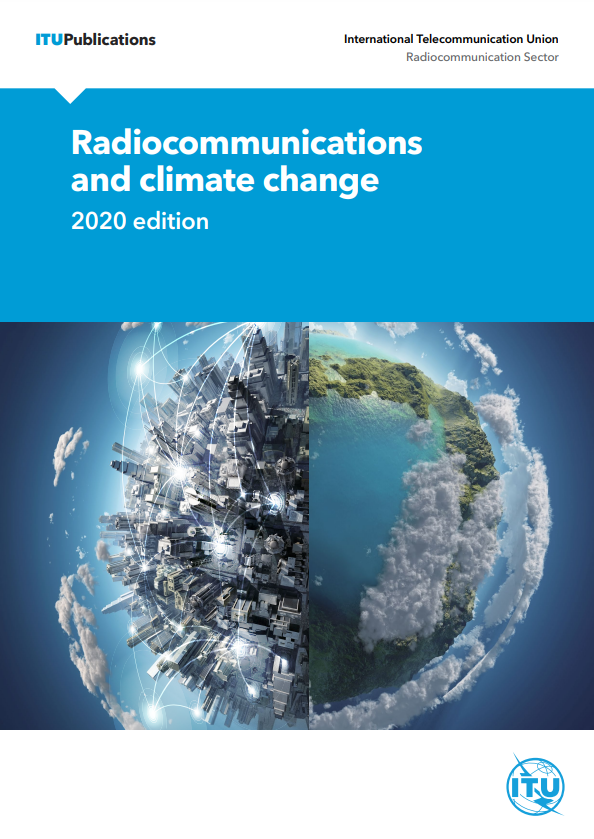
| Climate change and growing exploitation of the Earth’s natural resources is leading to a range of environmental problems that require international action. If humanity is going to respond effectively, many of the solutions will be informed by global monitoring of the environment, including the use of space assets. Satellite data is today an indispensable input for weather prediction models and forecast systems used to produce safety warnings and other information in support of public and private decision-making.
| 2020
|
Frontier technologies to protect the environment and tackle climate change
|
Access to the flipbook
(available in English)
|
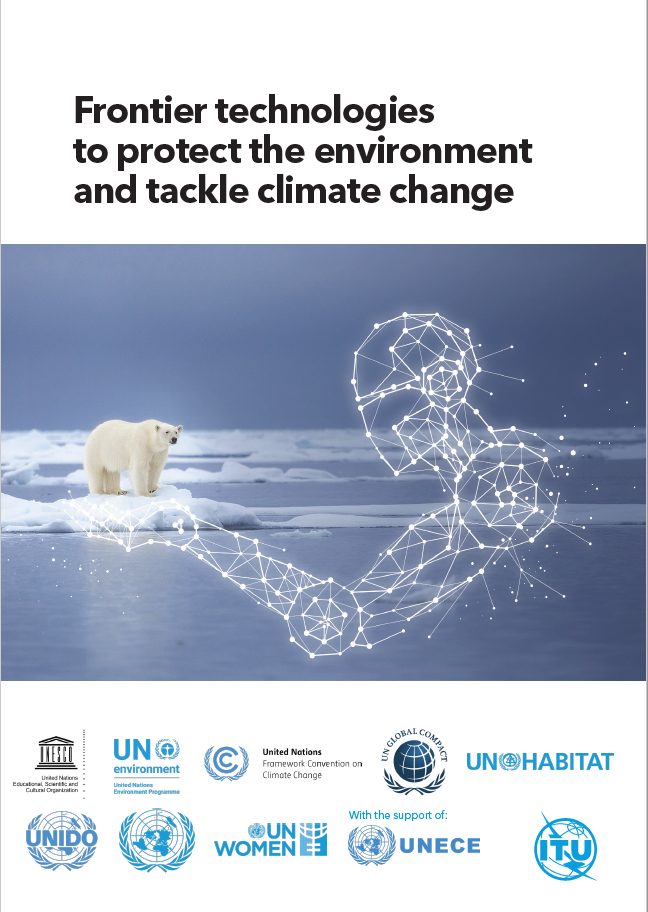
| Frontier technologies to protect the environment and tackle climate change, the latest report – developed by ITU together with UNECE; UNESCO; UN Environment; UNFCCC; United Nations Global Compact; UNIDO; UN-Habitat; and UN-Women – begins by exploring what is changing on our planet, why these changes are taking place, and who is most at risk as a result. It shows that catastrophic global climate change is already clearly underway and that urgent action is needed to help monitor, mitigate and adapt to its effects. Frontier technologies – new, innovative and disruptive technologies – offer tremendous potential for tackling climate change and meeting the goals of United Nations sustainable development goal (SDG) 13 (Climate Action).
The report spotlights eight key emerging technologies, each with the potential to be instrumental in tackling climate change: artificial intelligence (AI), Internet of Things (IoT), 5G, clean energy technology, digital twin, robotics, Space 2.0 technologies, as well as digitalization and Big Data.
| 2020
|
Executive Summary: Frontier technologies to protect the environment and tackle climate change
| Access to the flipbook
(available in English)
| 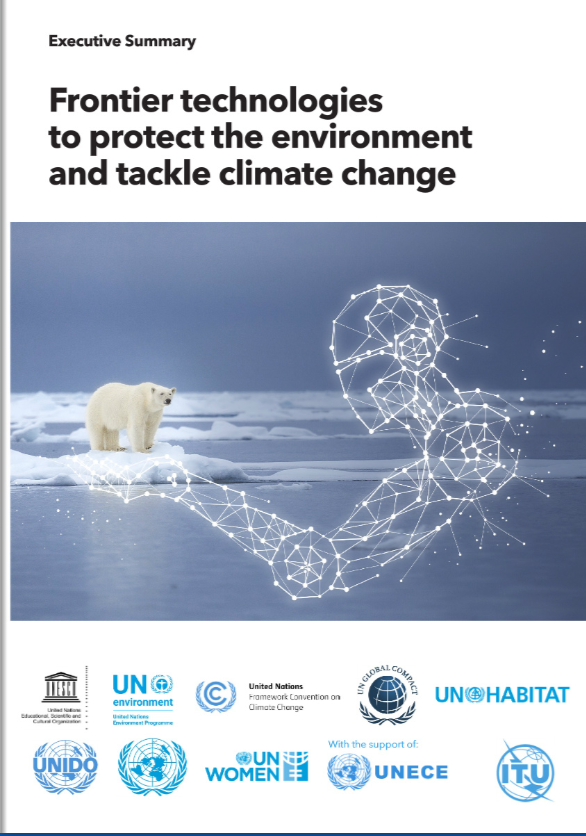
| This document contains the executive summary of the report on "Frontier technologies to protect the environment and tackle climate change".
| 2020
|
Guidance for ICT companies setting science based targets
| Access to the guidance
| 
| This guidance supports information and communication technology (ICTs) companies in setting science based targets for greenhouse gases (GHGs) according to a set of new decarbonisation pathways, described in detail in Recommendation ITU-T L.1470 "GHG emissions trajectories for the ICT sector compatible with the UNFCCC Paris Agreement" and aligned to the IPCC Special Report on 1.5°C and developed to be used as a sectoral target-setting approach by the Science Based Targets Initiative (SBTi).
| 2020
|
Year in Review and Upcoming
Activities 2019-2020
|
Access to the brochure
| 
| This brochure contains a recap of ITU-T key activities in 2019, and details of what to look out for next.
| 2020
|
|
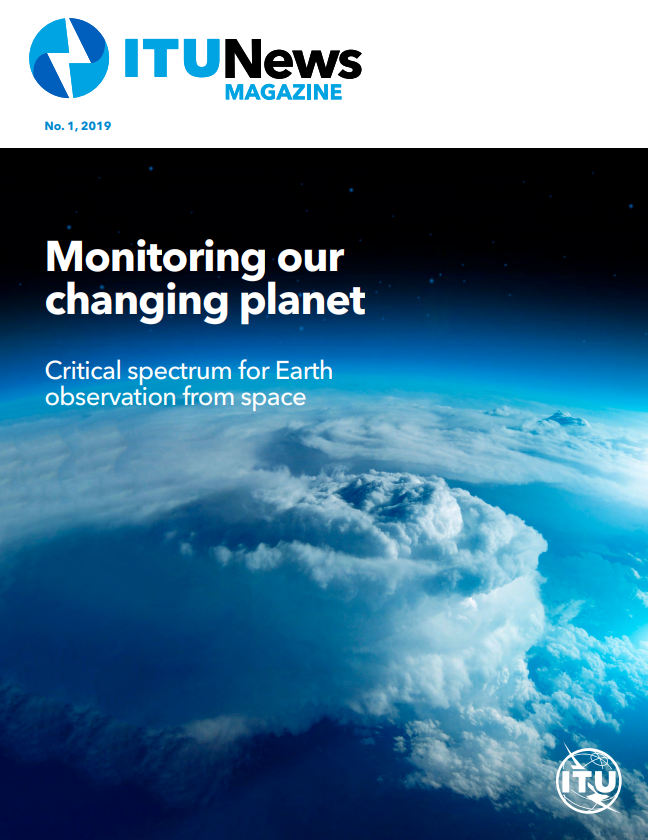
ITU News Magazine: Monitoring our changing planet
Critical spectrum for Earth observation from space
| Access to the magazine
| 
|
The ITUNews Magazine no.1, 2019: Monitoring our changing planet Critical spectrum for Earth observation from space contains information on space science, benefits of earth observation from space, how to deal with harmful interference and etc.
| 2019
|
Turning Digital Technology Innovation Into Climate Action
| Access to the Flipbook
(available in English)
| 
| The report on
“Turning Digital Technology Innovation Into Climate Action" takes a comprehensive approach to highlight the urgency and severity of climate change, along with the role that information and communication technologies (ICTs) play in both addressing and contributing to the issues of greenhouse gas emissions, the carbon footprint, e-waste and the other social and societal impacts of climate change. The report calls for the responsible use and uptake of ICTs, as well as the use of global ICT standards and best practices, the mainstreaming of eco-design principles and environmentally efficient applications of frontier technologies to help accelerate the response to climate change.
| 2019
|
| | | | |
City Science Application Framework
NEW
|
Access to the flipbook
|

|
The
City Science Application Framework provides a four-step methodology for cities to solve their pressing urban challenges. By using empirical evidence as the basis for evaluation, the city science application framework offers a reliable and consistent way for cities to assess, prioritize and boost their city applications.
The report includes the following
case studies on city science application: |
2019
|
Verification Report: Pully under the microscope
NEW
|
| 
| The
Verification Report: Pully under the microscope summarises the conclusions of the pilot project ‘ITU Indicators’ of the city of Pully carried out between 11 May 2017 and 2 February 2018, and encompasses the calculations and the analysis of the key-performance indicators (KPI) established by the ITU-T ‘U4SSC’ Working Group.
| 2019
|
Successful Electronic Waste Management Initiatives
| Download report
(available in English)
| 
| This report identifies successful electronic waste management projects in all regions. This report will guide Member States in handling electronic waste management challenges through initiatives related to capacity building on environmentally sound management of e-waste and the establishment of electronic waste management centers in different regions.
| 2018
|
Handbook for the development of a policy framework on ICT/e-waste
| Download report
(available in English)
| 
| This Handbook provides guidance on the key aspects to be taken into account when designing, implementing and improving a legal, regulatory and policy framework on ICT/e-waste. The proposed framework is intended to facilitate the management of ICT/e-waste based on the concepts of sustainable development, green ICT and the circular economy.
| 2018
|
Developing an e-waste national policy and regulatory framework for Malawi
| Download report (available in English)
| 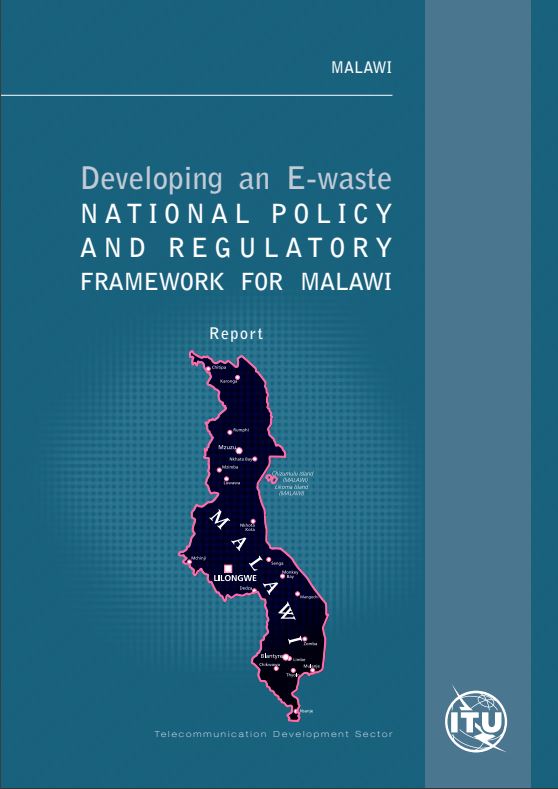
| This report presents the development of a national policy and regulatory framework, including a strategy and action plan for electrical and electronic waste (e-waste) management in Malawi. It provides an overview of the current e-waste treatment and a forecast of e-waste volumes and values related to specific electronic devices: mobile phones, computers and television (TV) sets; it identifies activities and responsibilities for each stakeholder from, both private and public sector, as well a financing model of the e-waste management system to be established in the country.
| 2018
|
Second Edition: E-waste Statistics - Guidelines on Classification, Reporting and Indicators
| Download report
(available in English)
| 
| This publication provides a universally relevant e-waste measurement framework and a classification of e-waste. The guidelines facilitate the implementation of harmonized concepts to measure the size of a country’s e-waste market, its transboundary e-waste movement and the e-waste recycling performance within that country. This publication has been published under the Partnership Measuring ICT for Development and is therefore also endorsed by ITU, ESCAP, ESCWA, OECD, UNCTAD, UNECA, Eurostat and UNEP/SBC.
| 2018
|
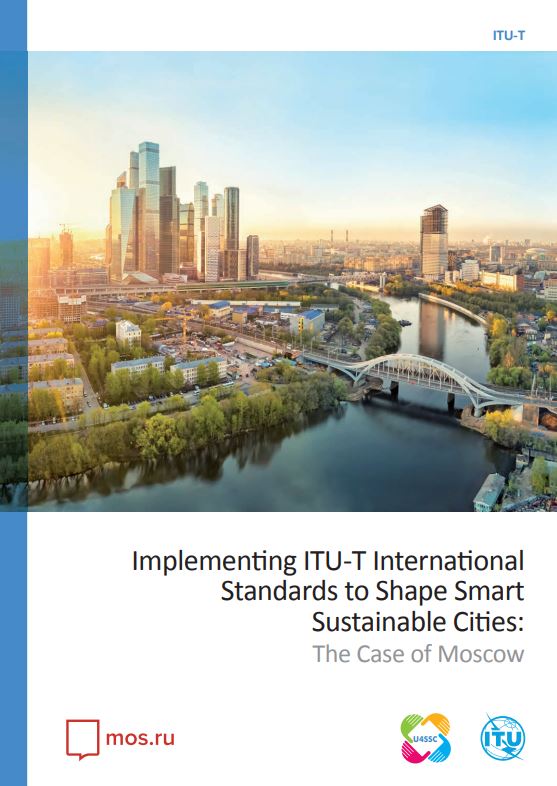
Implementing ITU-T International Standards to Shape Smart Sustainable Cities: The Case of Moscow
| Access to the Flipbook
(available in English)
PDF version
(Available also in
Russian)
PDF version
Presentation
| 
| The case study
“Implementing ITU-T International Standards to Shape Smart Sustainable Cities: The case of Moscow” offers practical insights into the experiences of Moscow in transforming into a smart sustainable city using the KPIs developed by the
United for Smart Sustainable Cities initiative (U4SSC) which are based on ITU-T KPIs for SSC Standards. It measures Moscow’s progress in reaching the objectives of its smart strategies and meeting the Sustainable Development Goals. The results of this case study provide valuable lessons to other aspiring smart sustainable cities.
|
2018
|
Global E-waste Monitor 2017
| Download report
(available in all UN languages)
| 
| The Global E-waste Monitor 2017, a joint effort of the ITU, the United Nations University (UNU) and the International Solid Waste Association (ISWA), provides the most comprehensive overview of global e-waste statistics and an unprecedented level of detail, including an overview of the magnitude of the e-waste problem in different regions. The report includes up-to-date information on the amounts of e-waste generated and recycled, makes predictions until 2021, and provides information on the progress made in terms of e-waste legislation.
| 2017
|
Use of Radio Spectrum for Meteorology: Weather, Water and Climate Monitoring and Prediction
| Download report
(available in all ITU official languagues)
| 
| Timely warning of natural and environmental disasters and accurate climate prediction, in addition to understanding, conservation and efficient management of scarce resources such as biomass, biosphere, mineral resources, water and energy are essential requirements for sustainable economic development. Information about climate, climate change, weather, cryosphere, precipitation, pollution and disasters is a critically important everyday issue for the global community. Radio systems are fundamental to monitoring the climate and to helping countries mitigate and adapt to the effects of climate change, and to address its major challenges. This Handbook provides an overview of the use of radiocommunication systems to monitor the various manifestations of climate change and their impact, as well as the application of ICTs and radiocommunication as a means to reduce global energy consumption.
| 2017
|
Final report of Question 6/2 ICTs and climate change for the study period 2014 - 2017
| Download report
(available in all ITU official languagues)
| 
| This report looks at methods and the use of state-of-the-art Information and Communication Technology (ICT) for climate change monitoring, mitigation and adaptation. Country experiences on monitoring and mitigating climate change are also provided.
| 2017
|
| Implementing ITU-T International Standards to Shape Smart Sustainable Cities: The Case of Singapore |
Access to the Flipbook (available in English)
PDF version | 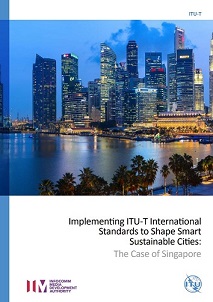
| The case study
“Implementing ITU-T International Standards to Shape Smart Sustainable Cities: The Case of Singapore" details Singapore’s journey towards becoming a smart sustainable city. This case study provides a valuable reference point to other cities pursuing smart city strategies. It also offers valuable guidance to ITU standards developers whom are responsible for the refinement of SSC’s KPIs. | 2017 |
| Collection Methodology for Key Performance Indicators for Smart Sustainable Cities | Access to the Flipbook
(available in English)
PDF version |  | This publication provides cities with a methodology on how to collect core data or information linked to key performance indicators (KPIs) for smart sustainable cities (SSC). This set of KPIs for SSC was developed to establish the criteria for assessing the smartness and sustainability of a city, and to provide cities with the means for self-assessments, while simultaneously achieving the SDGs. | 2017 |
| Connecting cities and communities with the Sustainable Development Goals | Access to the Flipbook
(available in English)
PDF version |  | This publication provides an overview of how cities can use ICTs to achieve the Sustainable Development Goals (SDGs). It also maps the case studies to the various international agreements as well as to the SDGs. | 2017 |
| Enhancing innovation and participation in smart sustainable cities | Access to the Flipbook
(available in English)
PDF version |  | This publication provides a series of case studies on smart governance, smart people and smart economy, which will catapult successful smart city practices into the global spotlight. | 2017 |
| Implementing SDG11 by connecting sustainability policies and urban-planning practices through ICTs | Access to the Flipbook
(available in English)
PDF version
|  | This publication provides a study of the advantages of using ICTs to support the implementation of the SDGs, namely SDG 11, by facilitating the missing linkages that exist between sustainability policies and urban-planning practices through digitally-enabled urban actions. | 2017 |
|
Implementing ITU-T International Standards to Shape Smart Sustainable Cities: The Case of Dubai | Access to the Flipbook
(available in English)
PDF version |  | The case study “Implementing ITU-T International Standards to Shape Smart Sustainable Cities: The Case of Dubai” details Dubai’s ambitious and trailblazing journey towards becoming a smart city, a venture worthy of emulation by other aspiring smart cities around the world. | 2016 |
| Unleashing the potential of the Internet of Things |
Access to the Flipbook (available in English) | 
| This flipbook presents a compendium of the first set of ITU international standards for IoT, providing a resource of great value to standards experts interested in contributing to the work of ITU-T Study Group 20. | 2016 |
|
Sustainable Management of Waste Electrical and Electronic Equipment in Latin America |
Download report
(available in
English and
Spanish)
Download PPT
(available in
English and
Spanish) |  |
This report provides an overview of e-waste management in Latin America. It also suggests 10 key steps and provides some guidance to countries how to handle e-waste. |
2016 |
|
Shaping smarter and more sustainable cities: striving for SDGs | Access to the Flipbook (available in English)
| 
| This compendium provides a comprehensive overview on Smart Sustainable Cities and includes the 21 Technical Reports and Specifications developed by the Focus Group on Smart Sustainable Cities (FG-SSC). | 2016
|
|
Monitoring of electromagnetic field levels in Latin America | Download report
(available in
English and
Spanish)
|  |
This Report provides an overview on how compliance with national and international standards can assist the management and mitigation of public concerns pertaining to EMF, making it easier to garner social acceptance for the installation of new wireless technologies. It also presents case studies on the continuous monitoring systems installed in some countries in Latin America, as well as the policies adopted at governmental level for the implementation of Recommendation ITU-T K.83 in Latin America. |
2015 |
Final report of
Question 24/2 ICTs and climate change for the study period 2010 - 2014
| Download report
(available in all ITU official languagues)
| 
| This report analyzes methods and the use of ICT for climate change monitoring, mitigation and adaptation.
| 2014
|
Partnering for solutions: ICTs in Smart Water Management
|
Download report
(available in English)
| 
| Though economic growth, climate change and rising populations highly influence the availability of global water resources, strategic incorporation of ICTs in SWM can mitigate some of these challenges. Such achievements, however, are unattainable without proper stakeholder involvement and buy-in. The principal intention of this report is to go further and emphasize how ICTs can overcome some of the challenges faced in the water sector when there is proper stakeholder involvement.
| 2014
|
| Resilient pathways: the adaptation of the ICT sector to climate change | Download
report
(available in English) |
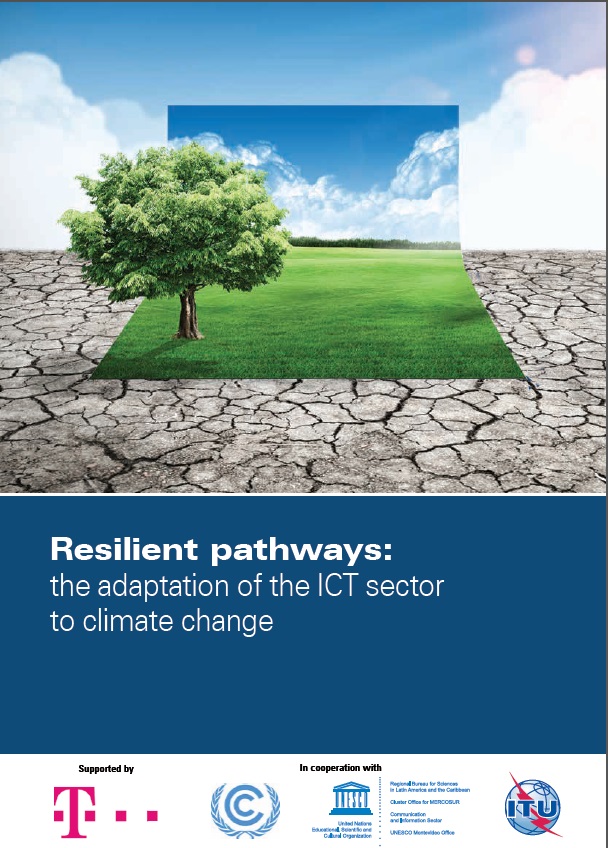
| The main objective of this report is to explore the impacts of climate change on the ICT sector and the potential for adaptation, while emphasizing the need for resilient pathways of action, enabling environments and new standards to foster the sector’s approach to adaptation. | 2014 |
| Partnering for solutions: ICTs in Smart Water Management | |
| Though economic growth, climate change and rising populations highly influence the availability of global water resources, strategic incorporation of ICTs in SWM can mitigate some of these challenges. Such achievements, however, are unattainable without proper stakeholder involvement and buy-in. The principal intention of this report is to go further and emphasize how ICTs can overcome some of the challenges faced in the water sector when there is proper stakeholder involvement. | 2014 |
| The case of Korea: the quantification of GHG reduction effects achieved by ICTs | Download report
(available in English)
|  | The purpose of this report is to demonstrate the potential GHG reductions by ICT services, estimate the reduced volume of GHG, and identify major ICT GHG reduction enablers in Korea. This report follows the methodology described in ITU-T Recommendation L.1410 and comprises a review of more than 30 ICT services through a literature study and global benchmarking. | 2013
|
Greening ICT Supply Chains – Survey on Conflict Minerals Due Diligence Initiatives
| Download report
(available in English)
Resources
| 
| This survey details and assesses the existing conflict minerals supply chain due diligence initiatives (incorporating national and international legislation, as well as industry-, government- and multi-stakeholder led schemes) that address the management of the broader spectrum of sustainability issues present in conflict minerals supply chains, with a particular focus on the management of environmental impacts.
| 2012
|
An Energy-aware Survey on ICT Device Power Supplies
| Download report
(available in English)
Resources
| 
| This survey reports the results of a wide analysis performed on a large set of commercially available external power supplies (more than 300 devices verified and more than 200 electrically measured) to assist the standardization activities within ITU-T Study Group 5 (SG5) (Recommendation ITU-T L.1001). Mechanical, electrical and environmental characteristics have been evaluated; correlation and statistics have also been developed.
| 2012
|
ITU-R Radiocommunication: Climate Change
|
(available in English)
| 
| This report provides an overview of the use of radiocommunication systems to monitor the various manifestations of climate change and their impact as well as the application of ICTs and radiocommunications as a solution to contribute to a global reduction in energy consumption.
| 2012
|
|
Toolkit on Environmental Sustainability for the ICT Sector |
Download report
(available in English)
Resources |
| The Toolkit on Environmental Sustainability for the ICT sector is an ITU-T initiative which provides plenty of detailed support on how ICT companies can build sustainability into the operations and management of their organizations, through the practical application of international standards and guidelines. | 2012 |
|
Sustainable ICT in Corporate Organizations |
Download report
(available in English)
Resources |
| This document focuses on the main sustainability issues companies face in using ICT products and services in their own organizations across four main ICT areas: data centers, desktop infrastructure, telecommunications networks and broadcasting services. | 2012 |
|
Sustainable Products |
Download report
(available in English)
Resources |
| This document provides technical guidance on environmentally conscious design principles and best practices, covering development and manufacture, through to end-of-life treatment. | 2012 |
|
Sustainable Buildings |
Download report
(available in English)
Resources |

| This document provides technical guidance on environmentally conscious design, maintenance, repair and operating principles and best practices from construction through to lifetime use and de-commissioning. | 2012 |
|
End of Life Management for ICT Equipment |
Download report
(available in English)
Resources |
| This document covers the various End-of-Life (EOL) stages, and their accompanying legislation. It also provides support in creating a framework for environmentally-sound management of EOL ICT equipment. | 2012 |
|
General Specifications and KPIs |
Download report
(available in English)
Resources |
| This document focuses on matching environmental KPIs to an organization’s specific business strategy targets, as well as the construction of standardized process to make sure the KPI data is as useful as possible to management. | 2012 |
|
Assessment Framework for Environmental Impacts of the ICT Sector |
Download report
(available in English)
Resources |
| This document explores how the various standards and guidelines can be mapped so that an organization can create a sustainability framework that is relevant to its own business objectives and desired sustainability performance. | 2012 |
|
Review of Mobile Handset Eco-Rating Schemes |
Download report
(available in English)
Resources |
| This report provides with an overview of eco-rating schemes developed by the mobile handset industry to communicate the sustainability performance of their products to consumers. | 2012 |
|
Guidance on Green ICT Procurement |
Download report
(available in English)
Resources |
| This Guidance provides directions to ICT companies to promote effective procurement practices with suppliers and customers, and to implement consideration for greater awareness of environmental issues in their business transactions. | 2012 |
|
Boosting Energy Efficiency through Smart Grids |
Download report
(available in English)
Resources |
| This report discusses the role of ICT in the smart grid with a view of energy efficiency, with the ultimate goal of hindering climate changes. | 2012 |
|
Climate Change Adaptation, Mitigation and Information & Communications Technologies (ICTs): the Case of Ghana |
Download report
(available in English)
Resources |
| This report focuses on exploring an increasingly important question: “How can developing countries effectively integrate ICT tools within climate change adaptation and mitigation strategies?”
The contribution of this report is two-fold. It presents the potential of ICTs towards adaptation and mitigation through the concrete case of Ghana, illustrating the challenges and opportunities faced by developing countries in this field. | 2012 |
|
Using submarine cables for climate monitoring and disaster warning: Opportunities and legal challenges |
Download report
(available in English)
Resources |
| Recognizing the newness of such uses of undersea telecommunications cables and the complexity of national and international legal-regulatory regimes, this report examines opportunities and legal challenges arising from dual-purpose telecom-marine data cables for ocean and climate monitoring and disaster warning. | 2012 |
|
Using submarine cables for climate monitoring and disaster warning: Strategy and roadmap |
Download report
(available in English)
Resources |

| This report presents a strategy and roadmap to move forward this vision of incorporating sensors into submarine cables. Nowadays, submarine telecommunication cables that traverse oceans transmit the global Internet, but are deaf, dumb and blind to their ocean environment around them. A future is envisioned when telecommunication companies integrate ocean-observing sensors within their submarine cable systems. This new sensory data would crucially advance our knowledge in monitoring global climate change and tsunamis in the deep ocean. | 2012 |
|
Using submarine cables for climate monitoring and disaster warning: Engineering Feasibility Study |
Download report
(available in English)
Resources |
| This report investigates technical feasibility of modifying repeaters to support science instruments for incorporation into commercial telecom cables systems. Allowing and improving long term measurement and data collection, a “Green Repeater" equipped with science instruments will indeed contribute to the effort of better understanding the oceans and the changing climate. | 2012 |