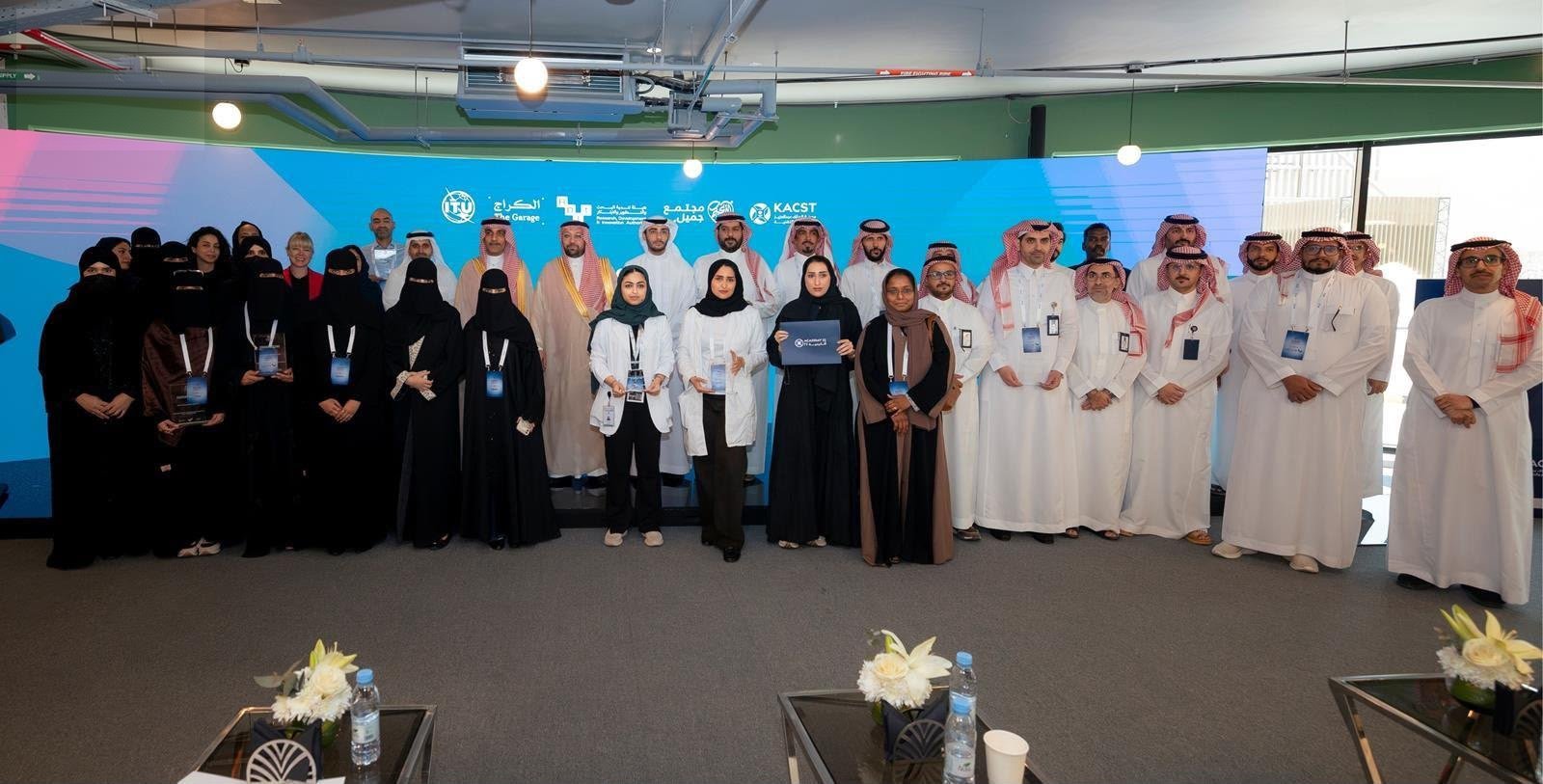
Through the Accelerating Research to Commercialisation (ARC) Programme, ITU and the King Abdulaziz City for Science and Technology (KACST) helped 17 Saudi research teams take their science out of the laboratory and test it in the real world.
The challenge
Saudi Arabia produces a growing amount of excellent science, but too little of it reaches the people who could benefit from it. Researchers are rewarded for publishing papers rather than building products, and few have ever sat down with a potential customer. Under Vision 2030, closing this gap is a national priority.
In 2026, the ITU Regional Office for the Arab States joined forces with KACST to tackle it. Rather than starting with money or companies, ARC started with people: helping researchers see their own work through the eyes of the market.
The journey
It began in February with a four-day bootcamp at KACST in Riyadh. Researchers from KACST and universities across five Saudi regions worked through a practical toolkit of 23 tools developed by ITU, from understanding a customer to building a financial model and a pitch. Participants rated the bootcamp up to 9.4 out of 10. As one researcher put it, “Instead of focusing on research publication alone, the bootcamp emphasised identifying real-world problems, commercialisation prospects, and shaping solutions that people are actually willing to adopt."
Eight weeks of one-to-one mentoring followed, built around a simple but demanding challenge: speak to 50 potential customers. In July, 12 teams pitched to an independent panel from KACST, the Research, Development and Innovation Authority (RDIA) and The Garage. Support then continued through the summer, with pitch rehearsals, financial modelling clinics and masterclasses from the Jameel Community, leading up to Demo Day on 17 September.
What changed
Fifteen of the 17 teams completed the programme. Together they held 529 conversations with customers, and every team that finished changed or sharpened its idea based on what it heard. Eight teams were judged investable, and ten applied for further support from the Jameel Community.
The first commercial results soon followed: one company registered and a second on its way, two intellectual property filings under way, seven signed agreements, two live pilots and a clinical partnership with King Fahad Medical City. Teams also opened doors with health regulators, government ministries and major industry players. The researchers themselves grew in confidence, especially in financial planning, and those who started with the least experience gained the most.
A story worth telling
One team captures the spirit of ARC. Three women researchers from the University of Jeddah, developing technology to tackle oil spills, finished tenth out of twelve at the July pitch day. The judges were frank: the team needed a stronger commercial focus. Rather than giving up, they kept going through the summer. By August, they had spoken to 30 customers, signed five agreements, registered their company and begun filing a patent. It was the clearest commercial success of the whole cohort.
Another team's survey of 50 families revealed a striking public health gap: more than half of the children had two or more severe allergic reactions a year, yet only 13% of families carried an emergency auto-injector.
Women were at the heart of ARC, making up about half of all participants and leading or co-leading most teams, including two of the top three at the pitch day.