Background:
The International Telecommunication Union (ITU), the United Nations specialized agency for information and communication technologies (ICTs), supports a wide range of initiatives, including e-waste policy development. With the generous contribution from the Government of Australia - DITRDCSA, this activity was organized under the project titled ‘Creating a Circular Economy for Electronics and Electricals in Thailand’.
In Thailand, recent consultations indicate that 90% of e-waste is managed outside of formal collection and recycling channels. Compounding the issue of locally generated e-waste, Thailand also faces significant challenges from rising quantities of imported e-waste.
To address this, the draft Waste Electrical and Electronic Equipment Act is being drafted to establish an extended producer responsibility EPR framework. In this regard, ITU is supporting the Government of Thailand to develop a technical proposal with sound recommendations for a comprehensive EPR system, encompassing the necessary legal regime, administrative arrangements, and financing mechanisms for e-waste governance in Thailand.
Workshop
Objectives
Thailand Post stands out as a key partner in this endeavor, having already demonstrated voluntary EPR schemes, taking back used mobile phones and small appliances. With its extensive logistics and nationwide postal network, Thailand Post is uniquely positioned to provide an infrastructure for an effective and accessible e-waste collection system.
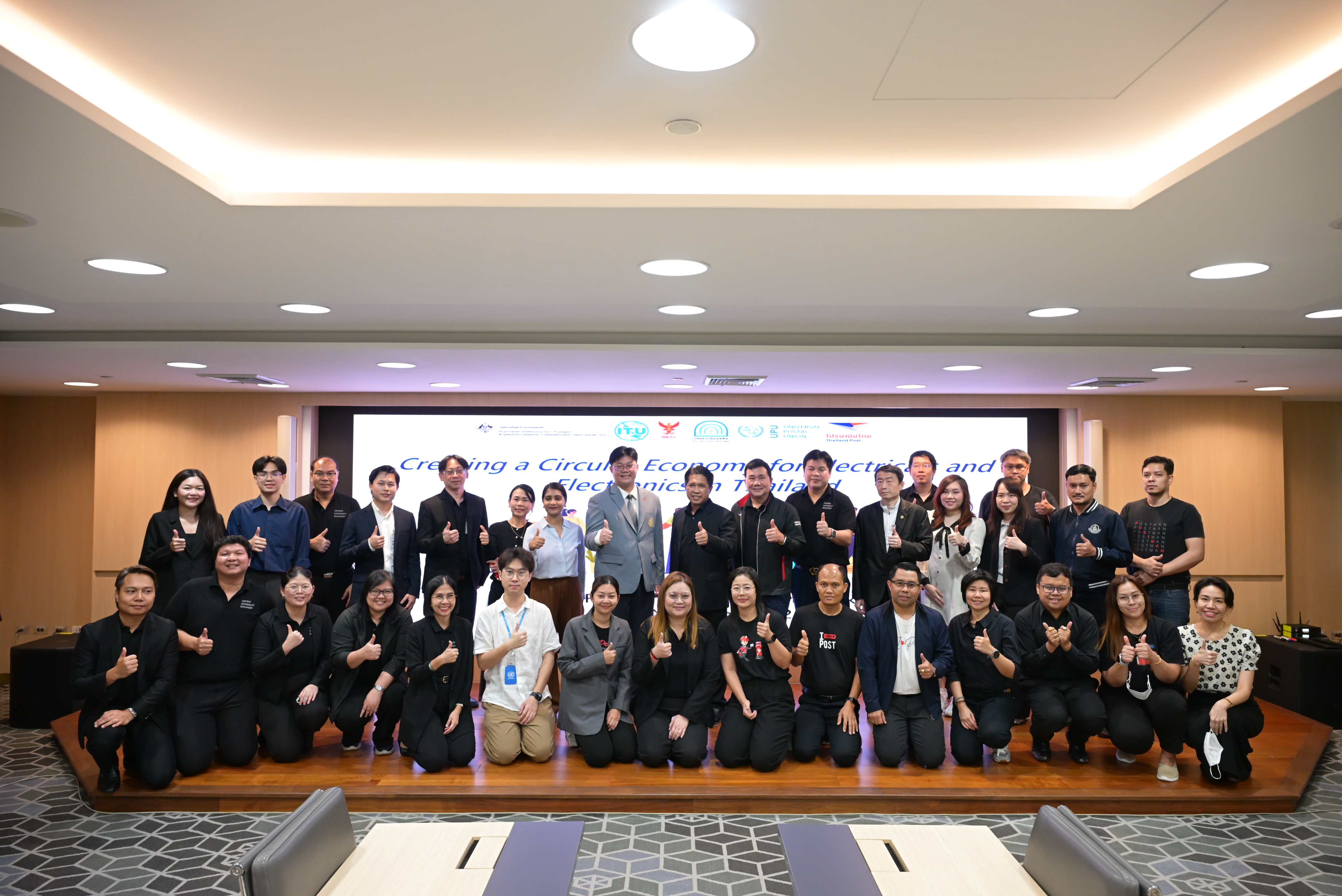
This workshop was organized to discuss potential business opportunities for Thailand Post within the new EPR landscape, and related policy gains. The objectives were the following:
- Equip participants with a comprehensive understanding of Thailand's current e-waste challenges, the draft WEEE Act, and the EPR principle.
- Enable participants to analyze and discuss potential business opportunities for Thailand Post within the new EPR landscape, and related policy gains - including how participation could reduce compliance costs for producers, unlock incentives, or justify co-investment in reverse logistics.
- Collaboratively brainstorm and outline practical reverse logistics strategies for collecting both small and large appliances, leveraging Thailand Post's extensive national network.
- Highlight the critical operational standards, including occupational health & safety protocols necessary for effective e-waste collection and transportation.