Digital@UNGA Awards: Projects reaching people


A community health platform spanning 24 countries, a mobile one-stop shop for government services, a system that releases emergency funds before floods strike, and a tool that flags fraudulent job offers were among the projects recognized this year in United Nations-led awards recognizing digital innovation that improves people’s lives.
The projects were honoured on 21 September in New York at the latest Digital@UNGA Awards organized by the International Telecommunication Union (ITU) and the United Nations Development Programme (UNDP).
Finalists representing over 40 countries emerged from more than 1,500 submissions from around the world.
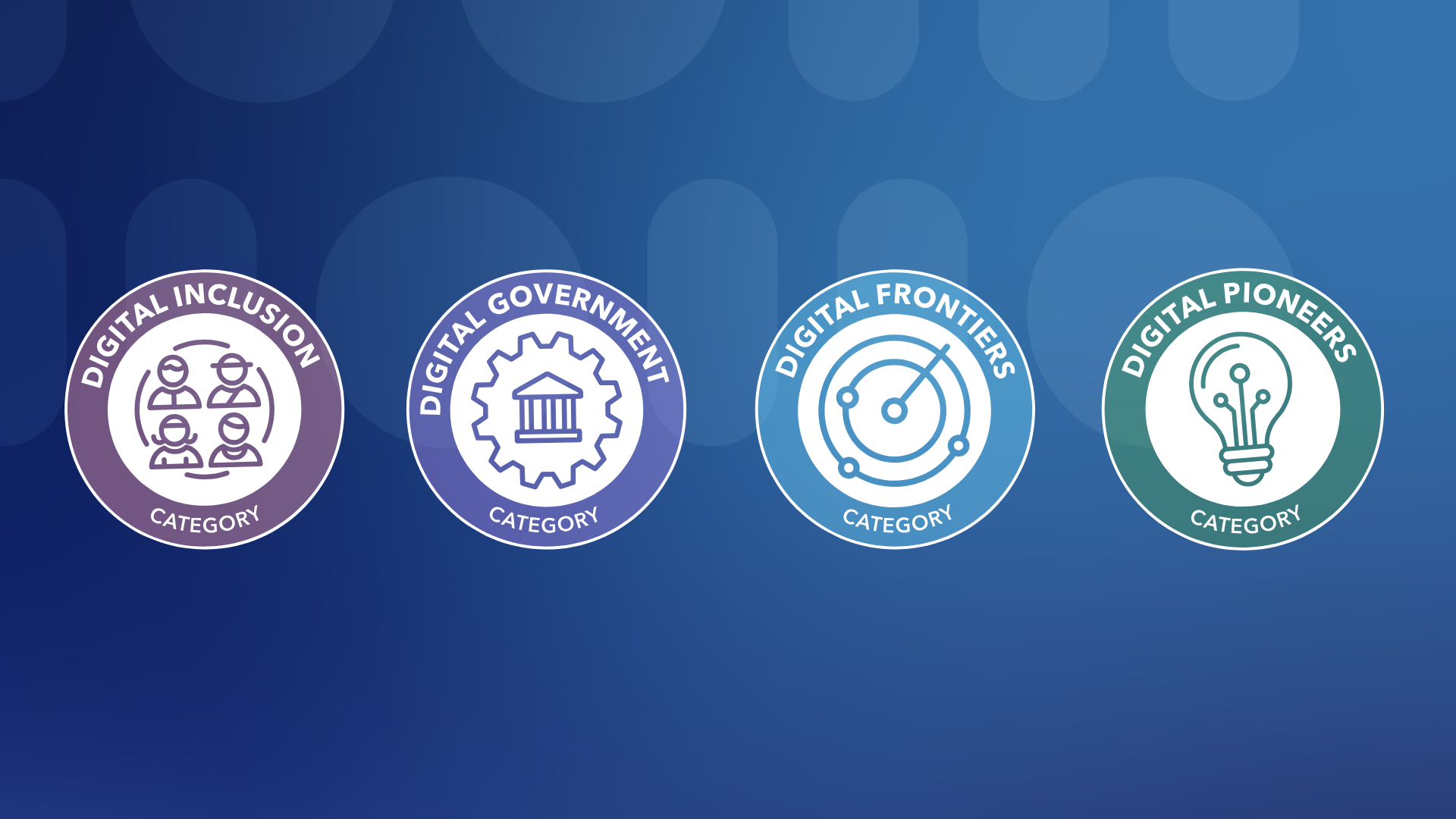
The four winning initiatives span healthcare, public services, disaster preparedness and online safety.
Digital Inclusion: Community Health Toolkit
The Digital Inclusion award recognizes initiatives that expand access to digital technologies, connectivity, digital skills and online participation, particularly for underserved communities.
This year’s winner, the Community Health Toolkit, equips community health workers with offline-first applications running on low-cost Android phones in local languages.
The platform, stewarded by the US-based non-profit Medic, supports more than 182,000 health workers across 24 countries, who used it to deliver 263 million care activities in 2025. Eight governments have adopted the toolkit as national infrastructure. In Kenya, it underpins the national community health information system across all 47 counties, while in Nepal the Ministry of Health and Population now covers more than 90 per cent of operating costs.
Digital Government: Diia
The Digital Government award recognizes governments and public institutions using digital technologies to improve public services.
Winning project Diia, led by Ukraine’s Ministry of Digital Transformation, brings government services, identity documents and social payments into a single mobile application driven by advanced, user-friendly artificial intelligence (AI). The platform has more than 23 million registered users, representing more than 80 per cent of Ukraine’s adult population.
An AI consultant launched in 2025 resolves more than half of citizen inquiries without human intervention. Diia.Card, which combines social assistance programmes in a single mobile wallet, had issued more than 3.5 million cards by early 2026. A UNDP study found that 58.4 per cent of internally displaced people used Diia to access state services.
Digital Frontiers: Rahat
The Digital Frontiers award recognizes pioneering initiatives that apply emerging technologies to address real-world challenges.
Winning project Rahat uses blockchain smart contracts and real-time climate data to release cash and issue warnings before floods occur, based on a disaster response platform developed by Nepal-based Rumsan.
When forecast thresholds are crossed, alerts are sent by text and voice message in local languages, while pre-positioned funds are distributed through bank accounts, mobile wallets or QR cards for people without banking access.
During Nepal’s 2024 monsoon floods, the platform ensured that USD 85,000 reached 774 households within five and a half hours of activation, and 98 per cent of recipients took protective action. The open-source platform now operates in six countries.
Digital Pioneers: Ramona AI
The Digital Pioneers award recognizes young innovators and youth-led organizations using digital technologies to address social, economic and environmental challenges.
The 2026 winner, Mexico’s Ramona AI, designed a tool that helps jobseekers identify fraudulent recruitment offers linked to human trafficking. Users can forward a suspicious offer through WhatsApp or Telegram and receive a risk assessment explaining the warning signs, without downloading an application, registering or paying a fee.
Built using insights from 200 interviews with survivors of labour trafficking and sexual exploitation, the system has analysed more than 127,000 job offers across Mexico, Colombia, Peru, Argentina and Chile since 2022. More than 800 people have reported that it prevented them from responding to offers linked to trafficking.
The wider field
The four winners emerged from a field of 60 initiatives recognized for enhancing digital public infrastructure, cybersecurity, healthcare delivery, scientific collaboration, climate resilience, disaster preparedness, digital identity, online safety, public services, connectivity, education and entrepreneurship across all award categories.
Together, the shortlisted initiatives reflected the breadth of digital work underway across the world’s sustainable development landscape and some of the numerous ways digital technologies are being applied to improve access to services, information and opportunities.
Check out the full lists of finalists:
How the awards work
More than 1,500 submissions were received for the 2026 Digital@UNGA Awards. The entries were assessed against five criteria: innovation and digital technologies used, partnerships and collaboration, impact, scale and replicability, and contribution to global priorities.
Juries included representatives from ITU, UNDP, the United Nations Educational, Scientific and Cultural Organization (UNESCO), the World Intellectual Property Organization (WIPO), the World Bank Group, academia, industry and civil society.

© ITU/M. Jacobson-Gonzalez
Header image credit: ITU
