
AI for Good: Meet the people powering machine-learning solutions


The AI for Good Machine Learning in 5G Challenge organized by the International Telecommunication Union (ITU) brings students, researchers and problem solvers together to develop unique machine learning solutions to address a series of local challenges. Winners for 2026 are set to be revealed at the AI for Good Global Summit in July.
Here, some of this year’s finalists share their stories of success, trial and innovation.
Your voice, your device, your language
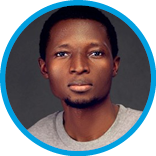
In bustling Lagos, Nigeria, a young researcher and ML engineer is building AI to solve people’s real-life problems. Israel Adedolapo Adegoke is focused on healthcare, climate, and industrial solutions, addressing challenges that define daily life across Africa.
His natural language processing (NLP) model for heath questionnaires is a contender in the upcoming AI and ML challenge that ITU put together in partnership with Zindi, an Africa-born, global professional network and crowdsourcing platform.
Beyond the excitement of competitive model development, the challenge aims to expand service offerings in numerous African languages.
“I like the fact that Zindi is African-inclusive,” Israel says. “That is something I have always looked for.”
He specialises in computer vision, natural language processing, and optimization algorithms.
As an entrant to the Your Voice, Your Device, Your Language Challenge, he set out to build a Kiswahili speech recognition system that could run offline on low-resource devices.
He read the brief carefully, studied the constraints, and planned his approach before touching a single line of code, he says. He then fine-tuned a Whisper model on Kiswahili speech data, managing memory and training in careful, controlled batches.
“Be steadfast,” he advises anyone else entering one of ITU’s challenges. “Understand more. Try out all available options. Then win.”
Measuring what matters
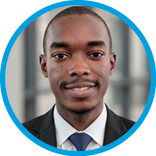
Another challenge participant, Peter Tinashe Mundowa, adds: “Do not wait until you feel fully ready to participate. Start with what you know and learn along the way.”
Peter is already employed as a data scientist while finishing his final year at the University of Zimbabwe. He leads the Right for Education Zimbabwe Chapter, running projects that use data and AI to address real social challenges.
His work is shaped by his home city, Harare, he says. When the challenge asked for new ways of measuring AI’s environmental footprint, he built around his solution interpretability and policy relevance, focusing on who needs to act to make a real difference.
“I focused strongly on problem framing and impact, not only technical performance,” Peter explains. “I ensured that every step directly addressed how the results could realistically be used by stakeholders.”
AI telco troubleshooting
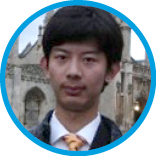
Challenge participant Shadi Wang, Chief Technical Officer at RealSight in Beijing, says solutions are only as important as the problems they solve. In telecommunications, he explains, AI that confidently gives the wrong command can be catastrophic.
If phone calls drop, telecom signals degrade, and infrastructure goes haywire, a wrong answer can upend people’s lives.
For the ITU AI Telco Troubleshooting Challenge on Zindi, Shadi built what he calls a hybrid multi-layered architecture: an ensemble of specialised models working in concert, each handling what it does best, all of them anchored by a deterministic rule engine that acts as a guardrail against hallucination.
In telecommunications, he explains, an AI that confidently gives the wrong command can be catastrophic. So, he designed his system to be as reliable as it was intelligent. If a cloud model timed out or failed a confidence check, a local fallback took over automatically. Nothing was left to chance.
“A brilliant algorithm is useless if the pipeline crashes during inference,” Shadi says. “The team with the most reliable system often wins against the team with just the theoretically smartest model.”
Unglamorous, patient work, like hardening underlying infrastructure, is what separates good AI from great AI, he suggests.
“Every failed API call, every hallucinated output, every broken script is simply a diagnostic log for your own learning process. Building industrial-grade AI is rarely a straight line.”
For others grinding through early failures, he advises: “Fall in love with the problem.”
Two PhD students in the Telco AI Troubleshooting Challenge say they were in over their heads at the start.
Seokhyun Jeong and Seonghoon Kim, hadnever worked with real network logs before. When they opened the dataset on Zindi, dense with signal metrics, hardware alarms, and fault records from live telecommunications infrastructure, it felt overwhelming.
But they stayed with the data.

“As we continued exploring, we gradually began to understand its structure,” Seokhyun recalls. “We could see how certain signal patterns led to throughput degradation.”
Rather than a single breakthrough moment, the shift came from time, patience, and the willingness to keep at it.
Their research at ISLAB centres on integrating large multimodal models with wireless communication systems, making networks more autonomous, more intelligent. The Telco challenge brought to life on a live leaderboard.

“What initially seems complex often becomes intuitive after spending enough time with the data,” notes Seonghoon. “Even if we cannot find the answer today, we may discover it tomorrow. Sometimes clarity comes with time, and sometimes it comes through collaboration and new perspectives.”
Classification for landslide detection
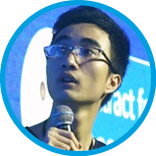
Dung Nguyen Ba, a chief data scientist with eight years in deep learning and computer vision, carved out two hours every evening for a month and quietly climbed to the top of Zindi’s ITU Landslide Detection Challenge leaderboard.
Based in Vietnam, Dung says he drew on years of pattern recognition, of knowing which questions to ask early, of trusting his instincts about what the data needs before the training loop ever runs.
His solution uses an ensemble of models trained across all 12 satellite bands, augmented by pseudo-labelling, where the model’s own predictions on unseen data are folded back into the training process.
He split the inputs into three bands handled as RGB – Red, Green and Blue: the three visible light spectrum bands that mimic human vision – and nine handled separately. Tools like LIME and SHAP help understand the emerging model’s decision-making and guide Dung’s further preprocessing choices.
While his best single model scored 0.944 on the public leaderboard, he’s maintained an ensemble anyway, trusting balance over brilliance.
“Do lots of experiments,” he says. “Always focus on data processing and choosing the right model.”
He has no regrets about making time amid his busy career. “These challenges are fun and all contribute to improving the lives of many people for the better,” he says.
GeoAI cropland mapping in dry environments

Juliet Ondisi a Kenyan currently in the Republic of Korea finishing a master’s in data science at SeoulTech, admits she has dropped out of challenges before.
But her thesis uses satellite imagery, so when the latest GeoAI challenge appeared, it felt like something she was supposed to do. Looking at the data, she discovered a covariate shift, meaning the statistical distribution of features in the training set didn’t match the test set. Variances across regions were evident, too.
She responded with quantile mapping to close the gap, vegetation indices and seasonal features to give the model cleaner signals, and outlier clipping, region-specific sampling strategies, and feature importance analysis to confirm that different regions genuinely needed different signals to work.
“I didn’t just use a strong model,” Juliet says. “I made the data strong for the model.”
Her hard-won advice is: “It’s never too late to start, or to finish. Don’t quit just because you’re not in the top five today. Treat the first runs as learning runs, finish the competition, and let your future self benefit from the full pipeline you built.”
She finished. And she placed.
Solutions showcased at AI for Good 2026:
- The latest AI Telco Troubleshooting Agentic Challenge winner will be announced in Geneva, Switzerland, along winners from the multi-lingual African language challenge, and the GeoAI challenge in a dedicated workshop GeoAI for Shared Future.
- An AI for Good workshop on 9 July – Agentic AI: Architecture and Standards for Next-Generation AI Agents – will reveal the outcome of a global competition to build an agent for telecom operators. This session will explore the technical foundations of agentic AI, specifically focusing on multi-agent systems, orchestration frameworks, and interoperability protocols. It covers AI-native networks (6G) and autonomous resource allocation.
- The Challenge is a data science competition on Low-Resource African Languages that asks participants to develop NLP models to answer health questions. Submissions are open until 21 June.
- The winner of the GeoAI Challenge: Reaching New Heights with Geo Foundation Models will be announced at a 7 July workshop: GeoAI for our shared future. This challenge, organized by ITU in partnership with the European Space Agency (ESA) Φ‑lab Challenges, KTH Royal Institute of Technology, Politecnico di Milano, and the Group on Earth Observation (GEO), is open until 30 June.
Credit: Photographs from participants
