In superposition: Why young people must shape the quantum future


By Sanskriti Deva, ITU160 Youth Ambassador
I first heard the word “quantum” in a Marvel movie: Iron Man. It sounded like another science-fiction buzzword to make Tony Stark sound smarter. A few years later, I heard it again in a very different setting: a university physics lab.
While working at a lab at Duke University in the United States during high school, I met a PhD student working on quantum computing. What started as a quick check-in became a long conversation about qubits, entanglement and the strange world of quantum mechanics. I learned that quantum was not just science fiction. People were building it, testing it, and experimenting with it. It was real, and it was shaping the future of technology.
I began asking bigger questions: What could quantum computing do for humanity? Could it help cure diseases, improve climate research or make communication more secure? And who decides how it is used, and who benefits from it?
When I entered college, I chose computer engineering so I could learn more about this field. At the same time, I became the youngest elected member of the UN Association’s US National Council. The more I learned about quantum technology, the more I realized something concerning: innovation in quantum was happening in a bubble and moving faster than our ability to manage it.
What is quantum computing?
Quantum computing can sound intimidating, but it’s simpler once we break it down. At its core, it’s the combination of quantum mechanics and computing.
- Quantum mechanics is the study of tiny particles like atoms and electrons. These particles don’t behave like everyday objects. They can do things that seem impossible in our world, like being in multiple states at once – a phenomenon called superposition. A helpful way to imagine this is a spinning coin that is not just heads or tails, but “both” until it lands.
- Classical computing uses bits, which are tiny switches set to 0 or 1.
- Quantum computing involves the use of qubits, which, thanks to superposition, can represent 0, 1, or both at the same time. When multiple qubits interact, they can process an enormous number of possibilities all at once.
Why does this matter? Because exploring many possibilities at once lets quantum computers tackle specific problems that are too big or complex for classical computing. They could, for example, speed up the discovery of new medicines, model climate systems with greater precision, optimize large-scale logistics, or develop next-generation encryption.
They’re not magic, but they are powerful tools that could broaden humanity’s technological capabilities.
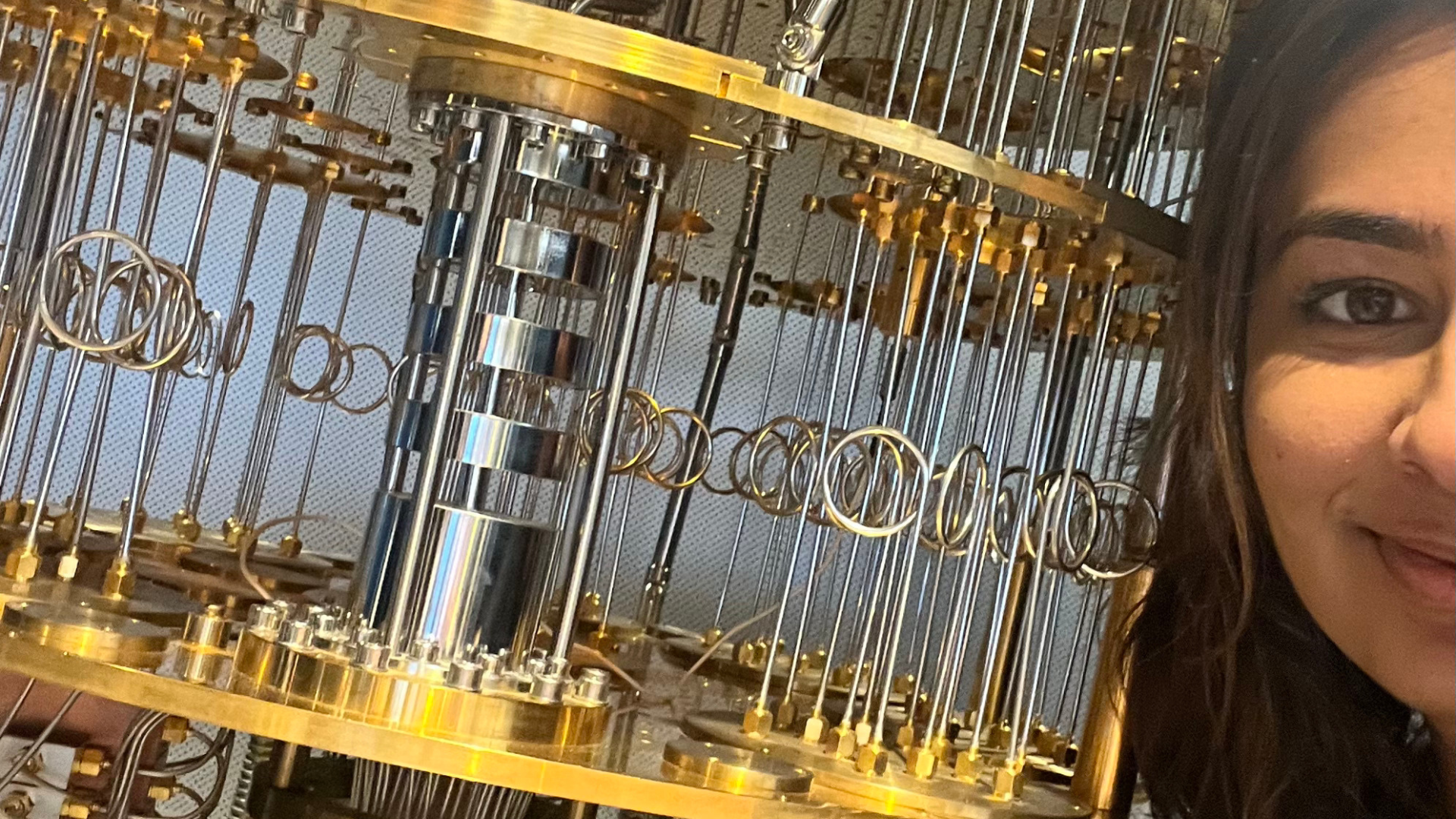
And they are stunning to look at. Superconducting quantum computers look like giant chandeliers, with rows of shiny discs, wires curling like delicate threads, all inside chambers cooled near absolute zero. It’s technology that’s as beautiful as it is powerful.
Why quantum matters now
For decades, quantum computing was mostly theoretical. Today, it is the focus of a major global race.
The first publicly available quantum computer was put on the cloud in 2016. It was a 5-qubit processor: just five quantum bits. Only seven years later, in December 2023, IBM unveiled its Condor chip with 1,121 qubits. The field is rapidly progressing, and companies and research labs are building increasingly powerful processors and the software needed to use them.
Governments are investing as well. The United States, China, and others have launched national quantum initiatives, while European Union members are working together on quantum communication infrastructure. Multilateral organizations such as the International Telecommunication Union (ITU) are developing standards for quantum networks and quantum-safe communication and convening experts to explore how quantum can support more secure and resilient global connectivity.
When innovation moves faster than policy
New technologies often outpace our ability to manage them. Quantum could change national security, finance and global communications. If we do not act early, access to these technologies could create greater inequality. At the end of the day, technology is just a tool, not intrinsically good or bad. It’s up to us to decide how we use it.
The future of technology can’t be shaped by scientists or engineers alone, and oftentimes the innovation we need occurs at the intersection of subjects. We need people who can connect different worlds: policymakers, educators, civil society leaders, and young people willing to stand in that “superposition” between disciplines and take in the bigger picture.
Bringing the next generation into the quantum conversation
ITU has stood for connection – between countries, industries, technologies and generations – for the last 160 years. As we enter the quantum era, that role matters more than ever, from developing early quantum communication standards to supporting countries as they prepare for quantum-safe networks
As an ITU160 Youth Ambassador, my goal is to help more people, especially young people, understand this technology and have a voice in how it develops. I want youth to see quantum as a field where they belong, whether they are coders, communicators or social entrepreneurs and activists.
This is exactly what ITU’s new Quantum for Good initiative aims to do.
It promotes responsible innovation and global collaboration, so quantum technologies support real benefits for everyone.
It has made a great start in 2025 – the International Year of Quantum.
Programmes like the Quantum for Everyone learning series, the Quantum World Tour, and the Quantum for Good track at the AI for Good Global Summit, have helped countries start building skills and consider the standards to put in place..
Just as importantly, ITU has opened the door for youth from around the world to engage with quantum in meaningful ways.
Header image credit: Sanskriti Deva
