
The International Telecommunication Union (ITU) and the United Nations Institute for Training and Research SCYCLE Programme (UNITAR-SCYCLE) of the Global E-waste Statistics Partnership (GESP), are working with the
Ministry of ICT and
Namibia Statistics Agency to build national capacity on e-waste data and statistics in Namibia. This is in line with the overall
national e-waste policy development also supported by the ITU.
Support is occurring through a three phased approach consisting of:
- data preparation
- statistical workshop, and
- a national model assessment
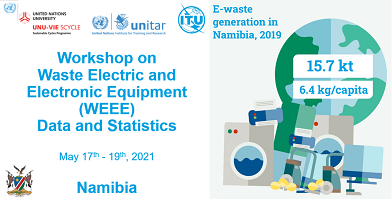
The 3-day workshop from 17 to 19 May 2021 was attended by stakeholder groups from the Namibia Statistics Agency, Ministry of ICT, the Communications Regulatory Authority of Namibia, the Ministry of Environment, Forestry and Tourism, the Ministry of Finance, and Town and City Councils. The workshop was delivered in cooperation with the
Ugandan Statistics Office, allowing for experiences in conducting national e-waste quantitative assessments to be shared in terms of monitoring, challenges faced, and progress made.
| 
|
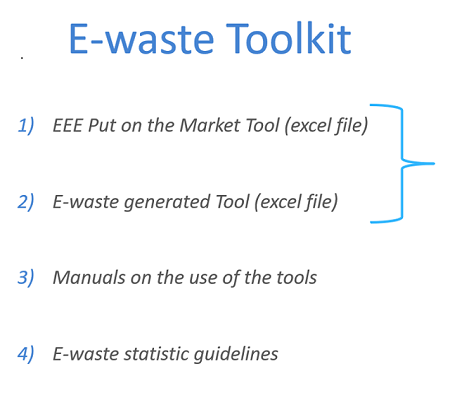
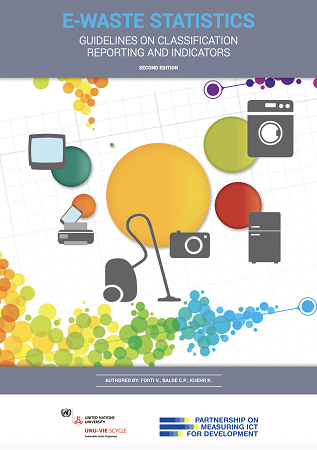
Participants discussed the e-waste challenge in Namibia in breakout groups and participated in hands on practical activities to test the SCYCLE E-waste Toolkit using data provided by the Namibia Statistics Agency to estimate e-waste put on the market and e-waste generated. During the workshop, participants produced a national roadmap to compile e-waste statistics. Participants will now be able to independently produce internationally comparable e-waste statistics for Namibia.
| 
|
With continued support of the GESP following the workshop, Namibia will conduct a quantitative national model assessment. This will put the statistical methods and tools learnt into practice, whilst also helping to establish a baseline for e-waste monitoring. Read more about the e-waste measurement framework
here.
Comprehensive collection of e-waste data provides a basis for Namibia to implement policies, recycling infrastructure, and regulatory instruments more efficiently. In addition, data will help Namibia set their own national targets for e-waste collection and recycling.