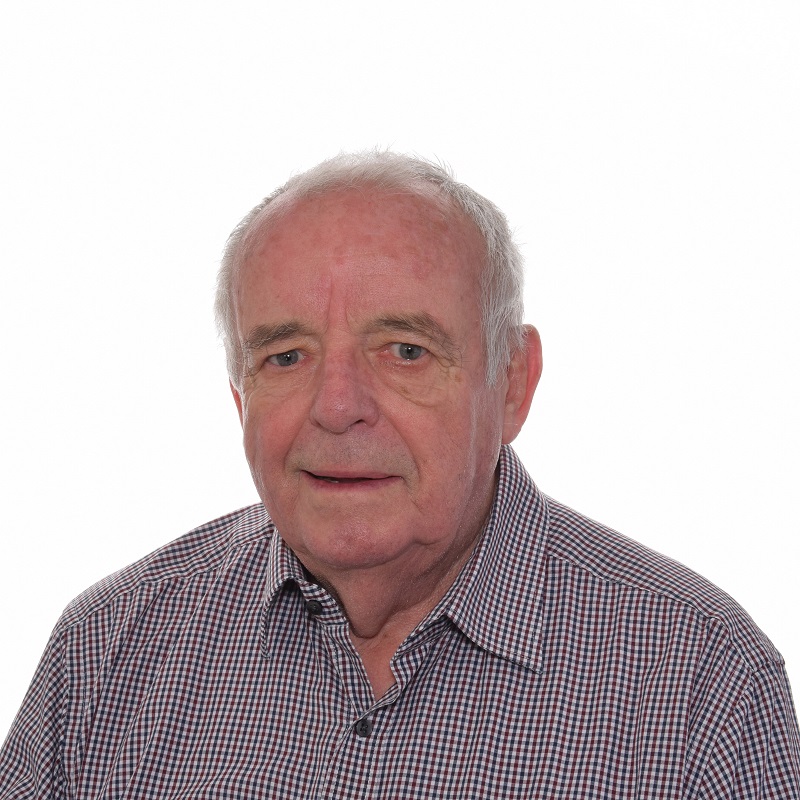
 Erik Anderson Erik Anderson
Editor of ITU-T X.509 | Independent Consultant, Andersen, L-Service, Denmark
Erik Andersen was employed by IBM for 27 years and was in the early 1980th appointed by IBM to be the IBM representative in Danish Standards (OSI). After leaving IBM, continue to be active in international and European standardization. Was during 16 years, the chair for the group responsible for the ITU.T X.500 series. Has for 17 years or more been the project editor for the ITU-T X.500 series, which includes ITU-T X.509. Is also project editor for three new part of the X.500 series, ITU-T X.510, ITU-T X.508 and the work on interconnecting PKI domains using blockchain.
|
 Isaac Bewarang Isaac Bewarang
Cyber Security Analyst, Mnemonic Identity Solutions
Isaac Bewarang is a Cyber Security Analyst at Mnemonic Identity Solutions and a Course Developer for CSFI CyberOps, with a focus on authentication systems and enterprise security architecture. He serves as an Invited Expert to ITU-T Study Group 17, contributing to global standardization efforts in telecommunications security and digital identity management. His work focuses on secure authentication architectures, with emphasis on advanced password systems and resilience against credential compromise and identity spoofing. He has contributed to the Cybrary cybersecurity curriculum, covering key domains including cryptography, web application security, security information and event management (SIEM), security policy, and network security. With formal training as a CyberOps Associate, he brings deep expertise in Public Key Infrastructure (PKI) and X.509 standards, and regularly engages in advancing practical approaches to identity assurance in modern cybersecurity environments.
|
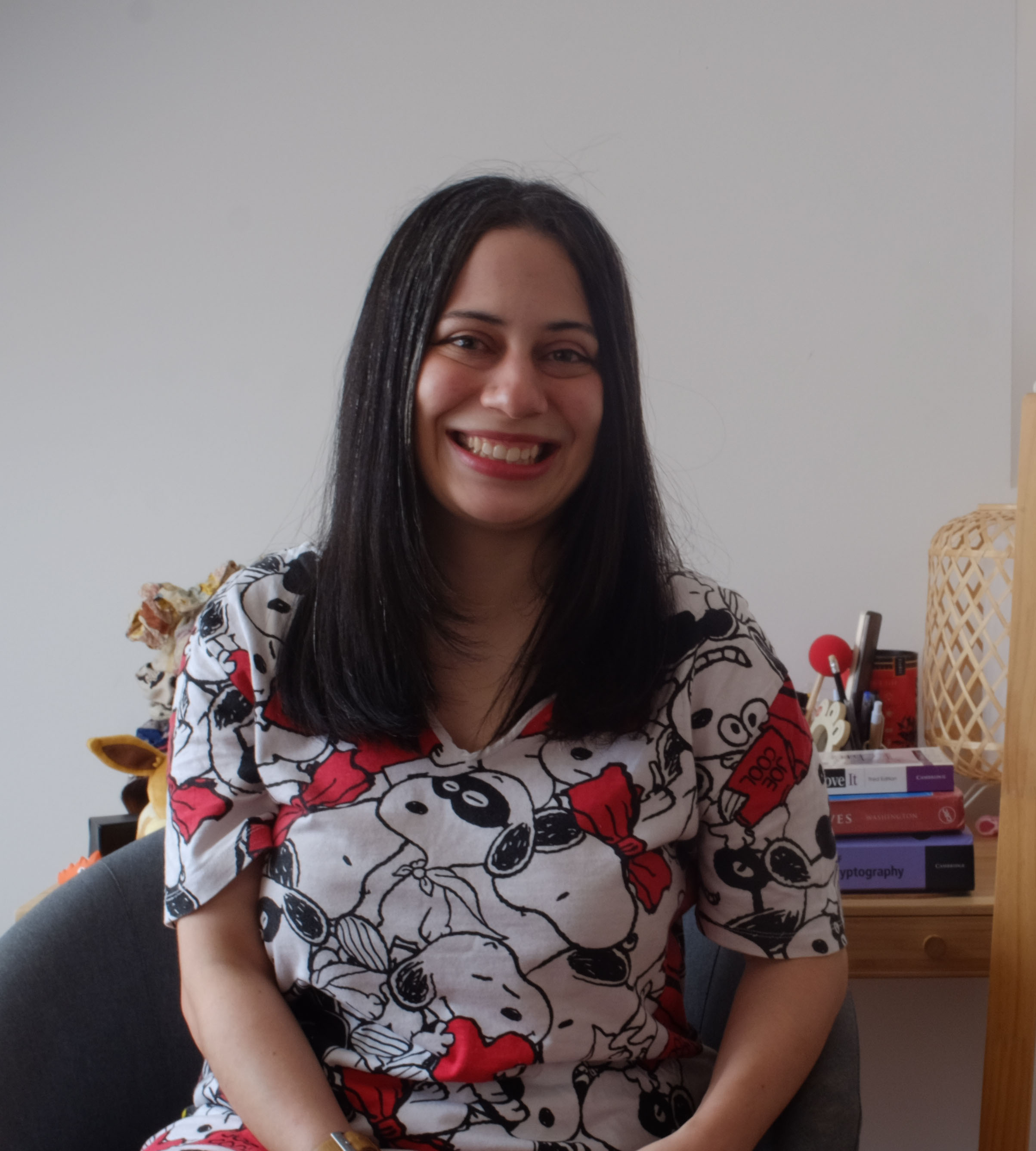 Sofía Celi Sofía Celi
Senior Cryptography Researcher, Brave I Honorary Fellow, University of Bristol
Sofía Celi is a Senior Cryptography Researcher at Brave and an Honorary Fellow at the University of Bristol, specializing in privacy-enhancing technologies, post-quantum cryptography, and secure communication systems. She is a member of the Advisory Council at the Open Technology Fund (OTF) and has held leadership roles within the IETF, IRTF, and W3C. Sofía has also provided expert consultations for the United Nations and human rights organizations. As a co-founder of Criptolatinos and Women in Cryptography, Sofía is committed to fostering diversity in cryptography and security. She is actively engaged in the academic community, serving as a member of the Latincrypt Steering Committee, Publicity Co-Chair of the PETS Symposium, IACR ePrint Co-Editor, and IEEE Security & Privacy Ethics Co-Chair. Sofía has received two Distinguished Paper Awards at IEEE S&P and NDSS, was a runner-up for the Best Paper Award at ESORICS and for the Pwnie Award.
|
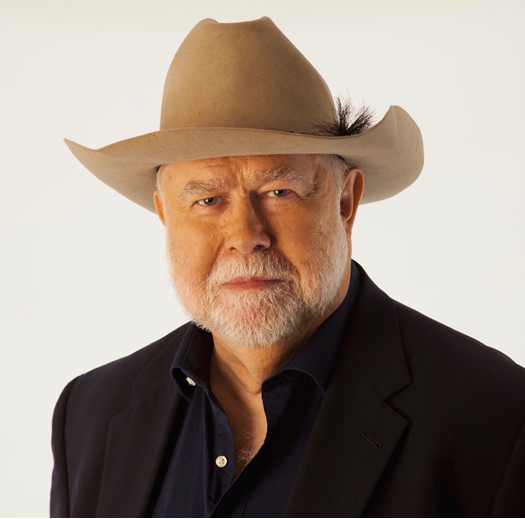 Hoyt L Kesterson IISecurity & Risk Architect, CNC ConsultingHoyt L Kesterson II is a Security & Risk Architect with CNC Consulting. He has more than 40 years of experience in information security. For 21 years he chaired the international standards group that created the X.509 public-key certificate, a fundamental component in digital signature and securing web transactions. He is a co-chair and founding member of the ABA's Information Security Committee. He is a testifying expert. He holds the CISSP and CISA certifications. He has three articles published in The SciTech Lawyer—What's Quantum Computing Got to Do with It? in the Spring 2022 issue; Cryptocurrency: A Need for Integrity in the Summer 2023 issue; and The Synergy of SciTech and the RSA Conference, co-authored with Ruth Hill Bro, in the Fall 2024 issue. Hoyt L Kesterson IISecurity & Risk Architect, CNC ConsultingHoyt L Kesterson II is a Security & Risk Architect with CNC Consulting. He has more than 40 years of experience in information security. For 21 years he chaired the international standards group that created the X.509 public-key certificate, a fundamental component in digital signature and securing web transactions. He is a co-chair and founding member of the ABA's Information Security Committee. He is a testifying expert. He holds the CISSP and CISA certifications. He has three articles published in The SciTech Lawyer—What's Quantum Computing Got to Do with It? in the Spring 2022 issue; Cryptocurrency: A Need for Integrity in the Summer 2023 issue; and The Synergy of SciTech and the RSA Conference, co-authored with Ruth Hill Bro, in the Fall 2024 issue. |
 Young Wook Kim
Information Security Incident Response Team Lead, LG Uplus
Young Wook Kim leads the Information Security Incident Response Team at LG Uplus. He is responsible for cybersecurity monitoring, incident response, threat detection, and SOC operations across enterprise and telecommunications environments. His areas of focus include SIEM, SOAR, EDR/XDR, threat intelligence, and AI-assisted security operations.
|
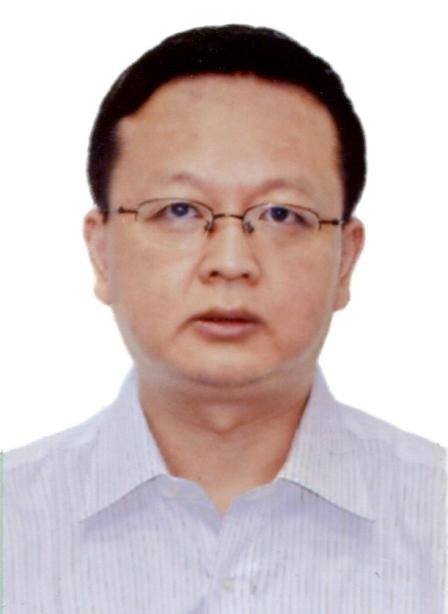 Fuwen Liu Fuwen Liu
Standard Representative, China Mobile
Since 2014, he has been working in China Mobile Research Institute. His current research interests focus on mobile network security, cryptography protocol, block chain, and quantum key distribution. He is active in various SDOs, such as ITU-T, 3GPP, and GSMA. He has made a number of contributions relevant to ITU-T standards, including the released X.1811 and X.1450, as well as ongoing work item X.qsdlt-ca and Y.QKDN-UNmd.
|
 Xiaoya Yang
ITU-T Study Group 17 Counselor
Xiaoya Yang serves as the Counselor of ITU-T Study Group 17 ‘security’ since 2017. With 20+ years of professional experience in telecommunication regulation, legislation and international standardization and coordination, she was the Head of the WTSA Programmes Division in the Telecommunication Standardization Bureau of the International Telecommunication Union (ITU-TSB) from 2010 to 2016, Co-counsellor of ITU-T Study Group 2 on 'Operational aspects of service provision and telecommunications management' and Study Group 3 on 'Tariff and accounting principles including related telecommunication economic and policy issues' from 2009 to 2010; Counselor of ITU-T Study Group 17 on 'Telecommunication security' from 2007 to 2008; and Workshop Project Coordinator from 2004 to 2006. Before joining ITU, she worked in the Ministry of Information Industry of China from 1998 to 2004. There she was the Division Director responsible for regulation of Internet and information security. From 1997 to 1998 she worked in China Telecom as a network engineer and service manager in their Internet service department. She has a M.S. in Computer Science from Tsinghua University, China and a MBA from Polytechnic University, Hong Kong. |
 Heung Youl Youm Heung Youl Youm
Professor (emeritus), Dept. of Information Security Engineering, Soonchunhyang University, Korea (Rep. of)
Dr Heung Youl Youm is a vice chair of ITU-T TSAG from October 2024 and was a SG17 chair from October 2026 to October 2024. He began participating in ITU-T SG 17 in 2003 and has actively contributed to the work of SG17 as a core member of security experts. He was an associate Rapporteur of SG 17 Question 10/17 from 2003 to 2004. For the Study Period (2005 – 2008), he served as a Rapporteur of Question 9/17. He was a Vice Chair of ITU-T Study Group 17 from 2009 to 2016. He was a Chair of Working Party 2 (Application Security) of SG17 for the Study Period (2009–2012) and was a Chair of Working Party 3 (Identity management and cloud computing security) of SG17 for the Study Period (2013–2016). He has been a Project Editor for many approved ITU-T Recommendations or agreed Supplements in DLT security, authentication/application protocols, de-identification techniques, USN/IoT security, 5G security, and cybersecurity. He has been working for the Department of Information Security Engineering in Soonchunhyang University, Korea since September 1990. He is currently the Director of SCH Cybersecurity Research Centre from Dec. 2013. He has been a Chair for the ISMS/PIMS certification committee in Korea since 2007. He is a member of the self-performance evaluation committee for the Korea personal Information Protection commission He was a Commissioner for Personal Information Protection Commission from August 2020 to August 2023. and was a Board member for the Korea Information/Security Agency from May 2020 to July 2022. He was a member of advisory committee to the Korea national security office for the Office of the President, Republic of Korea from October 2018 to May 2022, a president of KIISC (Korea Institute on information security and cryptology) in 2011 and is an emeritus president of KIISC. He had worked for ETRI as a senior research engineer from 1982 to 1990. He had been involved in developing high speed transmission system. He received a bachelor’s degree in 1981, a master’s degree in 1983, and a Ph.D. degree in 1990, all in Electronics Engineering from Hanyang University, Korea.
Haiguang Wang Principal Engineer, Huawei Technologies Co., Ltd
Dr. Haiguang Wang joined Huawei in 2013 and has been engaged in communication and internet security protocol design and standardization for many years. Currently, he represents the company in standards development at international organizations including 3GPP, ITU-T, and IETF, and has made significant contributions to 5G security protocol design. Dr. Wang has contributed to the development of ITU-T SG-17 standards X.1365 and X.1353, as well as ITU-T SG-13 standard Y.3261. He is currently participating in the development of ITU-T SG-17 X.dpki standard.
|