


ITU Council 2026
Snapshot report
28 April – 8 May
The 2026 session of the Council of the International Telecommunication Union (ITU), held in Geneva, Switzerland, laid vital groundwork for the upcoming ITU Plenipotentiary Conference (PP-26), where governments from around the world are set to shape the organization’s strategic direction for the next four years.
The Council heard updates on rapidly evolving global radiocommunications, digital development cooperation, ITU’s organizational transformation, internal and external activities in artificial intelligence (AI), and more.
Council delegates approved ITU’s operational plan for 2027 and endorsed the revised Draft Strategic Plan for consideration at PP-26. They also exchanged updates on preparations for upcoming conferences including PP-26 in November and the next World Radiocommunication Conference at the end of 2027.
The Council, composed of 48 Member States, acts as ITU’s governing body in the four-year cycle between plenipotentiary conferences.
“We are making good progress towards a Union that holds itself to the highest standards of accountability and transparency.”

Doreen Bogdan-Martin,
ITU Secretary-General
Key outcomes
ITU Secretary-General’s address: State of the Union
Secretary-General Doreen Bogdan-Martin reminded the Council of three key aims she had outlined for ITU upon starting her term three years before:
- A stronger position on the global digital agenda.
- A solid network of strategic partners.
- Recognition for organizational excellence.
In her State of the Union address, she reported on where ITU stands now and how far it still needs to go to close the digital divide that sees 2.2 billion people still offline.
Resilience was another central theme of the Secretary-General’s speech. “We know from experience that resilience is not a permanent state,” Bogdan-Martin said. It is continually “reinforced through strong efficiency measures and reinvesting in what matters.”
Today’s ITU makes every Swiss franc work harder for all the organization’s 194 Member States and 1000+ industry and academia members, she added, pledging that the leadership team and staff would continue making ITU fit for the future, agile, and results-driven: ready to face the challenges ahead.

Report on strategic plan implementation
The Council approved ITU’s latest annual implementation report, which outlines activities undertaken and results achieved between 2022 and the first quarter of 2026 under ITU’s previous and current strategic plans. The version presented to the Council will form the basis for a full four-year report to the Plenipotentiary Conference, PP‑26.
Transformation: Building an efficient, agile ITU
The ITU transformation drive is modernizing operations and building a culture of innovation. Top priorities for 2026, as outlined in the Council session, include enhancing the member experience, boosting operational efficiency and impact, empowering staff and encouraging innovation.
Delegates also learned about new ITU website interfaces and digital and AI tools set for launch at PP‑26. The Council welcomed the progress achieved to date.

Check out other ITU Council snapshot reports.

WSIS process: Inclusive digital cooperation
The Council noted documents pertaining to the multi-stakeholder process deriving from the World Summit on the Information Society (WSIS). These included a report on ITU activities to implement WSIS outcomes and advance sustainable development. The United Nations General Assembly in December 2025 endorsed the continuation and enhancement of the WSIS process as the UN’s central framework for people-centred digital development until 2035.
The ITU Secretary-General reported to the Council on the General Assembly’s WSIS+20 review. The Council also considered a gap analysis on existing ITU resolutions potentially requiring updates based on the WSIS+20 outcomes, for consideration in more detail at PP-26.
An extensive AI portfolio
The Council noted a report by the Secretary-General on ITU’s activities related to AI, showing how ITU connects practical AI solutions and knowledge-sharing, builds institutional and human capacity, and advances trusted, interoperable AI through standards. Interest continues growing in ITU’s capacity development work for AI, along with recognition for the AI for Good initiative, engagement on AI standards and related activities.

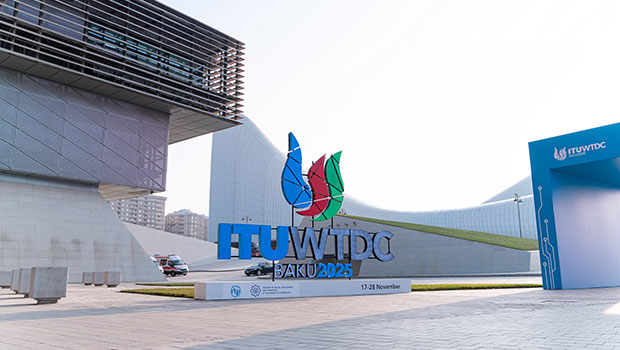
WTDC-25: A framework for digital development
The Council welcomed the successful outcomes of the World Telecommunication Development Conference 2025 held in Baku, Azerbaijan, in November 2025, and expressed appreciation to the Telecommunication Development Bureau and the host country for the effective organization of the Conference. It noted the adoption of the Baku Declaration and the Baku Action Plan, which establish a shared vision and results-based framework for advancing universal and meaningful connectivity during 2026–2029, as well as the adoption and revision of key resolutions, regional initiatives, and Study Group Questions to better align work in the sector with evolving development priorities.
WTPF-26: Dialogue on pressing issues
The next World Telecommunication/ICT Policy Forum (WTPF‑26) has been rescheduled for 2‑4 September 2026, preceded by a Strategic Dialogue on 1 September 2026. The high-level, multistakeholder forum, set to take place in The Bahamas, is dedicated to “Accelerating an inclusive, sustainable, resilient and innovative digital future.”
The WTPF platform fosters open and inclusive dialogue on emerging and pressing issues in the telecommunication and information and communication technology (ICT) landscape, aiming to build consensus through the adoption of Opinions that reflect shared priorities, challenges, and opportunities among ITU Member States, Sector Members, and other stakeholders. Key topics for the latest edition include bridging digital divides, greening digital technologies, enhancing resilience, space connectivity, and strengthening ICT-centric ecosystems and entrepreneurship.


Preparations for the Plenipotentiary Conference
The Council was updated on progress in Qatar’s preparations to host ITU’s next Plenipotentiary Conference (PP‑26) in November at the Doha Exhibition & Convention Center. The host country assured delegates that it is committed to hosting PP‑26 and continues to closely monitor developments in the region, taking all necessary measures to ensure the full participation of delegations and to support the successful organization of the conference. The ITU Secretariat, with the host country and the guidance of the UN Department of Safety and Security (UNDSS), will assess the situation four months before PP-26 and convene a meeting of the Council if need be.
Preparations for the World Radiocommunication Conference
The Council was updated on preparations for the 2027 Radiocommunication Assembly (RA‑27) and the 2027 World Radiocommunication Conference (WRC‑27), which are progressing in accordance with the decisions of Council 2025 and established ITU procedures. A site visit in March enabled an initial assessment of the proposed conference venue, the Shanghai Expo Center, and related facilities, including conference rooms and conference services. The draft Host Country Agreement has been shared with China. The WRC‑27 agenda features space and lunar communications along with other key topics concerning global spectrum management and coordination of satellite orbital resources.


Strengthening ITU’s regional presence
Delegates appreciated a review of ITU’s regional presence report prepared and presented by the Telecommunication Development Bureau. In response to a proposal by Member States, the Council decided to strengthen ITU’s presence in the Pacific, asked the ITU Secretariat to proceed with detailed planning for a Pacific area office, and requested a progress report to PP-26.
“The strength of this Council will be defined by our collective ability to work together.”

Bosun Tijani,
Minister of Communications, Innovation and Digital Economy,
Federal Republic of Nigeria, and 2026 Chair of the ITU Council
Women and youth: Ensuring everyone is included
The Council welcomed progress on ensuring inclusion since the establishment of the ITU Youth and Gender office in 2025. Young professionals from Côte d’Ivoire, Ghana, India, Malawi and Pakistan made statements during Council about the experience that they had gained at ITU, working on topics from space services to submarine cable resilience and cybersecurity. Japan announced a financial contribution to support ITU’s second Youth Leadership Programme cohort. At a Network of Women breakfast hosted by the Government of Canada, the ITU Secretary-General encouraged Member States to include more women and young people in their delegations at the forthcoming Plenipotentiary Conference.
Protection of children online
Keeping children safe online is becoming increasingly complex as new and emerging technologies scale up online risks for children, further accelerated by the rise of AI. Over the past year, ITU has showcased national, regional, and sector-led initiatives addressing risks while highlighting opportunities for child online safety; strengthened internal coordination across policy, operational, and technical standardization work; promoted multi-stakeholder engagement, including with industry, civil society, and international organizations; and reinforced transparency, information-sharing, and collaboration among Council Working Group members and partners.
The Council considered the Working Group’s four-year report for 2022‑2026 and agreed to submit a recommendation to PP‑26 to continue the work of the Council Working Group for Child Online Protection under ITU’s next strategic plan.
Strengthening submarine cable resilience
The Council was updated on the work of the International Advisory Body for Submarine Cable Resilience, established by ITU and the International Cable Protection Committee (ICPC) in 2024. The second International Submarine Cable Resilience Summit, hosted by Portugal in Porto on 2‑3 February 2026, brought together leaders from government, industry and international organizations to boost global collaboration, promote innovative solutions, and help strengthen vital global submarine cable infrastructure. In early 2026, the Advisory Body approved recommendation documents on timely deployment and repair, risk identification, monitoring and mitigation, and fostering connectivity and geographic diversity in cable routes.


WTISD: Digital lifelines and resilience
The Council was updated on the current year’s World Telecommunication and Information Society Day (WTISD‑26), focused on “Digital lifelines: strengthening resilience in a connected world.” The campaign around ITU’s anniversary calls for closer cooperation between governments and industry to strengthen digital resilience globally, emphasizing that putting resilience at the heart of policy helps ensure that digital systems can function, adapt and recover when disruptions occur, protecting people and livelihoods.
Council delegates welcomed ITU’s aim to engage further with Member States and partners to build a shared understanding on pathways to network resilience, protecting critical infrastructure and ensuring reliable international connectivity.
Council 2026 by numbers
Physical & virtual participation
Council delegates engaged actively at ITU headquarters and from around the world:

668
Onsite

104
Online
Global engagement
All 48 Council Member States were represented on site:
456
Onsite
62
Online
An additional 77 Council Observer Member States were represented:
190
Onsite
37
Online
* The State of Palestine (ITU Res. 99) was also represented on site.
Women’s representation
The percentages of women participating were:

39%
Onsite

49%
Online
% of delegates in each format
Regulators & industry representatives
Regulators, companies and research institutions worldwide were represented by:

6
RTOs

7
nominated
Sector Members
RTO = regional telecommunication organization
Operational plan for 2027
The Council approved ITU’s operational plan for 2027, which highlights five key themes:
- Spectrum and satellite orbits
- International numbering resources
- Infrastructure and services
- Applications
- Enabling environment
With 43 distinct outputs, the operational plan follows the structure of the 2024‑2027 Strategic Plan and financial plans approved by the ITU Plenipotentiary Conference in 2022.
Multilingualism: Evolving language tools
ITU is increasing the use of digital language tools, including ITU Translate (trained on ITU-specific material for the organization’s six official languages), the ITU Editing Tool (for English, initially), an augmented e‑publication tool providing web access to ITU publications with AI‑powered features, and a trial platform for AI captioning and interpretation.
Delegates welcomed the growing use of machine translation and the continued trialling of AI interpretation outside of formal meetings or highly technical discussions. The prevailing sentiment in Council was that technologies should complement, not replace, humans, with AI helping to strengthen multilingualism, including on ITU’s website, and increase language access while reducing costs. ITU will continue testing and implementing AI language tools and solutions, as well as asking Member States and Regional Telecommunication Organizations to collaborate in developing pools of local interpreters.
Technical support to Palestine
ITU has continued advancing the implementation of Council Resolution 1424 on assistance and support to Palestine, which calls for enhanced coordination efforts, the establishment of a dedicated fund-in-trust and a pledging/matchmaking roundtable, as well as support for telecommunications and ICT policy reform, digital skills assessments, Emergency Telecommunication Cluster activities, and interim damage and connectivity assessments. Technical support also facilitates targeted fellowship support, connectivity planning, contributions from Palestine to ITU standardization activities, and the strengthening of Palestine’s digital innovation ecosystem and international visibility.
During the session, ITU presented ongoing preparatory work undertaken for the proposed Matchmaking Roundtable initiative. Notably, due to unforeseen geopolitical developments and the evolving regional situation, the activity had to be postponed to later in the year, with ITU’s Telecommunication Development Bureau continuing to coordinate preparations and engagement with partners and stakeholders.
Delegates noted the progress achieved to date and endorsed ITU’s continued implementation of Council Resolution 1424, in accordance with the implementation plan presented by ITU as an information document.
Technical support to Ukraine
The Council noted a report from the Secretary-General on assistance and support to Ukraine for rebuilding the telecommunication sector. ITU has continued building up activities aimed at the implementation of Council Resolution 1408 through strengthened partnerships and establishing well-coordinated mechanisms to advance on the roll-out of activities and mobilization of financial resources. Stakeholders worldwide have been invited to support ITU’s global cooperation and activities in response to Resolution 1408, particularly by committing to provide technical assistance, capacity-building and financial support and to join ITU’s Partner2Connect initiative and submit pledges focusing on Ukraine.
Resolution on infrastructure impact in Bahrain, Kuwait, the UAE and Jordan
The Council adopted a new resolution addressing the impact of recent attacks on civilian telecommunications and ICT infrastructure in Bahrain, Kuwait, the United Arab Emirates and Jordan and the implications for regional and global connectivity. ITU will provide a report on the impact, including a damage assessment, for the year’s final Council meeting on 7 November 2026, the subsequent PP‑26, and future meetings and conferences as appropriate.
ITU Council 2026 also discussed:
- Humanitarian and emergency communications: The Council was updated on ITU’s ongoing work and the need to keep strengthening coordination and implementation, with reporting expected at PP‑26.
- Building, campus and business continuity: Delegates noted progress on ITU headquarters building and campus plans, including arrangements for meetings, staff relocation, and operations during the construction period, with PP‑26 to receive further updates.
- Reinvestments from 2025 savings: The Council allocated over CHF 11 million in budget savings from the previous year to the ITU’s Young Professionals Programme, agreed staff separations, and backlog clearance and modernization of satellite network filings, as well as corporate systems modernization, business continuity measures, regional initiatives, and short-term staffing for AI for Good and other initiatives, with any unspent funds by the end of 2029 to be transferred to the ITU reserve account.
- Hosting offers for future conferences: The Council expressed appreciation for proposals by India and Uzbekistan to host future ITU conferences, indicating that PP‑26 could consider both invitations.
- Host country selection: The Council agreed to implement the agreed selection process framework, pending PP‑26 discussions aimed at further refining the process and reducing conference costs.
Council 2026 at a glance
- Webcasts and captioning (ITU Member States and Sector Members only)
Media
Ms Doreen Bogdan‑Martin,
ITU Secretary-General
Subscribe to the ITU Newsletter
Get the latest on global trends in radiocommunication, technology standardization and digital development delivered to your inbox.
Image credit: All images are from ITU except where indicated.
© ITU 2026