
Flash Edition 13

Welcome to P2C Flash!
Welcome to the thirteenth edition of P2C Flash, designed to amplify the voices of pledgers and spotlight their impactful commitments to advancing global connectivity and digital transformation. With over 1,000 pledges from 500 entities across 149 countries, the Partner2Connect (P2C) Digital Coalition continues to drive meaningful change in the digital landscape. P2C Flash is a publication dedicated to showcasing these contributions, from inspiring impact stories and government initiatives to local innovations and new pledges, all with the goal of fostering a global community united by the mission of universal meaningful connectivity. Join us as we bring these efforts to the forefront and highlight the diverse initiatives shaping the future of sustainable digital transformation worldwide.
Click here to learn more about how to get featured in our upcoming editions.
Click here to read the email version of this edition.

Welcome New Pledges
Boston Consulting Group: AI for good solution co-investment
Boston Consulting Group (BCG) is committing USD 500 million by the end of 2030 to advance AI for social impact, its largest-ever commitment of this kind. The initiative will help BCG support leading philanthropies and non-profits as they unlock and scale development outcomes, with a focus on the organizations best positioned for transformative, large-scale system change spanning education, workforce development, healthcare, and poverty reduction.
This builds on BCG’s track record of sustained investment in social impact, with 3.5 million working hours dedicated to the cause and more than USD 1.5 billion invested in related projects since 2020. Since 2024, BCG has also delivered more than 200 tech and AI engagements for organisations in the sector.
As an initial step, BCG has partnered with Anthropic’s Beneficial Deployments team to deliver breakthrough impact for up to 20 leading social impact organisations this year, combining Anthropic’s frontier AI models with BCG’s strategic expertise.
Through this commitment, BCG aims to ensure that the organisations tackling the world’s hardest problems have access to the same transformative AI capabilities reshaping industries worldwide.
BCG welcomes partnerships; please reach out to Dhanani.Qahir@bcg.com

Microsoft: Building the foundations for an AI-ready future
Digital transformation begins with ensuring that communities can connect, participate, and benefit from the opportunities technology creates. Through two new commitments, Microsoft is advancing this vision by expanding meaningful connectivity in Kenya while strengthening AI readiness in Australia.
In Kenya, Microsoft is working with local partners to extend meaningful connectivity to more than 450 community hubs across rural and underserved areas. By combining satellite connectivity with devices, digital skills, locally relevant services, and community-based delivery models, the initiative will help connect smallholder farmers, cooperatives, aggregation centers, and rural communities to new opportunities in the digital economy. Designed as a scalable model, the approach has the potential to inform similar initiatives in other markets.
In Australia, Microsoft is expanding AI and cloud infrastructure, strengthening national cyber resilience through its partnership with the Australian Signals Directorate (ASD), and equipping 3 million Australians with AI and digital skills. Together, these efforts will help build the infrastructure, capabilities, and security needed to support an inclusive and trusted AI-enabled economy.
To collaborate, explore Microsoft’s work via the UNIO Microsoft page or contact the Partner2Connect Secretariat at partner2connect@itu.int

Asian Development Bank (ADB): Asia-Pacific Digital Highway – Connecting the region’s digital future
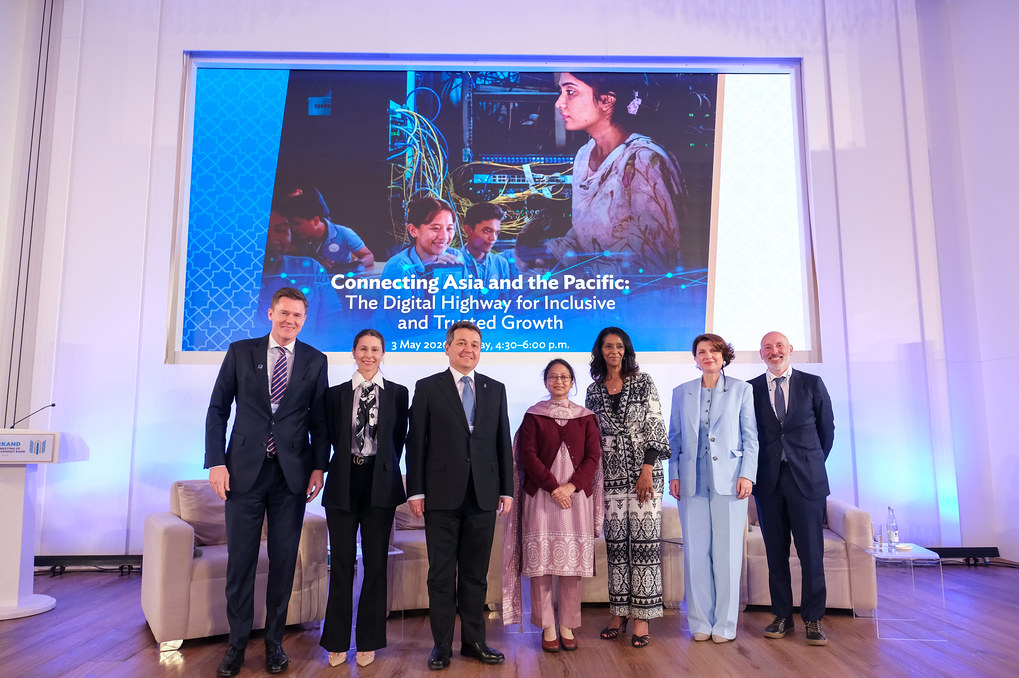
What does it take to build a truly connected digital region? For the Asian Development Bank (ADB), the answer lies in creating the infrastructure that allows people, businesses, and governments to participate fully in the digital economy. Through its pledge, ADB is advancing the Asia-Pacific Digital Highway, an ambitious regional initiative designed to strengthen digital connectivity across Asia and the Pacific. By mobilizing USD 20 billion in public and private investment by 2035, the initiative will expand the digital foundations that modern economies depend on from terrestrial fibre networks and submarine cables to Internet Exchange Points (IXPs), regional data centres, cloud infrastructure, and digital public infrastructure.
Beyond infrastructure, the initiative is about expanding opportunity. The Asia-Pacific Digital Highway aims to improve connectivity for 650 million people, including 200 million gaining first-time access to reliable broadband, while enhancing network quality for another 450 million. It will also connect approximately 300,000 schools, 25,000 health facilities, and establish eight regional digital infrastructure hubs, helping unlock new opportunities for education, healthcare, innovation, and economic growth.
By strengthening regional cooperation and building the foundations for trusted, resilient, and inclusive digital ecosystems, ADB is helping pave the way for the next generation of digital development across Asia and the Pacific.
ADB welcomes partnerships; please reach out to azaballos@adb.org
Telkom: Preparing South Africans for the AI economy
Artificial intelligence is changing how people work, learn, and innovate. Ensuring that everyone has the opportunity to participate in this transformation will depend not only on technology, but on building the skills and confidence to use it.
Telkom is establishing the Telkom AI Institute, a national platform dedicated to developing practical AI and digital capabilities for South Africans. Supported by an investment of R100–150 million over three years, the Institute will deliver industry-aligned training spanning AI literacy, responsible AI, cloud technologies, data analytics, AI engineering, entrepreneurship, and leadership.
The initiative will prioritize unemployed and underemployed youth while also supporting professionals, entrepreneurs, and researchers through flexible learning pathways that combine online training, practical laboratories, mentorship, certifications, and work-integrated learning.
Over the first three years, Telkom aims to train more than 5,000 people, achieve a 70% progression rate into employment, entrepreneurship, internships, or further study, and build a network of more than 50 partners across industry, academia, and the public sector. By investing in people today, Telkom is helping shape a more inclusive, innovative, and AI-ready South Africa.
Telkom SA. welcomes partnerships; please reach out to: Mndaume@telkom.co.za

GSMA: Advancing inclusive AI through the African AI Language Models project
The GSMA is committed to building artificial intelligence ecosystems in Africa that truly reflect the continent’s languages, cultures, and knowledge systems.
Through the ATLAS Umoja AI initiative, the GSMA is bringing together mobile operators, technology companies, academia, civil society organizations, and the public sector to address key barriers to AI development and adoption across Africa. A central focus is closing the usage gap, the persistent challenge of communities living within mobile network coverage but unable to benefit from it due to a lack of locally relevant digital content, among other barriers.
Through this pledge, the GSMA commits to convening stakeholders to promote African-led AI development and governance, facilitating collaboration on data, computing power, talent, and policy challenges, and supporting AI applications that address African needs across key sectors.
Together, these efforts aim to ensure that the AI systems shaping Africa’s digital future are built by and for African communities.
To learn more about the initiative, visit the GSMA press release and the CommonLingua open-source language model.
GSMA welcomes partnerships; please reach out to abaxter@gsma.com


Impact Stories
The Impact Stories section highlights the real-world transformations made possible through the P2C commitments. These stories bring to life the tangible benefits of connectivity, showcasing how innovative partnerships and bold initiatives are breaking barriers and empowering communities globally.

Ministry of Post and Telecommunications (Cambodia): Scaling Locally Produced Digital Education Across Cambodia
The Cambodia Ministry of Post and Telecommunications (MPTC) has made progress on its Local Content and Services Development and Promotion pledge through the Educational Broadcasting Cambodia (EBC) initiative, expanding the development and delivery of locally produced digital educational content nationwide.
Key milestones include the deployment of an integrated Learning Management System, Content Management System, eLibrary, IPTV, and AR/VR content, alongside mobile learning platforms. EBC has produced more than 9K educational video episodes, 15.5Kdigital learning courses, and 104.4K course lessons.
The initiative now serves over 50 schools, 63.9K students, and 2.9K educators, generating over 13.3 million views, supported by a scalable digital infrastructure with the capacity to accommodate up to one million concurrent users. Partnerships with the Phnom Penh Teacher Education College and New Generation Schools supported by KAPE have further strengthened teacher training and blended learning in public schools, reinforcing Cambodia’s efforts to build an inclusive digital education ecosystem.
MPTC welcomes partnerships; please reach out to rapid-sun@mptc.gov.kh
WWF: Singapore Cyber Spotter Programme to prevent illegal wildlife using a trade machine learning system
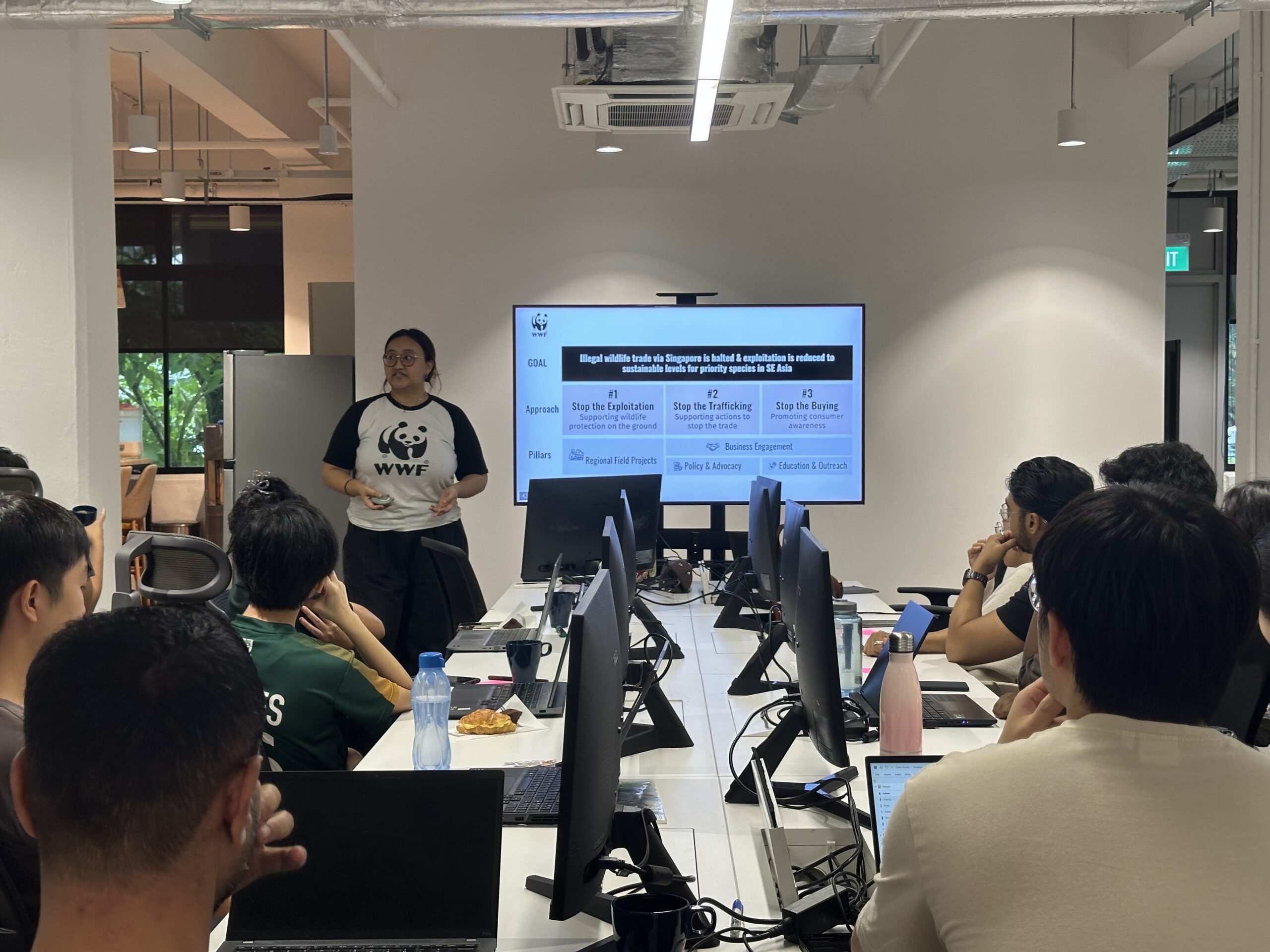
WWF is deploying artificial intelligence to strengthen the detection of illegal wildlife trade (IWT) across digital platforms, where traffickers exploit scale and anonymity to evade traditional monitoring efforts.
Through the Cyber Spotter Programme IWT ML System, WWF is building an AI-powered tool that scrapes online platforms for images and text, trains machine learning models using data collected by citizen-science volunteers, and displays flagged listings on a dashboard accessible to experts and law enforcement partners. The system is designed to dramatically increase the volume and accuracy of detected listings while reducing the manual review time that currently limits the reach of wildlife protection efforts.
Success will be measured by actionable intelligence shared with enforcement agencies, disruption of seller-buyer activity, and integration into enforcement and outreach workflows across WWF offices and partners, particularly in the Asia-Pacific region, where illegal wildlife trade poses the greatest threat to biodiversity and local communities.
WWF welcomes partnerships; please reach out to bgonzales@wwf.org.hk

Smart Axiata: Bringing Cambodia’s digital culture closer to home
Digital inclusion is more than expanding connectivity; it is also about ensuring people can access digital content that reflects their language, culture, and identity. Smart Axiata has continued to strengthen Cambodia’s digital ecosystem by investing in locally relevant content and making its digital platforms more accessible in the Khmer language.
Having worked with more than 170 local artists and Key Opinion Leaders (KOLs), Smart Axiata helps create culturally relevant music, podcasts, educational videos, interviews, movies, and other locally produced content through platforms such as Pleng and its social media channels. Smart also hosts concerts and watch parties to further distribute and amplify this content.
At the same time, the company is expanding Khmer-language content across its digital services, including the SmartNas app, website, and online platforms, making it easier for more Cambodians to access and benefit from digital technologies. With implementation progressing well and the initiative approaching its targets, Smart Axiata continues to demonstrate how investing in local languages and local creators can help build a more inclusive digital future.
Smart Axiata welcomes partnerships; please reach out to chem.sreyoeun@smart.com.kh

Pledge Highlights: Access For All
The Pledge Highlights: Access For All emphasises the shared global commitment to expand inclusive digital infrastructure, ensure affordability, and strengthen cybersecurity as essential pillars of meaningful connectivity. By extending broadband networks and mobile coverage to underserved areas, promoting fair and inclusive access to the internet and devices, and building secure, resilient systems that protect users, this collective effort drives sustainable digital transformation.
Viasat: Building Resilient and Equitable Communities Through Satellite Technology
Viasat, a global communications technology company, continues to advance its USD 2.7 million Partner2Connect commitment through programmes focused on expanding connectivity, building digital skills, and strengthening resilience for underserved populations worldwide.
Significant progress has been made across disaster response and humanitarian relief efforts. Beyond responding to active crises, Viasat’s partners are implementing disaster-resilient satellite communication systems designed to support affected communities before disruptions occur. This year’s work with partners such as Télécoms Sans Frontières, has combined real-time emergency deployments with preparedness initiatives, training exercises, and strategic partnerships, ultimately strengthening access to emergency communications at both national and regional levels.
Complementing these efforts, Viasat’s signature STEM Challenge has successfully launched in India, challenging students to explore how space technology can improve life on Earth. The programme is set to expand to Australia, continuing to inspire the next generation of technology innovators across the Asia-Pacific region. For more information click here.
Viasat welcomes partnerships; please reach out to donna.bethea-murphy@viasat.com
Imperial College London: Making AI work for better public sector decision-making
Good policy depends on good evidence. Yet for many governments and public institutions, particularly in resource-constrained settings, navigating vast amounts of information and translating it into practical decisions remains a significant challenge.
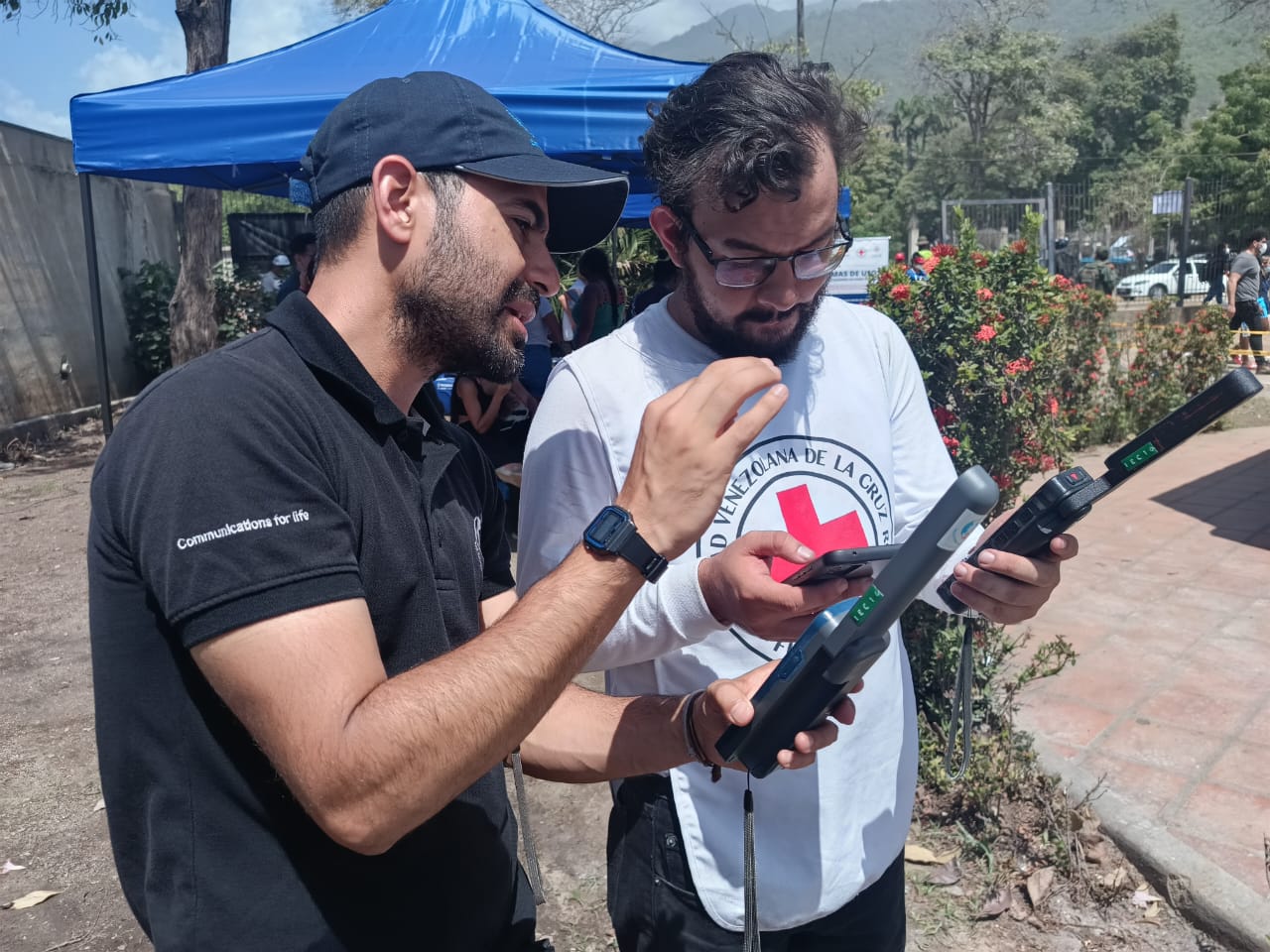
Through its new pledge, Imperial College London, in collaboration with United Nations University and University College London, is exploring how affordable and low-energy generative AI can strengthen the science-policy interface and make evidence more accessible to those who need it most. The SDGPolicyGPT initiative is testing multilingual and multimodal AI models to analyze policy documents, stakeholder consultations, public records and other information related to the Paris Agreement and the Sustainable Development Goals. The project will generate practical resources, including policy summaries, thematic dashboards, reusable workflows, training materials, and open guidance, to help policymakers and public institutions make informed, transparent and evidence-based decisions.
Designed with accessibility in mind, the initiative prioritizes low-cost, multilingual, low-bandwidth and low-energy AI solutions so that institutions in Least Developed Countries, Landlocked Developing Countries and Small Island Developing States can translate connectivity into meaningful digital and AI-enabled public services. By making advanced AI tools more accessible and practical, SDGPolicyGPT is helping ensure that evidence-informed policymaking is within reach for everyone, not only those with the greatest technological resources.
Technical Lead Contact: Marta Koch m.koch24@imperial.ac.uk
Claro Ecuador: Investing USD 408 Million to Expand Rural Connectivity and Close the Digital Divide
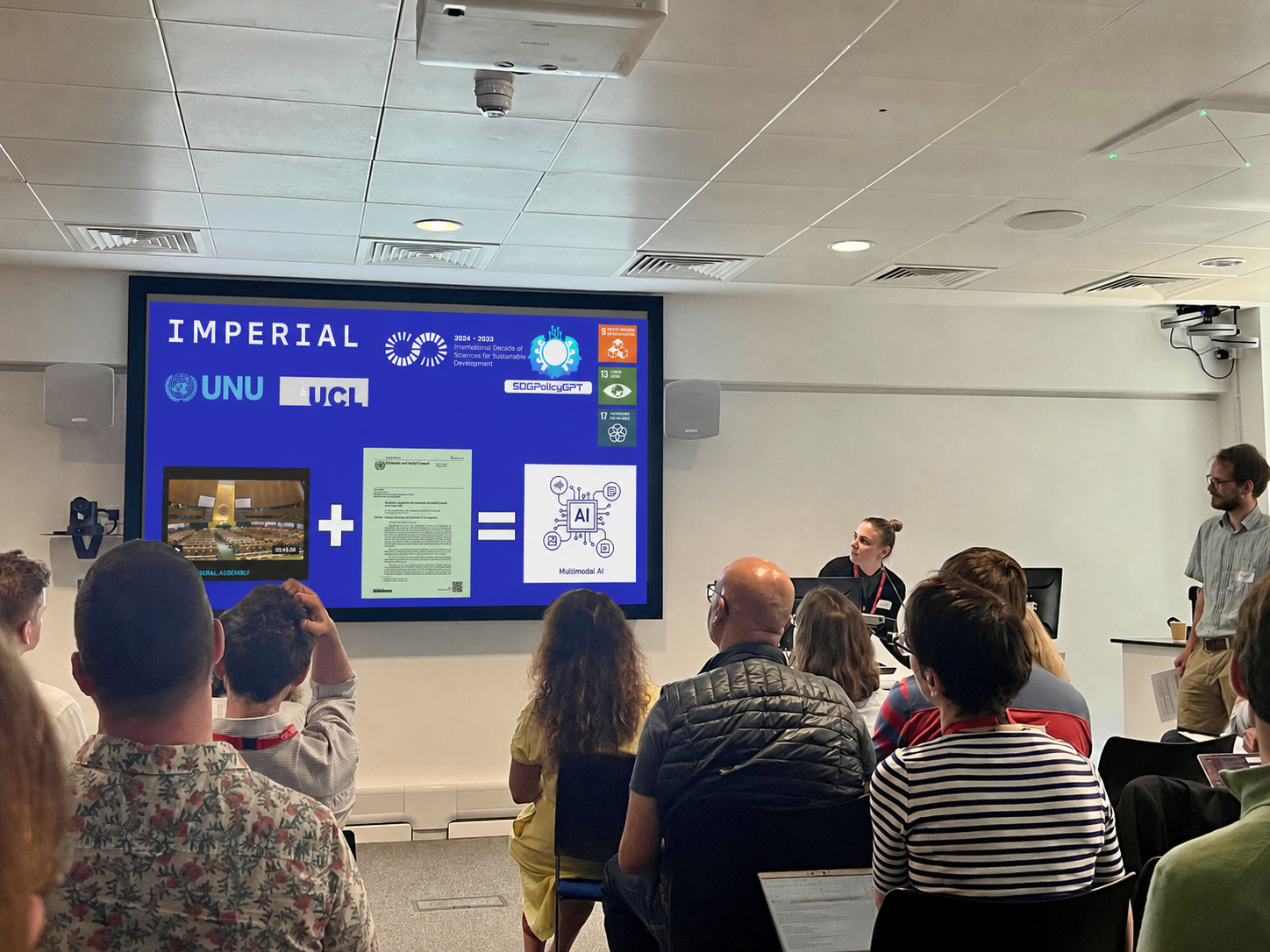
Claro Ecuador, one of Ecuador’s leading telecommunications operators, is committing USD 408 million to expand mobile connectivity across rural and underserved communities, in alignment with the country’s national digital inclusion policies under MINTEL’s Universal Service framework.
Through this pledge, Claro Ecuador will expand 4G and higher coverage across 360 new sites, deploy 1,170 new radio base stations, optimize radio spectrum use across 300 parishes, and increase the number of connected rural parishes from 101 to 121. Progress will be tracked through clear, verifiable indicators, including growth in 4G+ sites from 2,842 to 3,202 and radio base stations from 10,406 to 11,576.
The primary beneficiaries are rural communities, educational institutions, health centres, local governments, and entrepreneurs currently with limited access to digital services. Together, these investments aim to broaden mobile broadband coverage, facilitate access to education and telemedicine, and drive productivity and innovation across Ecuador.
Claro Ecuador welcomes partnerships; please reach out to:

We celebrate the incredible strides made through collective action and shared commitments to bridging the digital divide. The stories, partnerships, and innovations highlighted here are just the beginning of what we can achieve together. Stay tuned for our next issue, where we will delve even deeper into the transformative power of connectivity, featuring more inspiring initiatives, voices from the field, and bold new commitments driving progress across the globe. The journey to a digitally inclusive world continues – and we’re just getting started!
Click here to learn more about how to get featured in our upcoming editions.
Subscribe to our newsletter
Subscribe to the P2C Newsletter to receive exclusive insights, updates and opportunities to engage with the Partner2Connect Digital Coalition. Join a growing community committed to achieving universal, meaningful connectivity and be the first to know about impactful pledges and stories driving progress worldwide!