Rising from the Margins: Co-Creating Inclusive Digital Learning for Every Child
Center for programming and digital creativity "KIBERone Banja Luka
Session 340
From Access to Belonging: Designing Learning Environments Where Every Child Can Participate
Rising from the Margins: Co-Creating Inclusive Digital Learning for Every Child explores how digital education can move beyond access and towards meaningful participation for children with diverse learning needs.
Across many educational systems, children with mild and moderate developmental difficulties, neurodiverse learners, and children facing social vulnerability continue to encounter barriers to participation in digital learning environments. While technology has expanded educational opportunities, many digital platforms remain designed around standard learning pathways, leaving some children excluded from full engagement.
This session presents Mentoru Plus, an inclusive digital learning model developed through practical work with children in non-formal education settings. The model combines accessible digital activities, adaptive learning pathways, emotional support mechanisms, and AI-enhanced educational tools to create learning experiences that respond to different abilities rather than expecting children to adapt to rigid systems.
Drawing on real-world implementation experiences in Bosnia and Herzegovina, the session will showcase how children with developmental difficulties can actively participate in coding, digital citizenship education, AI literacy, communication, emotional learning, and future skills development when learning environments are intentionally designed for inclusion.
Particular attention will be given to the role of emerging technologies, including artificial intelligence, not as a replacement for educators but as a tool for personalization, engagement, and accessibility. The session will demonstrate how AI-supported activities can help children recognize emotions, practice communication skills, strengthen confidence, and participate more independently in digital learning experiences.
Participants will explore practical examples of inclusive educational design, including accessible interfaces, adaptive activities, visual supports, gamified learning experiences, and collaborative approaches involving educators, families, psychologists, and support professionals.
The discussion aims to contribute to the WSIS vision of an inclusive information society by highlighting how digital transformation can create opportunities for those who are too often left behind. Rather than asking how children can fit into existing digital systems, the session invites participants to consider how digital systems can be designed around the diverse realities of children themselves.
The session will conclude with recommendations for educators, policymakers, civil society organizations, and technology developers seeking to build more inclusive, equitable, and human-centered digital learning environments.

Dragana Babić is an IT leader, technology educator, and advocate for inclusive digital transformation from the Western Balkans. She is the CEO of KIBERone Banja Luka, an international school focused on digital skills, artificial intelligence, and future technologies for children and youth.
She was the first Google Women Techmakers Ambassador in Bosnia and Herzegovina, a WomenTech Network Country Leader, and a member of the Women Techmakers Transition Advisory Council. Her work focuses on digital inclusion, AI literacy, digital citizenship education, and creating opportunities for children who are often underrepresented in technology, including children with developmental difficulties and vulnerable backgrounds.
Dragana has presented and contributed to international initiatives through the Council of Europe, WSIS-related processes, and global technology communities, promoting human-centred and inclusive approaches to digital learning and innovation.

Sanja Hunyadi is a media management and innovation design specialist who works at the
intersection of media, design, and technology. With over twenty years of experience managing
complex, cross-border initiatives across Europe, her career has been defined by combining
technology, journalism and design thinking to build forward-thinking solutions.
Today, Sanja is deeply committed to reshaping the educational ecosystem for children, with a
specific focus on media literacy, digital citizenship, and digital equity. She believes that access to
the latest technological solutions and AI tools including digital literacy should never be a
privilege. Her work centers on developing inclusive, practical educational models that empower
every child, close the digital divide, and equip the next generation to navigate the digital world
safely, ethically and skillfully.
Bringing together a background in journalism, media management and design management,
Sanja approaches digital education with a unique blend of policy understanding, strategic vision
and human-centered design. Throughout her journey as an international media consultant and
project coordinator—including her foundational work with the International Federation of
Journalists (IFJ) and her current role as Special Advisor for Global Youth & News Media—she has
designed regional projects and collaborative frameworks supported by global organizations like
UNESCO, the European Commission, and the Council of Europe. Presently, she applies this
expertise as a consultant for Mentora Plus in Banja Luka, a pilot project dedicated to the digital
education of children and special advisor for Global Youth & News Media dedicated to media
literacy and education.

Micke Hermansson is a Swedish author, international speaker, and former educator with over 30 years of experience in education. He is the creator of GOTD (Grej of the Day), an innovative micro-learning concept that has inspired more than 100,000 educators worldwide. Today, he works internationally as a keynote speaker and lecturer, helping organizations and educators create engaging and effective learning experiences. Micke is also the author of more than ten books published in several countries.
.png?maxwidth=250)
Dr John Francis Leader is a Psychologist who works across policy, research and practice on the topics of mental health and digitalisation.
Dr Leader serves as Vice-President of the European Federation of Psychologists’ Associations and as Adjunct Research Fellow at University College Dublin’s School of Psychology.
Working closely through ECOSOC accreditation with the UN system to support healthcare and AI governance initiatives, Dr Leader is an appointee to the European Commission’s Health Technology Assessment Stakeholder Network.
Dr Leader’s work focuses on the intersection of mental health, digitalisation and health system innovation, with an emphasis on ethical, evidence-based public policy that recognises the digital determinants of wellbeing.
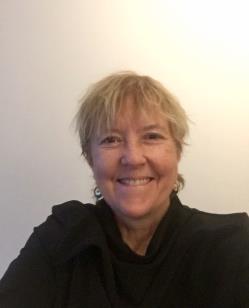
Aralynn Abare McMane PhD is executive director at the French-based nonprofit Global Youth & News Media, which encourages news media and the young to better engage for their mutual benefit and works for children and teenagers to become empowered to use news media and journalism themselves as tools to help safeguard their society, democracies and planet. The organization uses recognition, research, resource creation and joint actions to achieve these aims. Its interest groups include Children's News Europe and the World Teenage Reporting Alliance.
McMane’s most recent consultations include advising on the Council of Europe’s Guidelines for National Media and Information Literacy (MIL) Strategies ─ Practical Steps and Indicators and leading a European advocacy coalition of 40 expert individuals and organizations to assure that MIL frameworks and curricula include lessons on the necessary role of journalism in a democracy and on the grave dangers some face to do that job.
Previously, she was the executive director of youth engagement & news literacy for the World Association of News Publishers (WAN-IFRA), a journalist, researcher and professor. She holds a Ph.D. in communications with a global and new technologies emphasis from Indiana University (USA)

Milos Cizmovic is a Judge at the Basic Court of Banja Luka and holds a Master’s degree in International Humanitarian Law. Throughout his career, he has been committed to upholding the rule of law, protecting fundamental rights, and promoting access to justice. His professional interests include human rights, the rights of children, and the legal dimensions of inclusion in the digital age.
Mr. Cizmovic participates in this session in a personal capacity and does not represent the official views of the Basic Court of Banja Luka.
-
 C1. The role of governments and all stakeholders in the promotion of ICTs for development
-
 C3. Access to information and knowledge
-
 C4. Capacity building
-
 C6. Enabling environment
-
 C7. ICT applications: benefits in all aspects of life — E-learning
-
 C10. Ethical dimensions of the Information Society
This session contributes to several WSIS Action Lines by demonstrating how inclusive digital learning environments can increase participation and access to educational opportunities for children with diverse learning needs.
The session supports C3 (Access to Information and Knowledge) by enabling children who often face barriers to access digital learning opportunities and future-oriented digital skills.
It contributes to C4 (Capacity Building) through the development of digital competencies, AI literacy, communication skills, and confidence among children, educators, and families.
The session aligns with C6 (Enabling Environment) by presenting practical approaches for creating accessible and supportive learning environments that allow every child to participate meaningfully in digital education.
Through the Mentoru Plus model, the session also contributes to C7 (E-learning) by demonstrating innovative ICT-enabled educational practices, including adaptive learning pathways and AI-supported learning activities.
The discussion is further linked to C10 (Ethical Dimensions of the Information Society) by promoting inclusion, dignity, equity, and responsible use of technology for children who are often underrepresented in digital learning spaces.
Finally, the session reflects C1 (The Role of Governments and All Stakeholders) by highlighting the importance of collaboration between educators, families, civil society organizations, technology providers, and policymakers in building inclusive digital futures for all children.
-
 Goal 3: Ensure healthy lives and promote well-being for all
-
 Goal 4: Ensure inclusive and equitable quality education and promote lifelong learning opportunities for all
-
 Goal 10: Reduce inequality within and among countries
-
 Goal 16: Promote just, peaceful and inclusive societies
This session contributes to the Sustainable Development Goals by demonstrating how inclusive digital learning can create meaningful opportunities for children with diverse learning needs and abilities.
The session strongly supports SDG 4 (Quality Education) by promoting inclusive, equitable, and accessible learning environments that enable every child to participate in digital education and develop future-oriented skills.
It contributes to SDG 10 (Reduced Inequalities) by addressing barriers that often prevent children with developmental difficulties and other vulnerable groups from accessing quality digital learning opportunities on an equal basis.
The session also supports SDG 3 (Good Health and Well-being) through approaches that foster confidence, emotional development, social participation, and a sense of belonging within learning environments.
Furthermore, the session aligns with SDG 16 (Peace, Justice and Strong Institutions) by promoting inclusion, participation, dignity, and equal opportunities for children who are frequently underrepresented in educational and digital spaces.
Through practical examples and collaborative approaches involving educators, families, support professionals, and technology providers, the session demonstrates how inclusive digital innovation can contribute to sustainable and equitable development for all children
- Objective 1: Close all digital divides and accelerate progress across the Sustainable Development Goals
- Objective 3: Foster an inclusive, open, safe and secure digital space that respects, protects and promotes human rights
- Objective 5: Enhance international governance of artificial intelligence for the benefit of humanity
Council of Europe 2nd Digital Citizenship Education Forum 2026: The model was previously presented within the framework of the Council of Europe Digital Citizenship Education Forum 2026. – Official Agenda: https://rm.coe.int/agenda-forum-dce-v7/48802bda52
Presentation and participation in the Council of Europe 2nd Digital Citizenship Education Forum Strasburg 2026: LinkedIn post about presentation
Mentora Plus platform model :https://www.mentoraplus.org/