Support for harmonization of the ICT Policies
in Sub-Saharan Africa
During the 2nd Conference of African Ministers in charge of Communication and Information Technologies (CITMC-2), Member States of the African Union (AU) adopted the Reference Framework for Harmonization of the telecommunication and ICT Policies and Regulation in Africa (Cairo, 2008). The aim was to develop a strong, integrated and viable communications sector on the continent. One of its broad objectives was to:
Establish harmonized policy, legal and regulatory frameworks at the regional and continental levels to create an enabling environment that will attract investment and foster the sustainable development of competitive African Telecommunication/ICT regional markets, infrastructures, and to increase access [of its people to the related services].
HIPSSA was initiated as a result of the request made by the economic integration organizations in Africa, as well as regional regulators associations, to the International Telecommunication Union (ITU) and the European Commission for assistance in harmonizing ICT policies and legislations in sub-Saharan Africa. While HIPSSA does not cover the entire continent, it became an important building block in establishing global pan-African harmonized ICT policies and frameworks.
Given the geographical, political and cultural diversity of the region, special attention has been paid to adapting the methodology of the Project to specific needs and conditions. It was also noted that countries in different geographic regions belong to different economic, monetary and regulatory associations, or they may belong to several of them at the same time. The methodology of the Project has taken into account these very sensitive issues to avoid potential competition between the regional organizations. Therefore, the Project was divided into four sub-regional programs:
1) East Africa
2) Central Africa
3) Southern Africa
4) West Africa
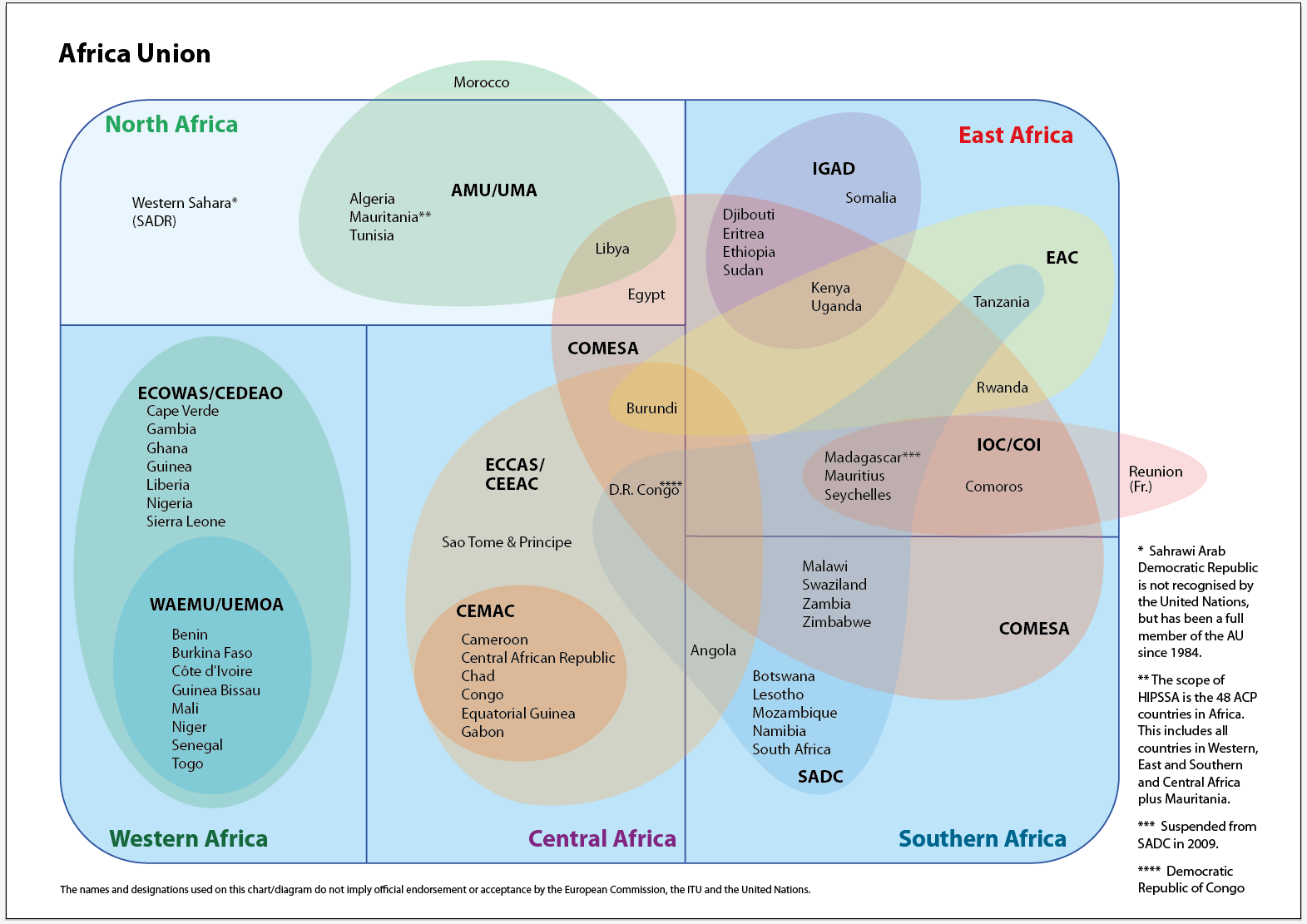
HIPSSA Project has also built on the previous regional harmonization efforts that took place earlier and were funded by various organizations.