AI and Healthcare: Building the Foundations of Intelligent Health Systems
United Nations Development Programme Egypt Country Office (UNDP)
Session 566
Artificial intelligence is reshaping how health systems detect disease, deliver care, and manage resources. Yet the promise of AI in health remains unevenly distributed, with innovation concentrated in high-income settings while the countries that stand to benefit most are often left as recipients rather than contributors. Furthermore, the lack of sufficient data that adequately represents the global population diversity in terms of traditional lifestyles, cultures, ethnicities, languages, and other relevant parameters greatly contributes to the varying degrees of effectiveness of data-driven AI solutions.
Egypt's AI SHARE initiative offers a different model. Built on locally developed AI diagnostic tools trained on a diverse set of Egyptian data, and designed from the outset to be shared with neighboring Arab and African countries, AI SHARE embodies a South-to-South vision of AI cooperation, one where countries in the Global South develop, own, and transfer solutions to one another rather than wait for packaged technology to trickle down from remote places and dissimilar environments.
The session will begin with two short presentations from AI health startups from Africa and the Arab region, showcasing practical examples of how locally developed AI solutions are addressing healthcare challenges and scaling across different contexts. These real-world experiences will help ground the discussion and highlight both the opportunities and barriers facing AI innovators in the Global South.
Building on these examples, a panel of representatives from government, international organizations, industry, and the health sector will explore what it takes to build and scale such models across diverse health systems. It will explore the conditions needed to move AI health innovations from national impact to regional relevance, and the governance, data, and institutional frameworks required to make that journey responsible, inclusive, and sustainable.

Dr. Ahmed N. Tantawy is a lifelong learner and educator, an engineer, an inventor, a scientist, and a former
senior business executive. He is currently a senior advisor to the Egyptian Minister of Communications and
IT and the Founding Director of the Applied Innovation Center, where national challenges are addressed
through the application and adaptation of emerging technologies. Since 2013, Dr. Tantawy has been serving
as an expert advisor to multinational corporations, the World Bank, the UN and various government
agencies. He is also a member of the Board of Directors of various national-scale initiatives in the Middle
East.
Dr. Tantawy held several technical and executive positions at IBM Corporation between 1988 and 2013.
Between 1980 and 1988 he was a University Professor in the USA, France, and Saudi Arabia. Over the
years, he served on the Boards of Trustees and Advisory Councils of several universities and research
institutes around the world and held special oversight assignments with the US National Academy of
Sciences and the Egyptian Supreme Council of Universities.
Dr. Tantawy’s scientific contributions include 34 inventions, 18 issued patents, and the publication of 4
books, 2 book chapters, and over 100 refereed papers. He was the Editor-in-Chief of a book series on High
Performance Computers and Communications and an Editor of 4 scientific journals. He participated in the
organization of over 50 IEEE, ACM, and IFIP conferences, serving as the General Chair of 14 among them.
Dr. Tantawy holds a Ph.D. in Computer Engineering with highest honors from Grenoble, France and earned
his B.Eng. and M.Sc. degrees in Electrical and Computer Engineering with distinction and highest honors
from Alexandria University, Egypt. He attended advanced executive education programs in Business
Administration, Corporate Governance, and Technology Management at Harvard, MIT, and IBM.

Ms. Chitose Noguchi was appointed as the new Resident Representative of UNDP Egypt, as of 17 August 2025.
Bringing over 25 years of experience in international development and crisis response, Ms. Noguchi most recently served as Special Representative a.i., and prior to that, Deputy Special Representative and Head of the Gaza Sub-office with UNDP’s Programme of Assistance to the Palestinian People (PAPP). She has contributed to emergency response and resilience building through economic recovery, strengthening of basic services delivery and governance, and climate resilience including sustainable water and energy resources management in some of the most challenging operational contexts. She has worked with national and international partners to advance efforts on the Humanitarian-Development-Peace Nexus and gender in crisis.
Her career also includes key leadership roles at UNDP Headquarters in New York as Global Programme Manager in the Bureau for Policy and Programme Support, where she co-led the design and establishment of the UN Joint SDG Fund, and oversaw global initiatives on institutional capacity development, quality assurance, and results-based management. She has also contributed to Egypt’s development cooperation agenda, having supported the design of the United Nations Development Assistance Framework (UNDAF) in 2012.
Ms. Noguchi began her career with CARE International, serving in leadership positions, including Deputy Country Director in Vietnam, and National Director of CARE Japan.
She holds a bachelor’s degree in law from the University of Tokyo and a master’s degree in international development from George Washington University.

Abeer Shakweer is currently the Assistant Resident Representative and the Inclusive Growth and Digital Transformation team leader at UNDP Egypt. She is responsible for digital transformation, SMEs and entrepreneurship, youth, innovation, and governance. She holds a Ph.D., in Environmental Engineering and a M.Sc. in Computer Science both from the University of Nottingham, in the UK, and a B.Sc in Chemical Engineering from Cairo University.
Dr. Shakweer has more than 20 years of experience in ICT, Technology Transfer, Innovation, and entrepreneurship, working with national and international organizations. She worked as the advisor to the Egyptian Minister of Communications and Information Technology; and the Founding Executive Director of the National ICT academy for Persons with Disabilities.
She previously worked as the founding Planning and Monitoring Manager and head of International Cooperation at the Science and Technology Development Fund, and the Executive Director for the center for future studies at the Egyptian Cabinet of Minister’s Information and Decision Support Center. Dr. Shakweer worked as a consultant with several reputable international organizations including the European Commission, and several UN agencies.
Dr. Shakweer received several international awards including the WSIS, Best UK universities alumni, the world innovation, technology, and services alliance award and the 100 communications and information technology officers award.

Senior Ethics Officer, Global Health Ethics, Department of Science for Health at WHO in
Geneva, Switzerland.
After medical studies and practice in internal medicine in Germany, France and Chile he
pursued studies in health economics and obtained a post-graduate degree in biomedical
ethics. His work focuses on ethical aspects of infectious diseases, public health
surveillance, health research, and artificial intelligence in health. Since 2023 he holds an
appointment as adjunct professor for medical ethics at the University of Erlangen
Nuremberg, Germany.
He has lectured and organized trainings for WHO in more than 60 countries and serves on
the editorial boards of Public Health Ethics and Monash Bioethics Review. He has
published widely and is the co-editor of four books on health ethics.

Dr. Amy Berk is a Director and Industry Advisor at Microsoft, where she works with health plans, providers, and public‑sector leaders to advance digital quality, interoperability, and AI‑enabled healthcare transformation. With deep expertise in value‑based care, population health, and regulatory quality programs, Amy helps organizations shift from retrospective measurement to real‑time, actionable insights that improve outcomes and reduce total cost of care.
A clinician and nationally recognized healthcare strategist, she specializes in digital quality measures (dQMs/eCQMs), FHIR‑based data exchange, and scalable AI‑driven workflows across Medicare, Medicaid, and commercial populations. Amy brings more than two decades of experience across clinical practice, health plan strategy, and digital health innovation. She is a frequent speaker is deeply committed to advancing equitable, data‑driven care delivery.
Dr. Berk is an advanced practice nurse with her Doctorate, Global Health Informatics, Emory University, a Master's in Nursing from Emory University and her Bachelors in Nursing from University of South Florida.

Darlington Akogo is a highly influential global leader in Artificial Intelligence, serving as
the Founder and CEO of minoHealth AI labs; an AI Healthtech company, KaraAgro AI;
an AI-powered Plant & Pest Disease Detection and Precision Agriculture platform,
Runmila AI Institute; an AI and Data Science training institute, and Gudra AI Studio; an
organization broadly exploring AI and Exponential Technologies applied various
domains including Transportation, Sanitation and Energy.
Darlington was named to the Forbes 30 Under 30 Class of 2025, and featured on the
Forbes cover. He has also been recognized as one of the Global Top 100 Most Influential
People of African Descent in Healthcare and chairs the Topic Group on AI for Radiology
under the United Nations World Health Organization and International
Telecommunications Union and Global Initiative on Artificial Intelligence for Health.
Darlington also serves as the co-lead for the Ghana National AI strategy under the
Ministry of Communication, Digital Technology and Innovations (MoCDTI).
In addition, Akogo served as the Chair for the working group on Artificial Intelligence
Economy for the African Union, which created the African Union (AU) Artificial
Intelligence (AI) Continental Strategy. He also serves as a Global Innovation Adviser to
the International Development Innovation Alliance, an alliance between the top 15
international development agencies, including Rockefeller Foundation, Bill & Melinda
Gates Foundation, Global Affairs Canada, Dutch Ministry of Foreign Affairs, Deutsche
Gesellschaft für Internationale Zusammenarbeit GmbH (GIZ), Global Innovation Fund,
Grand Challenges Canada, Skoll Foundation, Swedish International Development
Cooperation Agency (Sida), UNICEF, and USAID.
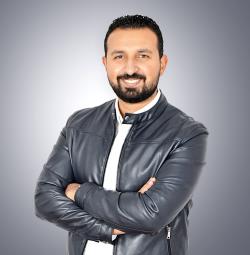
Mina Shawky is the Co-founder and CEO of CliniDo, a HealthTech entrepreneur passionate about transforming healthcare in emerging markets. With a strong background in marketing, product management, and strategy, he brings multi-industry experience across pharma, fintech, and digital health. Mina is a pharmacist and holds a Master of Business Administration
-
 C7. ICT applications: benefits in all aspects of life — E-health
-
 C11. International and regional cooperation
-
 Goal 3: Ensure healthy lives and promote well-being for all
-
 Goal 9: Build resilient infrastructure, promote sustainable industrialization and foster innovation
-
 Goal 17: Revitalize the global partnership for sustainable development
