Ministerial Roundtable
WSIS
Session 479



.jpg?maxwidth=250)


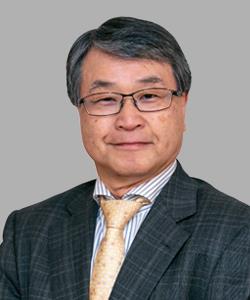
Sh. Ahmed bin Isa Al Khalifa serves as Assistant Undersecretary for Telecommunications at the Ministry of Transportation and Telecommunications, bringing 16 years of specialized experience in the telecommunications sector and ICT project management.
Sh. Ahmed holds a Master’s degree in Engineering Management from George Washington University and a Bachelor’s degree in Business Management from the University College of Bahrain.
He has progressed through several vital responsibilities, primarily within the Telecommunications Regulatory Authority (TRA), where he served as an ICT Projects Specialist, Manager of ICT, and Head of External Affairs, leading up to his current senior leadership position.
His professional achievements include leading and supervising strategic initiatives and projects to enhance the telecommunications infrastructure and international cooperation in the sector. His professional activity is also highlighted by his membership on the Board of Directors of the Bahrain Internet Exchange (BIX), where he contributed to the development and strengthening of the Kingdom's digital connectivity.


.png?maxwidth=250)

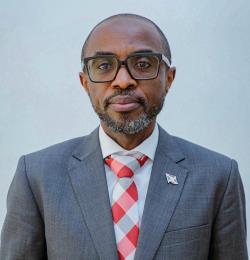
Mark Schaan is the Associate Deputy Minister at Innovation, Science and Economic Development Canada (ISED), confirmed in October 2025, which builds on the direction from the Prime Minister on July of 2025 that he act as the direct Deputy support to the Minister of Artificial Intelligence (AI) and Digital Innovation. In these capacities, Mark supports Canada’s industrial AI and digital agenda, working to position the country as a global leader in the responsible development and use of these technologies.
Mark’s career has been highlighted by this cross-cutting policy and framework effort, including leading major consultations and reforms, including for telecommunications, investment review, intellectual property, bankruptcy and insolvency, privacy and AI. Mark’s public service career has included roles across the policy spectrum, as well as leading on revitalizing the public service through innovative recruitment models.
Mark earned his BA (Honours) from the University of Waterloo, where he studied as a Loran Scholar. Mark earned his MPhil in Comparative Social Policy, conferred in 2004, and his DPhil in Social Policy, conferred in 2010 from the University of Oxford, where he studied as a Rhodes Scholar. Mark is also actively involved in his communities.

_0.jpg?maxwidth=250)


.jpg?maxwidth=250)




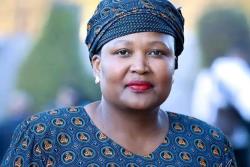


Datuk Abdul Halim Hamzah is the Secretary General of the Ministry of Communications, a position he has held since 24 November 2025.
With over 30 years of experience in the Malaysian public service, he has demonstrated strong leadership and an exemplary service record across various strategic portfolios.
He began his career as an Assistant Director at the Implementation Coordination Unit (ICU), Prime Minister’s Department. Prior to his current appointment, he served as Director General of the National Disaster Management Agency (NADMA) in 2025 and as Deputy Secretary General (Finance and Development) at the Prime Minister’s Department in 2023.
As Secretary General, Datuk Abdul Halim plays a key role in advancing the Ministry’s strategic priorities, including developing a progressive telecommunications sector, a robust government strategic communications machinery, a responsible media environment, and promoting the growth of the national orange economy ecosystem.

.jpeg?maxwidth=250)
.jpg?maxwidth=250)


Mr. Zarrar Hasham Khan is currently working as Federal Secretary, Ministry of information Technology and Telecommunication. Previously he served as Group Chief Business Solutions Officer at Pakistan Telecommunication Company Limited. Pakistan Telecommunication Company Limited is the national telecommunications carrier and the largest integrated Information & Communication Technology (ICT) Company of Pakistan.
Mr. Zarrar worked for 11 years in STC-Kuwait (A Saudi Telecom Group Company) as Chief Technology Officer where he was responsible for defining strategy and overseeing its execution for the fixed, mobile and ICT infrastructure. Additionally, in that role, he also spearheaded one of the largest commercial deployments of 5G services in the world in 2019.
In his last 20+ years of experience, Mr. Zarrar has had vast local and international experience in the investment banking domain as well as with leading telecom service providers including Saudi Telecom Company (STC), Mobilink GSM – PMCL (currently known as Jazz Pakistan), etc. He is a seasoned professional with planning and execution experience in Strategy Development, Technology Operations, Governance, Risk & Control, Customer Experience Management and Product Development


Al Hammadi act as assistant undersecretary of government information technology affairs at the
Ministry of Communications and Information Technology. Through her dedicated 20 years of hard work
in the information technology (IT) and e-government sectors, Al Hammadi was distinguished with a
high level of knowledge of IT strategies, business models, local culture, latest technical trends, and
change in the organizational structure.
Al Hammadi graduated from Qatar Leadership Centre (QLC) Program in 2015, and HEC-CTO Program in
2019. She has an MA in Executive Business Administration and a BA in Computer Science from the Arab
Academy for Science, Technology and Maritime Transport, and she is currently studying for her PhD on
the Impact of the Use of IT in Digital Government (Qatar as a Case).
During her career, she held various leadership positions in IT departments across different government
agencies, including the Ministry of Labor and the Ministry of Commerce and Industry, and accomplished
several strategic projects in the country.
Al Hammadi has also been an active board member of Qatar National Broadband Network (Qnbn), in
addition to taking part in several high-profile committees, such as the e-Government Steering
Committee. She is also a member of other internal ministry-level committees.
.jpg?maxwidth=250)




.jpg?maxwidth=250)

.jpeg?maxwidth=250)
.jpg?maxwidth=250)
-
 C1. The role of governments and all stakeholders in the promotion of ICTs for development
-
 C2. Information and communication infrastructure
-
 C3. Access to information and knowledge
-
 C4. Capacity building
-
 C5. Building confidence and security in use of ICTs
-
 C6. Enabling environment
-
 C7. ICT applications: benefits in all aspects of life — E-government
-
 C7. ICT applications: benefits in all aspects of life — E-business
-
 C7. ICT applications: benefits in all aspects of life — E-learning
-
 C7. ICT applications: benefits in all aspects of life — E-health
-
 C7. ICT applications: benefits in all aspects of life — E-employment
-
 C7. ICT applications: benefits in all aspects of life — E-environment
-
 C7. ICT applications: benefits in all aspects of life — E-agriculture
-
 C7. ICT applications: benefits in all aspects of life — E-science
-
 C8. Cultural diversity and identity, linguistic diversity and local content
-
 C9. Media
-
 C10. Ethical dimensions of the Information Society
-
 C11. International and regional cooperation
-
 Goal 1: End poverty in all its forms everywhere
-
 Goal 2: End hunger, achieve food security and improved nutrition and promote sustainable agriculture
-
 Goal 3: Ensure healthy lives and promote well-being for all
-
 Goal 4: Ensure inclusive and equitable quality education and promote lifelong learning opportunities for all
-
 Goal 5: Achieve gender equality and empower all women and girls
-
 Goal 6: Ensure access to water and sanitation for all
-
 Goal 7: Ensure access to affordable, reliable, sustainable and modern energy for all
-
 Goal 8: Promote inclusive and sustainable economic growth, employment and decent work for all
-
 Goal 9: Build resilient infrastructure, promote sustainable industrialization and foster innovation
-
 Goal 10: Reduce inequality within and among countries
-
 Goal 11: Make cities inclusive, safe, resilient and sustainable
-
 Goal 12: Ensure sustainable consumption and production patterns
-
 Goal 13: Take urgent action to combat climate change and its impacts
-
 Goal 14: Conserve and sustainably use the oceans, seas and marine resources
-
 Goal 15: Sustainably manage forests, combat desertification, halt and reverse land degradation, halt biodiversity loss
-
 Goal 16: Promote just, peaceful and inclusive societies
-
 Goal 17: Revitalize the global partnership for sustainable development

- Objective 1: Close all digital divides and accelerate progress across the Sustainable Development Goals
- Objective 2: Expand inclusion in and benefits from the digital economy for all
- Objective 3: Foster an inclusive, open, safe and secure digital space that respects, protects and promotes human rights
- Objective 4: Advance responsible, equitable and interoperable data governance approaches
- Objective 5: Enhance international governance of artificial intelligence for the benefit of humanity