Intergenerational Mentorship in the Age of AI
The Centre for Socio-Eco-Nomic Development
Session 377
Reimagining Work and Learning Across the Life Course
Background
In ageing societies and countries experiencing demographic transition, the re-engagement of older adults in economic and social life is becoming both a demographic necessity and a strategic opportunity. At the same time, many countries face a growing challenge of youth disengagement, reflected in increasing numbers of young people who are not in employment, education, or training (NEET). These parallel trends create an opportunity to connect the experience and accumulated knowledge of older generations with the aspirations, energy and needs of younger generations.
Connection through Intergenerational Mentorship
One promising avenue is the development of structured mentorship programmes that engage retired professionals as mentors to younger persons, including students, early-career workers, entrepreneurs, and NEET youth. Retirees possess valuable tacit knowledge acquired through decades of professional and community experience, including technical expertise, professional networks, organisational memory, practical problem-solving skills, and insights into workplace culture. Through mentorship, this knowledge can be transferred to younger generations, helping them navigate career choices, strengthen employability, and develop confidence and social capital.
Such mentorship programmes can be implemented through both physical and virtual modalities. Digital communication technologies enable retired mentors and young mentees to connect across geographic, economic, and cultural boundaries. This creates opportunities for intergenerational learning not only within developed countries facing population ageing, but also in developing countries where youth unemployment, educational disruption, and skills mismatches remain significant challenges. Virtual mentorship can help overcome barriers related to distance, mobility, and access to professional networks.
In view of the persistent gender disparity in educational and other socio-economic attainment, this intergenerational mentorship could be a critical complementary measure to promote gender equity and social justice.
Benefits.
The benefits extend beyond knowledge transfer. Many young people, particularly those experiencing prolonged unemployment or social exclusion, face reduced self-confidence, limited access to role models, and weak professional networks. Mentorship can provide psychosocial support, guidance, motivation, and pathways towards education, entrepreneurship, or employment. Equally, participation as mentors enables older adults to remain socially engaged, maintain a sense of purpose, and continue contributing to society.
To maximise effectiveness, retired professionals may benefit from targeted training in digital technologies, virtual communication, and AI-enabled collaboration tools. Strengthening their digital competence can enhance their ability to mentor across physical and virtual environments, making programmes more accessible, scalable, and inclusive.
In the age of AI, the challenge is not merely preserving information but fostering human capability, wisdom, and social connectedness. Intergenerational mentorship programmes can connect the experience of older generations with the creativity, adaptability, and technological capabilities of younger generations. By linking demographic ageing with youth inclusion, especially young women, such programmes can contribute to more resilient labour markets, stronger communities, and more inclusive digital societies.
Intergenerational mentorship is also a two-way street. Reversed mentorship, i.e., the young to the old, in developing competencies to take advantage of newly developed and emerging online tools to sustain their functionality in daily life, societal engagement, and online security, could be a great contribution to the well-being of older persons. Increasingly AI-driven, the learning deficiency of the older generations regarding online mastery consisted of a new INVISIBLE digital divide that is under-addressed. Reverse intergenerational mentorship offers the royal highway of closing this divide in scale and speed.
Aims of the Session:
- To examine how digital literacy and AI-enabled tools can enhance the effectiveness of intergenerational mentorship between different age groups.
- To explore how intergenerational mentorship can support the employability, social inclusion, and well-being of NEET youth and other vulnerable groups, especially women.
- To identify organisational, community-based, and digital-platform models for implementing mentorship programmes (including digital competencies) in both developed and developing countries.
- To discuss the competencies required of mentors and mentees to ensure effective knowledge transfer and reciprocal learning, including South-North and vice versa experience transfer.
- To identify the required competences of older and younger employees to ensure effective intergenerational mentorship.
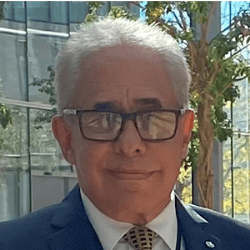
Alejandro Bonilla-Garcia, MSc, PhD, is a Mexican-Swiss actuary and former Director of Social Protection at the International Labour Organisation (ILO). He currently serves as Representative of the International Federation on Ageing to the United Nations in Geneva and Chair of the NGO Committee on Ageing (Geneva).

Professor Bettina Borisch, MD, MPH, FRCPath, is a Swiss scientist, researcher, teacher and advocate for humanity. Currently, she leads the World Federation of Public Health Associations (WFPHA) as its CEO. Her research and advocacy interests have a focus on gender justice, particularly in ageing societies.
Emad Tinawi is the Executive Director of Engage-AI.org, a nonprofit international development organisation that promotes artificial intelligence for human development and champions ethical and inclusive AI — ensuring that Global Majority countries shape, rather than simply inherit, the frameworks that will define their futures.
Professor Raymond Saner, PhD, is an emeritus Titular Professor at the University of Basel and a co-founder of CSEND. He has authored numerous publications on global governance, trade policy, and international cooperation, and regularly contributes to policy dialogues within the United Nations system. He is an internationally recognised expert in diplomacy, international negotiations, trade, and sustainable development.
Lichia Saner-Yiu, Ed.D. is President and co-founder of CSEND and Academic Director of the Geneva Programme on Global Leadership. With more than three decades of international experience, she has advised governments, UN agencies, businesses, and civil society organisations on leadership development, organisational transformation, public administration reform, and sustainable development. Her current work focuses on leadership, stakeholder engagement, regenerative approaches to development, and the implementation of the SDGs.
-
 C3. Access to information and knowledge
-
 C4. Capacity building
-
 C5. Building confidence and security in use of ICTs
-
 C7. ICT applications: benefits in all aspects of life — E-learning
-
 C7. ICT applications: benefits in all aspects of life — E-employment
-
 C10. Ethical dimensions of the Information Society
The session focuses on capacity building (C4) and lifelong learning (C7-e-learning) through intergenerational mentorship and digital partnership. Mentorship can take place in the workplace and other life scenes throughout the whole life course.
In addition, this session goes beyond the adoption and application of AI to reimagine potential social engagements for older persons at a later stage of the life course. This engagement can also include the reverse learning transfer between generations. The younger generation will be able to coach and mentor the older generation to acquire the necessary "ITC life skills" to benefit from the wide range of opportunities that enhance the quality of their daily lives without increasing the vulnerability often associated with online exposure. (C5)
-
 Goal 3: Ensure healthy lives and promote well-being for all
-
 Goal 4: Ensure inclusive and equitable quality education and promote lifelong learning opportunities for all
-
 Goal 8: Promote inclusive and sustainable economic growth, employment and decent work for all
-
 Goal 10: Reduce inequality within and among countries
-
 Goal 16: Promote just, peaceful and inclusive societies
Intergenerational mentorship fosters social interaction among retired persons, promoting well-being (SDG 3) and providing opportunities for learning. For older persons, learning will focus on digital literacy and competencies (SDG 4). For the younger, mentoring will be on strengthening life skills and professional development. Such a partnership will promote productivity gains and additional value creation (SDG 8).
Information disparity, or asymmetry, often hinders access to public goods, such as training, healthcare, food aid, apprenticeships, and subsidies. Enhanced digital competencies could promote the capacity to exercise citizen rights and support continued personal development for all. (SDG 10, SDG 16). The informality of mentorship allows greater flexibility in execution, enabling girls and women in more restrictive societies to continue learning and benefit from a broader perspective and greater cognitive resources in solving their life challenges.
- Objective 1: Close all digital divides and accelerate progress across the Sustainable Development Goals
- Objective 2: Expand inclusion in and benefits from the digital economy for all
- Objective 3: Foster an inclusive, open, safe and secure digital space that respects, protects and promotes human rights
www.csend.org
www.diplomacydialogue.org