Operationalizing Digital Sovereignty: The Autonomy Blue Print
RealTyme
Session 373
Digital Public Infrastructure Sovereign Stacks, Post-Quantum Resilience, and Edge AI
In an era of shifting geopolitical alliances and hyper-scaler dominance, digital sovereignty has graduated from a policy objective to a national security imperative. Developing nations face a dual challenge: avoiding systemic vendor lock-in and securing critical infrastructure against imminent decryption threats.
This session moves beyond theoretical "data decolonization" debates into the "Engine Room" of actual deployment. Presenting a validated model for national secure-by-design communication stacks, our speakers will demonstrate how African and Arab states are bypassing technology monopolies to build resilient, sovereign digital public infrastructure (DPI).
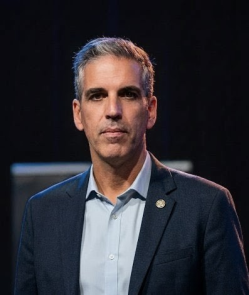
François Rodriguez is a leading voice in digital sovereignty and post-quantum secure communications. As Chief Commercial Officer at RealTyme, he works with governments, cybersecurity agencies, and regulated enterprises to build communication infrastructure that no foreign jurisdiction can reach. A speaker at IDC META event in Doha, and co-instructor of the ITU Academy course on digital sovereignty, François has architected strategic partnerships across Africa, the Middle East, and Europe. His conviction is simple and uncompromising: sovereignty must be built through local resilience — not purchased.

His Excellency Eng. Mohamed Ben Amor is the Secretary-General of the Arab Information and Communication Technologies Organization (AICTO), a specialized agency within the League of Arab States. He has led the organization since 2015, steering regional policies in digital transformation and cybersecurity

Thelma Efua Quaye is a prominent Ghanaian digital leader who serves as the Chief Digital Infrastructure, Skills, and Empowerment Officer at the Smart Africa Secretariat. With over 19 years of experience spanning telecommunications, information and communications technology (ICT), and banking, she plays a central role in driving Africa's digital transformation agenda

At RealTyme, I work closely with product, sales, and delivery teams to support adoption and enablement. Part of my role involves coordinating training-related activities and joint initiatives with partners such as ITU — aligning stakeholders, structuring contributions, and ensuring that learning efforts are clear, relevant, and well executed.
What motivates me is capacity building in a very concrete sense: helping organisations and teams gain clarity, confidence, and autonomy. I bring a pragmatic, collaborative approach, and I care about doing the work properly — from coordination and alignment to real-world impact.

Gallo Fall is a cybersecurity strategist and dedicated advocate for digital, data, and AI sovereignty. As Founder and CTSO of TALISMAN Cybersecurity, he built DSIP (Digital Sovereignty Intelligence Platform) — a unified continuous intelligence ecosystem purpose-built for governments, ministries, critical infrastructure, and national institutions that refuse to cede strategic control of their data, infrastructure, and AI future. Forged in the heavily regulated U.S. banking sector, where he spent his career helping institutions protect what matters most, he recently co-authored an AI risk expert prioritization Delphi study through the MIT AI Risk Initiative, applying structured, evidence-based thinking to emerging technology governance.
-
 C1. The role of governments and all stakeholders in the promotion of ICTs for development
-
 C2. Information and communication infrastructure
-
 C4. Capacity building
-
 C5. Building confidence and security in use of ICTs
-
 C11. International and regional cooperation
Track: High-Level Track / Thematic Workshop Primary WSIS Action Line: AL C5. Building confidence and security in the use of ICTs Secondary WSIS Action Lines: AL C1. The role of governments and all stakeholders; AL C4. Capacity building; AL C11. International and regional cooperation
-
 Goal 4: Ensure inclusive and equitable quality education and promote lifelong learning opportunities for all
-
 Goal 9: Build resilient infrastructure, promote sustainable industrialization and foster innovation
Goal 4: Quality Education (Ensure inclusive and equitable quality education and promote lifelong learning opportunities for all)
Implementation: Underpinned by capacity building with the ITU Academy and Smart Africa Digital Academy (SADA), the session addresses the critical need for localized, continuous digital training. It outlines educational frameworks that equip civil servants and engineers with the skills necessary to manage, configure, and maintain advanced cryptographic and AI stacks independently.
Goal 9: Industry, Innovation, and Infrastructure (Build resilient infrastructure, promote sustainable industrialization and foster innovation)
Implementation: Sovereign communications, Post-Quantum Cryptography (PQC), and Edge AI form the foundation of next-generation national infrastructure. By shifting away from vulnerable, foreign-hosted monopolies toward localized digital public infrastructure (DPI), this session provides the physical and mathematical blueprints for sustainable, resilient, and secure industrial-grade digital architectures.
- Objective 1: Close all digital divides and accelerate progress across the Sustainable Development Goals