Smart Hydrology: Data, AI and the Future of Water Management
WMO
Session 366
Water-related challenges are becoming increasingly complex due to climate variability which leads to floods and droughts and which is further exacerbated by growing demand. The advances in emerging technologies are changing the way we collect water related data, integrate, analyze and exchange it. These innovations offer exciting new opportunities to strengthen hydrological services and support more informed decision-making across sectors.
The session will bring together experts from academia, the United Nations and private sector to explore how digital innovation and emerging technologies can advance hydrology and water resources management by enabling smarter data ecosystems, enhancing hydrological modelling, and improving the accessibility and usability of information for decision-makers and key sectors.

Nakul Prasad specializes in hydrology, water resources, climate services, and the application of emerging technologies in these areas. He coordinates operational hydrology activities for Asia and the Southwest Pacific and supports global flood forecasting and water resources management initiatives. He serves as the Secretariat focal point of the WMO Working Group on Digital Transformation for Hydrology and Water Resource Management, collaborating closely with other UN Agencies on the topic.
Before transitioning to his current role, Nakul worked in the private sector, where he led projects focused on water treatment and integrated water resources management. He holds a Bachelor's in Mechanical Engineering from the National Institute of Technology (NIT) Surat, a Master's in Nanoscience and Nanotechnology from Katholieke Universiteit Leuven, and an Advanced Master's in Technology for Integrated Water Management from Universiteit Gent and Universiteit Antwerpen
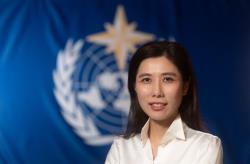
Dr Hwirin Kim is currently serving as the Chief of Hydrological Modelling and Forecasting (HMF) section within the Department of Earth System Data and Prediction (ESDP). The HMF section supports the enhancement of Members’ hydrological and water resources services by coordinating diverse projects and programmes such as the Associated Programme on Flood Management (APFM, WMO/GWP), the Flash Flood Guidance System With Global Coverage (FFGS/WGC), the WMO Community of Practice on Flood Forecasting and Early Warning Systems (CoP -FF-EWS), and other activities related to hydrologic forecasting and water resources assessment and management.
Before joining WMO, Dr Kim developed her career at the Ministry of Environment, Republic of Korea (2005-2019), having been the first hydrologist in the Ministry.
She was a leader of the Forecasting and Disaster Risk Reduction team of the Han River Flood Control Office, mainly working in the areas of flood forecasting and integrated water resources management.
She holds a master’s degree (M.Sc.) in Hydrology and a Doctorate degree (PhD) in Water Resources Engineering, from Korea University, B.Sc. from Pukyong National University.
She also worked at the Korea Insititute of Construction Technology (2003-2005) as a researcher focused on water resources assessment and planning.
She has had a vast experience in the international arena, where she made significant contributions to multiple programmes as a member of the Advisory Working Group (AWG) of WMO Commission for Hydrology (2016-2019), as a Theme leader of WMO Regional Association II Working Group Hydrological Services (2012-2019), and as focal point of both the UNESCO International Hydrological Programme (2011-2014) and the ESCAP/WMO Typhoon Committee (2010-2014).

James Ehrlich is Director of Compassionate Sustainability at the Stanford University School of Medicine Center for Compassion, Altruism Research and Education (CCARE). Additionally, James Ehrlich is appointed affiliate at Stanford Woods Institute – Human and Planetary Health, is Senior Fellow at NASA Ames Research Center, appointed faculty at Singularity University, and a former White House OSTP Appointee to a joint taskforce on AI integrated Regenerative Infrastructure.
James is also the Founder of ReGen Villages Holding, B.V. a Stanford University impact company founded in the Netherlands, using post-doctorate research applied to opensource AI and machine learning for the generative design and autonomous operation of climate-adaptable and resilient housing developments around the world.
The VillageOS™ opensource software is to apply generative design for the integration of clean water, renewable energy micro-grids, high-yield organic food production, and circular nutritional flows at the neighborhood scale. Giving landowners, residential developers, municipal and regional governments a freely accessible and easy-to-use platform for planning climate/resource resilient communities.
James is a graduate from New York University in computer science, and Mechanical Engineering from Stanford University under Prof. Larry Leifer at the Center for Design Research. He has won several awards for sustainable design and is a researcher and global lecturer on the topic of AI, Machine Learning and regenerative neighborhood development. He has co-authored two (2) U.N. Sustainable Development Goal Platform Briefs (2015/2018) with Prof. Larry Leifer and Chris Ford, PhD, AIA from the Center for Design Research at Stanford University.

Tim Smith is coordinator of the Open Quantum Institute (OQI), a multilateral governance initiative hosted at CERN, championing global, equitable, and inclusive access to quantum computing while creating pathways to realise this vision. He helped launch OQI at CERN. With 25 years experience leading CERN’s projects, services and teams, this role entails Tim’s passions for communication, diplomacy, direction, negotiation and community building.
For many years Tim has championed Open Science and Open Data around the world, building services and policies for CERN and beyond. He helped craft CERN’s big data capabilities and create the first large scale compute farms. Previously, completing a PhD in Particle Physics, Tim was responsible for data acquisition, reconstruction and electroweak physics analyses on the OPAL experiment at the LEP collider at CERN.

Pierre-Philippe Mathieu is the ESA implementation manager of the Civil Security from Space (CSS) programme at the European Space Agency (ESA), aiming to bring together space technologies (e.g. Earth Observation, secure connectivity and navigation), with digital technology (e.g. AI) to enable rapid and resilient response to crisis and develop new space-based market opportunities. He spent 20+ years working in the field of environmental and ocean modelling, weather risk management and remote sensing. He has a degree in mechanical engineering and M.Sc from University of Liege (Belgium), a Ph.D. in oceanography from the University of Louvain (Belgium), and a Management degree from the University of Reading Business School (Uk).
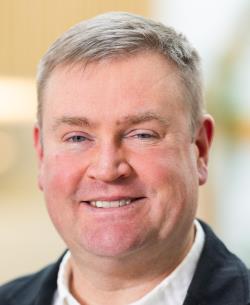
Stig Martin Fiskå is the Global Head of AI for Good at Cognizant, where he leads initiatives that harness digital transformation to address critical global sustainability challenges. With a focus on the “blue economy,” Stig Martin advocates for the essential role of emerging technologies—including artificial intelligence, advanced data analytics, and remote sensing—in reshaping how we protect and manage global aquatic resources.
He is a driving force behind River Deep Mountain AI (RDMAI), an award-winning, collaborative project funded by the Ofwat Innovation Fund. RDMAI develops open-source, scalable AI/ML models designed to revolutionize river health by identifying pollution patterns and optimizing catchment monitoring. Through this work, Stig Martin bridges the gap between digital engineering and environmental stewardship, turning complex data into actionable insights.
Stig Martin combines extensive industry experience with a commitment to high-impact technology. A frequent contributor to international forums, he champions the vision that intelligent, responsible technology is fundamental to solving our most critical environmental challenges, fostering resilient and sustainable water management for the future.
-
 C1. The role of governments and all stakeholders in the promotion of ICTs for development
-
 C2. Information and communication infrastructure
-
 C3. Access to information and knowledge
-
 C4. Capacity building
-
 C6. Enabling environment
-
 C7. ICT applications: benefits in all aspects of life — E-environment
-
 C11. International and regional cooperation
C1. The role of governments and all stakeholders in the promotion of ICTs for development
The session brings together stakeholders from governments, the United Nations, academia, and the private sector to discuss how digital technologies can support sustainable water resources management and strengthen hydrological services, demonstrating a multi-stakeholder approach to ICT-enabled development.
C2. Information and communication infrastructure
The discussion highlights the use of digital innovation, smart data ecosystems, sensors, cloud platforms, and communication technologies that enable the collection, integration, exchange, and dissemination of hydrological and water-related information.
C3. Access to information and knowledge
By focusing on improving the accessibility and usability of hydrological information, the session promotes greater access to reliable water and climate-related knowledge for decision-makers, practitioners, and affected sectors.
C4. Capacity building
The exchange of experiences and lessons learned among experts from different sectors supports knowledge sharing, technical learning, and capacity development in the application of emerging technologies for hydrology and water resources management.
C6. Enabling environment
The session will explore the institutional, governance, and partnership frameworks needed to support the adoption and effective use of digital technologies and data-driven approaches in water management.
C7. ICT applications: benefits in all aspects of life — E-environment
The session directly contributes to the E-environment action line by showcasing how ICTs, digital innovation, and emerging technologies can strengthen environmental monitoring, water resources management, flood and drought risk management, and climate resilience.
C11. International and regional cooperation
The participation of international organizations, academia, and private-sector partners fosters cross-border collaboration, knowledge exchange, and international cooperation in advancing digital transformation for hydrology and water resources management.
-
 Goal 6: Ensure access to water and sanitation for all
-
 Goal 13: Take urgent action to combat climate change and its impacts
-
 Goal 17: Revitalize the global partnership for sustainable development
contributes to SDG 6, 13 and 17
SDG 6 – Clean Water and Sanitation
The session contributes to SDG 6 by promoting the use of digital innovation and emerging technologies to improve water resources monitoring, hydrological forecasting, and data-driven water management. Enhanced access to reliable water information supports more sustainable and efficient management of water resources and strengthens resilience to water-related challenges.
SDG 13 – Climate Action
The session supports SDG 13 by exploring technologies that improve the monitoring, modelling, and prediction of climate-related water hazards such as floods and droughts. Better data integration and decision-support tools help strengthen adaptation, risk reduction, and climate resilience across sectors and communities.
SDG 17 – Partnerships for the Goals
The session advances SDG 17 through collaboration among the United Nations, academia, governments, and the private sector. By fostering knowledge exchange, innovation partnerships, and international cooperation, it helps mobilize expertise and resources needed to accelerate digital transformation in hydrology and water resources management.
- Objective 1: Close all digital divides and accelerate progress across the Sustainable Development Goals
- Objective 4: Advance responsible, equitable and interoperable data governance approaches
- Objective 5: Enhance international governance of artificial intelligence for the benefit of humanity