Digital Inclusion as a Driver of Community Development
ITU’s Telecommunication Development Bureau, Rhizomatica and Association for Progressive Communications
Session 355
How ITU-D and Partners are Transforming Lives in Rural, Remote and Indigenous Communities
Over the past seven years, the International Telecommunication Union (ITU) Telecommunication Development Bureau (ITU-D), together with regional and international partners, has been supporting digital inclusion in rural, remote and Indigenous communities through initiatives aimed at strengthening the skills and capacities needed to deploy, manage and sustain community-based ICT networks and services.
Through a year-long blended training programme, combining online learning and in-person bootcamps, participants from communities across the Americas — and more recently Africa through an adapted and localised model — have strengthened local capacities in connectivity, digital inclusion, community communications, renewable energy solutions and network sustainability.
Developed by the Digital Inclusion Service within ITU-D in partnership with Rhizomatica, REDES A.C., the Association for Progressive Communications (APC), the Internet Society, AFRALTI and other local and regional partners, this initiative has demonstrated the value of community-centred and locally adapted approaches to digital inclusion and meaningful connectivity.
The programme has also benefited from the support of donors and development partners, including the UK Foreign, Commonwealth & Development Office (FCDO) through the Digital Access Programme (DAP), the Swedish International Development Cooperation Agency (Sida), the Internet Society Foundation, Colaboratorio, the World Association for Christian Communication (WACC) and 48percent.org Foundation. Together, these efforts help address barriers such as geographic isolation, limited telecommunications infrastructure, affordability constraints and restricted access to relevant digital services and opportunities.
As a result of its implementation, the programme has strengthened local technical, organisational and leadership capacities; supported the development of community-led ICT initiatives; fostered knowledge exchange and partnerships; and expanded access to relevant digital services and connectivity solutions. The programme also contributes to ITU-D priorities under the Baku Action Plan and relevant WTDC resolutions, including Resolution 11 on capacity development, and Resolution 46 on assisting Indigenous Peoples through information and communication technologies.
Beyond technical skills development, the programme has contributed to stronger local ownership of digital initiatives, increased collaboration among communities and institutions, and expanded opportunities for locally relevant content, services and innovation. These efforts have supported more sustainable and community-centred approaches to digital inclusion, strengthened community resilience, and enabled greater participation in the digital society and economy.
This session will highlight lessons learned, good practices and community experiences emerging from these training programmes and bootcamps, including concrete examples from the Americas and Africa. It will explore how collaborative approaches to capacity building, meaningful connectivity and community-centred digital inclusion can support the adaptation, replication and scaling of similar initiatives in other regions, contributing to global efforts to ensure that no one is left behind in the digital age.
Learn more about the programme and its impact on community-centred digital inclusion initiatives in Africa and Latin America: https://www.youtube.com/watch?v=USIOto2EtKk

Dr Cosmas Luckyson Zavazava took office as Director of the Telecommunication Development Bureau (BDT) at the International Telecommunication Union (ITU) on 1 January 2023.
With more than 30 years in telecommunications, including over 20 years in ITU's Development Sector, Dr Zavazava has promoted and implemented impactful information and communication technology projects around the world.
Prior to his election as BDT Director, he served as ITU's Chief of Partnerships for Digital Development, overseeing development-related projects, strategic partnerships, and resource mobilization between 2019 and 2022, while launching new initiatives that have boosted the engagement of industry, private-sector and academia members in ITU's work.

Anriette Esterhuysen served as Chair of the Multistakeholder Advisory Group (MAG) of the United Nations Internet Governance Forum (IGF) from 2019 to 2021.
She was Executive Director of the Association for Progressive Communications (APC) from 2000 to 2017 and continues to work with APC as Senior Advisor on Internet Governance. She also convenes the annual African School on Internet Governance, a collaborative initiative of APC, Research ICT Africa at the University of Cape Town, and the African Union Commission.
Anriette serves on the governing bodies of the IGF Support Association, Connect Humanity, the Digital Empowerment Foundation, and the South African Tertiary Education Network (TENET).
In recognition of her contributions to expanding internet connectivity in Africa, she was inducted into the Internet Hall of Fame as a Global Connector in 2013. In 2015, she received the Electronic Frontier Foundation (EFF) Pioneer Award for her work in defending and promoting human rights online.

William Baraza is the Director and CEO of the African Advanced Level Telecommunications Institute (AFRALTI). He also serves as Senior Advisor for Africa at the Centre for Strategic Cyberspace and International Studies (CSCIS), Canada, and as Chairman of the Advisory Board of the Africa Cyber Defence Forum (ACDF). In addition, he is a member of the Board of Directors of the Digital Health Agency in Kenya.
He is currently pursuing a PhD in Strategic Information Systems and holds an MBA in Operations Management from the University of Nairobi, as well as a BSc in Computer Science from Egerton University.
William has worked on various ICT4D research projects in collaboration with development partners such as the Foreign, Commonwealth & Development Office (FCDO), IBM, the Norwegian Refugee Council, and USAID, among others.
With more than 25 years of experience in telecommunications—including engineering, pre-sales, sales, and leadership roles—and over 20 years in senior management positions across Sub-Saharan Africa, he has served in several countries, including Kenya, Uganda, Zimbabwe, and South Africa.
He has previously held senior technical and business development positions with international organizations such as CommScope, Ericsson, Nokia, Cisco, and Africa Online.
William is a member of the Internet Society (ISOC), the Kenya Institute of Management (KIM), and the Association for Information Systems (AIS).
His research interests include cybersecurity in e-commerce, cloud computing, and artificial intelligence. He actively collaborates with fellow researchers in the development and publication of research papers.

Dr. Dawit Bekele is the Regional Vice President for Africa at the Internet Society, where he leads efforts to advance an open, globally connected, secure, and trustworthy Internet across the African continent. With more than two decades of experience in Internet development, policy, and technology, he has played a key role in supporting Internet growth and digital inclusion initiatives throughout Africa and beyond.
Prior to joining the Internet Society in 2006, he served as an Assistant Professor at Addis Ababa University and worked as a consultant for international organizations and private-sector entities.
He holds undergraduate, Master's, and Ph.D. degrees in Computer Science from Université Paul Sabatier, as well as a Master's in Business Leadership from University of South Africa. An Ethiopian national, he is currently based in Switzerland.

Carlos Baca has served as an expert consultant to the International Telecommunication Union (ITU) since 2019, supporting the work of the Telecommunication Development Bureau (ITU-D) in the areas of digital inclusion, capacity development and connectivity for Indigenous, rural and remote communities. In this role, he has led and coordinated capacity-building programmes in Latin America and Africa, including the Training Programme in ICT Network Management for Indigenous and Rural Communities and related regional bootcamps focused on community-centred connectivity and digital inclusion.
Since 2020, Carlos has also coordinated the capacity-building area of LocNet, a global initiative led by APC and Rhizomatica across Africa, Latin America and Asia, which works to strengthen community-led approaches to digital inclusion and local network development.
Since 2012, through Redes A.C. and Rhizomatica, he has worked in the design and facilitation of training processes and in supporting organizations working with rural, remote and Indigenous communities in the development of telecommunications and community communication initiatives.
Carlos holds a PhD and a Master’s degree in Sociology from the Institute of Social Sciences and Humanities “Alfonso Vélez Pliego” of Benemérita Universidad Autónoma de Puebla (BUAP), and a Bachelor’s degree in Communication Sciences from Universidad de las Américas Puebla (UDLAP).
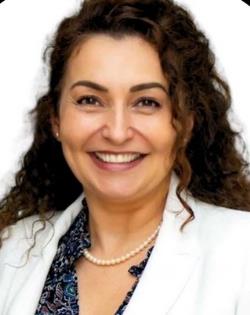
Roxana WIDMER-ILIESCU heads the Digital Inclusion Service at the Development Bureau of the International Telecommunication Union (ITU), where she has dedicated over 28 years to advancing the global digital inclusion agenda. She advises ITU Members on inclusive digital policies and strategies that enable everyone’s participation in the digital society, economy, and environment.
A passionate advocate for ICT and digital accessibility, Roxana promotes human-centred technologies and equitable digital opportunities for all—regardless of age, gender, ability, or location. To support global efforts toward building a digitally inclusive world where no one is left behind, she has spearheaded the development of more than 90 ITU-D key resources aimed at fostering the implementation of
available, affordable, and digitally accessible technologies.
Before joining ITU, she served in the International Relations Department of the Romanian Parliament. She holds a legal background with a specialization in strategic management of telecommunications, and is fluent in English, French, Romanian, and Spanish.
-
 C2. Information and communication infrastructure
-
 C4. Capacity building
-
 C6. Enabling environment
-
 C8. Cultural diversity and identity, linguistic diversity and local content
This session is primarily aligned with WSIS Action Line C4 (Capacity Building), as it focuses on strengthening the technical, organisational and leadership capacities needed to deploy, manage and sustain community-based ICT initiatives through a blended learning model combining online training and in-person bootcamps.
It also contributes to C2 (Information and Communication Infrastructure) by supporting the development and sustainability of community-centred ICT infrastructure solutions in rural, remote and Indigenous communities, and to C3 (Access to Information and Knowledge) by expanding opportunities for meaningful access to digital resources, services and learning.
Finally, the session relates to C8 (Cultural Diversity, Identity, Linguistic Diversity and Local Content) through its support for locally driven approaches that strengthen community participation, locally relevant services and content, and the inclusion of Indigenous and rural communities in the digital society.
-
 Goal 1: End poverty in all its forms everywhere
-
 Goal 4: Ensure inclusive and equitable quality education and promote lifelong learning opportunities for all
-
 Goal 5: Achieve gender equality and empower all women and girls
-
 Goal 9: Build resilient infrastructure, promote sustainable industrialization and foster innovation
-
 Goal 10: Reduce inequality within and among countries
-
 Goal 17: Revitalize the global partnership for sustainable development
This session contributes to several Sustainable Development Goals through its focus on community-centred digital inclusion, capacity development and meaningful connectivity in rural, remote and Indigenous communities.
- SDG 1 (No Poverty): By strengthening local capacities and expanding access to digital opportunities, the programme supports conditions that can contribute to improved livelihoods and economic participation in underserved communities.
- SDG 4 (Quality Education): The initiative is centred on a year-long blended learning programme that combines online training and in-person bootcamps to strengthen technical, organisational and leadership capacities.
- SDG 5 (Gender Equality): The programme promotes the participation and leadership of women in digital inclusion and connectivity initiatives, while seeking to increase access to training opportunities for women from rural, remote and Indigenous communities.
- SDG 9 (Industry, Innovation and Infrastructure): The programme strengthens capacities to deploy, manage and sustain community-based ICT infrastructure in areas that are often underserved by conventional telecommunications models.
- SDG 10 (Reduced Inequalities): By focusing on rural, remote and Indigenous communities, the initiative directly addresses digital inequalities and barriers to meaningful participation in the digital society.
- SDG 17 (Partnerships for the Goals): The programme is implemented through collaboration among ITU-D, local communities, civil society organisations, technical institutions and regional and international partners, demonstrating the importance of multi-stakeholder partnerships in advancing digital inclusion.
- Objective 1: Close all digital divides and accelerate progress across the Sustainable Development Goals
- Objective 2: Expand inclusion in and benefits from the digital economy for all
- Objective 3: Foster an inclusive, open, safe and secure digital space that respects, protects and promotes human rights
https://www.itu.int/itu-d/sites/digital-inclusion-indigenous-peoples/
https://www.itu.int/itu-d/sites/digital-impact-unlocked/empowering-indigenous-people-in-the-philippines-through-digital-literacy-training-programme/
https://www.apc.org/es/node/41046
https://youtu.be/wfUH2yz-4IQ?si=QVaWVxtGrKW_qPSO