I.T.U. – leaving no one behind…. I need a Telephone to connect to yoU
Institute for Digital Culture, University of Leicester
Session 352
Leaving no-one behind: rights and technology....
Connecting the world and beyond is the key driver for the ITU. Today, this is facilitated by movements in a digital world that increasingly connects us virtually while often aiding physical transport. But arguably, therein lies a possible misconnect, which this session seeks to explore…
Session overview:
This session argues that while a digital divide across the globe exists, technology advancements also risk a further divide, not just in terms of marginalised populations but across and between generations.
Today, we increasingly refer to our point in history - the ‘Millennials, or Generation Y or Z;’ and it remains admirable and essential that we seek inclusivity in terms of inviting and listening to our youth at events such as WSIS.
But what about the generations that came before?
- The ‘Baby Boomers,’ or 'the Traditionalists' (perhaps even more telling in terms of their ‘pseudonym’ – the ‘Silent Generation’).
There is no doubt that advancing technology aids the lives of so many, including an older or even elderly population but, globally, as this number grows, it risks leaving the ageing ‘Babies,’ also ‘Silent.’ While this segment of our world is not homogenous by any means, in many countries our seniors are also becoming more diverse, which brings with it increased challenges. Yet, at the same time, ageism is becoming a perpetuated prejudice.
There remains the potential that all older users are stigmatised as ‘technophobes’ or ‘digitally illiterate’ while conversely, it remains a fact, that some interfaces are poorly designed, and sometimes to the exclusion of older users.
Discussions within this proposed session, looks to:
1) Heighten these variable issues,
2) Gain critical insight and thoughts from the wider audience,
3) Propose solutions and/or,
4) Look at research opportunities to tackle related aspects and ensure…… ‘
‘no one get left behind….’
As a starting and basic point – there will be a study on a simple function: the phone, as a means of communicating you to me!
NOTE: QUESTIONNAIRE LINK - you are invited to take part in a policy questionnaire - which focuses on two specific aspects (regardless of whether you attend the session - please have your voice heard...)
(i) Are the UN Human Rights (Universal Declaration of Human Rights) enough/sufficient for today's digital and advancing technology world (including A.I.)? Or are specific (new ones) needed? - should they also go beyond a declaration?
(ii) And/or are new and specific human rights needed for the older generation?
NOTE: this links into last years session (Back to the Future: Putting the “I” back into AI)
The 1980’s (when the Baby Boomers were growing up) was significant from alerting us to the plight of ensuring our future was sustainable. From a cultural perspective 1985 also marked the film ‘Back to the Future,’ which considered the power of technology in terms of the ability to change the human destiny, this being facilitated through an advanced electric car. Putting the “I” back into AI – means making sure the ‘individual,’ not just the human, but the ‘you and me’ have an equitable voice and fair opportunity, regardless of culture and other differences - age, race, colour, disability, sex and sexuality. This necessities ensuring that technology advancements embrace diversity and remain an advantage and not disadvantage.
This year's session builds on this, whereby, the focus relates to (human) rights and especially for an ageing generation - today - the baby boomers have grown-up!

Dr Sarah Jane Fox is a skilled academic-practitioner and thought-leader, with extensive experience in Higher Education and external to it, whereby she has worked in government and consultancy roles.
Dr Fox is currently an academic at Leicester Law School, University of Leicester (UK) and is also an Associate-Director for the Institute of Digital Culture.
Dr Fox specialises in law, policy and strategy. She is an internationally recognised expert-specialist in transport, particularly, air/aviation, space and road transport modes and systems (including autonomous vehicles) sustainable future use and advancing cyber-connected technologies. This includes safety/security/cybersecurity factors. Her research also includes the social acceptance of evolving technology, engagement and EDI issues.
In 2015-2016 Dr Fox achieved a highly coveted Fulbright Commission Scholarship, whereby she undertook research in the U.S. for 12-months across the areas of aviation/autonomous systems (drones) and space.
Dr Fox has presented her research at a number of international key events, including at the United Nations (UN - ITU/WSIS; OOSA; ODC) the European Union (EU) and the Council of Europe. She continues to collaborate extensively with the UN and EU and is an adviser to a technology (Europol group).
Dr Fox continues to take part in key policy discussions in the United Nations and the EU on technology risks, challenges and opportunities. In 2024 Sarah Jane was a top-20 finalist of the United Nations SDG Game Changer Awards. This accolade honours individuals and organisations that are working towards rescuing the global goals through digital technologies and exemplifies how digital technologies can lay the groundwork for a more sustainable, inclusive and responsible future. Her work was acknowledged within the Peace Category, which relates to building peaceful and inclusive societies (SDG 16 and 17).
Dr Fox’s ongoing collaborative work relates to technologies used for peaceful purposes, namely to benefits society and protect national infrastructures (from misuse): it is based on sharing policies and guidance, alongside making recommendations.

Alfredo M. Ronchi is a professor at Politecnico di Milano (Engineering Faculty), an expert/advisor in e-Services, Secretary General of the EC-MEDICI Framework of Cooperation, Head of the JRC S2D2 (Safety, Security, Defence, Disaster Recovery and Management), delegate at UNESCO IFAP and active member of ITU and the WSIS since the establishment (2003).
Mr Ronchi is member of the following Boards: Member of AI&Society board (Springer Nature), Board of Directors Global Forum (France), Member Emeritus World Summit Award Board of Directors (Austria), Board of Directors European Education New Society Association (ENSA France). Member of the Keio University NoE (Japan). Member of the Advisory Board of the School of Law under the aegis of GD Goenka University (Hyderabad, India).
He cooperated as organizer or programme chair in W3C, ACM, IEEE, ITU-WSIS conferences; since more than forty years he organizes and manages international projects, conferences and workshops.
Author/contributor of more than 400 papers and various books on: e-Culture, e-Government, e-Society, e-Safety & Security, and e-Services.
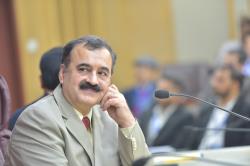
For over 37 years, Dr Duggal has worked at the intersection of law, technology, and governance — building frameworks that define how the world navigates the digital age. Recognized globally as the top most cyber lawyer, his work spans Cyber Law, AI Law, Quantum Law, Blockchain, Metaverse, and Data Protection.
He is significantly: Shaping the Legal Architecture of the Digital Future.......
🌍 Global Impact
🏛 Drafted landmark legislation including the Information Technology Act, 2000.
🌐 Advisor: Guided 40+ governments & UN agencies on AI, cybersecurity & digital policy.
🎓 Educator: Empowered 32,500+ students across 175+ countries through Cyberlaw University.
🎤 Speaker: Delivered 3,700+ talks at the UN, World Bank, Council of Europe & major global forums.
📚 Author: Written 200+ books, many ranked among the best in cyber & tech law.
🚀 Leadership Roles
President, Global Artificial Intelligence Law and Governance Institute
Principal Architect, International Artificial Intelligence Law Framework Initative
Chief Executive — AI Law Hub
Founder & Chancellor — Cyberlaw University
President — Cyberlaws.Net
Chairman — International Commission on Cyber Security Law
Director — International Conference on Cyberlaw, Cybercrime & Cybersecurity
🎯 Mission
To ensure that technology serves humanity — by shaping secure, ethical, and inclusive legal frameworks for our digital civilization.
-
 C1. The role of governments and all stakeholders in the promotion of ICTs for development
-
 C2. Information and communication infrastructure
-
 C3. Access to information and knowledge
-
 C6. Enabling environment
-
 C7. ICT applications: benefits in all aspects of life — E-government
-
 C7. ICT applications: benefits in all aspects of life — E-learning
-
 C7. ICT applications: benefits in all aspects of life — E-health
-
 C8. Cultural diversity and identity, linguistic diversity and local content
-
 C10. Ethical dimensions of the Information Society
-
 C11. International and regional cooperation
C1. C2. C3. C6. C7. C8. C10. C11.
-
 Goal 3: Ensure healthy lives and promote well-being for all
-
 Goal 4: Ensure inclusive and equitable quality education and promote lifelong learning opportunities for all
-
 Goal 5: Achieve gender equality and empower all women and girls
-
 Goal 8: Promote inclusive and sustainable economic growth, employment and decent work for all
-
 Goal 10: Reduce inequality within and among countries
-
 Goal 11: Make cities inclusive, safe, resilient and sustainable
-
 Goal 16: Promote just, peaceful and inclusive societies
-
 Goal 17: Revitalize the global partnership for sustainable development
G3. G4. G5. G8. G10. G11. G16. G17.
The focus is on inclusivity and leaving no one behind with emphasis on the older generations - to promote equalities in today's digital and technology enabled world and to question whether human rights frameworks are ultimately fit for purpose.
- Objective 1: Close all digital divides and accelerate progress across the Sustainable Development Goals
- Objective 2: Expand inclusion in and benefits from the digital economy for all
- Objective 3: Foster an inclusive, open, safe and secure digital space that respects, protects and promotes human rights
- Objective 4: Advance responsible, equitable and interoperable data governance approaches
- Objective 5: Enhance international governance of artificial intelligence for the benefit of humanity