WSIS Action Line C9: Media - Towards Resilient Information Ecosystems in Times of Crisis: Rethinking ‘Preparedness’ in Digital Governance
United Nations Educational, Scientific and Cultural Organization
Session 309
In times of crisis and emergencies, timely and accurate information can be as lifesaving as food, water and medical care. Yet crisis communication is no longer confined to national media systems. It increasingly unfolds within globally interconnected digital environments, where platforms, communication infrastructures and information flows operate across borders and jurisdictions, often without adequate coordination.
In this context, journalism and public-interest media remain essential. They provide verified information, counter false and misleading narratives, document realities on the ground, and enable informed public dialogue during moments of uncertainty. However, journalists and media actors often perform this role under growing pressure in the digital era, including threats and harassment, opaque platform systems, fragile economic models, and reduced visibility of public-interest content online.
As crises become increasingly shaped by transnational information flows and platform-mediated communication, there is a growing need to strengthen crisis preparedness frameworks that protect freedom of expression and access to information while enabling coordinated, transparent and rights-based responses. As part of UNESCO’s facilitation of WSIS Action Line C9 on Media, this session will explore emerging challenges and opportunities for building resilient information ecosystems in times of crisis. It will examine how governments, digital platforms, media actors and other stakeholders can strengthen preparedness, support public-interest journalism, and ensure access to reliable information when it is needed most.
The session builds on and complements UNESCO’s implementation of the WSIS Action Line 9 on Media, particularly in the topics of digital governance in times of crisis through a human rights-based multistakeholder approach in line with UNESCO's Guidelines for the Governance of Digital Platforms, with a broader view to advancing freedom of expression, media development, and information integrity in the digital age.

Maksym Dvorovyi is a Kyiv-based digital rights, media law, and policy expert currently serving as Senior Legal Counsel at Digital Security Lab Ukraine (DSLU), a non-governmental organization dedicated to promoting a human rights-centred digital environment. Since 2015, he has actively contributed to media law and policy reforms in Ukraine, with a particular focus on audiovisual and online media regulation and digital platform governance. At the international level, he has worked extensively on advancing platform accountability and strengthening content governance frameworks, particularly in the context of conflict and crisis situations, and co-coordinates the DSA Human Rights Alliance.
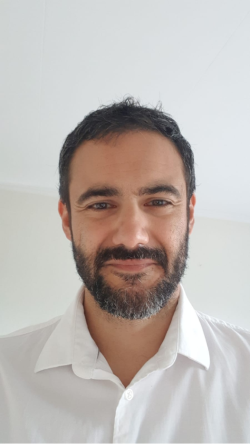
Giulio Coppi is a Senior Humanitarian Officer at AccessNow, with over 15 years of international experience across the humanitarian, human rights, and academic sectors. He has worked with NRC, ICRC, OCHA, and OHCHR, among others, and has experience responding to crisis contexts in several countries. At Access Now, Giulio is responsible for monitoring and advising on digital rights in the context of conflict and disaster; advancing protection from digital harm through international humanitarian law norms, customs, and principles; and promoting ethical approaches to the design and delivery of technological systems by private companies.

Ingrid Volkmer is Professor in the Media and Communication Program at the University of Melbourne. Her research focuses on how digital communication technologies are reshaping transnational political communication, digital citizenship, and the governance of global information flows. She serves on the Coordination Council of UNESCO’s Internet for Trust Knowledge Network, contributing to research and policy development on digital platform governance, including regulatory approaches to crisis communication and digital governance. She is currently leading a UNESCO-supported research project on digital regulation in times of crisis, with a report to be published in 2026. Professor Volkmer has held visiting appointments at leading institutions including the London School of Economics, Harvard University, MIT, the University of Vienna, and the University of Amsterdam.

Dr Charley Lewis is a South African ICT policy and regulation expert and Councillor of the Independent Communications Authority of South Africa (ICASA). With more than two decades of experience spanning academia, regulation, research, and policy advisory work, his expertise covers telecommunications, broadcasting, internet governance, digital platform regulation, consumer protection, universal access and digital inclusion. He has worked extensively on ICT policy and regulatory issues across Africa, engaging with a broad range of stakeholders on topics including telecommunications, broadcasting, internet governance, digital inclusion, and emerging digital technologies.

-
 C9. Media
UNESCO has been working as part of the implementation of WSIS Action Line C9 to strengthen the role of media in fostering inclusive and pluralistic information societies. This includes supporting the resilience of information ecosystems in times of crisis, so that journalism and public-interest media can continue to fulfil their critical role in ensuring access to trustworthy, verified, and pluralistic information in increasingly digital and networked crisis environments. This work builds on UNESCO’s broader work on freedom of expression and media development in the digital age, including efforts to advance human rights-based and multistakeholder approaches to digital platform governance.
-
 Goal 16: Promote just, peaceful and inclusive societies
This session complements broader efforts to achieve the Sustainable Development Goals, particularly SDG 16: Promote peaceful, just and inclusive societies for sustainable development. By examining how governments, digital platforms, media actors, and other stakeholders can strengthen resilient information ecosystems in times of crisis, the session contributes to efforts to safeguard freedom of expression, ensure public access to reliable information, and strengthen transparent and accountable institutions, in line with Target 16.10, which calls for ensuring public access to information and protecting fundamental freedoms, as well as Target 16.6 on developing effective, accountable and transparent institutions. By exploring rights-based and multistakeholder approaches to crisis preparedness and digital governance, the session seeks to advance the conditions necessary for informed public participation, trust, and societal resilience in an increasingly interconnected digital environment.
- Objective 3: Foster an inclusive, open, safe and secure digital space that respects, protects and promotes human rights


