Rethinking capacity building and digital learning for today and tomorrow's world (WSIS Action Line C4 session)
International Telecommunication Union, United Nations Educational, Scientific and Cultural Organization
Session 293
WSIS Action Line C4 (Capacity Building)
In an era defined by rapid digital transformation and the accelerated deployment of emerging technologies such as Artificial Intelligence, societies worldwide face both unprecedented opportunities and widening digital divides. Despite major progress in connectivity, gaps in digital skills, institutional capacities and access to learning opportunities continue to limit the abilities of many countries and communities to fully benefit from digital technologies.
Jointly organised by ITU and UNESCO, this session will consist of a multistakeholder dialogue that will explore how capacity development and digital learning ecosystems can evolve to respond to current and future challenges. It will showcase concrete examples of projects and initiatives through which governments, public administrations, academia and civil society are scaling capacity building interventions to drive digital transformation at national and community-levels. The discussions will also aim to generate insights to inform the WSIS vision and the forward-looking implementation of Action Line C4.
The panel will feature experts engaged in key flagship programmes such as the ITU Digital Transformation Centres (DTC) Initiative and the UNESCO Schools of Public Administration and Actors for Research and Knowledge on AI (SPARK-AI) Alliance.
.jpg?maxwidth=250)
Markus is Director for HP’s Global Policy & Strategy team leading on worldwide policy engagement with international organizations (UN family and beyond), digital equity and education. Before taking this role in 2023, he worked for Government Affairs in Central & Eastern Europe, the Middle East and Africa, providing advice to business leaders with the objective to help driving public sector business growth creating a level playing field for HP to compete successfully.
Markus joined HP in November 2015. He previously worked for Cisco in Asia-Pacific (based in Bangkok), Eastern Europe and Germany (based in Berlin) for 14 years in Corporate Affairs and Public Sector managing Cisco’s flagship education program “Cisco Networking Academy” and Social Innovation Group country teams. Prior to this, he worked for eight years as Head of Staff for Members of German Parliament (Deutscher Bundestag), Bonn/Berlin.
Markus holds a PhD degree on Public Private Partnership in Vocational Education from Technical University in Berlin, a master’s degree on Media and Education from the University of Rostock, Germany, and a master’s degree on Political Science, Sociology and National Economy from RWTH Aachen. He is a certified trainer in Leadership & Responsibility and trained not for profit groups in Europe in creativity techniques and program management.
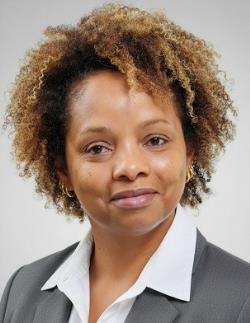
Dr Andrea Kanneh is a digital transformation leader and Manager of Performance and Engagement for Trinidad and Tobago's national Digital Skills Programme within the Ministry of Public Administration and Artificial Intelligence.
As the national focal point for the ITU Digital Transformation Centre initiative, she is leading efforts to equip more than 100,000 citizens with digital and AI skills. Her work focuses on building inclusive, human-centred pathways that connect digital capability development to economic opportunity, entrepreneurship, and national development. Through national programmes, she supports three key learner groups: digital consumers, ICT specialists and technology professionals, and digital businesses and entrepreneurs.
A recognised leader in digital transformation, education, and human capability development, Dr Kanneh combines expertise in technology, leadership, research ethics, project management, and executive coaching to design practical, people-centred solutions that expand opportunity, strengthen workforce readiness, and enable individuals and organisations to thrive in an AI-enabled future.
Dr Kanneh holds a PhD in Information and Communication Technology (ICT) and has extensive experience in digital transformation, workforce development, higher education, leadership development, and research ethics.

Dr. Fadi Salem is a global expert in digital governance and artificial Intelligence policy, with over twenty years of policy impact across government, international organizations, and research institutions. He is the Director of Policy Research Department at the MBR School of Government and the Senior Research Fellow in Digital Governance and Technology Policy. He leads the School’s Center of the Future of Government and is the founding Editor-in-Chief of The Policy Review journal.
Fadi was appointed by the UN Secretary-General to serve as a member of the UN Committee of Experts on Public Administration (CEPA). He also serves as Co-Chair of the UNESCO SPARK-AI Alliance and President of the Digital Government Society's AI-GOV Chapter. He is a member of several influential international governance and advisory boards, and is the Co-Director of the Global Risk and AI Safety Preparedness (GRASP) Initiative, and is a Lead AI Ethics Certified Assessor by the IEEE.
Previously, Fadi was a Research Associate at the Harvard Kennedy School, and a Fellow at the Lee Kuan Yew School of Public Policy, National University of Singapore. He holds a PhD in Public Policy from the University of Oxford, an MSc in MIS from the London School of Economics (LSE), and a B.Eng. in Computer Engineering from Aleppo University.

Aaron Bhugobaun is the Co-founder of the next-gen media company Latent Aurum, a Creative Technologist, and an AI Media Consultant with over a decade of experience modernising global workflows and working on major studio titles for Sony, Netflix, Disney, and Universal. Additionally, as the Studio Chair and Director of Creative Strategy at the Global Creative and Security Community (CG-SC) Media Association, Aaron champions responsible AI adoption across the industry while helping run one of the world's best-curated AI creative communities. He previously spent three years as Technical Production and AI Lead at Moonbug Entertainment, where he drove technical and business transformations that supported 9 billion monthly views and scaled content from YouTube to major streaming platforms.

Maria Gamboa is a Colombian lawyer and data privacy consultant based in the Netherlands. Her work focuses on AI governance and responsible technology, helping international organizations build privacy-by-design systems. Her expertise lies at the intersection of law and emerging technology, with a particular interest in how digital regulation affects access to justice and health data in underserved communities. This perspective is grounded in her academic training, including an LL.M. in Law and Technology from Tilburg University, and a CIPP/E credential.
-
 C4. Capacity building
-
 Goal 4: Ensure inclusive and equitable quality education and promote lifelong learning opportunities for all
-
 Goal 5: Achieve gender equality and empower all women and girls
-
 Goal 8: Promote inclusive and sustainable economic growth, employment and decent work for all
-
 Goal 9: Build resilient infrastructure, promote sustainable industrialization and foster innovation
-
 Goal 16: Promote just, peaceful and inclusive societies
-
 Goal 17: Revitalize the global partnership for sustainable development
- Objective 1: Close all digital divides and accelerate progress across the Sustainable Development Goals
- Objective 2: Expand inclusion in and benefits from the digital economy for all
- Objective 3: Foster an inclusive, open, safe and secure digital space that respects, protects and promotes human rights
- Objective 4: Advance responsible, equitable and interoperable data governance approaches
- Objective 5: Enhance international governance of artificial intelligence for the benefit of humanity