GovStack Women in GovTech Challenge 2026 & Digital Leaders' Forum
ITU/ GovStack partners
Session 263
The GovStack Women in GovTech Challenge 2026 & Digital Leaders’ Forum brings together global leaders, development partners, governments, academia, and the GovTech community to explore how inclusive Digital Public Infrastructure (DPI) can accelerate citizen-centred digital transformation. The session features a high-level panel discussion on strengthening GovTech ecosystems, advancing women’s leadership in digital public service, and fostering collaboration across countries. It also celebrates the finalists of the Women in GovTech Challenge 2026, showcasing innovative digital government solutions developed through the Challenge and recognising the next generation of women leaders driving inclusive digital transformation.
.png?maxwidth=250)
Dr Cosmas Luckyson Zavazava took office as Director of the Telecommunication Development Bureau (BDT) at the International Telecommunication Union (ITU) on 1 January 2023.
With more than 30 years in telecommunications, including over 20 years in ITU’s Development Sector, Dr Zavazava has promoted and implemented impactful information and communication technology projects around the world.
Prior to his election as BDT Director, he served as ITU’s Chief of Partnerships for Digital Development, overseeing development-related projects, strategic partnerships, and resource mobilization between 2019 and 2022, while launching new initiatives that have boosted the engagement of industry, private-sector, and academia members in ITU’s work.
From 2010 until 2019, he was Chief of the Projects and Knowledge Management, responsible for ITU’s project portfolio, statistics, capacity building, and emergency telecommunications activities, as well as coordinating special assistance to least developed countries (LDCs), landlocked developing countries (LLDCs), and small island developing states (SIDS).
Previously, as ITU’s Chief of Projects and Initiatives, he oversaw development projects focused on gender, youth, and people with special needs, along with capacity building, emergency telecommunications, climate change mitigation and adaptation, and e-waste management.
Earlier, Dr Zavazava headed the Republic of Zimbabwe’s Government Telecommunications Agency and served as a senior diplomat. He also taught MBA classes at the UK’s Nottingham Trent University.
Throughout his career, he has focused on closing the digital and skills divide and accelerating digital transformation to achieve socio-economic development for all.
Dr Zavazava holds a PhD in Multilateral Trade from Business School Lausanne (Switzerland), and a Master of Laws degree in Telecommunications and Information Technology from the University of Strathclyde (UK), as well as a Master’s in International Relations from Webster University (US), and an MBA from the University of Zimbabwe. He also holds a Bachelor’s in Business Administration and diplomas in Telecommunications and Systems Engineering.

Jody van Wyk is a global technology leader with more than 24 years of experience spanning mobile, fixed, hyperscale, OTT, cloud, and digital platforms. At the International Telecommunication Union (ITU), he leads digital infrastructure and connectivity initiatives within the Telecommunication Development Sector, supporting countries in advancing digital transformation and sustainable development.
Throughout his career, Jody has led large-scale technology and connectivity programs across Africa, the Middle East, and Asia. His expertise spans broadband infrastructure, cloud and edge computing, digital infrastructure, and emerging technologies. He works closely with governments, industry, development partners, and United Nations agencies to translate policy into practical, country-led implementation and foster collaboration that delivers measurable impact.
Jody holds a Master's degree in Business from Middlesex University London, together with several engineering qualifications. He is a recognised speaker on digital infrastructure, connectivity, artificial intelligence, and digital transformation, with a particular focus on enabling inclusive and resilient digital economies.

Kelly Ommundsen is the Head of Digital Inclusion and a Member of the Executive Committee for the World Economic Forum.
As Head of Digital Inclusion, Kelly combines her expertise in technology, policy, and partnerships with her commitment to social equity to drive meaningful change. Through flagship initiatives which she is leading, such as the EDISON Alliance and the Forum's portfolio on GovTech, she champions public-private partnerships to help bridge the digital divide and enable meaningful digital transformation.
Prior to this position, Kelly served as the Chief of Staff to the Founder and Executive Chairman of the World Economic Forum for over 5 years, as well as managed the Forum's Board of Trustees, its top governance body, and served as the official secretary.
Kelly was responsible for creating and leading the Global Collaboration Village, the Forum’s presence in the metaverse, as well as building a vibrant community of 100+ Village Partners. She has previously led the government and regional partnerships for the Forum’s work on technology, as well as responsible for the relationship with the US Government in the Forum’s New York office.

Ingrid-Gabriela Hoven is Managing Director of Deutsche Gesellschaft für Internationale Zusammenarbeit (GIZ) GmbH since October 2020. Ms. Hoven is a development economist with more than 30 years of international experience focusing strongly on sustainability and climate issues. From 2010 to 2014, she served as World Bank Group Executive Director representing Germany. Prior to this assignment and thereafter, she held various high-level positions in the BMZ (German Federal Ministry for Economic Cooperation and Development). During this time, Ms. Hoven spearheaded new global actions such as the NDC Partnership and AFR100, as well as initiatives in the field of climate risk insurance and finance. Ms. Hoven studied economics and political science at Justus-Liebig University Giessen and Université Paris IX/Dauphine. She is alumna of the postgraduate program of the German Development Institute (now IDOS).

With over 25 years of leadership at the intersection of technology, governance, and diplomacy, Nele has shaped digital transformation and collaboration globally. Currently, she leads Knowledge Hub Digital for the European Commission, supporting EU’s global digital partnerships and cooperation.
As Ambassador for Digital Affairs for Estonia (2020–2024), she established and directed the country’s digital diplomacy. In this role, she co-led the GovStack Initiative, co-founded Women in GovTech Challenge, and managed a broad portfolio of high-level global multi-stakeholder relations, and resource mobilisation.
Her career spans digital and state reforms in over 100 countries across Africa, Asia, Europe, and the Middle East, where she advised politicians and government leaders on digital transformation, digital governance and economy.
She has experienced the life of international organisations (United Nations, OECD) as well as private sector. She is a member of the World Economic Forum’s Global Future Council and Member of the Board of the Global Tech Diplomacy Forum. She is a former Chair of the Digital Cooperation and Diplomacy Network and the Global Standards Symposium of the ITU.
Academically, she holds a PhD in Political and Social Sciences from the European University Institute and was a Fulbright-Schuman Scholar. She continues to lecture on technology and foreign policy. She is an active promoter of female leadership in the digital sector.

Mei Lin Fung is Chair and Co-Founder of the People Centered Internet, begun in 2015 (with Vint Cerf, often called “a father of the internet”), which works to create a more equitable digital world. A tech pioneer and contributor to enterprise resource planning (ERP) software, she integrated a key analytic tool, Customer Lifetime Value, into customer relationship management (CRM) systems. Among other roles, she serves on the advisory council of GovStack and is a nominated Vice Chair of the UN AI for Good Impact Initiative.

Fungai Nora Mukora is the Dean of the Faculty of Computer Engineering Informatics and Communications at the University of Zimbabwe. She has over 20 years of university experience in Teaching, Research and Administration. Her teaching expertise includes Logic Design and Circuits, Number Systems, and Digital Electronics. Her research interests encompass ICT adoption, digital transformation, and the Fourth Industrial Revolution with a focus on Education.
Fungai holds a Master of Science Degree in Computer Science from the UZ and is currently a PhD in Engineering candidate. She chairs the ICT Association of Zimbabwe Advisory Board, serves as the Vice Chairperson of the POTRAZ ICT Journal's Editorial Committee, and is also a member of the Computer Society of Zimbabwe.
.png?maxwidth=250)
Dessi Dimitrova, PhD, is a Technical Officer in the Department of Data, Digital Health, Analytics and AI at the World Health Organization headquarters in Geneva. Prior to joining WHO, she was Head of Healthcare Transformation at the World Economic Forum, leading public-private collaboration on health systems strengthening. Earlier, she served as Deputy Minister of Health of Bulgaria and chair of the National Health Insurance Fund, and as a member of the Global Fund's Technical Review Panel. She started her career at McKinsey & Co and then served as Junior Professional at the World Bank and a manager at the Results for Development Institute. She holds a BA from Bowdoin College, MPA from Princeton University and PhD from Sofia University.

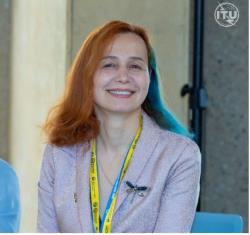
Ms. Ekaterine Imedadze has been a commissioner of the Georgian National Communications Commission (ComCom) since March 2021. Prior to taking up her position, she headed the Telecommunications Market Regulation Department at ComCom.
Ekaterine has over 15 years of professional experience in telecommunications with a global perspective. Ekaterine has held several key positions at the international telecommunications group company VEON Ltd., leading the Global Process unit responsible for the group's digital transformation. She also served as the group's internal control and risk management lead for several years. Ms Imedadze had previously served as the Head of Finance and Operations for a number of large private organisations, as well as a business consultant for leading ICT companies.
Ms. Imedadze holds an MBA from the University of Bradford School of Management and completed the Innovation Leadership programme at the Massachusetts Institute of Technology (MIT). Previously, she earned a master's degree in physics as well as a postgraduate diploma in artificial intelligence and fuzzy logic from Tbilisi State University, and she is currently pursuing an LL.M. in competition law and economics at the Brussels School of Competition (BSC).
Ekaterine was appointed as the Board Member of the Digital Regulation Network (DRN) at the International Telecommunication Union from 2025.
Chairperson of the Eastern Partnership Electronic Communications Regulators Network (EaPeReg) in 2023

Kathleen Ziemann is the Co-Lead of the GIZ Global Programme “Digital Transformation” an expert in AI, digital inclusion, and international digital policy. Her work focuses on shaping a human-centered and equitable digital transformation that strengthens social participation and expands digital opportunities for all. She is particularly committed to addressing inequalities in the digital sphere, especially through DPI and services for governments. A key focus of her work is advancing gender equality, reducing digital access barriers, and fostering the responsible development and use of digital technologies.

Yilmaz Akkoyun works as Senior Policy Officer at the Federal Ministry for Economic Cooperation and Development (Bundesministerium für wirtschaftliche Zusammenarbeit und Entwicklung, BMZ) in Berlin in the digital technologies unit and the Chief Digital Officer´s office. He graduated within the Global Public Policy Network (GPPN) dual degree program from Columbia University, School of International and Public Affairs (SIPA) in the city of New York with an Master of Public Administration (MPA) specializing in Advanced Policy and Economic Analysis as well as from the Hertie School of Policy in Berlin with an Master of Public Policy (MPP).

Hailan Wang is an interdisciplinary professional working at the intersection of technology, governance, industry, and international cooperation. Over the past decade, she has built a broad profile across engineering, digital transformation, policy, and multistakeholder engagement. She brings a rare all-round profile that combines technical depth with strategic and institutional understanding. Her background spans general engineering, Industry 4.0, management, technology policy, alongside hands-on experience in research, consultation, project management, and capacity building for diverse audiences. She has worked with international governmental organizations e.g. UNCTAD, public-sector institutions e.g. Bavarian state ministries, industry partners, and multistakeholder governance platforms, e.g. CSTD, IGF, and ICANN. Across these contexts, she has advised stakeholders, led multidisciplinary projects, and translated complex technological issues into actionable strategies, policy insights, and implementation pathways. Her work is driven by a strong commitment to ensuring that emerging technologies are governed responsibly and deliver meaningful benefits for society.

Nicole Greene is a GovTech communications strategist from Trinidad and Tobago, whose career combines technical ICT infrastructure with strategic communications across government, financial services, and international development. Her advisory work spans strategic communications, digital public infrastructure, and technology adoption. She translates complex ICT standards into adoption narratives for citizens, C-suite executives, and international partners. As Strategic Advisor to the CEO at Trinidad and Tobago’s National ICT Company (iGovTT), she led the launch campaign for Anansi, the country’s AI Digital Assistant, which won the IDB Pr.A.I.S.E. People’s Choice Award for Citizen Experience in 2025. She holds a Bachelor of Science in Computer Science from Trinity College, Hartford, Connecticut, USA.

Janine Ludborzs Garate holds a Law degree from the Peruvian University of Applied Sciences (UPC) in Lima. She pursued a Master of International Affairs at the Hertie School in Berlin with a specialisation in International Security, focusing on cybersecurity and the role of the private sector in security. She spent a semester at Sciences Po Paris, deepening her expertise in global security law, emerging technologies, and digital transformation. Before Hertie, Janine worked at the German Agency for International Cooperation (GIZ) in Lima, where she focused on anti-terrorism financing and anti-money laundering. As a regulatory lawyer, she has also contributed as a specialist to the World Bank and UNODC publication on managing seized and confiscated assets.

Aparna Krishnan is a Master of Public Policy candidate at the Hertie School in Berlin, with a concentration in Governance and Leadership. Her interests lie at the intersection of social policy, digital public infrastructure, and human rights, with a focus on gender and socio-economic issues. Before Hertie, she worked as a Research Executive at Ipsos Public Affairs in Chennai, conducting mixed-method research across 20+ studies for clients including UNICEF, UN Women, WHO, and BMGF. Earlier, as Communications Manager at Hand in Hand India, she led social media strategy and produced impact reports and qualitative research on women's livelihoods programs. She has also volunteered with Amnesty International's Digital Verification Corps, working on open-source investigations using OSINT research. As a finalist in the 2026 GovStack Women in GovTech Challenge, at GIZ, she worked on improving Germany's Child Supplement (Kinderzuschlag) service, exploring how user-centered digital public infrastructure can strengthen social protection systems.
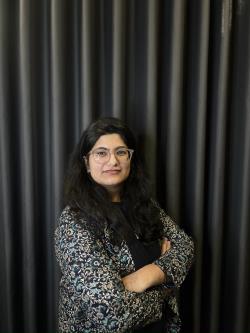
Isha Vig is a Master of Public Policy candidate at the Hertie School in Berlin, with a concentration in policy analysis. Her interests lie at the intersection of digital governance, feminist public policy, and the design of inclusive spaces and services, with a particular focus on expanding access for women and historically underserved communities. Before beginning her master's degree, Isha spent nearly three years at UNESCO's Regional Office for South Asia, where she led strategic communications and stakeholder engagement for regional initiatives across education, climate and social sciences, and culture. She recently joined GIZ's City Climate Finance Gap Fund as a Professional Year Intern, where she supports work on climate-resilient urban infrastructure projects. As a finalist in the 2026 GovStack Women in GovTech Challenge along with her team, she has explored how Digital Public Infrastructure and human-centred services can strengthen social protection systems while staying equitable, ethical, and citizen-centred.

Aarushi Mahajan is a Master's student in Data Science for Public Policy at the Hertie School in Berlin. She is currently working with GIZ, supporting AI and data initiatives for international development cooperation. Prior to her master's, she worked in public policy and research, contributing to projects on climate policy, digital governance, and evidence-based policymaking. Her interests lie at the intersection of data science, artificial intelligence, and public policy, with a particular focus on responsible AI and using data-driven approaches to address global development challenges.

Jocelyne Carrillo Herrera is originally from Colima, Mexico, and is pursuing a Master of International Affairs at the Hertie School, specializing in European Governance. She holds a Bachelor's degree in International Business from the University of Colima. During her studies, she completed her internship with the EU–LAC Digital Alliance Secretariat, supporting initiatives that strengthen digital cooperation between the European Union and Latin America and the Caribbean. Through her academic work and international perspective, she explores how digital governance can strengthen public institutions, improve access to essential services, and foster cross-regional cooperation. Jocelyne is passionate about designing citizen-centered digital ecosystems and advancing collaboration among governments, academia, and international organizations to promote sustainable and inclusive digital transformation.

Alessandra Ghitturi (she/her) holds a Bachelor of Science in International Politics and Government from Bocconi University and recently pursued a Master's in International Affairs at the Hertie School in Berlin, with a specialization in human rights and global governance. During her studies, she completed an exchange semester at Sciences Po Paris. Her work focuses on advancing inclusive and people-centered public policies through international cooperation. She has contributed to the organization of the eLearning Africa Conference at ICWE and worked as a Research Assistant at the Centre for Gender and Politics South Asia, supporting research on women's political leadership and representation. Alessandra is the finalist Team Lead in the GovStack Women in GovTech Challenge, where she worked on designing and promoting more inclusive public service delivery. She also founded and led EUWISE 2026 - Women in Social Sciences, a CIVICA student summit bringing together participants from across Europe to advance dialogue and collaboration on gender equality and contributed to the futurEU initiative. Her academic and professional interests include international development and cooperation, digital public infrastructure and gender equality.
-
 C1. The role of governments and all stakeholders in the promotion of ICTs for development
-
 C2. Information and communication infrastructure
-
 C4. Capacity building
-
 C7. ICT applications: benefits in all aspects of life — E-government
-
 Goal 5: Achieve gender equality and empower all women and girls
-
 Goal 9: Build resilient infrastructure, promote sustainable industrialization and foster innovation
-
 Goal 11: Make cities inclusive, safe, resilient and sustainable
-
 Goal 17: Revitalize the global partnership for sustainable development
- Objective 1: Close all digital divides and accelerate progress across the Sustainable Development Goals
- Objective 2: Expand inclusion in and benefits from the digital economy for all
- Objective 3: Foster an inclusive, open, safe and secure digital space that respects, protects and promotes human rights
- Objective 4: Advance responsible, equitable and interoperable data governance approaches
- Objective 5: Enhance international governance of artificial intelligence for the benefit of humanity
Explore the 2026 edition to discover this year's participants, stories, or visit the challenge homepage to learn more about the initiative and its mission.