Catalyzing Youth-Led Digital Public Infrastructure: A Philanthropic Roadmap for Human-Centric AI and Global Equity
Global Youth Philanthropy, Peaceland Foundation
Session 254
Background
As the global community navigates the "WSIS+20" era, the acceleration of the United Nations Global Digital Compact (GDC) demands a radical reimagining of how we build and govern technology. Digital Public Infrastructure (DPI) and human-centric AI have emerged as the foundational pillars required to anchor global sustainable development and bridge the persistent digital divide. Globally, youth possess immense digital agency and are uniquely positioned to co-create open-source public goods. However, young innovators routinely face systemic bottlenecks, including fragmented seed funding, a lack of institutional trust, and navigated complexities within multi-lateral compliance pathways. Global Youth Philanthropy (GYP) and the Peaceland Foundation advocate for a "Catalytic Philanthropy" framework to dismantle these structural barriers, mobilizing institutional capital and senior mentorship to scale youth-driven digital assets.
Successful Projects in Focus
This session grounds its strategic roadmap in field-proven, youth-led AI innovations that demonstrate the tangible human dimension of frontier technology. Among the featured initiatives is the "Shanghai Fuxing Island: Global Maker Island" project, a flagship model demonstrating how youth utilize AI-powered tools to revitalize local communities, map cultural heritage sites via affordable digital twins, and foster local circular economies. Additionally, the session highlights grassroots youth interventions in climate adaptation and zero-waste municipal management, where young researchers deploy machine learning algorithms for real-time disaster mitigation and localized pollution tracking. By presenting these successful applications, the session underscores that youth are no longer merely passive consumers of digital tech, but rather capable architects of scalable, secure, and inclusive digital public goods.
Vision for WSIS Beyond 2015, Towards 2025 and 2026
Looking ahead, the evolution of the WSIS process must shift from digital accessibility to proactive digital empowerment. In the decade following the WSIS Beyond 2015 framework, the focus has pivoted toward ensuring that frontier technologies actively foster global equity and leave no one behind. Our vision for the WSIS ecosystem centers on the institutionalization of transnational funding and mentoring matrices. By connecting multi-lateral dignitaries (from the ITU, UNDP, and UNESCO) with philanthropic foundations and elite young AI researchers, we aim to establish a permanent global youth tech-mentorship network. This session concludes with a Joint Declaration, serving as a unified call-to-action to embed youth leadership directly into the global AI governance architecture, ensuring an equitable, inclusive, and human-centric digital future for all.

Ms. Yuanyan Xie is an educational innovation expert combining a profound international perspective with deep professional expertise. She holds both her Bachelor’s and Master’s degrees from the School of International Studies at Peking University. Following a distinguished executive career at a Fortune Global 500 financial and insurance enterprise, she successfully transitioned her focus toward nurturing youth global competence and social innovation education.
As the Founder and Chairperson of Global Youth Philanthropy (GYP), Ms. Xie is dedicated to constructing an innovative youth philanthropy network that bridges China and the world. Under her strategic leadership, GYP has emerged as an active platform for youth engagement within the United Nations system. Multiple youth-led social innovation initiatives under her mentorship have been officially incorporated into the UN Voluntary Commitments Database. Furthermore, GYP has been invited to deliver keynote presentations and curate exhibitions at core multilateral stages, including the ECOSOC Youth Forum, the UN Climate Change Conference (COP29), the UN Commission on the Status of Women (CSW69), and the Humanitarian Networks and Partnerships Week (HNPW). These initiatives span critical global agendas such as climate action, digital inclusion, gender equality, and innovative global governance, showcasing the exceptional capacity of global youth to deeply engage with world issues.
As the editor-in-chief of the book Igniting the Inner Drive of Children, she pioneered the "Energy-Driven Cultivation Approach," advocating for the reshaping of educational pathways through intrinsic motivation and global citizenship. Through her cross-sector leadership and contributions to philanthropic innovation, Ms. Xie continually drives a paradigm shift among the next generation of educators—moving from a conventional "exam-oriented" focus toward "future empowerment"—to cultivate future global leaders equipped with empathy, leadership, and actionable agency.

Wang Xingyu has spent the better part of a decade making a case most of his peers overlooked — that the future of China is being written in its villages — and then proving it, one community at a time.
A graduate of Fudan University and New York University, he returned home the moment he collected his NYU master's in 2017 and walked away from the conventional post-grad path to throw himself into the front lines of poverty alleviation and rural revitalization. Nine years on, he has become one of the most recognizable young voices in that work.
His flagship initiative, Beyond the City, has brought tens of thousands of urban young people into the Chinese countryside for fieldwork and volunteer travel — and carried more than a thousand rural youth in the opposite direction, into the cities on sponsored "Dream Journeys" that opened up possibilities most of them had never been told to imagine. Along the way, Wang built career-planning and life-skills courses that now reach tens of thousands of rural students, and more recently launched the Youth Rural Plan and the China Rural Artisan Rejuvenation Plan, putting the internet and AI to work in the service of rural education and craft revival.
The work has drawn both national and international recognition. Wang is a member of the All-China Youth Federation, a National Pioneer of Youth in Rural Revitalization, and a Shoucheng Zhang Scholar at Alpine Academy. In 2024, the Central Committee of the Communist Youth League selected him as China's youth representative to the United Nations ECOSOC Youth Forum. He is also a former champion of Jiangsu TV's One Stop to the End.
Off the village paths, Wang is a prolific communicator — more than two million young followers across his social platforms and twenty-plus appearances on programs about ideas, knowledge, and rural China. The throughline of his message is the same one he lives: that ordinary people, acting small and acting often, are the ones who actually move a country forward.

Rupa Singh is the CEO of AI-Beehive and a globally recognized thought leader in AI ethics. Ranked among the Top 20 Global AI Ethics Leaders, she has established herself as a visionary in developing and operationalizing ethical frameworks for artificial intelligence.
As a TEDx speaker and keynote presenter at over 150 national and international forums, including BRICS AI Ethics Forum, Columbia University, and Dell Technologies' Experience Design Summit, she brings a deeply interdisciplinary and actionable approach to AI governance.
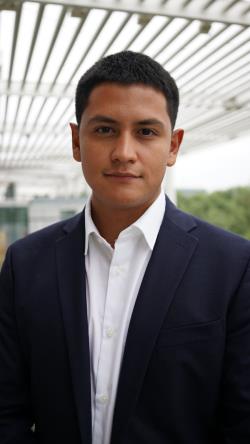
Eugenio Salas Iturriaga serves as the Mexico City Hub Leader for the Young AI Leaders Community under the United Nations’ AI for Good Initiative (ITU). In this role, he promotes youth leadership in artificial intelligence, building partnerships with international hubs across Latin America, the Middle East, and Europe to develop projects that apply AI to social and urban challenges. His work focuses on fostering innovation with a strong emphasis on ethics, equity, and sustainability.
He is also the Founder of Alexandr.ia, an initiative dedicated to designing inclusive, AI-powered education systems in Mexico. Inspired by the ancient Library of Alexandria, one of humanity’s greatest centers of learning, Eugenio’s mission is to democratize access to personalized, high-quality education that empowers individuals to thrive in the age of artificial intelligence.
Through Alexandr.ia, he leads a multidisciplinary team of educators, psychologists, software developers, data scientists, and communication experts who collaborate to create tools that bridge technology and human-centered pedagogy. Their projects include AI learning agents
for schools, “Data Management for Kids” workshops, and frameworks for transforming schools into AI-driven learning communities. His work emphasizes the ethical, responsible, and locally relevant use of AI to reduce educational inequality and promote lifelong learning.
Eugenio also has a professional background as a Data Governance Specialist, developing policies and standards for global organizations to ensure ethical and effective data management. He holds a Bachelor’s degree in Business Intelligence from Tecnológico de Monterrey, specializing in descriptive, predictive, and prescriptive analytics. His work represents a unique intersection between technology, education, and social innovation building a future where AI serves humanity, not the other way around.

Ms. Fadwa Saad AlBawardi, is a Saudi Arabian Entrepreneur who have established her own Consultancy office (FSAB) to provide consulting services in Digital Transformation, Performance Management, Strategic Planning, Data and AI strategies.
Ms. AlBawardi is a Certified Strategy and Business Planning Professional, as well as an IT/Performance Management Senior Consultant, with more than 22+ years of working experience.
Moreover, she is a certified trainer as well as an Elsevier reviewer for international AI & technical research papers and articles. Ms. AlBawardi is also a public speaker and a workshop presenter in several national and international conferences including: United Nations ITU IGF2023 in Kyoto Japan, as well as UN ITU AI for Good Summits 2024, 2025 and 2026 in Geneva Switzerland, and Digital Global Forum 2025, Russia. In addition, she is a trainer with United Nations Institute for Training and Research (UNITAR), and a certified trainer in KSA. She also conducts several training and consultancy sessions with the African Tech community. She also participates in the UN Digital Compact online meetings, as a stakeholder, providing insights and consultation reports on AI Governance. In addition, Ms. AlBawardi is a member of ICC-SA.
Ms. AlBawardi is also an Author who have participated in writing several technical international publications, as well, including HiMSS Book of the Year (editions 2007, 2013 and 2018) in USA. She is also a USA Today Bestselling Author, as well as a weekly Columnist, with 200+ articles, in KSA digital journals, mainly about AI and Digital Economy themes.
Ms. AlBawardi has earned a Master’s degree in Computer Science from Boston University, USA, in 2003, as well as 2 certifications in Strategic Planning. Her Computer Science Bachelor Degree was from the American University in Cairo, in 1994, and she has also attended a Strategic Management course in Harvard University, USA, in 2019.

Wu Zehao is a 19-year-old youth representative at Global Youth Philanthropy (GYP). He led a student team in developing a sports-themed mobile application featuring immersive 3D visual effects, combining his interests in technology and youth wellbeing.
The project was inspired by Zehao's concern over the physical and mental health of today's teenagers. He observed that many young people spend most of their time indoors with little physical activity, and that a growing number struggle with low mood or even depression — often linked to a lack of outdoor exercise and genuine social connection.
Designed with a vibrant, game-like interface, the app aims to capture teenagers' attention and encourage them to step outside and join group sports. By combining regular physical activity with peer interaction, it offers young people experiencing loneliness or anxiety a gentle source of emotional support. Through this small digital creation, Zehao hopes to inspire healthier, more connected lifestyles for young people everywhere.

Shweta Khushu is Manager of AI Engineering at the Vector Institute, where she leads and supports over a dozen high performing AI researchers and developers in the development of Vector’s AI software and machine-learning reference implementations. She partners with researchers to identify and translate promising AI technologies into practical applied solutions for enterprise, health, and government partners. In her previous role, Shweta held the position of Engineering Manager at SkySpecs Inc where her team focused on applying Computer Vision techniques to solve real-world problems challenging the wind energy space. Additionally, she is a board member of Women in Machine Learning (WiML), a volunteer-run organization dedicated to supporting women in the field of machine learning through various events and programs. She also serves on the Technical Advisory Committee for ITU’s AIforGood - Innovate for Impact initiative. Shweta holds a Master of Science in Electrical and Computer Engineering from the University of Michigan.

CEO OptiCloud, AI For Good, Athlete, Planet Guardian, AI For Climate Action UN Award Winner COP29

Dino Osmanagić, Hub Leader at Young AI Leaders Linz, Head of Innovation & Product at Incert, and Ambassador at Lovable.
-
 C2. Information and communication infrastructure
-
 C3. Access to information and knowledge
-
 C4. Capacity building
-
 C6. Enabling environment
-
 C7. ICT applications: benefits in all aspects of life — E-business
-
 C7. ICT applications: benefits in all aspects of life — E-learning
-
 C7. ICT applications: benefits in all aspects of life — E-health
-
 C7. ICT applications: benefits in all aspects of life — E-environment
-
 C7. ICT applications: benefits in all aspects of life — E-science
-
 C8. Cultural diversity and identity, linguistic diversity and local content
-
 C9. Media
-
 C10. Ethical dimensions of the Information Society
-
 C11. International and regional cooperation
This session directly advances the WSIS+20 agenda and the UN Global Digital Compact (GDC) by aligning with the following key Action Lines:
C1. Role of Stakeholders: It champions a "Catalytic Philanthropy" framework, uniting multi-lateral dignitaries (ITU, UNDP, UNESCO), impact investors, and civil society to build transnational funding and mentorship ecosystems.
C4. Capacity Building: It bridges systemic bottlenecks for youth (lack of funding and institutional trust) by establishing a tech-mentorship network, transforming youth from passive tech consumers into active Digital Public Infrastructure (DPI) architects.
C7. ICT Applications (E-applications): The session showcases field-proven, youth-led AI innovations addressing critical global challenges, specifically mapping onto E-environment (climate adaptation, disaster mitigation, zero-waste management) and E-learning (smart education).
C10. Ethical Dimensions: Centered on "Human-Centric AI and Global Equity," the high-level panel addresses the ethical deployment of frontier technologies to combat digital divides and ensure that AI development "leaves no one behind."
C11. International Cooperation: Concluding with a Joint Declaration, the session fosters cross-border technology transfer and global operational synergies to scale youth-led open-source public goods.
-
 Goal 3: Ensure healthy lives and promote well-being for all
-
 Goal 4: Ensure inclusive and equitable quality education and promote lifelong learning opportunities for all
-
 Goal 7: Ensure access to affordable, reliable, sustainable and modern energy for all
-
 Goal 8: Promote inclusive and sustainable economic growth, employment and decent work for all
-
 Goal 9: Build resilient infrastructure, promote sustainable industrialization and foster innovation
-
 Goal 11: Make cities inclusive, safe, resilient and sustainable
-
 Goal 12: Ensure sustainable consumption and production patterns
-
 Goal 13: Take urgent action to combat climate change and its impacts
-
 Goal 16: Promote just, peaceful and inclusive societies
-
 Goal 17: Revitalize the global partnership for sustainable development

This session is deeply anchored in the United Nations 2030 Agenda. By deploying a "Catalytic Philanthropy" framework to fund youth-led Digital Public Infrastructure (DPI) and human-centric AI, this initiative transforms youth from passive tech consumers into active architects of global equity.
In direct alignment with the 2026 HLPF review of the interconnected nature of the SDGs, the session maps onto the following goals:
SDGs 6 & 7 (Clean Water, Sanitation & Clean Energy): The session showcases youth-led AI models in climate adaptation and resource management. By deploying open-source machine learning, young innovators build predictive tools for local disaster mitigation, water security, and smart-grid optimization.
SDG 9 (Industry, Innovation, and Infrastructure): DPI is the backbone of modern development. This session provides elite young AI researchers with the seed capital, cloud resources, and policy alignment needed to co-create secure, open-source Digital Public Goods (DPGs).
SDG 11 (Sustainable Cities and Communities): Featured projects, such as the "Shanghai Fuxing Island: Global Maker Island" initiative, demonstrate how youth leverage AI-powered digital twins and creative narratives to preserve cultural heritage and implement zero-waste municipal management.
SDG 17 (Partnerships for the Goals): Serving as a catalyst for multi-stakeholder mobilization, this session bridges Multi-lateral Dignitaries (ITU, UNDP, UNESCO), Impact Investors, and Civil Society. The concluding Joint Declaration establishes a unified call-to-action for cross-border technology transfer and global youth tech-mentorship.
- Objective 2: Expand inclusion in and benefits from the digital economy for all
- Objective 3: Foster an inclusive, open, safe and secure digital space that respects, protects and promotes human rights
- Objective 4: Advance responsible, equitable and interoperable data governance approaches
https://www.gypleader.org/
https://www.linkedin.com/company/global-youth-philanthropy-gyp