Better Data for AI – A Possible Task
UN-CCSA/ UNCTAD/ITU/ Colombia, Norway, UK
Session 239
Large language models and generative AI increasingly shape how knowledge is used and shared, but their reliability depends on the quality and provenance of training data. As AI expands into governance, public services and markets, identifying trustworthy, well-documented sources has become a global priority.
Official statistics provide a key public good: they are produced under professional standards, transparent methodologies and public oversight, drawing on administrative records, surveys and privately held data. They offer essential ground truth for validating, calibrating and benchmarking AI outputs. In a context of growing data volumes and uneven quality, authoritative statistical datasets help verify results and ensure consistency with established evidence.
Combining diverse data for AI raises challenges around quality assurance, metadata, representativeness, bias, intellectual property and privacy. The WSIS+20 and GDC processes emphasize shared approaches for safe, inclusive and interoperable digital ecosystems.
This session will examine how statistical and geospatial communities, private companies, NGOs and initiatives such as the Financing for Development work on the Future of Data and the Trusted Data Observatory can develop joint action on “better data for AI.” It will explore principles for identifying, curating and sharing high-quality datasets and metadata. Experts from national statistical offices, international organizations, academia and the private sector will discuss roles of official and private data, practices for documenting AI-ready datasets, innovations in AI-for-data, and opportunities for cooperation to ensure the next generation of AI is built on trusted, accountable and globally beneficial data foundations.

Ms. Anu Peltola, Director of UNCTAD Statistics, Data and Digital Service, leads statistics, data and information technology efforts in the UN Trade and Development (UNCTAD). This includes releasing official statistics and analytical data on trade and development globally at the UNCTADstat Data Hub and its Data Insights reflecting the latest datasets with key messages and visualizations. The Service facilitates responsible and innovative use of new technology, artificial intelligence and data science approaches in UNCTAD, empowering countries with digital tools, such as TiSSTAT system for services trade statistics. As the custodian agency of nine SDG indicators on international trade, investment, illicit finance, south-south cooperation, and enterprise sustainability, UNCTAD supports countries’ statistical capacity. UNCTAD supports the UN initiative on Beyond GDP with UNDESA, UNDP and the Executive Office of the Secretary-General, and coordinated a UN effort to cost the achievement of sustainable development. The Service develops and publishes indicators to inform policies on productive capacities, inclusive growth, gender equality in trade, digital economy, technology readiness etc. Ms. Peltola serves as the co-chair of the Committee of Chief Statisticians of the UN System, and the broader Committee for international organizations, CCSA. Prior to joining UNCTAD, she worked at the UNECE Statistical Division and started her career at Statistics Finland.
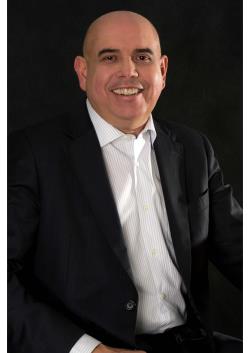
Mr Alexandre Barbosa, Head of the Regional Center for Studies on the Development of the Information Society (Cetic.br), linked to the Brazilian Network Information Center (NIC.br). He is responsible for research projects to produce ICT-related data for the monitoring of national policies and international goals, such as the Sustainable Development Goals (SDGs). He coordinates capacity building programs in survey methodologies in Latin America and Portuguese-speaking countries in Africa. Mr Barbosa is a Member of Consultive Committee of the Brazilian Census (Brazilian Institute for Geography and Statistics) and member of the Board of Councelors of the Brazilian Center for Innovation in Education (CIEB). Chair of the Expert Group on ICT Households indicators (EGH) from the International Telecommunications Union (ITU) from 2012 to 2017, expert at the OECD working party on Measurement and Analysis of the Digital Economy and working party on Artificial Intelligence Governance.
Mr Barbosa holds a PhD degree in Business Administration from Getulio Vargas Foundation (Brazil), a Master Degree in Business Administration from Bradford University (UK), a MSc Degree in Computer Science from Federal University of Minas Gerais (Brazil) and a BSc Degree in Electrical Engineering from Catholic University (Brazil) and conducted postdoctoral research at HEC Montreal (Canada).

Esperanza Magpantay is the Senior Statistician at the ICT Data and Analytics Division of the International Telecommunication Union (ITU), where she has worked since 2000. She leads the global collection, harmonization, and dissemination of ICT statistics and spearheaded the creation of the ITU Expert Groups on ICT Indicators, which have become key global mechanisms for developing methodologies and standards in ICT measurement. She represents ITU in major international forums, including the UN Statistical Commission, the UN World Data Forum, Big Data Conferences, and co-Chairs the Partnership on Measuring ICT for Development.
Ms. Magpantay also chairs the UN Committee of Experts on Big Data and Data Science for Official Statistics’ Task Team on Mobile Phone Data, a global collaboration of over 50 experts advancing the use of mobile data for official statistics. She co-leads the ITU–World Bank initiative on Putting Mobile Phone Data to Work for Statistics, which aims to support 30 countries by 2030 in using mobile phone data to inform public policy and its use for official statistics.
With over three decades of experience in international statistics, Ms. Magpantay has been a leading advocate for improving information society statistics, supporting countries in producing high-quality official data, and fostering collaboration and coordination among national and international stakeholders to strengthen evidence-based policymaking. She has led the development and production of international methodological guides, organized and delivered capacity-building initiatives and global events, and contributed to shaping global frameworks and digital indicators that strengthen the production and use of official data worldwide.
Prior to joining ITU, she worked as a Statistical Officer at the International Labour Office (ILO) for seven years. She holds a Global Master in Business Analytics and Big Data from IE University in Madrid, Spain, and a Bachelor of Science in Statistics from the University of the Philippines.

Vibeke has 20 years of experience working with capacity development in data and statistics. She currently manages the data and statistics capacity development portfolio at Norad. In this capacity, she co-leads the FfD Sevilla Platform for Action initiative ‘FfD and the future of data’. Previously, Vibeke has worked in various roles at Statistics Norway, the UN Statistics Division and for the Norwegian Refugee Council’s Norcap roster. She has led numerous capacity development and statistical training programs. She holds a master’s degree in economics from the University of Oslo.
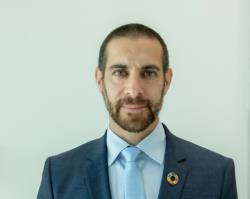
Ambassador Benjamin Rothen is Head of International and National Affairs at the Swiss Federal Statistical Office (FSO), a position he has held since 2021.
He leads Switzerland’s engagement in international statistical cooperation, with a focus on the implementation of the 2030 Agenda for Sustainable Development, including work on financing for development and AI readiness of official data and statistics. He is also involved in the Trusted Data Observatory initiative, contributing to efforts to strengthen trust and innovation in the data ecosystem. Benjamin Rothen has chaired various committees at the United Nations. He was part of the Swiss delegation during the negotiations of the 2030 Agenda and subsequently contributed to the development of its monitoring framework. In 2021, he organized the UN World Data Forum in Bern and co-founded the Bern Network on Financing Data for Development in preparation for the event. He has been working at the FSO for over 17 years. He holds a degree in political science with a focus on international cooperation and development.

Dr Daniel Power is the Managing Director of the Flowminder Foundation, a not-for-profit organisation dedicated to utilising mobile and other data to inform and support humanitarian and development policy and decision-making. With a background in data analysis and strategic project management, Dr Power leads Flowminder’s efforts to enhance the use of mobile data in addressing critical global challenges.
Flowminder’s work focuses on leveraging anonymized mobile operator data and other sources to provide crucial insights into population movements and resource needs, particularly in low- and middle-income countries. The foundation’s projects span disaster response, public health, development planning, and poverty alleviation, significantly impacting how data is used to improve lives and support sustainable development goals.
Dr Power’s expertise includes strategic leadership, underpinned by a rich understanding of the complexities involved in using big data for social good. This encompasses partnership mobilisation, data engineering, privacy protection and ethics, data analysis, and supporting the practical use of data. His leadership at Flowminder is characterised by a commitment to people-centred principles, ensuring that the organisation not only utilises cutting-edge technology but also harnesses the collective expertise of its team to make a tangible impact on global humanitarian and development efforts.
-
 C1. The role of governments and all stakeholders in the promotion of ICTs for development
-
 C2. Information and communication infrastructure
-
 C6. Enabling environment
-
 C11. International and regional cooperation
-
 Goal 17: Revitalize the global partnership for sustainable development
- Objective 1: Close all digital divides and accelerate progress across the Sustainable Development Goals
- Objective 2: Expand inclusion in and benefits from the digital economy for all