Deep Skilling for the Quantum Age: A Global Education Model for Women and Girls
Innovation Network Global; Innovation Network Canada, Dynamic Coalition on Emerging Technologies (DC-ET), UN Internet Governance Forum
Session 222
The applied value of quantum will largely be realized through people most quantum education programs do not address. Existing programs train the quantum scientist — the physicist, the computer scientist, the mathematician who advances the science. Countries compete to recruit them, and they remain scarce. The second kind of talent is the domain expert made quantum-capable: the chemist who can now use quantum methods for molecular simulation, the financier who can apply them to risk, the biologist who can apply them to discovery. That person cannot be produced by training a physicist in chemistry; they are produced by making an existing chemist quantum-capable. The same holds across materials, finance, engineering, and biology. Building this second kind of talent is where the gap lies, and where the largest workforce effect of the quantum transition will be felt.
The Global Quantum and Exponential Technologies Education Initiative (GQEI) is being established as a long-term international capacity-building program in quantum and exponential technologies, building on the momentum of the UNESCO International Year of Quantum Science and Technology. It is structured in two streams: international pathways for doctoral and postdoctoral quantum talent, anchored in IEEE Quantum Week — which draws close to two thousand participants from over fifty countries each year — and connected to additional partner platforms across the global quantum scientific community; and a modular course portfolio that makes domain experts quantum-capable in their own sectors. A quantum software engineering micro-credential, approved by the Government of British Columbia and used by industry to evaluate and onboard talent from diverse backgrounds, demonstrates that the second stream works. GQEI extends that model internationally and across sectors.
The full and equal participation of women and girls is a central commitment of the program, in both streams. Every major technology transition has produced a skills divide; women have been the last to gain access and the first to bear the economic consequences. The quantum transition runs on a more compressed timeline than previous ones, and the decisions made now about who gets access will set economic participation patterns for a generation.
GQEI is convened by Innovation Network Canada and Innovation Network Global, in partnership with UNESCO's International Year of Quantum, IEEE Quantum Week, Accra Technical University and the ESDEV Foundation in Africa, and the Dynamic Coalition on Emerging Technologies at the UN Internet Governance Forum. The panel brings additional perspectives from the Global Partnership on AI Tokyo Expert Community and the Open Quantum Institute at CERN. At this session, the program is presented to the international community for the first time, and it will produce a Global Quantum Skilling Framework as a contribution to the WSIS Action Line C4 roadmap.

Dr. May Siksik is Chief Executive Officer of Innovation Network Global, a Canada-headquartered organization advancing system-level innovation in artificial intelligence, quantum technologies, digital health, and digital infrastructure through technology platforms, governance frameworks, and multi-stakeholder initiatives. She co-chairs the Dynamic Coalition on Emerging Technologies at the United Nations Internet Governance Forum (IGF), leads the Global Quantum and Exponential Technologies Education Initiative (GQEI) in partnership with UNESCO's International Year of Quantum, and founded Healthcare Without Borders, a global initiative building sovereign, AI-enabled health systems for Indigenous, remote, and underserved communities.
Dr. Siksik is a delegate to ISO/IEC JTC 3 on Quantum Technologies and liaison to ISO/IEC TC 62 on medical devices and software. She is a member of the OECD Global Forum on Technology Focus Group on Quantum Technologies, serves on the Board of NGen Canada, and is Vice Chair of the Board of CMC Microsystems. She previously chaired Canada's National Research Council Applied Quantum Computing Challenge Program Review Committee.
Through her work, Dr. Siksik brings together industry, government, academia, and civil society to design governance frameworks, develop deployable technologies, and translate emerging technologies into practical solutions for complex real-world challenges.

Dr. Yuko Harayama is the Secretary General of the Tokyo Centre of the Global Partnership on AI (GPAI) Expert Community, where she leads international collaboration on AI governance and policy. She currently serves as a trustee of Yamaguchi University and as a board member of Toray Industries.
Dr. Harayama brings extensive experience in science policy and international affairs to her leadership roles. She previously served as Executive Director for International Affairs at RIKEN and held senior positions in the Japanese government as an Executive Member of the Council for Science, Technology and Innovation (CSTI) in the Cabinet Office. Her international expertise was further developed during her tenure as Deputy Director of the Directorate for Science, Technology and Industry (DSTI) at the OECD. She also spent a decade as a professor at Tohoku University's Graduate School of Engineering.
She has been awarded the Légion d'Honneur (Chevalier) and holds an honorary doctorate from the University of Neuchâtel. She is an International Fellow of the Royal Swedish Academy of Engineering Sciences and a Foundation Fellow of the International Science Council.
Dr. Harayama holds doctorates in both education and economics from the University of Geneva, reflecting her interdisciplinary approach to science policy and innovation.

Prof. Amevi Acakpovi is the Vice-Chancellor of Accra Technical University (ATU),
Ghana, and a seasoned academic, researcher, and engineering professional
with extensive experience in higher education leadership, technology, and
sustainable development. He holds a PhD in Energy Systems Engineering and has
dedicated over two decades to advancing engineering education, research,
and innovation across Africa.
His work spans renewable energy systems, smart technologies, artificial
intelligence, IoT, and technical and vocational education. He has authored over
140 scholarly publications and actively promotes industry-driven education,
digital transformation, and capacity building for young people.
Prof. Acakpovi currently serves as President of the IEC National Committee of
Ghana and contributes to several international initiatives in standards
development, technology policy, and engineering capacity building. He is
passionate about expanding access to emerging technologies and preparing
future generations with the skills needed to thrive in a rapidly evolving
technological landscape
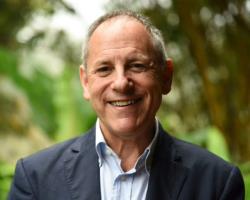
Dr. Joseph Niemela is an Emeritus Scientist at the Abdus Salam International Centre for Theoretical Physics (ICTP), a category 1 Institute of UNESCO located in Trieste, Italy. He currently serves as Chair of Commission 13 of the International Union of Pure and Applied Physics (IUPAP), Chair of the Physics for Development group of the European Physical Society, co-Chair of the UNESCO International Day of Light Steering Committee. He also served as Chair of the Executive Committee of the International Year of Quantum Science and Technology 2025 (IYQ2025), helping to guide it through the UN system towards proclamation, and was a member of the IYQ2025 Steering committee. He has received the Galileo Galilei Silver medal from the Italian Physical Society, the Dwight Nicholson Medal from the American Physical Society, and was elected a Fellow of the American Physical Society for his contributions to turbulence research in both quantum and classical fluids. He is an elected Foreign Fellow of the Pakistan Academy of Sciences.
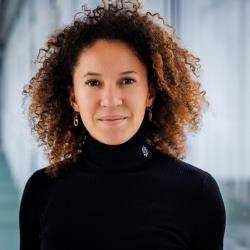
Audrey Himmer leads education and capacity building at the Open Quantum Institute (OQI) at CERN. She previously coordinated innovation and digital cooperation programmes for the French Embassy in Dakar, supporting incubators, entrepreneurs, and initiatives focused on women in technology, AI, and space. Before that, she led international standardisation work on quantum technologies at AFNOR, the French standardisation body, helping to shape global frameworks in the field.

Dr. Müller is a Computer Science Professor at the University of Victoria. He is an international expert in quantum computing, quantum algorithms, distributed quantum computing, software engineering, adaptive systems, and intelligent cyber-physical systems. He was Chair of IEEE Quantum Technical Community (2024-2025) and Co-Chair of the IEEE Future Directions Quantum Initiative (2019-2023). He is a co-founder and the Steering Committee Chair of the IEEE International Conference on Quantum Computing and Engineering (QCE), also known as IEEE Quantum Week. He is the General Chair of QCE26, September 13-18, 2026, in Toronto. He was General Chair of QCE20 (virtual), QCE21 (virtual), QCE23 in Bellevue/Seattle and Program Board Chair of QCE24 in Montréal and QCE25 in Albuquerque. He served on the IEEE Conferences Committee (2019-2021). He was Vice President of the IEEE Computer Society Technical and Conference Activities Board (T&C) (2016-18) and past Chair of TCSE, IEEE CS Technical Council on Software Engineering (2011-15).
-
 C4. Capacity building
-
 C7. ICT applications: benefits in all aspects of life — E-learning
-
 C11. International and regional cooperation
The session is anchored in WSIS Action Line C4 on capacity building. Quantum and exponential technologies represent the next frontier of digital capability, and the question of who can access this capability — and who is shut out — will determine global participation in the economies these technologies create. GQEI directly addresses C4 through structured international capacity-building pathways for both quantum scientists and domain experts being made quantum-capable, with women and girls placed at the centre of both streams. The program also delivers C7 E-learning through modular, internationally co-developed quantum and AI curricula adapted by participating institutions for their own contexts. The international partnership model — anchored in partner institutions across continents — implements C11 by building capacity-building capacity itself through cross-border collaboration on curriculum, standards, and credentialing while these norms are still being set.
-
 Goal 4: Ensure inclusive and equitable quality education and promote lifelong learning opportunities for all
-
 Goal 5: Achieve gender equality and empower all women and girls
-
 Goal 9: Build resilient infrastructure, promote sustainable industrialization and foster innovation
-
 Goal 10: Reduce inequality within and among countries
GQEI directly serves SDG 4 by establishing internationally recognized education pathways in quantum, AI, and HPC, including a government-approved micro-credential model already in delivery. SDG 5 is a central programmatic commitment: the program is explicitly designed to bring women and girls into the quantum transition as scientists and as domain experts at equal scale, addressing both pipeline access and applied workforce participation. SDG 9 is served through the development of human capital required to translate quantum capability into innovation across regulated industries including health, materials, and infrastructure. SDG 10 is addressed through international partnerships that ensure participating countries and institutions — including those in the Global South — help shape curriculum, credential standards, and talent networks while these norms are still being formed, rather than receiving frameworks already set elsewhere.
- Objective 1: Close all digital divides and accelerate progress across the Sustainable Development Goals
- Objective 2: Expand inclusion in and benefits from the digital economy for all
- Objective 5: Enhance international governance of artificial intelligence for the benefit of humanity
Innovation Network Global (ING)