From Conversation to Co-creation: Fostering Next-Generation Leadership for Sustainable Development through AI Literacy
Navinor/International and Bilingual School Educators Association (IBSEA)
Session 218

The World Summit on the Information Society (WSIS) has long championed the role of youth as digital change-makers. However, the rapid proliferation of Generative AI and autonomous systems has created a paradox: while young people are digital natives, they often lack the critical AI literacy required to lead responsibly. Current educational and policy frameworks focus predominantly on AI as a technical tool or a regulatory risk. This leaves a critical gap in applied leadership competencies and the ability to question algorithmic bias, co-design human-centric AI policies, and leverage AI for sustainable development (SDGs). Without targeted intervention, the next generation of leaders will inherit AI systems they do not fully control or understand. This side event organized by Navinor and the International and Buisness School Educators Association (IBSEA) addresses WSIS Action Lines C4 (Capacity building), C7 (E-learning), and C11 (International cooperation). It responds to the urgent need to move from passive AI consumption to active, ethical, and strategic leadership among youth and emerging professionals.

Graduate of the Sustainable Development and Sustainable Business Program at the University of Cambridge; holds a Bachelor's degree from Sun Yat-sen University and a Master's degree from National Taiwan University.
Founder and CEO of Navinor. Previously served as Founder and CEO of the Qinghuo Project of the Asia-Pacific Economic Forum (Yabuli China Entrepreneurs Forum), External Practice Supervisor at Wuhan University, and Education Program Advisor for the Fosun Foundation.
His primary research interests include climate change policy, development aid, and international relations theory. He has published over ten academic papers in journals such as Nankai University’s Journal of Modern World History, Northeast Asia Journal, and Economic Research Guide. He has also contributed to the writing of academic monographs including International Game and National Policies on Climate Change and Blue Book of Oceania.
Previously participated as a speaking guest at the 2025 ACUNS Annual Meeting
in Nairobi
.
He was equally a speaker at the World Summit on the Information Summit (WSIS) 2025 Forum and AI for Good Global Summit 2025 in Geneva, during a side-event on the theme: “Utilizing Digital Technologies to Strengthen Sustainable Development”.

Liao is a Sustainablity Youth Leader who holds a Bachelor's degree from Jinan University; currently pursuing a Master of Science (MSc) in Global China Studies at The Hong Kong University of Science and Technology;Completed a minor coursework in Contemporary International Politics at the University of Texas at Austin. Chief Marketing Officer (CMO) of NatNavis.
Previously participated the 2025 ACUNS Annual Meeting in Nairobi. He was a Youth Leader representing the Global SDGs and Leadership Development (UNITAR affiliated Center) during the World Summit on the Information Society (WSIS) 2025 Forum and AI for Good Global Summit in Geneva.
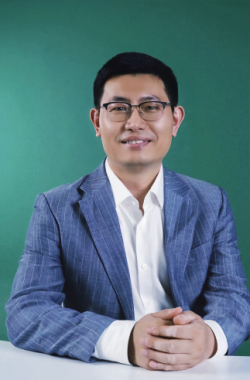
Having worked in various international schools in Hong Kong, Mainland China, and overseas, Mr. Wesley HAN is the co-founder or advisor of several international schools in Zhejiang, Jiangsu, Guangdong, and Shandong provinces. To address the development challenges of international schools, he has organized training programs for thousands of Chinese and foreign teachers, administrators, and school heads, with a focus on integrating international curricula with Chinese or Hong Kong curricula.
Mr. Wesley HAN is the Founder of the Global Chinese Writing Competition for Young Writers. Over the past five years, the competition has grown into a globally influential platform, engaging nearly 500 renowned international and bilingual schools from over 20 countries, with more than 10,000 registered students. He is also the designer of the Global Youth AI Creation Course, which empowers students to advance from foundational AI literacy and language proficiency to multimodal creation, and ultimately to research-level projects that address real-world issues aligned with the UN Sustainable Development Goals.
In March 2026, Mr. Wesley HAN was invited to deliver a speech to school principals and teachers at the Hong Kong Education Bureau on the theme “Global Youth AI Creation Course and Conference: A Bridge to the United Nations and Future Careers.”

Ms. Chenayi Mutambasere is a development economist, global enterprise architect, and Director at the Africa Centre for Economic Justice. With extensive experience across the UK banking, legal, and public sectors, she brings a multidisciplinary perspective to economic policy, digital transformation, and institutional reform.
Chenayi is also actively engaged in shaping global conversations on AI and diversity, advocating for inclusive data systems that ensure no community is left behind in the digital age. Her work focuses on advancing equitable economic systems across Africa, with particular emphasis on data poverty, artificial intelligence, and inclusive digital economies. Chenayi has led research on land reform and continues to contribute to policy discussions on governance, transparency, and economic justice. She is also a Stewart for the U4SSC Digital Development Goals working group.

Dr. Lionel Mbanda is a visionary leader with advance strategic planning, technical advisory, corporate negotiation and program management abilities. He is a dedicated professional with work and research experience related to development finance, energy policy, environmental management, clean power generation and sustainability with; International governmental organizations (IGO`s), multi-lateral development banks (MDBs), Non-Profit and Non-governmental organizations (NGOs). Currently, he serves as a Board Member of the Model Forest Policy Program (MFPP) that is focused on providing climate risk mitigation solutions to rural communities notably in Idaho, USA. Lead Author of UNESCO Science Report (USR) for Chapter 11 entitled: Africa for the 8th Edition of the UNESCO Science Report (USR). He equally leads International Programs for the Global SDGs and Leadership Development Center (UNITAR affiliated Center), that initiates capacity development and youth empowerment programs that has supported 5000+ climate leaders to achieve the UN SDGs Agenda.
-
 C1. The role of governments and all stakeholders in the promotion of ICTs for development
-
 C3. Access to information and knowledge
-
 C4. Capacity building
-
 C5. Building confidence and security in use of ICTs
-
 C6. Enabling environment
-
 C7. ICT applications: benefits in all aspects of life — E-government
-
 C7. ICT applications: benefits in all aspects of life — E-learning
-
 C7. ICT applications: benefits in all aspects of life — E-science
-
 Goal 1: End poverty in all its forms everywhere
-
 Goal 2: End hunger, achieve food security and improved nutrition and promote sustainable agriculture
-
 Goal 4: Ensure inclusive and equitable quality education and promote lifelong learning opportunities for all
-
 Goal 7: Ensure access to affordable, reliable, sustainable and modern energy for all
-
 Goal 8: Promote inclusive and sustainable economic growth, employment and decent work for all
-
 Goal 9: Build resilient infrastructure, promote sustainable industrialization and foster innovation
-
 Goal 10: Reduce inequality within and among countries
-
 Goal 11: Make cities inclusive, safe, resilient and sustainable
-
 Goal 17: Revitalize the global partnership for sustainable development
- Objective 1: Close all digital divides and accelerate progress across the Sustainable Development Goals
- Objective 2: Expand inclusion in and benefits from the digital economy for all
- Objective 3: Foster an inclusive, open, safe and secure digital space that respects, protects and promotes human rights
- Objective 4: Advance responsible, equitable and interoperable data governance approaches
