Building the infrastructure of trust, governance, and scalability for the prevention of Noncommunicable Diseases
WHO, ITU, Vital Strategies and REACH Digital
Session 210
This session is jointly organized by the World Health Organization (WHO), the International Telecommunication Union (ITU), Vital Strategies, and REACH Digital as part of the World Summit on the Information Society (WSIS) Forum 2026. It brings together leaders from governments, international organizations, and implementation partners to explore how trusted AI, digital health, and cross-sectoral collaboration can accelerate healthier lives and strengthen prevention at scale.
Noncommunicable diseases (NCDs) are a leading cause of morbidity and mortality globally, increasingly co-occurring and shaped by shared social, commercial, and environmental determinants. NCDs are responsible for approximately 43 million deaths each year, of which 18 million occur prematurely (before the age of 70). According to the 2023 Global Burden of Disease study, NCDs account for three of the top five causes of disability-adjusted life years (DALYs) lost—namely ischemic heart disease, stroke, and diabetes. The health impact of NCDs is substantial, and remains largely unaddressed in resource-limited settings, where 82% of premature deaths due to NCDs occur, and it falls disproportionately on vulnerable and socially disadvantaged populations. While digital health interventions have proliferated, the landscape remains characterized by fragmented pilots and siloed data systems that lack interoperability and long-term sustainability. To effectively address these complex health challenges and achieve impact at scale, there is a clear necessity to move beyond standalone tools toward a more integrated and sustainable digital approach.
In alignment with the Global Digital Compact[1] and the Global Initiative on Digital Health[2], there is growing recognition that digital health must evolve from fragmented pilots toward trusted, interoperable and sustainable national digital ecosystems. As countries increasingly look to harness AI to strengthen prevention and improve health outcomes, success will depend not only on technology, but also on effective governance, trusted health content, interoperable digital infrastructure and strong cross-sectoral collaboration. This session brings together leaders from governments, international organizations and implementation partners to explore these critical building blocks, drawing on practical experiences from country implementation and global initiatives—including the evolution of the World Health Organization –International Telecommunications Union (ITU) Be He@lthy, Be Mobile (BHBM) partnership—as examples of how trusted AI-powered digital health solutions can be scaled responsibly.
Objectives:
- To share practical experiences from governments and global partners on building sustainable digital health solutions that improve people's lives.
- To explore how trusted governance, strong partnerships and digital infrastructure can enable safe and scalable digital health.
[1] Global Digital Compact | Office for Digital and Emerging Technologies
[2] Global Initiative on Digital Health

Dr Cosmas Zavazava took office as Director of the Telecommunication Development Bureau (BDT) at the International Telecommunication Union (ITU) on 1 January 2023.
With more than 30 years in telecommunications, including over 20 years in ITU's Development Sector, Dr Zavazava has promoted and implemented impactful information and communication technology projects around the world.
Prior to his election as BDT Director, he served as ITU's Chief of Partnerships for Digital Development , overseeing development-related projects, strategic partnerships, and resource mobilization between 2019 and 2022, while launching new initiatives that have boosted the engagement of industry, private-sector and academia members in ITU's work.
Previously, as ITU's Chief of Projects and Initiatives, he oversaw development projects focused on gender, youth, and people with special needs, along with capacity building, emergency telecommunications, climate change mitigation and adaptation, and e-waste management.
Earlier, Dr Zavazava headed the Republic of Zimbabwe's Government Telecommunications Agency and served as a senior diplomat. He also taught MBA classes at the UK's Nottingham Trent University.
Throughout his career, he has focused on closing the digital and skills divide and accelerating digital transformation to achieve socio-economic development for all.
Dr Zavazava holds a PhD in Multilateral Trade from Business School Lausanne (Switzerland), and a Master of Laws degree in Telecommunications and Information Technology from the University of Strathclyde (UK), as well as a Master's in International Relations from Webster University (US), and an MBA from the University of Zimbabwe. He also holds a Bachelor's in Business Administration and diplomas in Telecommunications and Systems Engineering.
.jpg?maxwidth=250)
As Assistant Director-General of Health Promotion and Disease Prevention and Control, Jeremy Farrar leads WHO's work on communicable and noncommunicable diseases, health through the life course, health promotion and social determinants of health, nutrition and food safety, migration and health, and the impacts of the environment and climate change on health.
Between 2023 and 2025 Dr Farrar was the Chief Scientist at WHO.
Prior to joining WHO, Dr Farrar was Director of Wellcome for 10 years. He oversaw a series of major reforms and growth, with Wellcome now collaborating with partners around the world focused on fundamental discovery science and three challenge areas: Climate and health, Infectious diseases, and Mental health, all with a commitment to ensuring that equity, diversity and inclusion are central to the science they support.
Before joining Wellcome, Dr Farrar spent over 17 years as Director of the Clinical Research Unit Hospital for Tropical Diseases in Ho Chi Minh City, Viet Nam. His clinical and scientific interests have been in integrated health sciences across a range of public health priorities including emerging infections, influenza, infections of the brain, HIV, dengue, typhoid, malaria, tuberculosis, snakebite, and antimicrobial resistance.
Dr Farrar trained in neurology and infectious diseases in London, Edinburgh, Melbourne and Oxford. He has a PhD in immunology from the University of Oxford.

Mr. Omar Badjie has served as the NCD Program Manager and National Tobacco Control Focal Person at the Ministry of Health, Republic of The Gambia since 2012 and also at the MOP Bureau Member for the African Region for Illicit Trade Protocol in Tobacco Control. He holds a Bachelor of Science degree in Public and Environmental Health and a Master’s degree in Public Health – Health Promotion from the University of Leeds Beckett in the United Kingdom.

Dr Guy Fones heads the Crosscutting and Integration Unit and is, currently, Director a.i. at WHO’s Department of Noncommunicable Diseases and Mental Health, at the World Health Organization (WHO).
He received his MD from the University of Chile in 1991 and has, since then, gained more than 30 years’ experience and achievements in public, private and global health platforms, including his 15-year clinical practice as both ‘Ear, Nose and Throat’ and ‘Emergency Medicine’ specialist in Chile.
Dr Fones cemented his expertise in Global Health Diplomacy as Health Attaché for the Permanent Mission of Chile to the United Nations Organizations in Geneva where, for 6 years, he gained solid experience in multilateral and stakeholder governance for health, global policy consensus-building and forging strategic pro-health partnerships bridging national, regional and global multistakeholder interests.
Dr Fones joined WHO in 2015 at the Global Coordination Mechanism for NCDs, which he led from 2019-2024, supporting WHO’s work on multistakeholder and cross-sectoral engagement, knowledge sharing, capacity building and partnerships for NCDs.
In July 2024, Dr Fones joined WHO’s NCD Department as Cross Cutting Lead, Strategy, and from 2024-2025 he was appointed its Director a.i., including the important role as main focal point for the preparatory process towards the 2025 4th United Nations High-Level Meeting on NCDs and Mental Health.

Deputy Director of the eHealth Department at the Ministry of Health of Poland. Contributes to shaping the strategic directions of the digital transformation of Poland’s healthcare system. Her work focuses on leading initiatives that leverage artificial intelligence, health data, and the Internet of Medical Things (IoMT) to support innovation and improve healthcare delivery. Graduate of the Harvard Medical School Executive Education program Leading Digital Transformation in Health Care and a PhD candidate researching the application of artificial intelligence in medical sciences.
.jpg?maxwidth=250)
Pedro do Carmo Baumgratz de Paula is Senior Vice President of Global Innovation at Vital Strategies, where he oversees the organization's strategy for integrating AI, data science, and digital health solutions across programs and partnerships in more than 70 countries. Pedro joined Vital Strategies in 2015 and founded its Brazil office in 2017, building a multidisciplinary team recognized for translating data into government action at national scale. Over the past decade, his work has spanned road safety, NCDs, mental health, gender-based violence, pandemic response, and pioneering applications of AI in public health. He holds an LL.B. (J.D. equivalent) from the Federal University of Juiz de Fora, a M.Sc. and a Ph.D in Economic Law and Political Economy from the University of São Paulo’s Law School, with visiting doctoral research on state capacity for innovation in public health at the Blavatnik School of Government, University of Oxford.

Debbie Rogers, a dynamic leader passionate about advancing mobile technology for health, brings a wealth of experience and expertise to her role as CEO of Reach Digital Health (Reach) and a board member of Turn.io. Her leadership tenure at the organisation, spanning over a decade, has demonstrated her ability to drive innovation and deliver impactful solutions. Drawing on her advanced Electrical and Electronic Engineering and Digital Arts degrees, Debbie possesses a unique blend of technological problem-solving skills and creative insights. Debbie was the recipient of the Skoll Award for Social Entrepreneurship in 2023.
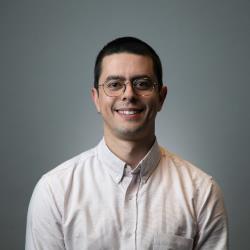
Sebastien Peytrignet is a Project Officer in the Future Networks and Spectrum Management Division at the International Telecommunication Union (ITU) in Geneva. His work focuses on using data and digital technologies to support digital development and evidence-based policymaking. He holds an MSc in Econometrics from the University of Geneva and a Certificate of Open Studies in Machine Learning from EPFL. Prior to joining ITU, Sebastien worked as a Research Statistician at the University of Manchester, supporting clinical and public health research. He also worked at The Health Foundation, where he developed population health data linkages with the UK's National Health Service (NHS) to support health system analysis and policy.

Surabhi Joshi is a Technical Officer (Digital Health) in the Department of Noncommunicable Diseases, Rehabilitation and Disability at the World Health Organization (WHO), Geneva where she leads work at the intersection of digital health, artificial intelligence and the prevention and management of noncommunicable diseases (NCDs). She supports the WHO–International Telecommunication Union (ITU) Be He@lthy, Be Mobile (BHBM) initiative, helping countries scale trusted, people-centered digital health solutions for healthier lives.
With more than 15 years of experience in global public health, Surabhi has worked across digital transformation, health systems strengthening, and international partnerships, with a particular focus on translating WHO normative guidance into practical digital solutions for countries. Her work brings together governments, UN agencies and technical partners to advance trusted AI, citizen engagement and digital innovation for public health.
-
 C7. ICT applications: benefits in all aspects of life — E-health
-
 C8. Cultural diversity and identity, linguistic diversity and local content
-
 Goal 3: Ensure healthy lives and promote well-being for all
- Objective 1: Close all digital divides and accelerate progress across the Sustainable Development Goals
- Objective 3: Foster an inclusive, open, safe and secure digital space that respects, protects and promotes human rights