Control Systems for Excellence: Data & Processing Systems (specific reference to bionic eyes)
IGF Dynamic Coalition on Data Driven Health Technologies
Session 156
Frameworks for achieving excellent operational systems for best outcomes for health data and general applications
As we integrate systems globally, it is critical that we have excellence for data quality that sources other systems (including AI and Quantum) so as to minimize disruption from poor interoperability. Hence monitoring of the foundational systems for data quality including reliability, accuracy, authenticity, validity, relevance and so forth is important. We must be mindful of structured and unstructured data and how user that input and output data may be impacted by data quality such as hallucinations or basic accessibility for the disabled. Is the data meaningful for its intended purpose? Are the formats useful? Is the data up to date and free of errors? All these questions must be answered before the data is sent into another system.
The health Eco-System will integrate legal, financial, cultural and other relevant systems with the specific health system from say a pharmacy or hospital to provide the end user with an integrated service opportunity. Each integrating system must be it own stand alone "truth" for its data with ensuing meta tags so that there is excellence for interoperability.
To build data quality excellence we need to implement monitoring systems guided by internationally recognized frameworks and policies for all data gathering, storing, processing, feeding and reporting mechanisms. There are a number of manners of implementing these control and monitoring systems. This session we look at sensors and the bionic eye as an emerging technology that can support our work.
Bionic eyes — formally classified as visual prostheses or retinal/cortical prosthetic systems — represent one of the most complex intersections of embedded electronics, real-time data processing, neural interfacing, and clinical governance in the history of health technology. As these devices evolve from proof-of-concept implants into AI-augmented, wirelessly connected neural interfaces, the governance, risk management, and data control disciplines required to oversee them have grown correspondingly complex. This session examines the architecture of control excellence for bionic eye technologies through three converging lenses: (1) the COSO Internal Control and Enterprise Risk Management (ERM) frameworks as the foundational governance model for data and systems controls; (2) relevant ISO/IEC standards and technical reports governing medical device quality, risk, software lifecycle, network integration, and health informatics security; and (3) the some of the most recent research, clinical trials, and white papers addressing systems control, AI integration, cybersecurity vulnerabilities, and neurodata privacy in visual prostheses and so forth.

Amali is Founder and Chair of IGF DC DDHT. She is a professional accountant CPM CMA with a Masters in International Accounting & Finance (LSE UK) an Economist (BSc(Hons) Warwick UK) and pursued the Master in Computer Science program at Imperial College UK. She has worked in Industry such with LMI Dynavision, other Technology, Non Profit and Government. She was President of VCN (ISP) in Vancouver, a Director of the Freedom of Information & Privacy Assoc in BC and Director UNA Victoria, Board Member EIA (affiliated with ICANN). She has been active @WSIS since prep com 1 leading the North American caucus at that time, She has contributed to Pew / Elon University projects and Eurodig.
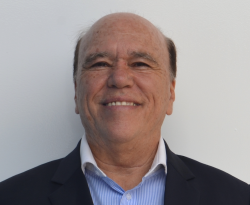
Amado Espinosa is a respected international expert on the field of Medical Informatics with academic, institutional and entrepreneurial antecedents. He is one of few MD who has developed a clinic, administrative, technical and legal carrier. After being trained as a specialized physician in Anesthesiology, he served as a national advisor for healthcare at the Mexican Social Security Institute, and got his MBA and his MCS in Mexico and then his PhD in Germany together with the specialty on Medical Informatics (MI). He got a Law Degree in Mexico and a Master in Law for New Technologies (AI) in Spain. Main interests: Digital Health, AI Governance for self-management of care, Universal Health Coverage.
He founded the Institute for Medical Informatics at the Autonomous University of Guadalajara, the Mexican MI Association, formalized and was the founder president of the International Medical Informatics Association for Latin America and Caribbean, and organized training programs on MI for healthcare professionals in Latin America.
He started the first LA consortium to develop ICT solutions for healthcare, coping with the requirements of the healthcare reform and PAHO (Pan-American Health Organization) guidelines. In 1998 he launched Medisist, a company dedicated to research, develop and deploy innovative ICT solutions for the healthcare system. He has served as a Board member of International Medical Informatics Association (IMIA) and the World IT Services Alliance (WITSA), becoming the chairman of the organizing committee of the GPPS 2011 (Global Public Policy Summit) and WCIT 2014 (World Congress on ICT) held in Guadalajara, Mexico, with more than 3,000 attendees. He has served as the VP for international affairs at CANIETI (Mexican ICT Chamber), and Chair of Committee at AMITI (Mexican IT Industry Association). He is a member of the International Health Academy of Sciences Informatics.
He has been member of the Multistakehoder Advisory Group at the Internet Governance Forum (IGF) of United Nations, representing Latin American’s private sector, and is a co-facilitator at the Dynamic Coalition for Data Driven Health Technologies, and co-facilitator at the Policy Network on Artificial Intelligence at the IGF,Member of the Domain Committee AI for Healthcare at the UNESCO – IFIP (International Federation for Information Processing). He is member of the EC at IGFSA, Digital Health specialist at AMITI, and VP for Digital Health at Coparmex
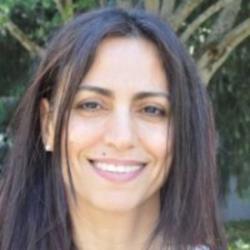
Dr. May Siksik is CEO of Innovation Network Global, a Canada-headquartered platform advancing system-level innovation across AI, quantum, and digital infrastructure. She co-chairs the Dynamic Coalition on Emerging Technologies at the United Nations IGF, leads the Global Quantum Education Initiative in partnership with the UNESCO International Year of Quantum, and founded Healthcare Without Borders, a global initiative focused on AI-driven, inclusive health systems. She serves as a national delegate to the ISO technical committee on quantum technologies and liaison to the committee on medical devices and software (TC 62), and chairs Canada's national research council's review committee for the applied quantum computing challenge program.

Deputy Chief Executive with a distinguished United Nations career spanning roles as Chief IT Auditor and Chief Information Officer, bringing extensive, multi-year hands-on experience designing, governing, and assuring Information Systems, Blockchains, Distributed Ledger Technologies, and Digital Identity solutions underpinning United Nations Global Operations and Critical Infrastructure.
Brings deep practical expertise in information security assurance aligned with international standards, including the assessment, identification, and mitigation of emerging cryptographic threats — with particular focus on post-quantum computing risks to blockchain-based and distributed systems.
Applies rigorous, standards-based methodologies to evaluate cryptographic resilience, inform remediation roadmaps, and future-proof mission-critical infrastructure against evolving threat landscapes.
Committed to responsible and ethical design, use, and assessment of emerging technologies, to serve the broader goals of the United Nations, organizational integrity, and societal benefit.
Led the achievement of the first United Nations ISO/IEC 42001 certification, establishing a landmark standard for the responsible and ethical use of Artificial Intelligence across UNJSPF operations.
Dedicated to compliance with international standards and professional best practices for governing, managing, auditing, and securing global information systems and protecting data and privacy — including ISO/IEC 27001 (Information Security Management), ISO/IEC 27701 (Personal Identifiable Information Management), and ISO/IEC 42001 (AI Management Systems).

Jörn Erbguth is President of Geneva Macro Labs and an independent Researcher at the University of Geneva, where his work centres on privacy in new technologies. He is active in the Dynamic Coalition on Data Driven Health Technologies (DC-DDHT), addressing how emerging data-driven systems can advance health while safeguarding privacy and individual rights. With a background spanning law and computer science, he focuses on the practical governance of technologies at the intersection of data protection and innovation.

I am a Telecommunications PhD holder and Senior Researcher at Innov’COM
Laboratory (Sup’COM Tunisia), where my work sits at the critical intersection of
wireless connectivity, artificial intelligence, and security. My research focuses on
next-generation mobile networks, signal processing, and vehicular (V2X)
communications, all anchored by a deep commitment to digital inclusion and equity.
In 2019, I was selected as a TechWomen Emerging Leader by the Institute of
International Education (IIE)—a milestone that culminated in a transformative
professional mentorship at Qualcomm California. There, I gained hands-on industry
exposure to cutting-edge 5G, V2X, and Wi-Fi 6 technologies, bridging the gap
between academic theory and real-world telecommunications R&D.
Beyond the lab, I actively shape the global digital ecosystem through governance and
policy. I serve as the North Africa Coordinator for IPv6 Cybersecurity and am a
contributing member of the African Union Expert Cybersecurity Group, the ISOC
Tunisia Chapter, and the NCSG at ICANN. My dedication to open, resilient internet
standards is further underscored by my fellowships with both ICANN and the IETF.
My academic journey includes lecturing at Tunisia's top engineering schools,
including Sup’COM, ISET'COM, ESPRIT, and ISAMM. I am also a frequent
reviewer for IEEE conferences and a sought-after international speaker and trainer,
passionate about empowering diverse talent and fostering cross-border collaboration
in the digital age.

Summary
With extensive experience spanning both the European Union and the Caribbean, I am a
dedicated health care professional and human rights activist. My work combines
clinical excellence, innovative research, and passionate advocacy for equitable access
to health care. I am driven by a commitment to advancing public health, empowering
communities, and shaping policy to support vulnerable populations. My career reflects
a blend of academic rigour, practical leadership, and a global perspective.
Qualifications
I hold advanced degrees in nursing and public health, complemented by specialised
training in human rights and health policy. My academic credentials are further
enhanced by ongoing professional development in clinical research, medical ethics,
and health systems management. These qualifications have equipped me to navigate
complex health care environments and drive impactful change.
Areas of Expertise
• Clinical Practice: Delivering patient-centred care across diverse settings
• Research: Designing and conducting studies focused on public health and
nutrition
• Advocacy: Championing human rights in health care, with a focus on
underserved communities
• Business & IT: Integrating technology and business principles to optimise health
services
• Policy Development: Advising on health policy and regulatory frameworks in the
EU and Caribbean
Research Interests
• Health Equity and Access
• Nutrition and Public Health
• The Impact of Vitamin D on Community Health
• Medical Ethics and Human Rights
• Innovative Health Technologies
Professional Activities
I am actively engaged in a range of professional activities, including international health
conferences, policy forums, and collaborative research projects. My ongoing
development involves mentoring emerging health care leaders and participating in
multidisciplinary teams. I regularly contribute to publications and advisory panels,
ensuring my practice remains at the forefront of best standards and innovation.
Personal Statement
My motivation stems from a deep belief in the transformative power of health care and
human rights. I strive to create meaningful impact by bridging gaps between
communities, professionals, and policymakers. Through my work, I aim to inspire
lasting change, foster resilience, and promote dignity for all. Every challenge is an
opportunity to advocate for justice, compassion, and excellence in health care.
Study Involvement
I have contributed significantly to the Cardera Study at the KGT School of Medicine,
focusing on advancing medical knowledge and improving outcomes for patients in the
Caribbean. Additionally, my involvement in the Vitamins D study at Queen Mary
University of London (QMUL) has deepened my expertise in nutritional health and its
effects on diverse populations. These projects have enriched my understanding of
global health challenges and strengthened my commit

Yao Amevi A. Sossou is a multifaceted professional operating at the intersection of digital policy, software engineering, and community development. He brings an interdisciplinary background to his work, combining a BSc in Computer Science and an MA in Communication, Media, Sound & Interaction Design with ongoing advanced studies in Data Science and Artificial Intelligence.
Yao holds significant leadership roles in the Internet governance ecosystem, notably serving as the Policy Chair of the Not-for-Profit Organizations Constituency (NPOC) at ICANN. He is a dedicated advocate for digital transformation, having initiated the Youth IGF Benin Initiative to empower young people and foster policy literacy globally.
Professionally, Yao has extensive experience as a Research Associate, Project Manager, and Software Engineer. He has successfully designed and developed digital health platforms, such as BintaCura, and has contributed to numerous international research and development projects. His technical expertise spans design, programming and database management, which he leverages to translate complex technical requirements into practical, human-centered solutions.

João Rocha Gomes is a medical doctor, health economist, and digital health specialist working at the intersection of clinical safety, health data science, and responsible AI. His work focuses on trustworthy digital health solutions, evidence-based innovation, and the governance of AI-enabled technologies in healthcare.
-
 C1. The role of governments and all stakeholders in the promotion of ICTs for development
-
 C2. Information and communication infrastructure
-
 C3. Access to information and knowledge
-
 C4. Capacity building
-
 C5. Building confidence and security in use of ICTs
-
 C6. Enabling environment
-
 C7. ICT applications: benefits in all aspects of life — E-government
-
 C7. ICT applications: benefits in all aspects of life — E-business
-
 C7. ICT applications: benefits in all aspects of life — E-learning
-
 C7. ICT applications: benefits in all aspects of life — E-health
-
 C7. ICT applications: benefits in all aspects of life — E-employment
-
 C7. ICT applications: benefits in all aspects of life — E-environment
-
 C7. ICT applications: benefits in all aspects of life — E-agriculture
-
 C7. ICT applications: benefits in all aspects of life — E-science
-
 C8. Cultural diversity and identity, linguistic diversity and local content
-
 C9. Media
-
 C10. Ethical dimensions of the Information Society
-
 C11. International and regional cooperation
Our main action line is C6 and C7 Health
-
 Goal 1: End poverty in all its forms everywhere
-
 Goal 2: End hunger, achieve food security and improved nutrition and promote sustainable agriculture
-
 Goal 3: Ensure healthy lives and promote well-being for all
-
 Goal 4: Ensure inclusive and equitable quality education and promote lifelong learning opportunities for all
-
 Goal 5: Achieve gender equality and empower all women and girls
-
 Goal 6: Ensure access to water and sanitation for all
-
 Goal 7: Ensure access to affordable, reliable, sustainable and modern energy for all
-
 Goal 8: Promote inclusive and sustainable economic growth, employment and decent work for all
-
 Goal 9: Build resilient infrastructure, promote sustainable industrialization and foster innovation
-
 Goal 10: Reduce inequality within and among countries
-
 Goal 11: Make cities inclusive, safe, resilient and sustainable
-
 Goal 12: Ensure sustainable consumption and production patterns
-
 Goal 13: Take urgent action to combat climate change and its impacts
-
 Goal 14: Conserve and sustainably use the oceans, seas and marine resources
-
 Goal 15: Sustainably manage forests, combat desertification, halt and reverse land degradation, halt biodiversity loss
-
 Goal 16: Promote just, peaceful and inclusive societies
-
 Goal 17: Revitalize the global partnership for sustainable development

Main SDG is #3
However, this work will be an enabler and educator for all SDGs
- Objective 1: Close all digital divides and accelerate progress across the Sustainable Development Goals
- Objective 2: Expand inclusion in and benefits from the digital economy for all
- Objective 3: Foster an inclusive, open, safe and secure digital space that respects, protects and promotes human rights
- Objective 4: Advance responsible, equitable and interoperable data governance approaches
- Objective 5: Enhance international governance of artificial intelligence for the benefit of humanity
a. COSO
COSO Internal Control – Integrated Framework (ICIF): https://www.coso.org/internal-control — the foundational 1992/2013 framework for data and systems controls, applicable to health technology governance
COSO Enterprise Risk Management (ERM): https://www.coso.org/guidance-erm — the 2017 ERM update integrating strategy, performance, and risk
COSO Compliance Risk (Healthcare): https://www.corporatecompliance.org/coso — authored with SCCE & HCCA specifically for health compliance programs
COSO + AI Governance (Deloitte 2025): Deloitte's guide on applying COSO ERM to AI risks — directly relevant to AI-driven stimulation algorithms in bionic eyes
b. ISO Standards Stack
Standard
Relevance
ISO 42001
Responsible use of AI
ISO 13485:2016
Medical device QMS — full lifecycle quality
ISO 14971:2019
Risk management — hazard analysis for bioelectronics, software, wireless
IEC 62304
Medical device software lifecycle — Class C for AI stimulation algorithms
IEC 80001-1
IT networks with medical devices — wireless connectivity risk
ISO 27799:2016
Health informatics security — neurodata protection
ISO/IEC 25010
Software quality — reliability, security, maintainability