WSIS: Building an Inclusive Future for All: The WSIS Action Lines as a Framework for Global Digital Cooperation
Co-organisers: ITU, UNDP, Egypt, South Africa, ICC, APC
Session 604
Venue: Conference Room, WIPO, 1 UN Plaza, Suite 2530, NY 10017, USA
As the global digital landscape continues to evolve, advances in connectivity, digital skills, digital public infrastructure, artificial intelligence, data and emerging technologies are creating new opportunities to accelerate sustainable development, while also raising new challenges around inclusion, trust, equity and governance. Twenty years since the creation of the WSIS Action Lines, their continued relevance provides an opportunity to look ahead, build on progress and lessons learned, and strengthen cooperation to translate the commitments of the WSIS+20 Outcome Document into concrete action and greater impact for people and communities around the world.
Following the WSIS+20 review and the adoption of the WSIS+20 Outcome Document (A/RES/80/173), this session during the United Nations General Assembly will bring together stakeholders from across the UN system, governments, the private sector, civil society, technical community, and academia to showcase concrete examples of WSIS Action Lines implementation efforts, share experiences and lessons across regions and sectors, and strengthen the partnerships needed to advance the commitments made.
The discussion will explore how Action Line implementation is supporting inclusive and sustainable digital transformation, including through national and regional initiatives, and identify opportunities to scale collaboration and accelerate progress.
The annual WSIS Forum serves as the central multistakeholder convening platform for advancing the implementation of the WSIS Action Lines and supporting global digital cooperation. The recent WSIS Forum 2026, held from 6 to 10 July 2026 in Geneva, Switzerland, brought together stakeholders from across sectors and regions to exchange experiences, share knowledge and identify opportunities for further action, reaffirming its continued relevance in advancing inclusive and meaningful digital cooperation. Highlights and key outcomes from the Forum are available here. The Forum was chaired by H.E. Eng. Raafat Hendy, Minister, Ministry of Communications and Information Technology, Egypt (Arab Republic of). The Chair’s Summary is available here.
Key areas of discussion include:
- Showcasing tangible results and impact achieved through WSIS Action Line implementation across sectors and regions.
- Exploring how Action Line implementation roadmaps can translate global digital commitments into practical action at national and local levels.
- Strengthening coherence between the WSIS Action Lines, the Global Digital Compact, and the Sustainable Development Goals.
- Identifying opportunities to deepen multistakeholder collaboration and scale successful initiatives to accelerate progress on WSIS+20 commitments.

Mahmoud Badawi has been serving as the Assistant Minister for Digital Transformation since January 2025.
In this capacity, Badawi is responsible for overseeing the implementation of key digital transformation initiatives carried out by the Ministry of Communications and Information Technology (MCIT) across various state sectors. His role also includes the preparation and monitoring of strategic action plans aimed at advancing digital transformation efforts and expanding the digitization of government services.
Badawi holds a bachelor’s degree in Computer and Information Sciences from Ain Shams University and brings with him 19 years of extensive experience in the fields of information technology, business administration, and strategic planning.
Prior to his current position, Badawi served as the Chief Executive Officer of Post Connect and the General Manager of Managed Services at Giza Systems. His career also includes significant tenures at IBM. He was instrumental in designing and developing organizational structures for various departments and companies specializing in IT services and digital transformation.
Throughout his career, Badawi has led teams of up to 300 multi disciplined specialists and has developed deep expertise in a range of technical domains, including blockchain, cybersecurity, data science, DevSecOps, Cloud and Digital Solutions

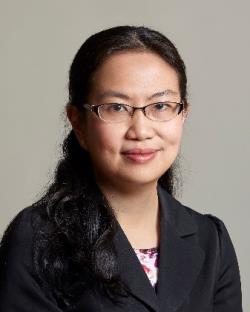
Yu Ping Chan is a senior digital policy expert and diplomat currently serving as the Head of Digital Partnerships and Engagement at the United Nations Development Programme (UNDP) Global Centre in Singapore. With extensive experience in multilateral diplomacy, she previously led the team in the Office of the UN Secretary-General’s Envoy on Technology, where she focused on international cooperation and digital governance. Throughout her career, she has been a key figure in bridging gaps between governments, the private sector, and civil society to leverage technology for sustainable development and global connectivity.

Dr. Derrick Muneene is the Team Lead for the Assessment, Planning and Partnerships Team within the Insights, Capacity and Operations Unit of the Department of Data, Digital Health, Analytics and AI at the World Health Organization (WHO) Headquarters in Geneva, Switzerland. He has over 25 years of progressive experience in global digital health, health information systems, digital transformation, public health informatics, digital health governance, capacity development, and strategic partnerships.

Chat Garcia Ramilo is the Executive Director of the Association for Progressive Communications (APC). She has organisational, management and gender expertise developed from over 30 years of leading multi-country and multi-disciplinary projects, programmes and networks on internet, digital technologies, human rights and development.
The Association for Progressive Communications is a trusted convenor and diverse network founded in 1990 with staff, members and partners active in 60 countries. The APC community of feminist and human rights advocates, policy change actors and people centred technology practitioners work together towards building a transformative movement to ensure that the internet and digital technologies enable social, gender and environmental justice for all people.
Ms Garcia Ramilo comes from the Philippines and previously worked in migration, ethnic and multicultural issues and women’s rights in the Asia-Pacific region.
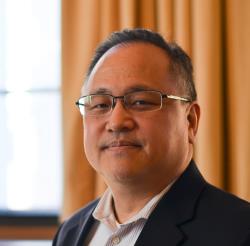
Christopher S. Yoo is the Imasogie Professor in Law & Technology; Professor of Communication; Professor of Computer & Information Science; the Founding Director of the Center for Technology, Innovation & Competition; and the Faculty Co-Director of the Penn Center of Media, Technology, and Democracy at the University of Pennsylvania. He is the author of 4 books and over 130 other scholarly works and has taught at over a dozen universities around the world.
Professor Yoo received his A.B. from Harvard University, his M.B.A. from UCLA, and his J.D. from Northwestern University. Before entering the academy, Professor Yoo clerked for Justice Anthony M. Kennedy of the Supreme Court of the United States and Judge A. Raymond Randolph of the U.S. Court of Appeals for the D.C. Circuit. He also practiced law with the D.C. firm of Hogan & Hartson (now Hogan Lovells) under the supervision of now-Chief Justice of the United States John G. Roberts, Jr. He previously taught at the Vanderbilt Law School, where he founded the Technology and Entertainment Law Program.
He is frequently called to testify before the U.S. Congress, Federal Communications Commission, Federal Trade Commission, Antitrust Division of the U.S. Department of Justice, foreign governments, and international organizations. He recently served as a member of the Federal Communication Commission’s Broadband Deployment Advisory Committee, a Consultant to the Administrative Conference of the United States, a member of the Board of Advisors for the American Law Institute’s (ALI’s) Project on Principles of Law for Data Privacy and the Restatement of Principles for a Data Economy (joint with the European Law Institute), and as a Non-Governmental Advisor to the International Competition Network. He is currently an Advisor to the ALI’s new project on Principles of the Law, Civil Liability for Artificial Intelligence (AI), co-leader of an initiative to create technically implementable AI standards, and the Co-Chair of the ITU’s inaugural Academic Advisory Body on Emerging Technologies.

Dr. Hilda J. Mwakatumbula is Head of Digital Economy at GIZ's Support to the East African Community (EAC) Programme, where she leads thel EU–EAC Digital Economy, E-Commerce, E-Payments and Public E-Services (DEEP) Programme, a regional initiative advancing an integrated, inclusive and competitive digital market across East Africa. She works closely with the EAC Secretariat, Partner States, central banks, private-sector actors and development partners on cross-border payments, Digital Public Infrastructure (DPI), data governance, digital trade and regional digital transformation. She has also contributed to global and continental digital policy initiatives, including through the Global Technical Working Group on DPI Safeguards, and has advised or contributed to the work of the World Bank, UNECA, ITU and the African Union. Dr. Mwakatumbula is a contributor and co-author of several regional and national reports, including the State of Instant and Inclusive Payment Systems (SIIPS) in Africa, the World Bank's Tanzania Gender Assessment and Zanzibar Poverty Assessment. She holds a PhD from Waseda University, Japan, with a focus on ICT Economics, Trade and Policy.

Akua Gyekye is Microsoft’s Head of Government Affairs for Africa, responsible for shaping the company’s public policy agenda and leading a team of policy professionals across the continent. Together, they focus on key policy areas including artificial intelligence, cloud computing, data privacy, cybersecurity, digital safety and integrity, and international trade. The team engages with governments, civil society, and industry leaders to help shape inclusive and future-focused technology policy across Africa.
Akua brings over 20 years of cross-sector experience in public policy, technology, law, finance, and international development, with a career that spans the private sector, multilateral institutions, and government affairs. She joined Microsoft from WhatsApp, where she led public policy and government affairs across Europe, the Middle East, and Africa. Prior to that, she spearheaded election integrity efforts at Meta in Africa and played a key role in establishing and expanding the company’s first Africa Policy Team. She also created and implemented pan-African campaigns on digital connectivity and online safety.

Jennifer Chung is the Vice President, Policy for DotAsia Organisation. She is the current appointed Chair of the IGF Multistakeholder Advisory Group (MAG member 2025, 2018-2020; Expert Working Group 2022, 2026). She served as the co-convenor of the Informal Multistakeholder Sounding Board for the WSIS+20 review. She heads the IGFSA Secretariat which provides support to the IGF and grants to National, Regional and Youth Initiatives. She serves in the APrIGF Secretariat and amplifies APAC contributions on Internet governance. Ms. Chung represents .Asia Registry at ICANN, is the GNSO Vice Chair and topic lead on DNS Abuse mitigation policy development. Previously, she headed the ICG Secretariat that oversaw the IANA stewardship transfer from the US to the global multistakeholder community. Ms. Chung is on the ISIF.asia Committee that awards grants supporting Internet development in APAC. She is in the core Secretariat of TCCM, a group of critical Internet infrastructure operators dedicated to strengthening the multistakeholder approach to Internet governance. She works on IDN policies and supports Universal Acceptance, a foundation for a multilingual Internet.
.jpg?maxwidth=250)
Gitanjali Sah is the Head of the WSIS and Stakeholder Engagement Division at the International Telecommunication Union (ITU). With more than 20 years of experience in digital policy and development, driving innovative, evidence‑based approaches to harness technology for inclusive, resilient, and sustainable progress across the UN system—including roles at ITU, UNESCO, and UNDP—she has played a central role in advancing digital cooperation, WSIS implementation, and inter‑agency coordination. She is an experienced leader in multistakeholder engagement, strengthening inclusive collaboration among governments, the private sector, civil society, academia, the technical community, and international organizations to build people‑centered, development‑oriented information and knowledge societies. She holds an M.Phil. in Development Studies from the University of Cambridge and a Master’s in Political Science from Jawaharlal Nehru University (JNU), India. She is widely recognized as a leader in shaping global digital development agendas.

Fatima Nisar is a 20-year-old Data Science student and AI and technology practitioner from Pakistan. As founder of Youth Service & Policy Pakistan, she works to make technology accessible to young people, especially girls, by bringing AI, robotics, digital literacy, and online safety opportunities to underserved communities. She has built and contributed to AI and data-driven projects in natural language processing, climate analytics, forecasting, and intelligent systems. She is an ITU160 Gender Champion and Kofi Annan Changemaker 2026, and her work was featured in the UN80 Exhibition.

Tania Soerianto is CEO and Co-Founder of Generation Girl, an Indonesian non-profit expanding STEM education and opportunities for girls and young women. Since 2018, she has built programs connecting young women and teachers with technical skills, mentorship, and STEM career pathways, growing the organization into a nationwide community reaching over 100,000 beneficiaries. She also helped the Indonesian Ministry of Education launch the 2022 national curriculum and scale digital teacher training to more than 3 million teachers. She holds degrees from Harvard and the University of Wisconsin-Madison.
-
 C1. The role of governments and all stakeholders in the promotion of ICTs for development
-
 C2. Information and communication infrastructure
-
 C3. Access to information and knowledge
-
 C4. Capacity building
-
 C5. Building confidence and security in use of ICTs
-
 C6. Enabling environment
-
 C7. ICT applications: benefits in all aspects of life — E-government
-
 C7. ICT applications: benefits in all aspects of life — E-business
-
 C7. ICT applications: benefits in all aspects of life — E-learning
-
 C7. ICT applications: benefits in all aspects of life — E-health
-
 C7. ICT applications: benefits in all aspects of life — E-employment
-
 C7. ICT applications: benefits in all aspects of life — E-environment
-
 C7. ICT applications: benefits in all aspects of life — E-agriculture
-
 C7. ICT applications: benefits in all aspects of life — E-science
-
 C8. Cultural diversity and identity, linguistic diversity and local content
-
 C9. Media
-
 C10. Ethical dimensions of the Information Society
-
 C11. International and regional cooperation
-
 Goal 1: End poverty in all its forms everywhere
-
 Goal 2: End hunger, achieve food security and improved nutrition and promote sustainable agriculture
-
 Goal 3: Ensure healthy lives and promote well-being for all
-
 Goal 4: Ensure inclusive and equitable quality education and promote lifelong learning opportunities for all
-
 Goal 5: Achieve gender equality and empower all women and girls
-
 Goal 6: Ensure access to water and sanitation for all
-
 Goal 7: Ensure access to affordable, reliable, sustainable and modern energy for all
-
 Goal 8: Promote inclusive and sustainable economic growth, employment and decent work for all
-
 Goal 9: Build resilient infrastructure, promote sustainable industrialization and foster innovation
-
 Goal 10: Reduce inequality within and among countries
-
 Goal 11: Make cities inclusive, safe, resilient and sustainable
-
 Goal 12: Ensure sustainable consumption and production patterns
-
 Goal 13: Take urgent action to combat climate change and its impacts
-
 Goal 14: Conserve and sustainably use the oceans, seas and marine resources
-
 Goal 15: Sustainably manage forests, combat desertification, halt and reverse land degradation, halt biodiversity loss
-
 Goal 16: Promote just, peaceful and inclusive societies
-
 Goal 17: Revitalize the global partnership for sustainable development

- Objective 1: Close all digital divides and accelerate progress across the Sustainable Development Goals
- Objective 2: Expand inclusion in and benefits from the digital economy for all
- Objective 3: Foster an inclusive, open, safe and secure digital space that respects, protects and promotes human rights
- Objective 4: Advance responsible, equitable and interoperable data governance approaches
- Objective 5: Enhance international governance of artificial intelligence for the benefit of humanity
.jpeg?maxwidth=2160)
.jpeg?maxwidth=2160)
.jpeg?maxwidth=2160)
.jpeg?maxwidth=2160)
.jpeg?maxwidth=2160)
.jpeg?maxwidth=2160)