The Future of Education and Research in the AI Era: Equipping Young People for Tomorrow
International Telecommunication Union
Session 541
The Future of Education and Research in the AI Era: Equipping Young People for Tomorrow will examine how emerging technologies are reshaping both learning and research. As automation transforms traditional academic and research practices, the session will explore the educational models and competencies that will best prepare young people for the future. Panelists will discuss the growing importance of applied, real-world learning experiences, the value of interdisciplinary approaches that bridge technology with other fields of study, and innovative models emerging across the education sector. Drawing on practical experiences, speakers will share insights into what works, what does not, and how education and research institutions can adapt to equip the next generation for success in an AI-driven world. The session will be particularly relevant for professors, students, and other stakeholders interested in the future of education, research, and the impact of AI on learning and innovation.

Christine Kaddous is full professor at the University of Geneva since 2002. She has been or is a visiting professor at the Montesquieu University in Bordeaux, Nice Sophia Antipolis, Paris II (Panthéon Assas) as well as the College of Europe. She is Director of Centre d’études juridiques européennes (Centre d’excellence Jean Monnet) and of the Master of Advanced Studies in European and International Governance (MEIG Programme). She holds a Jean Monnet Chair ad personam.
Christine Kaddous pursued her legal studies in Switzerland (BA and PhD at the University of Neuchâtel), the United Kingdom (MA in Law, LL.M. (Cantab) at the University of Cambridge) and Belgium (MA in European Studies at the Université Libre de Bruxelles). She was admitted to the Bar and was a practicing lawyer for a number of years in the field of Commercial Law, first in Neuchâtel, then in Geneva.
She pursues her teaching and research activities in EU Law and International Law, Dispute Settlement, External Relations of the EU with an emphasis on the EU-WTO relations, and on the EU-Switzerland Bilateral Agreements.
Christine Kaddous is President of the Swiss Society of International Law (Société Suisse de droit international, SSDI-SVIR) since 2008, Vice-President of the Association suisse pour le droit européen (ASDE), a member of the Executive Committee of the Association suisse d’étude de l’intégration européenne (ECSA-Suisse) and a member of the Steering Committee of the Centre européen de la culture. She is also member of many national and international associations or societies related to her areas of expertise such as the Société française de droit international (SFDI), the International Law Association (ILA), the European Society of International Law (ESIL), the Commission pour l’Etude des Communautés européennes (CEDECE) and the Swiss Association Arbitration (ASA).
Since 2001, she is editor of the Collection ‘Dossiers de droit européen’ (DDE), published today by Schulthess/LGDJ (Zürich/Paris) and member of a number of scientific review committees, namely of the Swiss Review of International and European Law (SRIEL, Revue suisse de droit international et européen - RSDIE), the Journal du droit européen (JDE) and the Austrian Journal of Public and International Law (Zeitschrift für öffentliches Recht).
She is currently taking part in research projects in the fields of EU-Switzerland Bilateral Relations, international trade and the free movement of persons and services.
Areas of expertise: EU Law, International Law, European and International Dispute Settlement, International Economic Law (including Investment Law), International Agreements concluded by the EU, EU-WTO Relations, EU-Switzerland Relations, Law and Politics in the areas of Free Movement of Goods, Persons, Services and Capital, Air and Land Transport, Public Procurement, Technical Obstacles to trade, Environment and Health Protection.
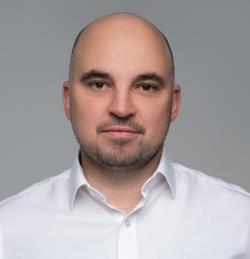
Prof Azamat Zhilokov is the Director of the Institute of Artificial Intelligence (IAI) at the Moscow Institute of Physics and Technology (MIPT). His main areas of interest are physical AI and multi-agent systems as applications for “industrial brain” – implementations of AI systems for manufacturing scenarios. Previously Azamat served as AVP and Director of Commercial Business at BV Deutschland in Germany.

Yong Xiao is a Huazhong-Scholar Distinguished Professor in the School of Electronic Information and Communications at the Huazhong University of Science and Technology (HUST), Wuhan, China. He currently serves as the associate group leader of the network intelligence group for IMT-2030 (6G promoting group). He leads the first international standardization effort on semantic-aware networking at ITU-T. Previously, he was a Research Assistant Professor at the University of Arizona, where he is also the center manager of the Broadband Wireless Access and Applications Center (BWAC), an NSF Industry/University Cooperative Research Center. Dr. Xiao has also held Postdoctoral Research Fellowships at Trinity College Dublin, MIT, and the University of Houston. His research focuses on agentic AI networking, semantic communications, semantic-aware networking, edge intelligence, network AI, and the Internet-of-Things (IoT).

Tim Unwin is a British and Irish academic and public figure, specialising in the uses of digital technology by the world’s poorest and most marginalised peoples. He led the UK Prime Minister’s Imfundo initiative (creating partnerships for using IT in education in Africa) between 2001 and 2004, was Secretary General of the Commonwealth Telecommunications Organisation between 2011 and 2015, and founding Chairholder of the UNESCO Chair in ICT4D at Royal Holloway, University of London between 2007 and 2023. Much of his research practice over the last 50 years has concentrated on the interface between learning and digital tech, and his latest book Digital Inclusion in an Unequal World: an Emancipatory Manifesto was published by Routledge in April 2026. https://ict4d.org.uk; https://timunwin.blog.

Pablo Marco is Vice Dean at the IE School of Politics, Economics & Global Affairs, where he is responsible for academic quality, innovation, and new program development. He also serves as Academic Director of the Master in Technology and Global Affairs and the Master in International Development.

Alexander Schrier is Junior Project Officer at the International Telecommunication Union and is a Master of Arts in International Relations Candidate at the Johns Hopkins University School of Advanced International Studies. Alexander graduated from the University of Pennsylvania in 2025 with a Bachelor of Arts in International Relations. His work has covered telecommunications and digital technology, international law, and Central Asian multi-vector foreign policy. He speaks English, Russian, Spanish and Italian.

Ava Mitzi works at the intersection of conservation technology, natural capital, and institutional engagement, with a professional foundation in drone operations for anti-poaching and habitat protection in Southern African national parks, where she completed a Master's degree in Conservation focused on the region. She holds a second Master's in Environmental Policy from Sciences Po Paris and currently leads strategic partnerships and commercial development at a U.S. technology company, with a specialisation in environmental technology companies.
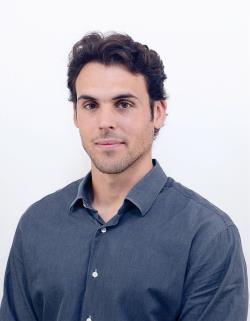
Joseph Devin is a former French Special Operations professional with over a decade of field experience, specializing in the development and operational integration of emerging and dual-use technologies. He subsequently pursued a Master's degree in International Security at Sciences Po Paris, before transitioning into the defense technology sector, at the intersection of defense, industry, and policy.

Regina Valiuillina works as Academia Relations officer at the International Telecommunication Union. She contributes to the development of outreach strategies and promotes a harmonized approach to strengthen engagement and recruitment of universities and research establishments across the organization. She advances the latest development of science and technology activities and builds cooperation with academic and scientific institutions in specific areas of interest to ITU.
-
 C3. Access to information and knowledge
-
 C5. Building confidence and security in use of ICTs
-
 C7. ICT applications: benefits in all aspects of life — E-learning
-
 Goal 4: Ensure inclusive and equitable quality education and promote lifelong learning opportunities for all
-
 Goal 8: Promote inclusive and sustainable economic growth, employment and decent work for all
- Objective 1: Close all digital divides and accelerate progress across the Sustainable Development Goals
- Objective 2: Expand inclusion in and benefits from the digital economy for all