The Monoculture Problem in Artificial Intelligence
University of Florida (UFL), Geneva School of Diplomacy
Session 374
As AI systems converge on a narrow set of architectures, training datasets, and embedded value assumptions, they increasingly reproduce a single way of seeing the world — an epistemic monoculture in which the languages, knowledge systems, and conceptions of personhood of much of the world, including across Africa and Asia, are treated as edge cases rather than as sources of resilience. Drawing on the lesson of ecological monocultures, which trade short-term efficiency for long-term fragility, this panel argues that epistemic and cultural diversity is not a matter of inclusion but a structural condition for AI safety — and a question of epistemic sovereignty for the nations least represented in how these systems are built.
Bringing together perspectives from diplomacy, multilateral governance, defense and security, and AI ethics research, the session asks how global AI governance might move from a logic of access to one of alignment: from widening who can use these systems toward shaping whose values, languages, and ways of knowing they encode. Panelists will examine what epistemic sovereignty would require in practice, where homogenization creates correlated and system-wide risk, and what concrete governance steps could counter monoculture over the next two years.

Professor Schmer-Galunder is the Director of the Renwick Program for Safe, Ethical and Beneficial AI — the institution's inaugural program dedicated to AI ethics, safety, and social impact. A social anthropologist with more than fifteen years of experience across academia, government, and industry, she examines how diverse cultural values, ideas, and imaginations shape the assumptions embedded in AI systems, arguing that preserving human diversity makes technology not only safer but a vital source of innovation. Previously, at Smart Information Flow Technologies (SIFT), she led NASA-funded space-simulation studies and DARPA programs on moral disengagement in misinformation and hate speech, cultural and gender bias in AI, and pluralistic value alignment. At Florida she also co-directs the NLP&Culture Lab and is a member of the Florida Institute for Cybersecurity.
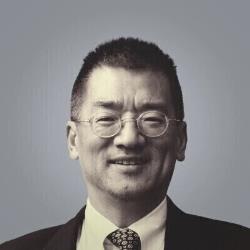
Dr Wallace S. Cheng is Professor and Programme Director for Frontier Technologies and Governance at the Geneva School of Diplomacy. He has worked with the UN World Food Programme (WFP), UNCTAD, Globethics, and the International Centre for Trade and Sustainable Development (ICTSD), driving initiatives that link sustainable development, economic policy, and technology for the public good. Since 2015, he has contributed to the World Economic Forum as an Agenda Author, helping shape global discussions on trade, technology governance, and inclusive growth. He serves as an Expert Member of the UN’s United for Smart and Sustainable Cities (U4SSC) initiative, supporting policy frameworks at the intersection of sustainability, digital transformation, and governance. Dr. Cheng advises the UN World Food Programme and Stop Killer Robots on AI governance in humanitarian and high-risk contexts. He is also an Industrial Advisory Board Member of Renwick Program for Safe, Ethical and Beneficial AI at the University of Florida. A Yale World Fellow, Wallace brings a globally informed, interdisciplinary approach to leadership—bridging sectors, advancing public–private collaboration, and supporting organizations navigating complex policy and sustainability landscapes.

Ambassador Prof. Muhammadou M. O. Kah is a Gambian diplomat and academic serving since 2020 as Ambassador Extraordinary and Plenipotentiary of The Gambia to Switzerland and Permanent Representative to the United Nations Office at Geneva (UNOG), the WTO, and other international organizations. A scholar of information and technology management — he holds his bachelor's, master's, and PhD in the field from Stevens Institute of Technology, alongside an MSc in Finance from George Washington University and a postgraduate diploma from Oxford's Saïd Business School — he has led institutions across three continents, including as the first Gambian-born Vice Chancellor of the University of the Gambia and as Vice President at the American University of Nigeria. In Geneva he has served as Vice Chairman of UNCTAD's Commission on Science and Technology for Development and as Vice President (Africa) of the UN Human Rights Council, and he is a founding board member of the International Digital Health and AI Research Collaborative (I-DAIR).

Dr. Supheakmungkol Sarin is a Cambodian technology leader with some two decades of experience in data and artificial intelligence, focused on making AI's benefits reach the Global Majority. He is Co-founder and Executive Director of AI Safety Asia, founder of the advisory practice AI Equity Advisory, and an appointed AI expert to the United Nations Secretary-General's High-Level Advisory Body on Artificial Intelligence. At the World Economic Forum he served as Head of Data and AI Ecosystems, where he helped establish the AI Governance Alliance, launched the Global Future Council on Data Equity, and convened the Forum's inaugural AI Governance Summit. Earlier, at Google AI, he led inclusive-AI initiatives that reached over a billion people and built speech and language resources for dozens of under-resourced languages across the Global South — including through the Crowdsource platform. He holds a Doctor of Science from Waseda University, is an IEEE Senior Member, and has authored more than 40 publications.

Adam is a Distinguished Principal Scientist in the AI Division and is currently on IPA assignment to the National Science Foundation's Technology, Innovation and Partnerships (TIP) Directorate to lead their X-Labs initiative. Before joining TIP, Adam was the AI Division Director, where he was responsible for helping to set the Division's strategic direction and supporting the AI Division's faculty, staff, and students to do what they do best: make positive impact through discovery, experimentation (aka "fail, learn, improve"), development, and deployment of new capabilities, focusing on our vision for "H > AI" (that is, ensuring that humans and our world are greater than, greater because of, and greater with AI).
-
 C3. Access to information and knowledge
-
 C8. Cultural diversity and identity, linguistic diversity and local content
-
 Goal 4: Ensure inclusive and equitable quality education and promote lifelong learning opportunities for all
-
 Goal 8: Promote inclusive and sustainable economic growth, employment and decent work for all
-
 Goal 10: Reduce inequality within and among countries
- Objective 1: Close all digital divides and accelerate progress across the Sustainable Development Goals
- Objective 2: Expand inclusion in and benefits from the digital economy for all
- Objective 5: Enhance international governance of artificial intelligence for the benefit of humanity