Democratizing Innovation: Citizen Data, Indigenous Knowledge & Participatory STEM
Women in Technology in Nigeria - WITIN & Nigeria Data Protection Commission – NDPC
Session 321
Women, Girls, and Communities as Drivers of Science and Innovation
As the world takes stock of the WSIS+20 Review Outcomes (A/RES/80/173), adopted by the UN General Assembly in December 2025, the imperative to place people at the centre of digital transformation has never been more urgent. This high-level session, convened by Women in Technology in Nigeria (WITIN) in partnership with the National Data Protection Commission (NDPC), examines how citizen-generated data, participatory science, community-led innovation, and inclusive STEM engagement can drive digital inclusion, evidence-based policymaking, and sustainable development.
Through shared case studies, lessons learnt, and actionable recommendations, this session will unpack how inclusive innovation can drive sustainable development — ensuring communities, particularly women and girls, are not just consumers of technology but active contributors to shaping the future. Participants will engage on:
🔹 The role of citizen-generated data in evidence-based decision-making
🔹 Integrating indigenous and community knowledge into digital transformation efforts
🔹 Expanding access to participatory STEM opportunities for women and girls
🔹 Building inclusive, ethical, and people-centred innovation ecosystems
Grounded in the Global Digital Compact and the WSIS+20 Review Outcomes, the session affirms that communities—especially women, girls, Indigenous Peoples, and other marginalised groups—must be active contributors to data generation and digital innovation. Indigenous and community data are foundational for AI systems to produce equitable and representative outcomes. Training data must capture the diversity of human experience, including the knowledge, cultures, storytelling, and lived realities of historically underserved and Indigenous communities. Excluding these datasets risks embedding bias, reinforcing inequality, and overlooking the fact that culture and local knowledge are not peripheral—they are data. Inclusive data governance is therefore the foundation of participatory science, trustworthy AI, and a just digital future.
This session will provide concrete strategies for stakeholders in the global south — including civil society, the private sector, academia, and development partners — as well as actionable policy pathways for governments to design and implement inclusive digital frameworks. From strengthening data protection regimes to embedding community voice in national AI strategies, our recommendations are oriented toward accelerating progress on the SDGs and ensuring no one is left behind by 2030.

Martha Omoekpen Alade is a digital governance and systems leader and Founder of Women in Technology in Nigeria (WITIN), an ECOSOC-accredited organization advancing inclusive digital transformation across Africa. With over two decades of experience, she bridges grassroots innovation, national policy, and global digital cooperation. A contributor to Nigeria's National AI Policy and a WSIS+20 High-Level Delegate, she champions citizen participation, inclusive data governance, and equitable access to STEM and AI. Through WITIN's national platforms, she has expanded digital inclusion, AI literacy, and digital safety, empowering women, girls, teachers, and underserved communities to shape Africa's digital future.

Markie Idowu, FNCS, FICA, HCIB is an award-winning banking, fintech, and technology leader with over 37 years experience in financial services, digital transformation, and corporate governance.
She is the President of the National Institute of Credit Administration and serves on the boards of several companies in the banking and insurance sectors.
Formerly Group Managing Director/CEO of Xpress Payment Solutions and an Executive Director at Polaris Bank, she has led major business and technology transformations. She has several degrees including a first-class in Computer Science, Masters in Software Engineering with distinction as well as global executive education from Harvard, MIT, LBS; amongst others.

Dr. Vincent O. Olatunji is the pioneer National Commissioner/CEO of the Nigeria Data Protection Commission (NDPC). He holds degrees in Geography and Planning, an Advanced Diploma in Computer Studies, and certifications in Public-Private Partnerships and Data Protection. With over 36 years in public service, he played a key role in Nigeria’s digital transformation through policies on eGovernment, cloud computing, interoperability, and data protection. Since leading the NDPC, he has driven the Nigeria Data Protection Act 2023, created thousands of jobs, strengthened compliance, developed privacy professionals, fostered strategic partnerships, and enhanced Nigeria’s leadership in data governance across Africa.

Malik Afegbua is Founder and CEO of Slickcity Media and the creator of the acclaimed AI Elders Series, an innovative initiative that uses artificial intelligence to preserve cultural heritage, amplify indigenous knowledge, and make African history and wisdom accessible to new generations. Through compelling digital storytelling, he demonstrates how AI can be harnessed to promote inclusion, strengthen cultural identity, and ensure that underrepresented voices shape the digital future. A strategic communications expert, Malik is a leading advocate for responsible, people-centred innovation, championing the role of communities, culture, and citizen participation in building inclusive and equitable digital societies

Dr. Patricks Oghuma is a seasoned civil servant with over 28 years of expertise in ICT, telecommunications, spectrum management, and e-governance. He serves as Special Assistant to Nigeria’s Minister of Innovation, Science, and Technology, and Deputy Head of Project Delivery, Monitoring and Evaluation (PROD-ME). A KAIST alumnus with MS and PhD in Information Science and Telecommunications Technology, he champions inclusive innovation, data governance, and citizen-led science

Eloho Iyamu is an innovation manager at SIDFS with 18+ years' experience engineering inclusive financial systems. Leveraging a background in geophysics, she applies systems-thinking to map informal economic networks and design user-centered products. Eloho bridges the gap between policy and practice by integrating citizen data and digitising indigenous trust networks. At WSIS, she'll champion participatory STEM to build lasting financial resilience for underserved populations.

Seyi is a transformational executive and tech advocate with over 20 years’ experience in digital innovation, governance and strategic transformation. As COO of NiRA, she supports Nigeria’s internet ecosystem through .ng, digital identity and stakeholder collaboration. She has held senior roles at PwC, FITC and SNEVA, and holds certifications from MIT Sloan and Cambridge. She is passionate about innovation, women in technology and empowering Africa’s next generation.

Engr. Kunle Olorundare, is a global tech governance champion and President of the Internet Society Nigeria Chapter. An IEEE Senior Member, he leads the Nigerian School on Internet Governance (NSIG). As a leading researcher, Kunle shapes critical policy on emerging technologies like AI, Data and smart cities. A dedicated mentor for the global ICANN Fellowship program, he masterfully combines cutting-edge research and leadership to empower the next generation of digital leaders.

Professor Olayinka Jelili Yusuf is a Professor of Rural Sociology and Agricultural Extension at Kwara State University, Nigeria, and Founder/Lead of the AI4SARD Research Group. His work focuses on responsible AI, digital agriculture, gender-responsive innovation, climate resilience, and participatory innovation. He leads multidisciplinary initiatives integrating AI with community knowledge to develop inclusive solutions for sustainable agriculture across Africa.

Felix Emeka Anyiam is a Research and Data Scientist whose work bridges public health, epidemiology, and digital innovation. As a PhD candidate in Health Sciences, he focuses on using citizen-generated data, participatory research, and data analytics to improve disease surveillance, maternal health, and evidence-informed decision-making. He is passionate about democratizing access to data and empowering communities to co-create sustainable, technology-driven solutions that advance health equity.
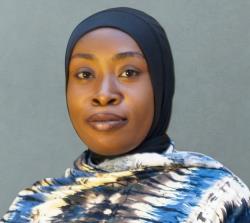
Amina Khalid is a journalist and development communication professional with the Center for Information Technology and Development (CITAD), Kano. She specializes in radio, digital media, and advocacy on social inclusion, digital rights, gender issues, and community development. Trained in AI-powered journalism, she leverages technology and storytelling to amplify marginalized voices, promote civic engagement, and drive positive social change.

C.ITP Ifeyinwa Nkemdilim Obiokafor is an academic researcher, Chartered Information Technology Practitioner, and cybersecurity lecturer at Admiralty University of Nigeria and WITIN's Consultant Outreach Lead . Her work focuses on cybersecurity, data privacy, digital resilience, and advancing STEM for women and girls. She promotes inclusive digital ecosystems, citizen data protection, ICT accessibility, and the integration of indigenous knowledge for a secure and sustainable digital future.

Somto Akujuruobi is the Communications and Community Coordinator at Women in Technology in Nigeria (WITIN), a leading organisation advancing gender-inclusive digital participation. Somto brings extensive experience in digital inclusion programme management, strategic communications, and community engagement. A committed advocate for equitable access to technology, working at the intersection of policy, people, and innovation, with a focus on empowering underrepresented communities in emerging digital economies.
-
 C1. The role of governments and all stakeholders in the promotion of ICTs for development
-
 C2. Information and communication infrastructure
-
 C3. Access to information and knowledge
-
 C4. Capacity building
-
 C7. ICT applications: benefits in all aspects of life — E-learning
-
 C7. ICT applications: benefits in all aspects of life — E-science
-
 C8. Cultural diversity and identity, linguistic diversity and local content
-
 C10. Ethical dimensions of the Information Society
-
 Goal 1: End poverty in all its forms everywhere
-
 Goal 4: Ensure inclusive and equitable quality education and promote lifelong learning opportunities for all
-
 Goal 5: Achieve gender equality and empower all women and girls
- Objective 1: Close all digital divides and accelerate progress across the Sustainable Development Goals
- Objective 2: Expand inclusion in and benefits from the digital economy for all
- Objective 3: Foster an inclusive, open, safe and secure digital space that respects, protects and promotes human rights
- Objective 4: Advance responsible, equitable and interoperable data governance approaches
- Objective 5: Enhance international governance of artificial intelligence for the benefit of humanity