Advancing Universal Acceptance of all Domain Names and Email Addresses
Internet Corporation for Assigned Names and Numbers and United Nations Educational, Scientific and Cultural Organization
Session 281
Enabling domain names and email addresses in local languages and scripts has been a longstanding commitment, articulated in WSIS 2005 (in Tunis) and also supported through UNESCO’s 2003 Recommencation Concerning the Promotion and Use of Multilingualism and Universal Access to Cyberspace. This is because communities around the world use a variety of local languages and scripts to access education, health, public services, and conduct economic activities. To facilitate these activities it is essential that Internet users are able to navigate and communicate online in their chosen languages and scripts. Domain names and email addresses are now available in many languages and scripts, based on work done by the technical and broader community, as also acknowledged in the WSIS+20 Outcome Document. However, work now needs to be done on their Universal Acceptance (UA) by all software applications and systems.
The objective of the session is to raise awareness about the importance of Universal Acceptance adoption by the public sector, academia, civil society, and the technical community. Following the recently published UNESCO-ICANN policy brief: “Advancing Universal Acceptance of All Domain Names and Email Addresses for a Multilingual Internet,” this session will highlight the roles of the different stakeholders, and showcase the efforts being conducted to advance the adoption of UA.
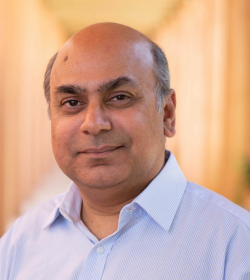
Sarmad has been with ICANN since 2014, involved with the Internationalized Domain Names and Universal Acceptance initiatives. He has a background in research and development of local language technology, including localization and specifically speech and language processing. He has been a professor of Computer Science before joining ICANN and held the IDRC Chair in Multilingual Computing. During his work he led the PAN Localization project to develop the local language computing capacity across developing Asia from 2004-2012.
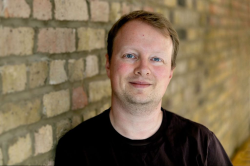
Sean is a Distinguished Business Engineer at Meta, based in London. His focus is on data and privacy and he helps businesses using the Meta platforms shape and define strategies on how to best use technology for advertising success. Sean additionally attends on behalf of Meta at several advertising and developer trade bodies including ISBA, the WFA, the IAB, and the W3C to contribute to what we believe the future of advertising technologies should look like.

Cathy Wissink is a 30-year veteran of the global tech industry. Most of her career was spent at Microsoft, with her early tenure devoted to internationalization support for Windows. She then spent 15 years working focused on global government and regulatory affairs. In her most recent role at Microsoft, Cathy managed a part of Microsoft's standards portfolio supporting regulatory needs in forums like ISO/IEC JTC1, CEN/CENELEC, NIST, and also led Microsoft's product certification process for China. Cathy led Microsoft's participation in the Unicode Technical Committee from 2000-2005, and served as UTC vice-chair and INCITS/L2 chair from 2002-2005.

Dr. Fatema Akbar is an Assistant Professor of Computer Science at the American University of Bahrain (AUBH), where she is committed to enhancing computer science education and mentoring the next generation of professionals. She has incorporated the ICANN curriculum on universal acceptance of internationalized domain names into AUBH’s Computer Science program. Her research has appeared in leading journals and conferences and has been highlighted in U.S. media outlets such as The New Yorker and EHR Intelligence. Dr. Akbar earned her Ph.D. in Informatics from the University of California, Irvine, an M.Sc. from the University of Oxford, and a B.Sc. from Carnegie Mellon University.

Since January 2025, Guilherme Canela is the Director of the Division for Digital Inclusion and Policies and Digital Transformation, and Secretary of the Information for All Programme (IFAP) at UNESCO headquarters, in Paris. As Chief of the Section for Freedom of Expression and Safety of Journalists for 5 years (2020-2025), he was notably responsible for World Press Freedom Day, the UNESCO/Guillermo Cano World Press Freedom Prize, and the Guidelines for the Governance of Digital Platforms.
Between 2012 and 2020, he held the position of Communication and Information Regional Adviser for Latin America and the Caribbean at UNESCO Montevideo Office. During those years, he performed as Regional Coordinator of the UNESCO Initiative for the Promotion of Democracy and Freedom of Expression in judicial systems in Latin America. He was also the Secretary of the Regional Committee of the UNESCO Memory of the World Programme for Latin America and the Caribbean, and focal point of the Organization for issues related to the safety of journalists. He has a B.A. in International Relations from the University of Brasília (UNB) and a Master’s Degree on Political Science from the University of São Paulo (USP).
-
 C1. The role of governments and all stakeholders in the promotion of ICTs for development
-
 C3. Access to information and knowledge
-
 C4. Capacity building
-
 C6. Enabling environment
-
 C7. ICT applications: benefits in all aspects of life — E-government
-
 C7. ICT applications: benefits in all aspects of life — E-business
-
 C7. ICT applications: benefits in all aspects of life — E-learning
-
 C8. Cultural diversity and identity, linguistic diversity and local content
-
 C11. International and regional cooperation
C1. The role of governments and all stakeholders in the promotion of ICTs for development
The WSIS+20 outcome document reaffirmed the Tunis Agenda and the multistakeholder model of Internet governance. WSIS Action Line C1 acknowledges that advancing ICT development requires contributions from all stakeholders, not just governments, as the expertise extends beyond the government stakeholder.
C3. Access to information and knowledge
The WSIS+20 outcome document recognizes the role of IDNs in creating multilingualism on the Internet. The document highlights the progress made toward UA of IDNs, which enables diverse language communities across the globe to access the Internet in local languages and scripts. Use of the Internet in local languages enables access to information and knowledge. As such, the following priorities can be highlighted in WSIS Action C3.
- Digital inclusion
- Meaningful connectivity
- Promote UA of all domain names and email addresses
- Skills development
- Capacity building
C4. Capacity building
Multistakeholder collaboration is an important driver of capacity building. Technical communities, businesses, research communities, academia, and other stakeholders continue to build and strengthen the capacity and the knowledge base within low and middle income countries, and in rural, remote and underserved parts of the world, leading to the increased growth and development of the digital landscape. Expanding the Internet infrastructure and ensuring that the technology remains secure, resilient, and interoperable includes capacity building. For example, technical training and workshops, technical forums for sharing best practices, and educational materials and curricula. In light of that, the WSIS Forum can prioritize the following areas in the WSIS Action Line C4:
- Multistakeholder collaboration
- Public private partnerships
C6. Enabling environment
The WSIS+20 outcome document reflects a clear consensus that the achievements in narrowing the digital divide were possible in part by the positive enabling environment, including enabling regulatory framework, for infrastructure growth and investment, and the collaborative efforts of stakeholders. WSIS Action Line C6 recognizes that an enabling policy and regulatory environment is the foundation for progress on digital transformation. Governments must continue to foster such an enabling environment that invites vibrant stakeholder collaboration and multidisciplinary expertise, and attracts infrastructure investment and promotes healthy competition.
C7. ICT applications: benefits in all aspects of life — E-government
The provision of e-government services, especially at the local and municipal level, and their availability to be accessible in local languages, supports the needs of rural and remote communities. These digital services deliver vital essential services, such as preventative care and health information – a role that proved life-saving during the COVID-19 pandemic.
C7. ICT applications: benefits in all aspects of life — E-business
A globally interoperable Internet is the foundation of the digital economy. This technical foundation enables the delivery of ICT applications and services to scale and enhance various aspects of life, including increasing a country’s economic growth. Furthermore, ICT applications enable businesses to expand their global reach by participating in the digital market place.
C7. ICT applications: benefits in all aspects of life — E-learning
The ubiquity of ICTs and affordable and reliable Internet access has significantly expanded educational opportunities, overcoming geographical and socioeconomic barriers. Access to e-learning will be greatly increased through broader adoption of a system that will enable multilingual access to the Internet. ICT applications, including tools and platforms, are enabling greater access to online learning information, materials and resources, and training.
C8. Cultural diversity and identity, linguistic diversity and local content
The WSIS+20 outcome document highlights the progress made since 2005 on the implementation of IDNs and progress made towards Universal Acceptance. Furthermore, the document urges stakeholders to ensure that the Internet and digital services support diverse language communities across the globe.
C11. International and regional cooperation
Enhancing international and regional collaboration should go beyond government-to-government engagements. Nongovernmental stakeholders, including the technical community, private sector, academia, and civil society, bring valuable insights and innovative solutions that can be effectively implemented. Formalizing mechanisms to integrate multistakeholder collaboration within multilateral processes would improve predictability and coherence in addressing global digital challenges; and should be a priority for WSIS Action Line C11.
-
 Goal 9: Build resilient infrastructure, promote sustainable industrialization and foster innovation
Target 9.c of SDG 9 asks to significantly increase access to information and communications technology and strive to provide universal and affordable access to the Internet in least developed countries.
Given the diversity in languages people speak around the world and the scripts they use to write these languages, enabling the use of domain names and email addresses in local languages and scripts is essential to allow these communities to navigate and communicate online. The technical standards for IDNs and EAI are in place, and the technical and linguistic communities have worked to make IDNs and EAI available for use. Their Universal Acceptance is now needed in downstream software applications and systems to make sure that their benefits can be transmitted to and accrued by the end-users. This requires a multistakeholder collaboration.
- Objective 1: Close all digital divides and accelerate progress across the Sustainable Development Goals
- Objective 2: Expand inclusion in and benefits from the digital economy for all
- Objective 3: Foster an inclusive, open, safe and secure digital space that respects, protects and promotes human rights
- Universal Acceptance
- Internationalized Domain Names
- Linkedin: ICANN
- Facebook: ICANN
- Instagram: @icannorg
- X: @ICANN
- YouTube: ICANN