Measuring What Matters: Revisiting ICT Core Indicators for the WSIS Vision
Partnership on Measuring ICT for Development
Session 266
This session will present recent developments in the global framework for monitoring progress towards an inclusive information society. It will highlight the recent United Nations General Assembly resolution recognizing the work of the Partnership on Measuring ICT for Development in the field of ICT measurement and monitoring. The resolution provides a mandate for the Partnership to undertake an assessment of the current core ICT indicators, including their data availability and relevance in relation to the WSIS Action Lines, the Global Digital Compact (GDC), and the Universal and Meaningful Connectivity (UMC) Targets, in close collaboration with WSIS Action Line facilitators.
The session will provide an overview of the assessment process and initial findings. It will identify areas where indicators are missing or require further development, and discuss practical approaches to improving the availability, quality and comparability of ICT data.
The session will offer an opportunity for stakeholders to exchange views on priorities for future monitoring and reporting that could be reflected in the assessment of the core ICT indicators mandated by the UN General Assembly. The assessment should be completed in 2027.
As input to this session, the Partnership has launched the following survey: Partnership on Measuring ICT for Development Systematic review of ICT indicators – Fill out form.
This questionnaire is open to all WSIS stakeholders, including governments, international organizations, the private sector, civil society, academia, and the technical community. It seeks views on the relevance of the Core List of ICT Indicators and related methodologies for measuring progress across the WSIS Action Lines, with a key focus on identifying additional ICT indicators that could better measure progress, including proposed indicator names, definitions, relevant Action Lines, possible data sources, and the feasibility of data collection. By completing the questionnaire, you will contribute to developing a meaningful and broadly accepted measurement framework. Inputs from WSIS Action Line facilitators and stakeholders will help ensure that information society indicators remain relevant to the WSIS Action Lines and broader international development goals, accurately reflect real-world developments across sectors, and support evidence-based policies, investments, and analyses for an inclusive information society.

Dr Cosmas Luckyson Zavazava took office as Director of the Telecommunication Development Bureau (BDT) at the International Telecommunication Union (ITU) on 1 January 2023.
With more than 30 years in telecommunications, including over 20 years in ITU's Development Sector, Dr Zavazava has promoted and implemented impactful information and communication technology projects around the world.
Prior to his election as BDT Director, he served as ITU's Chief of Partnerships for Digital Development, overseeing development-related projects, strategic partnerships, and resource mobilization between 2019 and 2022, while launching new initiatives that have boosted the engagement of industry, private-sector and academia members in ITU's work.
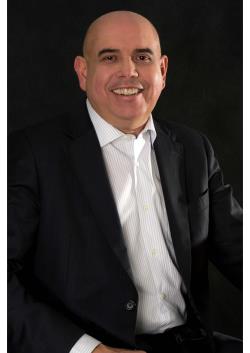
Alexandre Barbosa, Head of the Regional Center for Studies on the Development of the Information Society (Cetic.br), linked to the Brazilian Network Information Center (NIC.br) is responsible for research projects to produce ICT-related data for the monitoring of national policies and international goals, such as the Sustainable Development Goals (SDGs). He coordinates capacity building programs in survey methodologies in Latin America and Portuguese-speaking countries in Africa. Mr Barbosa is a Member of Consultive Committee of the Brazilian Census (Brazilian Institute for Geography and Statistics) and member of the Board of Councelors of the Brazilian Center for Innovation in Education (CIEB). Chair of the Expert Group on ICT Households indicators (EGH) from the International Telecommunications Union (ITU) from 2012 to 2017, expert at the OECD working party on Measurement and Analysis of the Digital Economy and working party on Artificial Intelligence Governance.

Scarlett Fondeur Gil is Economic Affairs Officer in the E-commerce and Digital Economy Branch, Division on Technology and Logistics, at UN Trade and Development (UNCTAD) since 2003. The Branch produces the flagship Digital Economy Report, which analyzes digital economy trends and their implications for developing countries and their participation in international trade. She contributes to the development of internationally comparable ICT statistics through the Partnership on Measuring ICT for Development. UNCTAD compiles data on the use of ICT by enterprises, on the ICT sector, on international trade in ICT goods, ICT services, and digitally-deliverable services; and is developing methodological guidance on measuring digital trade and e-commerce value.

Ambassador Janis Karklins joined ICANN as Head of Government and IGO Engagement in October 2025 after a long and distinguished career in the Latvian diplomatic service that spanned three decades. Among his notable achievements, Janis served as Latvian Permanent Representative to the United Nations at Geneva, Permanent Representative of Latvia to the Council of Europe, and Latvian Ambassador to France, Andorra, Monaco, and UNESCO. Janis also served as the Assistant Director General of Communication and Information of UNESCO and was founding Director of the NATO Center of Excellence for Strategic Communications.
Janis holds an engineering degree from the Riga Technical University and attended an Executive Education Program for Eastern European diplomats at the Hoover Institute at Stanford University.

Esperanza Magpantay is the Senior Statistician at the ICT Data and Analytics Division of the International Telecommunication Union (ITU), where she has worked since 2000. She leads the global collection, harmonization, and dissemination of ICT statistics and spearheaded the creation of the ITU Expert Groups on ICT Indicators, which have become key global mechanisms for developing methodologies and standards in ICT measurement. She represents ITU in major international forums, including the UN Statistical Commission, the UN World Data Forum, Big Data Conferences, and co-Chairs the Partnership on Measuring ICT for Development.
Ms. Magpantay also chairs the UN Committee of Experts on Big Data and Data Science for Official Statistics’ Task Team on Mobile Phone Data, a global collaboration of over 50 experts advancing the use of mobile data for official statistics. She co-leads the ITU–World Bank initiative on Putting Mobile Phone Data to Work for Statistics, which aims to support 30 countries by 2030 in using mobile phone data to inform public policy and its use for official statistics.
Prior to joining ITU, she worked as a Statistical Officer at the International Labour Office (ILO) for seven years. She holds a Global Master in Business Analytics and Big Data from IE University in Madrid, Spain, and a Bachelor of Science in Statistics from the University of the Philippines.

Deniz Susar is a Senior Governance and Public Administration Officer in the Digital Government Branch of the Division for Public Institutions and Digital Government at the United Nations Department of Economic and Social Affairs (UN DESA). His work focuses on digital government and the preparation of UN DESA’s biennial flagship publication, the United Nations E-Government Survey. In his current role, he also supports the Internet Governance Forum (IGF).
His main areas of research and professional expertise include e-government, open government, citizen engagement, internet governance, artificial intelligence and other frontier technologies, and open government data.
Deniz holds a Master’s degree in International Political Economy and Development from Fordham University in New York, United States, and a degree in Computer Engineering from Boğaziçi University in Istanbul, Türkiye.
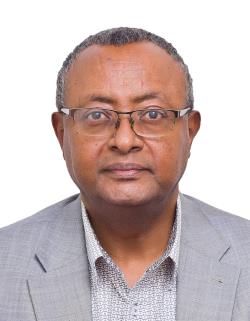
Mr. Afework Temtime currently serves as an Economic Affairs Officer in the Frontier and Emerging Technologies, Innovation, and Digital Transformation Section of the Technology, Innovation, Connectivity, and Infrastructure Division at UNECA. He holds an MSc degree in Information Studies from Loughborough University of Technology in the UK. Over the past 20 years, he has been actively involved in numerous initiatives related to African digital transformation, ICT for Development (ICT4D), Science, Technology, and Innovation (STI), and programme management. His areas of specialization include digital policy strategy, regulatory frameworks, ICT measurement, internet governance, artificial intelligence, project management, and quality assurance. He has been engaged in the World Summit on the Information Society process and the African Internet Governance Forum since their inception, contributing to capacity-building activities and promoting digital transformation to achieve the Sustainable Development Goals (SDGs) and the aspirations of Agenda 2063: The Africa We Want.
Before joining UNECA, Mr. Temtime held several positions in Ethiopia, including Development Information Officer at USAID-Ethiopia, Documentalist at the International Livestock Research Institute, and Information Science Expert at the National Science and Technology Information and Documentation Centre of the Ethiopian Science and Technology Commission.

He is an expert in competitiveness, productive development policies, digital transformation, and internationalization. He is currently the Director of the Productive and Business Development Division at ECLAC (Economic Commission for Latin America and the Caribbean). He has served as Advisor to the Colombian Foreign Trade Council, Vice President of Competitiveness at the Bogotá Chamber of Commerce, Vice President of the Private Council for Competitiveness, Risk Director at the National Federation of Coffee Growers of Colombia, and a negotiator for the Free Trade Agreement with the United States. He has also served as an economist in the Office of Advisors to the Government on Coffee Affairs, among other positions. He has been a member of numerous boards of directors of national and international organizations, most notably TCI Network, the global network of cluster experts.
He holds a degree in Industrial Engineering and a Master's degree in Economics from the University of Los Andes (Colombia), and a Master's degree in Public Administration in International Development from Harvard University.
-
 C1. The role of governments and all stakeholders in the promotion of ICTs for development
-
 C2. Information and communication infrastructure
-
 C3. Access to information and knowledge
-
 C4. Capacity building
-
 C5. Building confidence and security in use of ICTs
-
 C6. Enabling environment
-
 C7. ICT applications: benefits in all aspects of life — E-government
-
 C7. ICT applications: benefits in all aspects of life — E-business
-
 C7. ICT applications: benefits in all aspects of life — E-learning
-
 C7. ICT applications: benefits in all aspects of life — E-health
-
 C7. ICT applications: benefits in all aspects of life — E-employment
-
 C7. ICT applications: benefits in all aspects of life — E-environment
-
 C7. ICT applications: benefits in all aspects of life — E-agriculture
-
 C7. ICT applications: benefits in all aspects of life — E-science
-
 C8. Cultural diversity and identity, linguistic diversity and local content
-
 C9. Media
-
 C10. Ethical dimensions of the Information Society
-
 C11. International and regional cooperation
Measurement and monitoring is needed in all WSIS action lines.
-
 Goal 1: End poverty in all its forms everywhere
-
 Goal 2: End hunger, achieve food security and improved nutrition and promote sustainable agriculture
-
 Goal 3: Ensure healthy lives and promote well-being for all
-
 Goal 4: Ensure inclusive and equitable quality education and promote lifelong learning opportunities for all
-
 Goal 5: Achieve gender equality and empower all women and girls
-
 Goal 6: Ensure access to water and sanitation for all
-
 Goal 7: Ensure access to affordable, reliable, sustainable and modern energy for all
-
 Goal 8: Promote inclusive and sustainable economic growth, employment and decent work for all
-
 Goal 9: Build resilient infrastructure, promote sustainable industrialization and foster innovation
-
 Goal 10: Reduce inequality within and among countries
-
 Goal 11: Make cities inclusive, safe, resilient and sustainable
-
 Goal 12: Ensure sustainable consumption and production patterns
-
 Goal 13: Take urgent action to combat climate change and its impacts
-
 Goal 14: Conserve and sustainably use the oceans, seas and marine resources
-
 Goal 15: Sustainably manage forests, combat desertification, halt and reverse land degradation, halt biodiversity loss
-
 Goal 16: Promote just, peaceful and inclusive societies
-
 Goal 17: Revitalize the global partnership for sustainable development

Data and indicators are needed to monitor the achievement of SDGs.
- Objective 1: Close all digital divides and accelerate progress across the Sustainable Development Goals
- Objective 2: Expand inclusion in and benefits from the digital economy for all
- Objective 3: Foster an inclusive, open, safe and secure digital space that respects, protects and promotes human rights
- Objective 4: Advance responsible, equitable and interoperable data governance approaches
- Objective 5: Enhance international governance of artificial intelligence for the benefit of humanity
https://www.itu.int/en/ITU-D/Statistics/Pages/intlcoop/partnership/default.aspx
https://docs.un.org/en/a/res/80/173
https://www.itu.int/en/ITU-D/Statistics/Documents/coreindicators/Core-List-of-Indicators_March2022.pdf