
Bridging the Standardization Gap
Bridging the Standardization Gap (BSG) stands as a pivotal element within the ITU’s overarching mission to unite the global community through dynamically evolving technology. Among the five strategic objectives outlined by the ITU’s standardization sector (ITU-T), BSG takes a central role. The primary objective of the BSG program is to address the imbalances between member states, and developing countries inter alia, concerning their ability to access, participate, develop, and implement international standards set by ITU.
Quick links
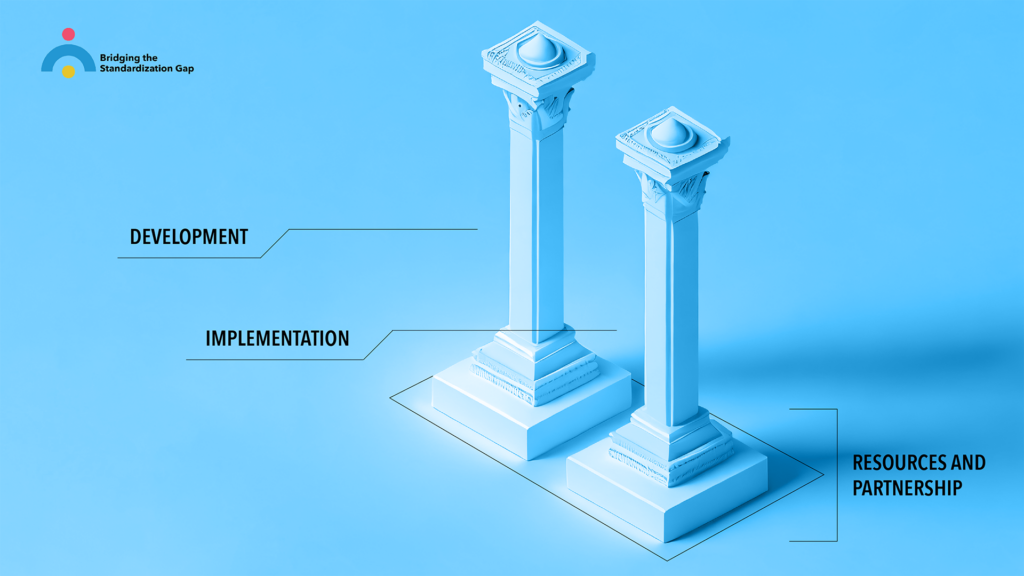
The new BSG program with two strategic pillars is designed to facilitate the active participation of member states, especially developing countries in formulating and implementing the ITU’s standards through innovative partnerships. BSG is here to connect and empower member states to contribute to and benefit from ITU’s global standards.
ITU fosters collaboration to support innovation on a global scale. Our work to bridge the standardization gap is central to our mission and values.
 Seizo Onoe – Director, TSB
The new BSG strategic pillars
From development to implementation – resources and partnership underpin everything we strive to achieve. We carefully curate and openly welcome thematic initiatives and partnerships that propel our activities to achieve the core mission of bridging the standardization gap.
Development
Online & hands-on training are offered in collaboration with ITU-T Study Group Meetings. Executive Briefings on technical standardization will be on offer to high-level experts upon request. Contact bridging@itu.int for more information.
Our ITU-T Regional Groups have proven to be an ideal vehicle to facilitate participation and engagement across different regions in accordance with our aim to bridge the standardization gap for all.
Learn more here.
Representatives from developing and least-developed countries can apply for fellowships to facilitate their participation in ITU-T Meetings. Click here to find out more.
Member states may wish to coordinate their standards activities in the ITU-T Meetings through the establishment of a National Standardization Secretariat (NSS). Find out more here.
Tap into data and analytics from our Study Groups. Want to find out more about what we do? Why not take our quiz?
Implementation
ITU stands ready to support countries with the adoption of existing ITU-T Recommendations by encouraging their incorporation into national plans and policy frameworks where relevant.
Interested in learning more about how our standards bridge the digital divide? Watch this space for information on upcoming events. You can find a list of our previously held events here.
BSG is already being showcased across a spectrum of initiatives across the ITU. See below for more details.
Our drive for BSG
Thematic initiatives
Our dedication extends to actively organize strategic events and implement initiatives hosted across the ITU-T. This holistic approach ensures that we embrace the support structure offered by BSG, while fostering a collaborative environment to drive digital transformation across different thematic areas.






Emergency management coming soon


Security: CDCP
Take our quiz!
Want to know more about what we do? Why not have fun doing it with our interactive quiz.
Join us as partners
Ministry of Internal Affairs and Communications, JAPAN, is our current partner.