Consolidation of programmes
The OneGoal Initiative for Governance
Session 509
Development of a method
New technologies redefine the very tools used to organise ourselves as well as to govern. They not only impose new aspects to programmes, but may also help identify how to consolidate activities and shape the outcome and the impact on industries.
In the midst of an effort to redirect governance toward sustainability, we are still introducing new technologies to markets and dealing with substantial additional challenges. Layered shifts in the overall status of our systems on top of the mosaique of activities in governance are pulling the various aspects of the world in various directions among which we want to maintain coherence in relation to our actual goal.
To achieve this, we turn to the consolidation of programmes. The resulting global consolidated structure enhances the leverage of tech.
This is the second workshop on this theme. In the first session, we discussed the concept of consolidation between programmes and looked into the technical do of a concrete project as an allegory in this context. Participants shared their experience in their respective fields of work. In this new session, we will aim for the development of a method, which will dig into the consolidation between programmes as well as with their goal, and that of the goal with the system it applies to.
This supports SDG 17 for partnerships for the goals in that it encourages and supports a more powerfully coordinated global action. In particular, targets 17.13 to “enhance global macroeconomic stability, including through policy coordination and policy coherence” and 17.14 “Enhance policy coherence for sustainable development” in question. This adds a paragraph to C3 in that it enhances the access of the decision makers themselves to knowledge; to C6 in that a possible optimal consolidation acts in a similar way to interoperability, empowering any intended activity based on governance structures; to C7 helping build on scientific knowledge through a common reference model; and to C11 as a basic requirement for all players to collaborate.
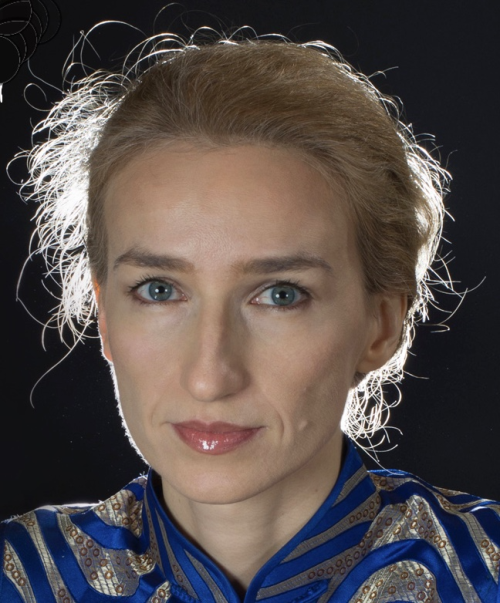
Alève Mine is at the origin of the study of recursive risk and the founder of the OneGoal Initiative for Governance, which just launched its Qaucus programme, and of the Zurich AR/VR Meetup, which was identified as a “key Swiss player” on the Gottlieb Duttweiler Institut’s extended reality map. Alève holds a M.Sc. from the EPFL (Ecole Polytechnique Fédérale de Lausanne) in microengineering (robots, nanotech, chips, sensors, materials, lasers, signal processing, computing, production lines, etc.) as well as a finance diploma from the St. Galler Management Institut (valuation, analysis), worked worldwide in the arts and is an ITU-T laureate. Alève is the author of “Storytelling Automation Principles”.
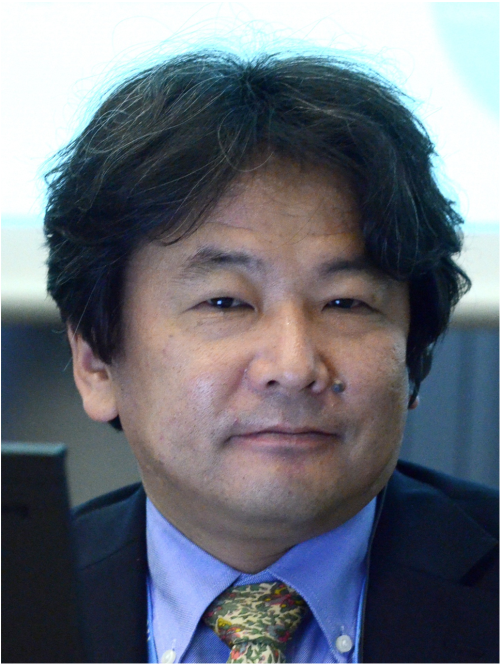
Since 2009, he is the Rapporteur of Question 28 "Multimedia Framework for e-Health Applications" in Study Group 16 of ITU-T. He appeared as speakers at several conferences on e-health, including IEEE-ICC, WSIS, and Telecom World, all in 2011. He actively participated in the collaboration between ITU-T, ITU-D and WHO, and was an active participant in the Joint ITU-WHO Workshop on e-Health Standards and Interoperability, Geneva, 2012.
After joining the Information Science Lab, NTT Basic Research Labs, in 1989, he did research and development in artificial intelligence.
Since 1998 until 2002, he was a research member of "Creating the Brain" Research Project of the JST (Japan Science and Technology Agency)'s CREST ("Core Research for Evolutional Science and Technology") Program. He was also a lecturer, 1998-2006, at the School of Allied Health Sciences, Kitasato University, Japan. In 2004, he led the development with the University of Tokyo, Japan, on a health information system using wearable sensors that measured the hippocampal function in the brain to detect early signs of dementia.
He is also a co-chair of ITU-T's Focus Group on Media Accessibility as well as the coordinator of IPTV-Global Standards Initiative.
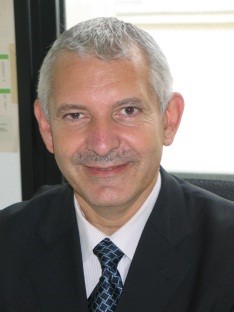
Mr Christophe Xerri, president of The Sailing Brain Consulting, is an independent international expert with more than 30 years of experience in the field of energy, waste management, circular economy and multi-cultural management.
From 2015 to 2022, he was Director at the International Atomic Energy Agency in charge of fuel cycle, waste management and research reactors. Before his appointment to the IAEA, he served from 2011 to 2015 as Counsellor to the French Embassy in Japan and in Mongolia, with a focus on nuclear applications, innovation and post-crisis management.
He started his career in finance in Japan and Luxembourg. He joined COGEMA (now ORANO) in 1991, in the field of nuclear fuel recycling and waste management. He then moved to uranium mining and innovative enrichment technology. Later, he worked in weapon’s non-proliferation and then was assigned to the office of the President of AREVA (nuclear, renewables, electricity transmission equipment) in charge of international affairs.
He moved to Japan in 2007 and became Vice President of Mitsubishi Nuclear Fuel in 2009, where he was also involved in handling the consequences of the earthquake and tsunami of March 2011.
Mr Xerri holds an Engineer’s degree from Ecole Centrale de Lyon, France, a Master of Science from Salford University, UK; and an MBA from Institut Supérieur des Affaires in France.
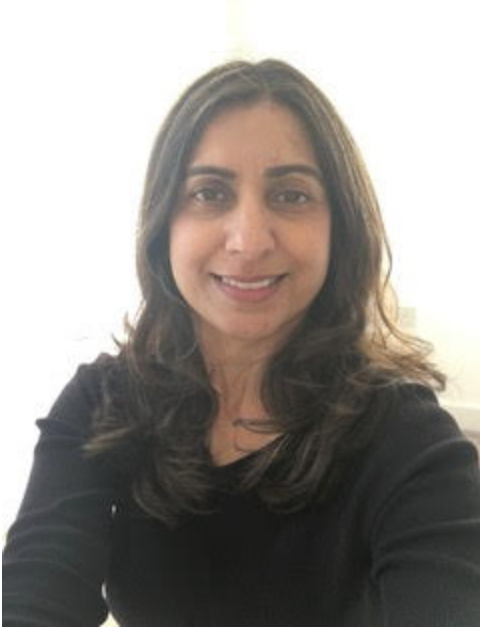
Anita Patel serves as the Domain Coordinator for the Accounting & Audit Program Development Area within the United Nations Centre for Trade Facilitation & Electronic Business (UN CEFACT). She has contributed to CEFACT since 2015. Anita also served as a Vice Chair and Expert with the International Standards Organization to develop the ISO 19600:2014 Standard on Compliance Management Systems.
Anita currently works as a special advisor in the UK government sector on public infrastructure projects. She regularly teaches undergraduate and professional courses in IT auditing, IT governance and accounting information systems and has served on the Senate of a Canadian academic institution.
Anita holds an MSc from the University of Liverpool, UK, in Information Systems Management, an honours degree from the University of Leeds, UK, in Economics, and a Blockchain Professional Certificate from York University, Canada. She is a Certified Information Systems Auditor (US), Certified Information Systems Security Professional (US) and a fellow of the Association of Chartered Certified Accountants (UK).
-
 C3. Access to information and knowledge
-
 C6. Enabling environment
-
 C7. ICT applications: benefits in all aspects of life — E-government
-
 C7. ICT applications: benefits in all aspects of life — E-business
-
 C7. ICT applications: benefits in all aspects of life — E-learning
-
 C7. ICT applications: benefits in all aspects of life — E-health
-
 C7. ICT applications: benefits in all aspects of life — E-employment
-
 C7. ICT applications: benefits in all aspects of life — E-environment
-
 C7. ICT applications: benefits in all aspects of life — E-agriculture
-
 C7. ICT applications: benefits in all aspects of life — E-science
-
 C11. International and regional cooperation
This adds a paragraph to C3 in that it enhances the access of the decision makers themselves to knowledge; to C6 in that a possible optimal consolidation acts in a similar way to interoperability, empowering any intended activity based on governance structures; to C7 helping build on scientific knowledge through a common reference model; and to C11 as a basic requirement for all players to collaborate.
-
 Goal 17: Revitalize the global partnership for sustainable development
This supports SDG 17 for partnerships for the goals in that it encourages and supports a more powerfully coordinated global action. In particular, targets 17.13 to “enhance global macroeconomic stability, including through policy coordination and policy coherence” and 17.14 “Enhance policy coherence for sustainable development” in question.