|
|
Digital Transformation and
Cities Digest
|
|
|
Message from Seizo Onoe,
Director,
Telecommunication
Standardization Bureau, ITU
|
|
Dear Colleagues,
Cities are reaching a turning
point. Artificial intelligence is no longer confined to individual
applications; it is becoming embedded in the systems that help cities
plan, coordinate and deliver services. This creates extraordinary
opportunities to improve resilience, efficiency and quality of life. It
also raises urgent questions about interoperability, trust,
accountability and inclusion.
The task before us is therefore
not simply to deploy more technology. It is to build the common
foundations that allow innovation to work across sectors, platforms and
borders, while keeping people and the public interest at the centre.
This edition of our Digest
highlights a major step in that direction: the new ITU Focus Group on
AI for Smart Sustainable Cities and Communities. Open to all interested
experts, the Focus Group will bring together cities, governments,
industry, academia standards bodies and United Nations organizations to
advance safe, interoperable and scalable urban AI. The group will hold
its first meeting from 10 to 11 September in Tampere, Finland.
This edition also provides the
latest updates on our progress in areas from the new working group on
Guiding Principles and Frameworks for People-Centred Smart Cities in
the AI Era within the United for Smart Sustainable Cities initiative to
the outcomes of UN Virtual Worlds Day, the Citiverse Assembly and ITU-T
Study Group 20. I encourage you to engage and help shape standards that
can translate technological possibility into benefits for cities and
communities worldwide.
Sincerely,
|

|
Seizo
Onoe,
Director,
Telecommunication Standardization Bureau, ITU
|
|
|
In the
Spotlight: Focus Group on AI for Smart Sustainable Cities and
Communities
|
|
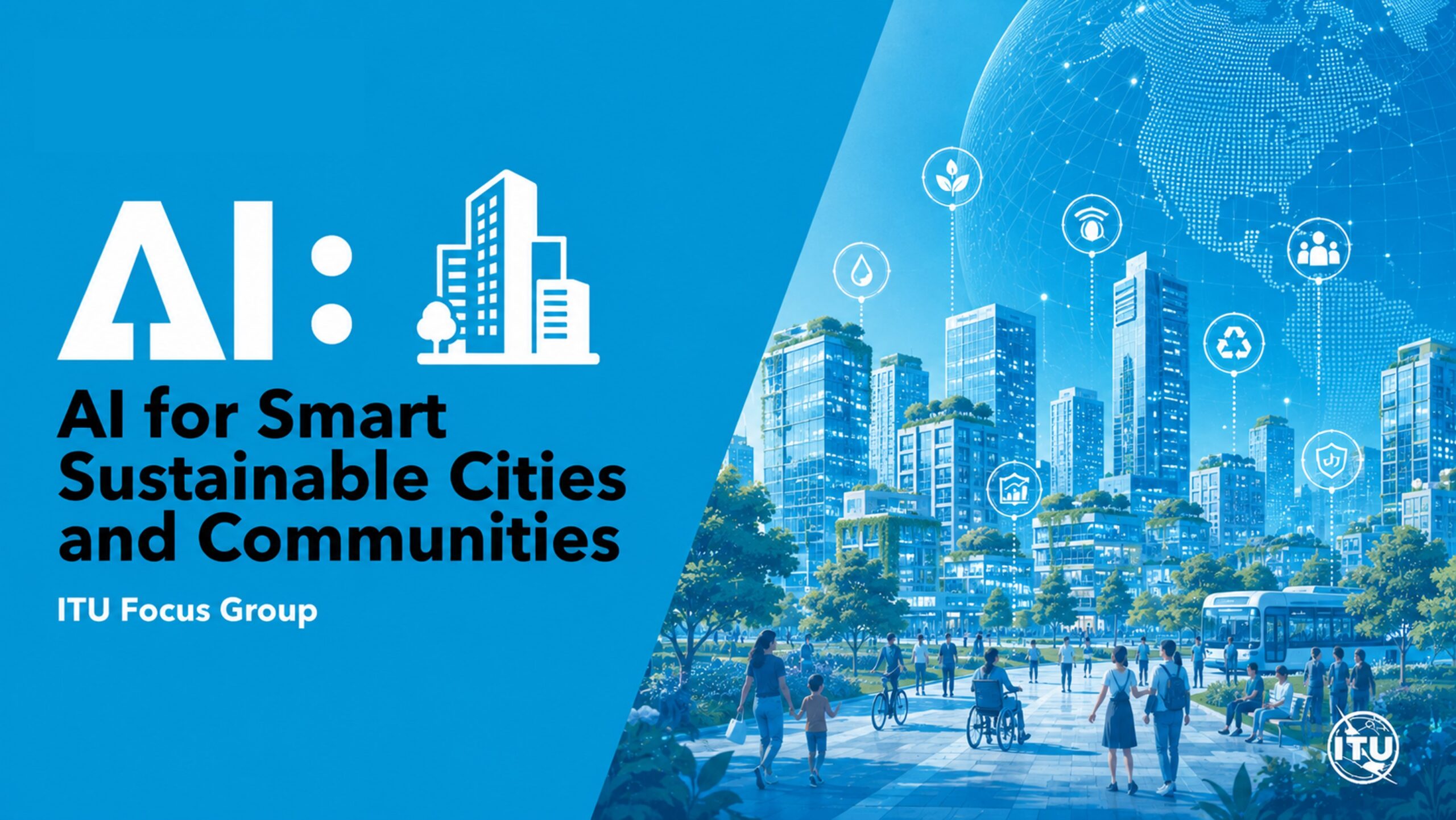
|
Established by ITU-T Study
Group 20 in May 2026, ITU Focus Group on AI for
Smart Sustainable Cities and Communities (FG-AI4SSC) provides
an open global platform for collaboration among cities, governments,
industry, academia, standards bodies, international organizations and
United Nations entities. Through its pre-standardization work, the
Focus Group will help translate innovation into interoperable,
scalable, inclusive and sustainable solutions and lay the groundwork
for future international standards.
|
|
9-11 September
2026
1st Meeting
& Forum
Tampere,
Finland. Remote participation is available.
Find more
here >
|
28 August 2026
(Deadline)
Submit a
Contribution
Propose a new
technical report, technical specification or use case.
Contact us: tsbfgai4ssc@itu.int
|
Open to all
Join the Focus
Group
Subscribe to
the FG-AI4SSC mailing list for updates and invitations.
Step-by-step
instructions here >
|
|
|
Coming up:
Digital Transformation Webinar and Smart City Expo World Congress 2026
|
|
|
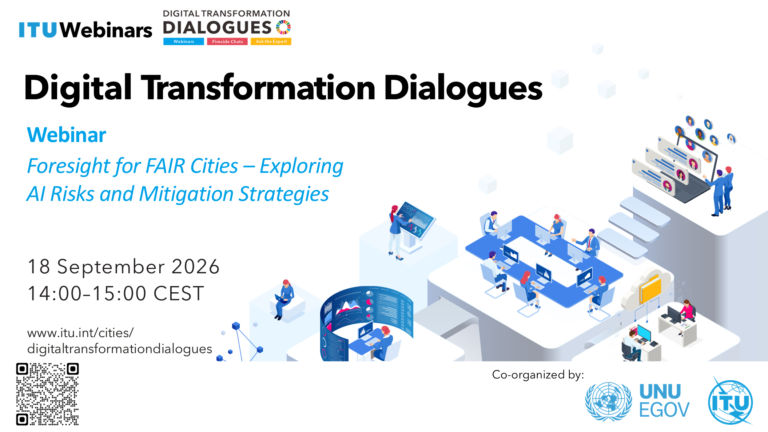
Webinar:
Foresight for FAIR Cities – Exploring AI Risks and Mitigation
Strategies (18 September
2026, Virtual)
Co-organized by ITU and UNU-EGOV, this Digital Transformation
Dialogues webinar
will present the Guide for Cities on FAIR AI and the Repository of
Best Practices and Frameworks for Urban AI. It will also use
strategic foresight to examine emerging risks, future scenarios and
practical mitigation strategies.
Register here.
|
|
|
Smart City Expo
World Congress (3 to 5
November 2026, Barcelona)
From 3 to 5 November in Barcelona, ITU, UN-Habitat and United Nations
partners will convene a series of sessions on “AI & Citiverse” at
the first UN Pavilion and celebrate the 10th anniversary of the United
for Smart Sustainable Cities initiative. The
programme will focus on translating urban ambition into practical,
scalable impact.
For more information: Visit here.
|
|
New
United for Smart Sustainable Cities workstreams
|
|

|
United
for Smart Sustainable Cities (U4SSC)
is a global United Nations initiative coordinated by ITU, UNECE and
UN-Habitat, with the support of another 20 United Nations entities.
Its newest workstreams respond to two urgent needs: ensuring that
AI-enabled transformation remains people-centred, and helping
cities anticipate how AI may reshape institutions, employment and
economic development.
|
|

|
Working Group
8: Guiding Principles and Frameworks for People-Centred Smart
Cities in the AI Era (Co-led by UN-Habitat and ITU)
Launched by Doreen Bogdan-Martin, ITU Secretary-General, and
Anacláudia Rossbach, Executive Director of UN-Habitat, during the
AI for Good Global Summit, this Working Group will develop the
People-Centred Smart Cities in the AI Era Toolbox. The Toolbox will
provide practical guidance to city leaders, policymakers and
practitioners to plan, implement and scale digital, smart and
AI-enabled solutions that enhance quality of life, strengthen urban
resilience, foster inclusion and ensure that technological innovation
delivers meaningful and lasting benefits for people and
communities. Find more here.
|
|
|
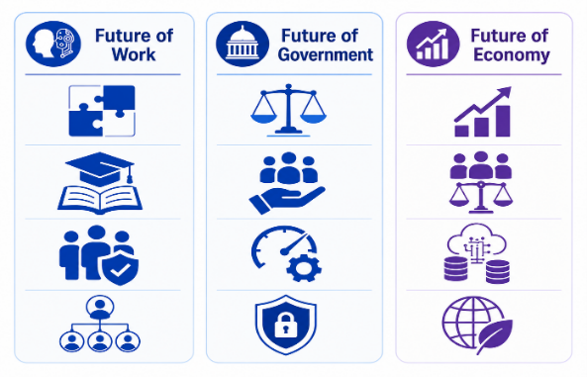
Future
foresight subgroups: economy, work and government
Three new U4SSC subgroups have been launched under the U4SSC
Thematic Group on Future Foresight for Cities to explore how
artificial intelligence is reshaping the future of cities.
- Future of Work and Skills in the Age of AI
- Future of Governments in the Age of AI
- Future of Inclusive Economies in the Age of AI
Find
more here.
|
Learn
more about U4SSC here.
Contact us: u4ssc@itu.int.
|
|
|
Advancing global
collaboration on AI, spatial intelligence and citiverse
|
|
ITU-T Study Group
20 Meeting (12–21
May 2026, Geneva, Switzerland)
|
397
participants
|
248
contributions
|
21
Recommendations
approved
|
12
Recommendations
determined
|
58
new work items
|
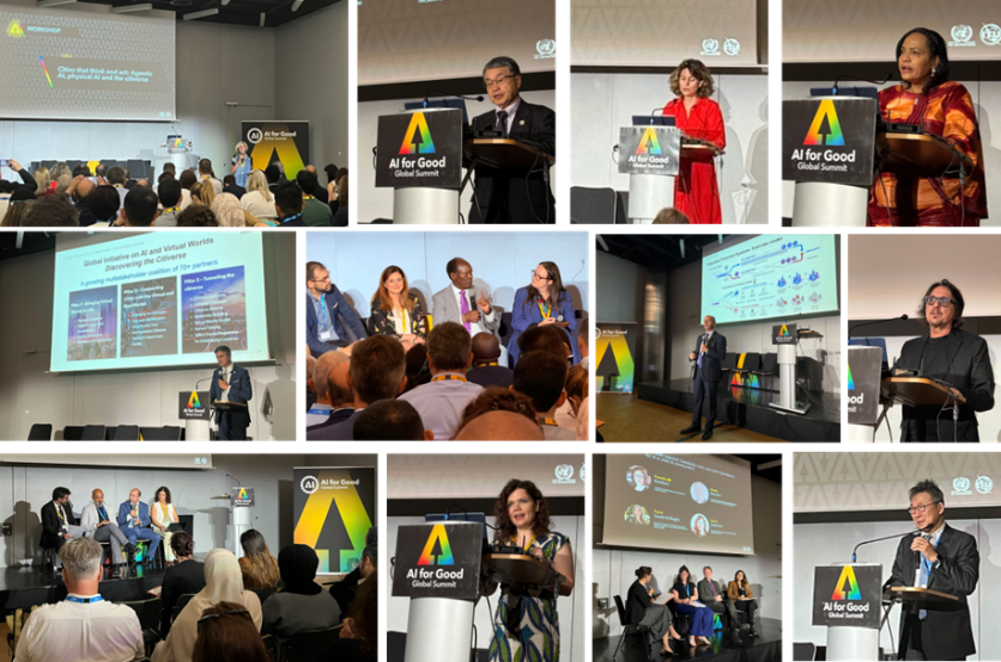
3rd UN Virtual
Worlds Day (11–12
May 2026, Geneva, Switzerland)
|
|
The 3rd
UN Virtual Worlds Day,
co-organized by 20 United Nations entities in partnership with the
Global Cities Hub, brought together ambassadors, ministers, mayors,
city leaders, United Nations entities, industry and academia to
examine how AI, spatial intelligence and the citiverse can support
trusted, inclusive and people-centred urban transformation. The event
attracted more than 450 participants, with over 20 ambassadors
attending onsite, and featured an Ambassadors’ Roundtable, six
thematic sessions and an innovation exhibition showcasing 10
organizations.
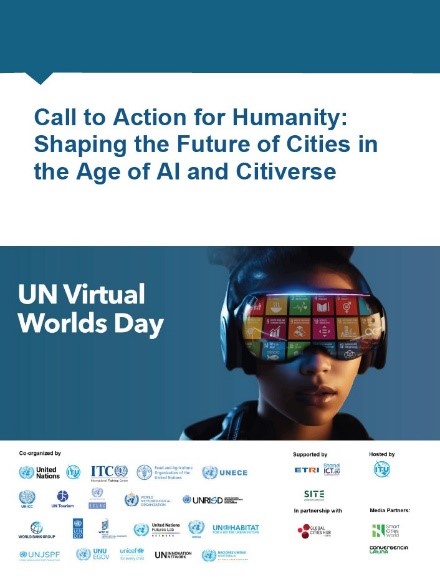
The event concluded with two key deliverables: the first UN Executive Briefing on AI,
Spatial Intelligence and the AI-Enabled Citiverse,
developed with contributions from 20 United Nations entities, and a Call to Action for Humanity:
Shaping the Future of Cities in the Age of AI and Citiverse.
Together, they set out strategic priorities for advancing trusted,
interoperable and people-centred digital transformation in cities and
communities.
|
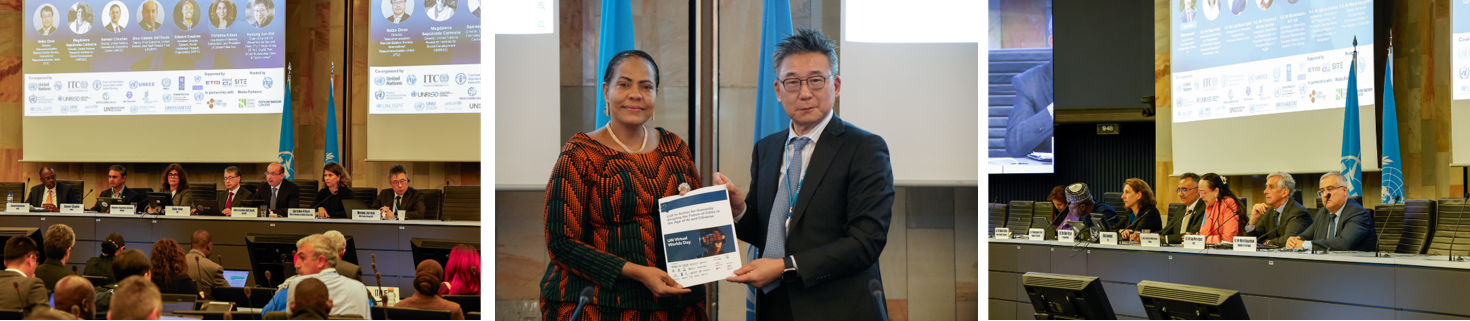
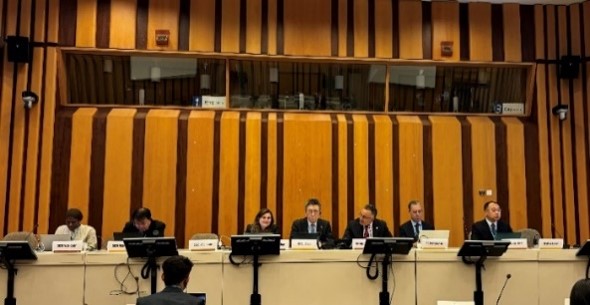
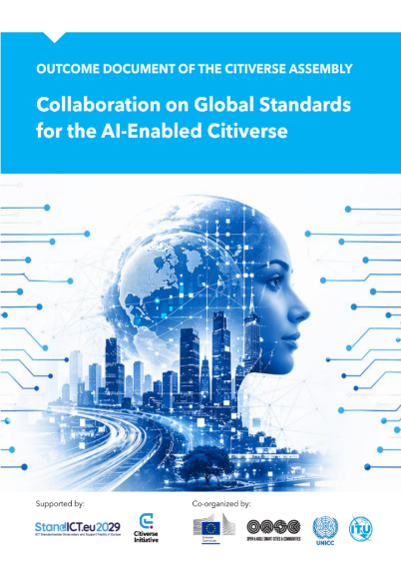
2nd Citiverse
Assembly (12
May 2026, Geneva, Switzerland)
World Urban Forum
(WUF13) (19
May 2026, Baku, Azerbaijan)
As part of WUF13, the ONE UN
session Artificial Intelligence for
Cities: Urban Planning and Building Smart, Resilient Communities was held
on 19 May 2026 in Baku. Co-organized by ITU, UN-Habitat and the
Government of Azerbaijan, the session explored how AI-enabled solutions
can strengthen urban planning and evidence-based decision-making and
support smart, resilient and people-centred cities. Watch the recording here.
|
|
Leadership
Perspectives
|
|

|
Karl-Filip
Coenegrachts
Executive Director, Open & Agile Smart Cities
(OASC)
|

|
Teppo
Rantanen
Steering Committee Vice-Chair of the Global
Initiative on AI, Digital Twins and Virtual Worlds – Discovering the Citiverse
|
|
On city collaboration, open
standards and the practical work required to move local digital twins
and the citiverse from fragmented initiatives towards shared
implementation.
Watch the interview >
|
On
Tampere's urban innovation journey and why cities need partnerships,
experimentation and interoperable foundations to translate technology
into better services and quality of life.
Watch
the interview >
|
|
|
Publications spotlight
|
|
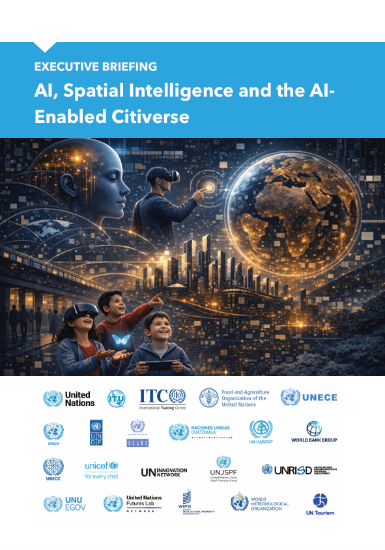
|
STRATEGIC
ORIENTATION
Executive
Briefing on AI, Spatial Intelligence and the AI-Enabled
Citiverse
Developed with contributions
from 20 United Nations entities, this Executive Briefing examines how
AI, spatial intelligence and the AI-enabled citiverse are reshaping
governance and urban development. It highlights key opportunities,
challenges and governance priorities for senior decision-makers, with
a focus on trusted, interoperable and people-centred digital
transformation.
Read it here.
|
|

|
STRATEGY
AND ROADMAP
AI-Enabled
Citiverse: A Strategic Blueprint for Cities in the Age of AI
This Blueprint provides a
strategic roadmap for city leaders to harness AI, digital twins,
spatial intelligence and immersive technologies. It offers guidance
on responsible integration, policy direction and cross-sector
collaboration to support inclusive, resilient and human-centred urban
development.
Read
it here.
|
|
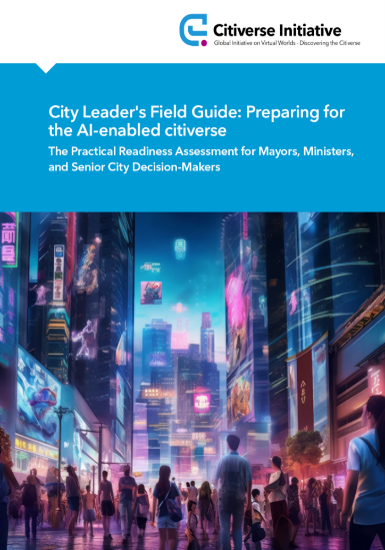
|
READINESS
AND FIRST ACTION
City Leader’s
Field Guide: Preparing for the AI-enabled citiverse
This Field Guide offers a
practical readiness assessment and 90-day action framework to help
city leaders prepare for the AI-enabled citiverse. It provides tools,
checklists and evidence-based guidance to assess city readiness,
identify implementation gaps and move from vision to real-world
deployment of responsible, human-centric and interoperable AI-enabled
citiverse solutions.
Read
it here.
|
|
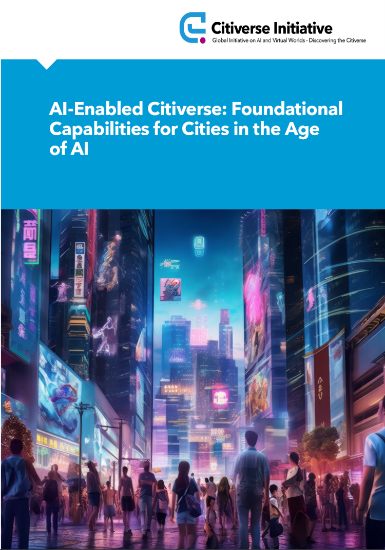
|
TECHNICAL
FOUNDATIONS
AI-Enabled
Citiverse: Foundational Capabilities for Cities in the Age of AI
This report outlines the key
capabilities and technologies cities need to operationalize the
AI-enabled citiverse. It provides city leaders and policymakers with
a practical framework for using AI, digital twins, immersive
technologies and intelligent infrastructure to deliver public value
and sustainable urban transformation.
Read it here.
|
|
|
USE
CASES
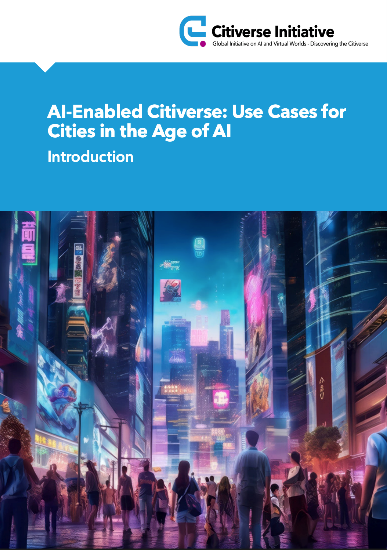
AI-Enabled
Citiverse: Use Cases for Cities in the Age of AI
This series of reports
provides a practical reference for policymakers, industry leaders,
city officials and other stakeholders on the opportunities and
pathways for implementing the AI-enabled citiverse. It highlights
emerging momentum, key applications and practical approaches for
adoption, experimentation and scale.
Introduction | City Administration, Services
and Public Participation
| Urban Planning, Placemaking
and Infrastructure
| Economic Development,
Education and Tourism
| Public Safety, Health and
Disaster Resilience
| Transport and Mobility
|
|
|
AUTONOMOUS
URBAN SYSTEMS
Autonomous
cities and AI: The next frontier of urban transformation
This Guide examines how AI,
digital twins, IoT, robotics and advanced connectivity are supporting
the transition towards more autonomous cities. It highlights
applications across urban planning, mobility, public services and
sustainability, while emphasizing the need for responsible
governance, cybersecurity, interoperability and human
oversight. The Guide is complemented by the following case
studies:
Spain | Republic of Korea | Shenzhen | Dubai | India | Canada | Hungary | Beijing | Shandong
Read it here.
|
|
|
|
|
|
|