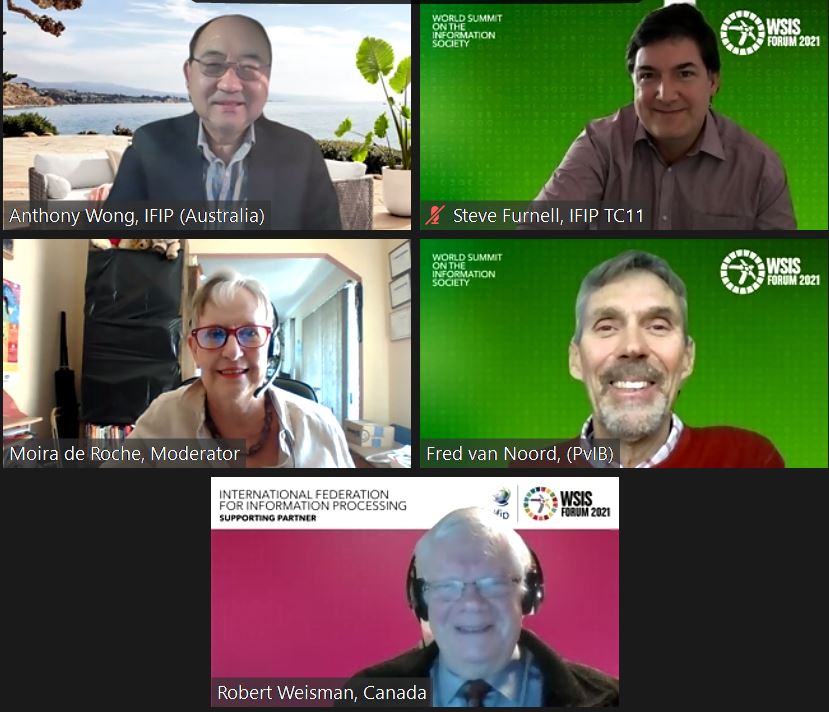
Building Cyber Resilience with a Professional workforce
International Federation for Information Processing IP3
Session 293
How to Protect infrastructure, privacy, consumers and facilitate global skills transfer
The UN Secretary-General in his Jun 2020 Digital Cooperation Roadmap: Secretary-General’s Roadmap for Digital Cooperation (un.org) articulates the importance of many facets on digital cooperation including on:
- Digital Capacity-Building
- Digital Trust And Security
- Artificial Intelligence
This workshop will highlight activities in different regions to build capacity in Digital Trust & Security for cyber-resilience in a world that went digital almost overnight. We will explore how Skills Frameworks, Bodies of Knowledge, and Quality Assurance are developing to build capacity in Cybersecurity, creating a resilient professional workforce.

Moira de Roche is an independent consultant. She is the Chair of IFIP (International Federation for Information Processing) IP3, and a member of the IFIP board. Moira was awarded the IFIP Silver Core in 2016.
Moira is an accomplished speaker and has presented at conferences around the world and in South Africa, on diverse subjects including Technology & Learning, IT Leadership, Professionalism, Trust & the Duty of Care in Digital, as well as people-related issues with Industry 4.0. She has attended and presented at the World Summit for Information Society since 2012.
A Past-President of IITPSA (Institute of IT Professionals South Africa) Moira is a Professional Member and Fellow and serves as a Non-executive Director. She received the IITPSA Distinguished Service in ICT Award in 2009.
She is also a member of ACM and the South African Institute of Directors.

Prof. Steven Furnell is the current chair of IFIP Technical Committee 11, addressing Security and Privacy Protection in Information Processing Systems. He is also Professor of Cyber Security at the University of Nottingham and a Director of the Chartered Institute of Information Security. Steve has authored over 340 papers in refereed international journals and conferences, as well as various books, book chapters, and industry reports. He is also a member of the Steering Group for the Cyber Security Body of Knowledge and was a contributor to the CSEC 2017 Cybersecurity Curricular Guidelines. More recently, he has been involved in the qualifications workstream within the UK Cyber Security Council formation project, and has also co-authored various studies for the Department for Digital, Culture, Media & Sport, including annual analysis of the cybersecurity skills in the labour market.

Fred has over 25 years of experience with challenges in information security and ICT security management, in various roles.
As board member and president of the Dutch Association for Information Security Professionals (PvIB) he worked on and stimulated professionalisation and qualification of the information security workforce.
From 2013 on Fred recognised a significant growth of stakeholders interested in well-educated cybersecurity professionals. He started a public-private steering group to develop cybersecurity qualification. Several large public and private organisations joined the steering group. The results have already been used in education programs for secondary vocational and higher education.
From 2020 Fred is a member of the ENISA Ad Hoc Working Group on the European Cybersecurity Skills Framework with the aim to promote harmonisation in the ecosystem of cybersecurity education, training and workforce development and to develop a common European language in the cybersecurity skills context.

Anthony Wong is the Managing Director of AGW Legal & Advisory, a multidisciplinary legal and advisory practice advising in many areas of law and technology, cybersecurity, privacy and data protection, and the emergent risks and issues arising from 4.0 Industrial technologies including the Internet of Things (IoT), Big Data, Artificial Intelligence (AI), Machine Learning, Virtual and Augmented Reality, Cloud and Blockchain.
He is a key industry thought leader and has served on the Australian Government IT Industry Innovation Council, Past President of the Australian Computer Society (ACS), chaired the NSW Government ICT Advisory Panel, and on the NSW Government Digital Transformation Taskforce.
He has also held senior management positions in multinational corporations and government, including as CIO of the Australian Tourist Commission during the Sydney 2000 Olympics and led the digital transformation of Thomson in the Asia Pacific.
Anthony has double degrees in Computer Science and Law from Monash University, Master of Laws in Media, Communications and IT from UNSW, and a Master of Intellectual Property from UTS, Australia.
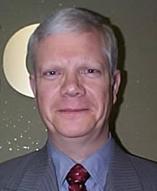
Robert (Bob) Weisman has 30 years' leadership experience in government (mainly in Defence), 10 years in the private sector as an executive management consultant at CGI working globally, and is now creating and teaching (in English and French) new courses in digital transformation and enterprise architecture (EA) at the University of Ottawa and Build The Vision Inc. He is a civil and military engineer, expert in plans and operations, an AI-focused computer scientist, and recently graduated with a PhD in e-Business (Digital Transformation and Innovation). He is heavily involved in the creation of open standards bridging business and technology using architecture and business design in The Open Group and several professional associations, notably ISACA and the Association of Enterprise Architects. He is also chair of the 2nd Annual Conference on Digital Transformation in Government 15-17 June 2021. Security and resiliency, cyber and other, are key aspects of digital transformation and EA.
-
 C3. Access to information and knowledge
-
 C4. Capacity building
-
 C5. Building confidence and security in use of ICTs
-
 C7. ICT applications: benefits in all aspects of life — E-learning
C3 - Exploration of Skills Frameworks and provision of skills align to this action line
C4 - Discussions are around cybersecurity and resilience capacity building
C5 - Cybersecurity is the prevailing theme of this workshop, with a view to keeping everyone safe in a world that is changing at an unprecedented rate
C7 - The Skills requirements for cybersecurity and resilience support this action line
-
 Goal 4: Ensure inclusive and equitable quality education and promote lifelong learning opportunities for all
-
 Goal 8: Promote inclusive and sustainable economic growth, employment and decent work for all
-
 Goal 9: Build resilient infrastructure, promote sustainable industrialization and foster innovation
SDG4 - Standardization of Skills Frameworks and global standards ensure equitability
SDG8 - Economic growth in any economy is dependent on trustworthy use of ICT
SDG9 - Resilience is the central theme of the workshop