


Page 71 - ITU-T Focus Group Digital Financial Services – Executive Summary
P. 71
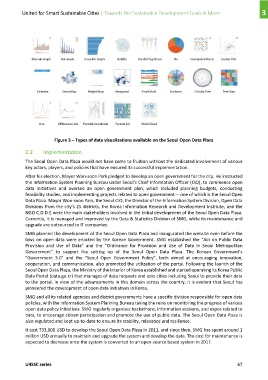
Figure 3 – Types of data visualizations available on the Seoul Open Data Plaza

            2.2     Implementation

            The Seoul Open Data Plaza would not have come to fruition without the dedicated involvement of various
            key actors, players, and policies that have ensured its successful implementation.
            After his election, Mayor Won-soon Park pledged to develop an open government for the city. He instructed
            the Information System Planning Bureau under Seoul’s Chief Information Officer (CIO), to commence open
            data  initiatives  and  oversee  an  open  government  plan,  which  included  planning  budgets,  conducting
            feasibility studies, and implementing projects related to open government— one of which is the Seoul Open
            Data Plaza. Mayor Won-soon Park, the Seoul CIO, the Director of the Information System Division, Open Data
            Divisions from the city’s 25 districts, the Korea Information Research and Development Institute, and the
            NGO C.O.D.E were the main stakeholders involved in the initial development of the Seoul Open Data Plaza.
            Currently, it is managed and improved by the Data & Statistics Division of SMG, while its maintenance and
            upgrade are outsourced to IT companies.
            SMG planned the development of the Seoul Open Data Plaza and inaugurated the website even before the
            laws on open  data  were enacted  by  the  Korean  Government.  SMG  established  the “Act on Public Data
            Provision  and  Use  of  Data”  and  the  “Ordinance  for  Provision  and  Use  of  Data  in  Seoul  Metropolitan
            Government”  to  support  the  setting  up  of  the  Seoul  Open  Data  Plaza.  The  Korean  Government’s
            "Government  3.0"  and  the  “Seoul  Open  Government  Policy”,  both  aimed  at  encouraging  innovation,
            cooperation, and communication, also promoted the utilization of the portal. Following the launch of the
            Seoul Open Data Plaza, the Ministry of the Interior of Korea established and started operating its Korea Public
            Data Portal (data.go.kr) that manages of data requests and asks cities including Seoul to provide their data
            to the portal. In view of the advancements in this domain across the country, it is evident that Seoul has
            pioneered the development of open data initiatives in Korea.

            SMG and all its related agencies and district governments have a specific division responsible for open data
            policies, with the Information System Planning Bureau taking the reins on monitoring the progress of various
            open data policy initiatives. SMG regularly organises hackathons, information sessions, and expos related to
            data, to encourage citizen participation and promote the use of public data. The Seoul Open Data Plaza is
            also regulated and kept up-to-date to ensure its stability, relevance and resilience.

            It cost 733,000 USD to develop the Seoul Open Data Plaza in 2011, and since then, SMG has spent around 1
            million USD annually to maintain and upgrade the system and develop the data. The cost for maintenance is
            expected to decrease once the system is converted to an open-source based system in 2017.


            U4SSC series                                                                                   67

