Best practices for teaching the Internet of Things
The Abdus Salam International Centre for Theoretical Physics
Session 296
According to ITU-T Recommendation Y.2060 the Internet of Things (IoT) is “a global infrastructure for the information society, enabling advanced services by interconnecting (physical and virtual) things based on existing and evolving, interoperable information and communication technologies”. The IoT is expanding, as the continual decrease in size, cost and energy consumption of wireless devices boosts the number of deployed devices dramatically. With the advancement of the IoT, there is a worldwide need for technical professionals involved in developing IoT networks.
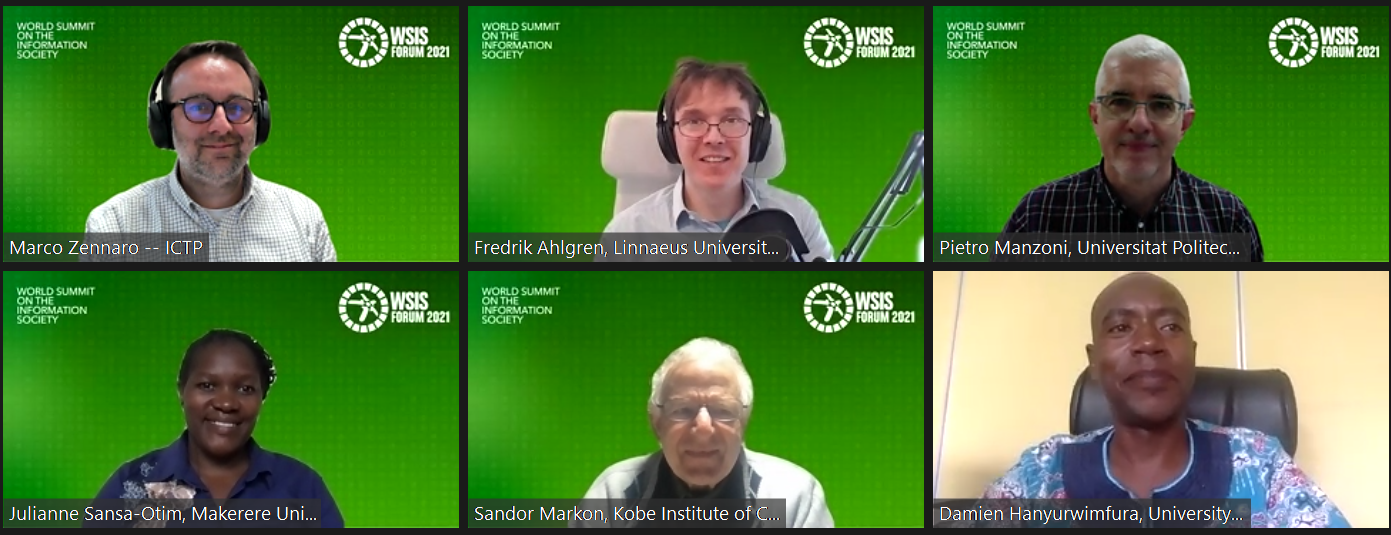
In this session we will share experiences gained in organizing training activities on IoT for a diverse range of participants (students, researchers, managers, practitioners, regulators, etc). We will discuss the lessons learned and we will present the best practices to be considered when teaching the Internet of Things. Panelist will discuss experiences gained in very diverse environments.
Marco Zennaro is a research scientist at the Abdus Salam International Centre for Theoretical Physics (ICTP) in Trieste, Italy, where he coordinates the Science, Technology and Innovation Unit. He received his PhD from the KTH-Royal Institute of Technology, Stockholm, and his MSc degree in Electronic Engineering from the University of Trieste. His research interest is in ICT4D, the use of ICT for Development, and in particular he investigates the use of Internet of Things for Development (#IoT4D). He has organized more than 30 training activities on IoT in Developing Countries. Marco is a Visiting Professor at Kobe Institute of Computing (KIC) in Kobe, Japan.
Pietro Manzoni received the master degree in Computer Science from the "Università degli Studi" of Milan, Italy, in 1989, and the PhD degree in Computer Science from the "Politecnico di Milano", Italy, in 1995. From November 1992 to February 1993 he did an internship at the Bellcore Labs, Red Bank, New Jersey, USA, and from February 1994 to November 1994 he was a visiting researcher at the ICSI (International Computer Science Institute) Berkeley, California, USA.
His research activity is related to the use of Mobile Wireless Networks to the design of dynamic systems. He is currently working on solutions for the Internet of Things focussing on LPWAN-based networks, and Pub/Sub systems. The overall focus is on the design of sustainable solutions, that is, solutions that try to consider at least one of sustainability's three main pillars: the economy, society, and the environment.
He is currently a full professor of computer engineering at the "Universitat Politècnica de València", Spain. He is the coordinator of the Computer Networks Research Group (GRC) and a senior member of the IEEE.
Damien Hanyurwimfura is currently the Acting Director and Head of PhD Studies and Research at the African Center of Excellence in Internet of Things( ACEIoT) and he is a Lecturer in the computer and Software Engineering department, School of ICT, College of Science and Technology, University of Rwanda.
He received his Bachelor degree of Engineering in Computer Engineering and Information Technology from University of Rwanda (Former KIST) in 2005. He obtained his Master degree of Engineering in Computer Science and Technology and Ph.D. degree in Computer Science and Technology from Hunan University, China in 2010 and 2015 respectively.
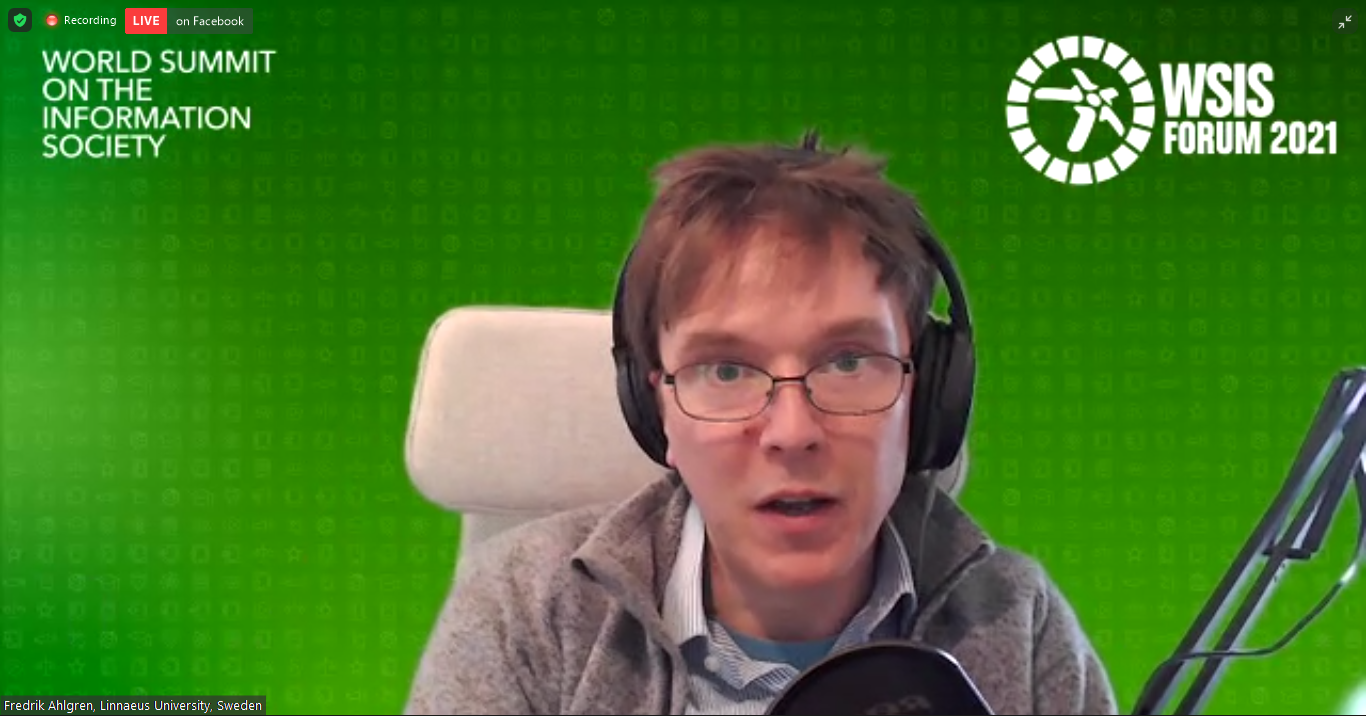
Fredrik started his career in the Royal Swedish Navy in 2001, and has sailed as a Marine Engineering officer on fast attack crafts, corvettes and submarines. During these years he has worked with gas turbines, diesel engines as well as battery electric propulsion. Since 2020 he is part of the Computer Science department, teaching courses in Internet of Things, Web Intelligence and Python programming. In his previous academic career, he has been teaching the pumping technology course, hydromechanics and machinery systems for the marine engineer programme.

Julianne Sansa-Otim is a Senior Lecturer in Computer Networks at Makerere University. She teaches, undertakes research and consultancy related to applying Information and Communication Technologies (ICTs) to different development contexts. She also serves on several boards including that of Research and Education Network for Uganda (RENU) and the UbuntuNet Alliance.
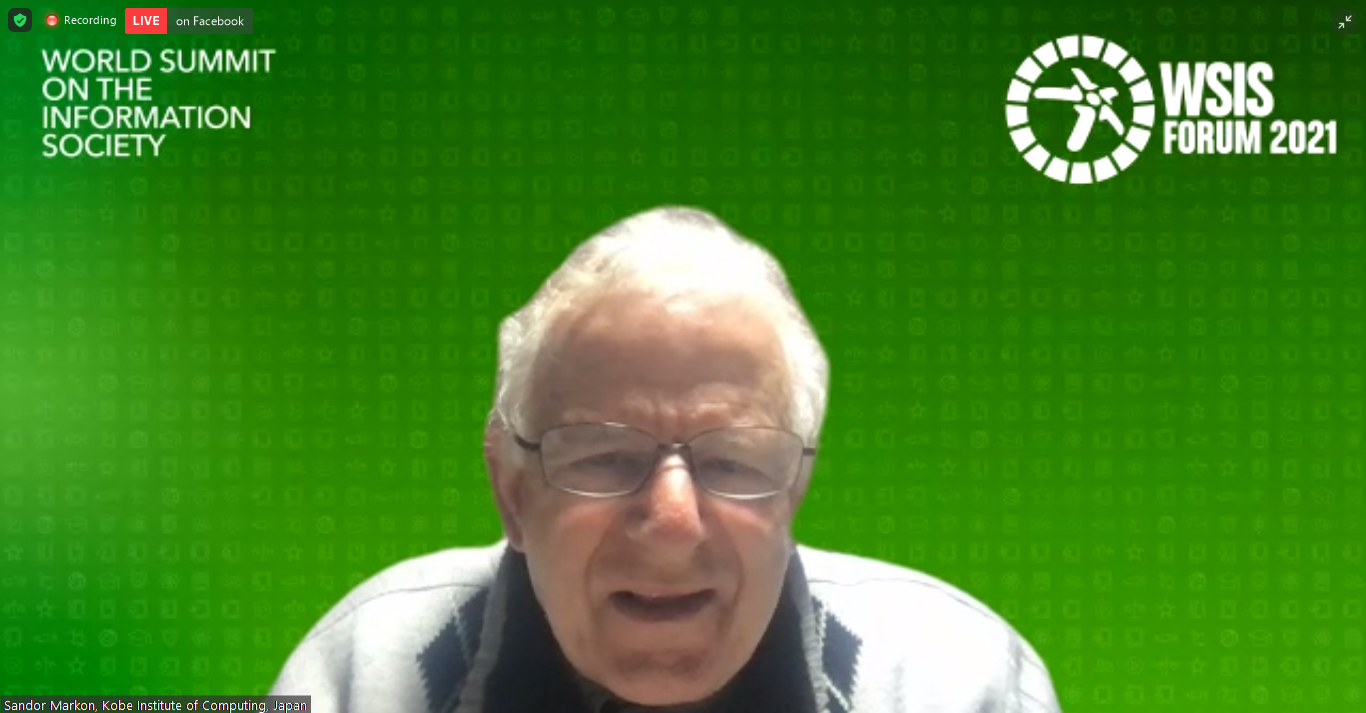
Sandor is a Professor at Kobe Institute of Computing, Japan.
His interest in ICT4D is mostly sensors and signal processing but he also works in AI, optimization, and new human-machine interfaces.
He holds a PhD from Kyoto University.
-
 C2. Information and communication infrastructure
-
 C4. Capacity building
-
 C11. International and regional cooperation
We will discuss on how to best organize capacity building activities in the field of Internet of Things, so the Capacity Building component is key. IoT networks strengthen the ICT infrastructure. As the organizer (ICTP) is a category 1 UNESCO institution, we will cover the impact of IoT training on International and Regional Cooperation.
-
 Goal 2: End hunger, achieve food security and improved nutrition and promote sustainable agriculture
-
 Goal 3: Ensure healthy lives and promote well-being for all
-
 Goal 11: Make cities inclusive, safe, resilient and sustainable
-
 Goal 13: Take urgent action to combat climate change and its impacts
-
 Goal 15: Sustainably manage forests, combat desertification, halt and reverse land degradation, halt biodiversity loss
There are reports that state that IoT can have a role to play on most SDGs (https://www.ceps.eu/wp-content/uploads/2020/03/IoT4SDG-report.pdf). Some SDGs are clearly linked:
SDG 2: ZERO HUNGER:
An estimated 821 million people were undernourished in 2017. Annual cereal production will need to rise to about 3 billion tonnes and annual meat production will need to rise by over 200 million tonnes to reach 470 million tonnes to feed 9.1 billion people by 2050. IoT can be used to optimize food production.
SDG 3: GOOD HEALTH AND WELL-BEING:
3 billion people worldwide lack access to basic sanitation. Noncommunicable diseases alone will cost low- and middle-income countries more than $7 trillion in the next 15 years. IoT can he used to monitor patients remotely.
SDG 11: SUSTAINABLE CITIES:
Half of humanity – 3.5 billion people – lives in cities today and 5 billion people are projected to live in cities by 2030.The world’s cities occupy just 3 per cent of the Earth’s land, but account for 60-80 per cent of energy consumption and 75 per cent of carbon emissions. IoT can be used to monitor cities.
SDG 13 & 15: CLIMATE ACTION and LIFE ON LAND:
Given current concentrations and on-going emissions of greenhouse gases, it is likely that by the end of this century, the increase in global temperature will exceed 1.5°C. Global emissions of carbon dioxide (CO2) have increased by almost 50 percent since 1990. IoT can be used to monitor climate.