3G achieves global reach
with CDMA
by Perry M. LaForge
Executive Director, CDMA Development Group
CDMA2000: More than 100 million
subscribers and growing
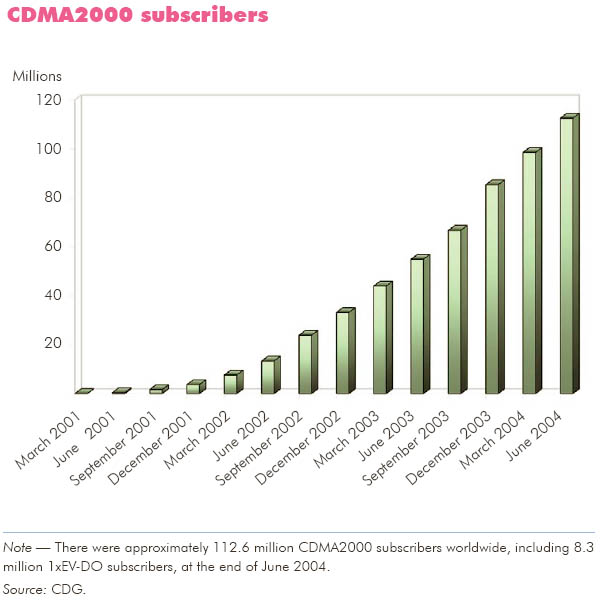
At the end of June 2004, over 112 million
people across all continents used CDMA2000®
technology to make voice calls or to access the
Internet and advanced data services. This
gives the wireless industry a historic milestone
to celebrate. CDMA2000, as the first IMT-2000
technology to be deployed and to offer broadband wireless services, is a good foundation
for discussing the promise of third-generation
(3G) mobile communications: that of providing an unprecedented level of voice and data
services that can be used anytime, anywhere,
by anyone.
|
Kyocera |
In October 2000, SK Telecom and LG Telecom
of the Republic of Korea pioneered the introduction of 3G networks using the CDMA2000 1X
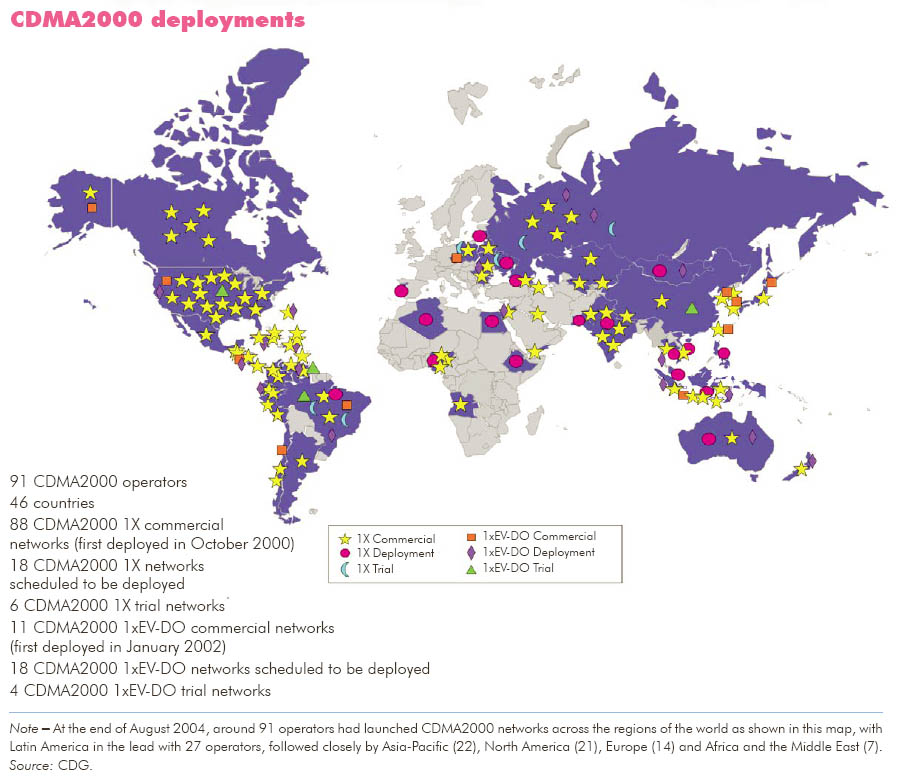
standard. By August 2004, there were 98 networks providing commercial 3G CDMA2000
services to more than 112.6 million customers
in 46 countries around the world (see map and chart).
CDMA2000 users account for 96 per cent of all
3G subscribers worldwide and the customer base
is increasing at the rate of more than 4.6 million
new subscribers per month. This growth rate
is expected to continue for several more years.
According to the Yankee Group, CDMA2000 will
have 290 million users in 2008. Of these users,
121 million (or 42 per cent) are expected to subscribe to CDMA2000 broadband wireless technologies: 1xEV-DO (evolution-data optimized)
and 1xEV-DV (evolution-data and voice).
Initially deployed
in Asia, 73 per cent
of the CDMA2000
networks now operate in other regions,
with Latin America
and the Caribbean having the greatest number
deployed. The use of CDMA2000 is also expanding rapidly in the world’s two largest markets,
China and India, and it is now being deployed
in Europe. CDMA2000 1X and its broadband evolution,
1xEV-DO, support the most advanced data services on the cellular market today. For example,
CDMA2000 1xEV-DO, with its 300–600 kbit/s
average throughput and 2.4 Mbit/s peak data
speeds, enables operators to offer innovative
multimedia services and broadband access to
the Internet. Customers are using their phones
to watch videos and live streaming news, to
send and receive video mail, and for picture
messaging, banking and e-commerce.
CDMA2000 1xEV-DV, offering simultaneous
voice and data at peak speeds of 3.1 Mbit/s,
will continue the evolution of CDMA2000
3G services. The Republic of Korea,
which has the “world’s most extensive
CDMA2000 1x EV-DO network,” according to the latest ITU Report: The Portable
Internet, launched at ITU TELECOM ASIA 2004, is expected to see the first 1xEV-DV offering
later this year.
Innovative services, handsets
and devices
The adoption of innovative services is already driving rapid development of
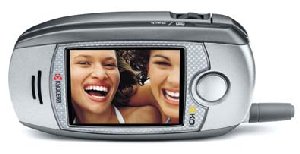
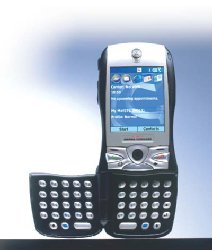
handsets and devices. Today, more than 650 CDMA2000 devices are on the market,
including 86 1xEV-DO models. The devices are manufactured by more than 56
vendors, and range from low-cost phones to high-end devices with advanced
functionality. This is good for consumers, because the great quantity and
wide variety of devices provides
something for everyone at a
range of price points. It is good for operators
because it expands opportunities to differentiate services for various market segments, and
it is good for handset manufacturers, because
they will benefit from the continuing demand
for innovative devices that new applications
and services create.
|

Sierra wireless |
CDMA2000 has demonstrated that it serves
operators’ business interests by enabling them
to deploy services and applications that attract
new customers, reduce churn rates, create new
market opportunities and increase revenues. As
voice, even wireless voice, becomes increasingly commoditized, operators look
to the 3G data service offerings
to enhance their individual
business cases. One recent
example of how operators
are gaining market advantage with the technology is
Verizon Wireless in the United
States, which reported that it
gained an industry record 1.5
million customers in the second
quarter of 2004, while dropping its
churn rate from 1.7 per cent to 1.45
per cent and posting a 25 per cent
increase in total revenues. [1]
In Japan, KDDI had amassed more
than 15 million 3G subscribers as of August
2004, just over two years after its entry into the
3G market in April 2002. The company attributes this achievement to its CDMA2000 1X
and 1xEV-DO services that enable it to offer
market-differentiating advanced broadband
content and innovative handsets. [2]
One of the most popular
services being offered by
CDMA2000 operators on their
1X and 1xEV-DO networks is
“push-to-talk”, which allows
users to engage in immediate
communication with one or
more people. Push-to-talk over
cellular (also known as PoC) is
expected to lead to a variety
of other “push-to” features
such as instant conferencing
and instant voice messaging.
Sierra Wireless |
The service has broad applicability within both the consumer and enterprise sectors,
as well as for public safety
and government use. A
number of handsets are already available with pushto-talk functionality, and
more are expected to enter
the market soon. 3G data services are noticeably increasing operators’ average revenues per
user (ARPU). The CDMA experience in the Republic of
Korea is a good example of
this. There, operators have
reported a five-fold increase
in data ARPU with 1X compared to 2G cdmaOne™.
They have tripled their overall ARPU with 1xEV-DO
compared to 1X, and doubled their data ARPU with
1xEV-DO compared to 1X.
CDMA2000 technologies operate in a variety of frequency bands (450, 800, 1700, 1900
and 2100 MHz) and can therefore support the
varying needs of wireless operators around the
world. A prime example is the 450 MHz band,
where CDMA2000 is the only 3G wireless technology commercially available. In this band, CDMA2000 has become an exciting option for
operators across Asia and in Eastern and Central Europe to deploy 3G services cost-effectively and in a spectrally efficient manner. And
it gives analogue NMT-450 operators a thirtyfold increase in network capacity, enabling
them to serve a larger number of users within
their existing spectrum.
CDMA2000 also gives operators a new means
of delivering both voice and broadband Internet
services to previously underserved markets, particularly those in developing countries, offering
a great opportunity to increase global access to
telecommunications. In many developing countries without existing wireline infrastructure,
CDMA2000 at 450 MHz is proving to be a particularly effective and efficient way for operators to meet their universal access obligations. It is expected to enhance the lives of many in
rural and underdeveloped areas, providing affordable access to telephones and the Internet where
there was no access previously.
The future of 3G and CDMA
|

Initially deployed in Asia, 73 per cent of the CDMA2000 networks now operate
in other regions
ITU 0420077 Siemens |
As the breadth of deployments indicates,
CDMA2000 is already a mature technology, yet
it is designed to have ongoing flexibility to advance in sophistication as operators have need
for new capabilities. CDMA is expected to become the dominant wireless platform worldwide
in the next five to six years as W-CDMA (which
is also based on CDMA) and CDMA2000 take
market leadership from second-generation GSM.
The Yankee Group forecasts that by 2008, some
735 million subscribers (or nearly 40 per cent of
the global market) will use 3G technologies. Of
these subscribers, 628 million (or 85 per cent)
will use CDMA-based 3G technologies. [3]
The next challenge: Delivering
on the anytime, anywhere promise
While we believe that CDMA will be the
dominant platform, it will coexist with other
technologies. Creating a world of networks and services that can deliver the anytime, anywhere
promise will require a substantial, industry wide effort to standardize and implement technologies that will allow customers to seamlessly
access information and communicate via any
device.
According to the architecture planned for next generation systems, networks will standardize
around an all-IP core and allow use of a variety
of radio-access technologies in interoperable
fashion so that consumers will be able to enjoy a
common set of services regardless of the technology platform used. The architecture will bring
in 2G, Wi-Fi, mesh networks and other technologies to provide not just high-speed multimedia
services to stationary and mobile wireless users,
but machine-to-machine communications as
well.
The industry is already beginning to meet
these needs in several ways. Many operators
have begun migrating to all-IP networks. New
multi-mode, multi-band, multi-network chipsets
are available now to allow inter-standard roaming between networks, facilitating the manufacture of handsets that are increasingly adaptable to different environments. “World phones”
that support both CDMA2000 and GSM are on
the market today and within the next two years,
devices that incorporate both CDMA2000 and
W-CDMA will become available.
While these examples illustrate how interoperability can be addressed at the product
level, the CDMA industry is also collaborating
with standards-development organizations to
define standards that will make it possible for
applications and services to work independently of the air interface, allowing customers
to exchange information and communicate
across networks, service providers, devices and
geographies.
Conclusion
With the global reach of 3G now a reality,
we have entered an exciting new era in communications in which wireless spectrum has
become the preferred medium for delivering
text, video, music and speech to increasingly
demanding business and consumer markets as
well as to those who have never had access to
such services before. Our task ahead is to find even more ways to deliver on 3G’s promise to
ensure that wireless technologies continue to
meet the communication needs of people
across the globe rapidly and cost-effectively.
The IMT-2000 family of systems will enable us
to achieve this important goal. "
Sources:
[1] Verizon Communications Reports 6 per cent
second-quarter revenue growth, led by wireless
revenue growth of 25 per cent (second quarter
highlights posted on 27 July, 2004).
[2] Data obtained from “The Mobile Internet Strategy of the Broadband Era,” presented by Makoto
Takahashi, KDDI, at BREW Developer’s Conference,
9 June, 2004.
[3] Yankee Group Global Wireless/Mobile Forecast,
April 2004.
|
About the author Perry LaForge is the Founder, Executive Director and
Chairman of the CDMA Development Group (CDG).
The CDG is a trade association comprised of over 100
of the world’s leading wireless operators and manufacturers. At the CDG, Perry is responsible for overseeing
the expansion of CDMA technology throughout the
world and for leading the evolution of the technology
through the CDG’s subcommittees. Currently, there are
over 500 individuals working on various CDG subteams.
Perry has been involved in the development of CDMA
since the first proof of concept trials in 1988.
Perry sits on an advisory board for Innovative Global
Solutions (IGS) and serves on the Board of Directors of
SignalSoft and Broadband Wireless (BBW) corporations.
He has participated in various industry committees, including the Cellular Telecommunications Industry Association’s (CTIA) Presidents Technology Subcommittee, the
Telecommunications Industry Association’s (TIA) TR45
committee as well as the American Electronic Association’s (AEA) interest groups.
He has been a speaker in over twenty countries and has
worked with government officials throughout the world
to develop telecommunication policies. He is a frequent
guest columnist for a number of publications and sits on
editorial advisory Boards for CDMA Spectrum and Wireless Business
& Technology magazines.
Recently, Perry was listed as one of the top 50 telecommunications industry executives by Wireless Week
magazine.
|
|