
Interview with Pierre Aboudarham
Chairman, Radio Regulations Board

More than ever, the radiocommunication industry has stories to tell. Radiocommunications are a fast-growing segment of the
international telecommunications market. Industry estimates indicate that a record 46 geostationary satellites were ordered for
the year 2000 alone. This represents a USD 5.3 billon investment expected to generate more than 20 billion in operating revenues
over the fifteen-year lifetime of the satellites. Further, as new generations of fixed and mobile communication systems are
defined and deployed, a savvy blend of innovative technology promises to offer new investment opportunities and value-added
services to customers. With so much at stake, the ground rules in what has become a complex radiocommunication environment have
to be clear at all times and for all players. But are they? Mr Aboudarham explains the role of the Radio Regulations Board (RRB)
— the "custodian of an international public trust".
What is the RRB and what are its role and functions?
The Radio Regulations Board was created in 1992 as part of the new structure of the International Telecommunication Union, and replaced the old International Frequency Registration Board (IFRB), which operated on a full-time basis.
RRB's twelve members were elected by the Plenipotentiary Conference in Minneapolis in 1998, representing all five ITU regions: the Americas (Region A), Western Europe (Region B), Eastern Europe (Region C), Africa (Region D) and Asia and Australasia (Region E).
The Board operates on a part-time basis. Its main functions, as defined in the Constitution, the Convention and the Radio Regulations, are as follows:
What is the purpose of these Rules of Procedure that RRB approves and how does RRB deal with issues that cannot be resolved under those rules?
The Rules of Procedure are used by BR and its Director in applying the Radio Regulations to register frequency assignments made by ITU Member States.
This means that, when the Radio Regulations are not very clear, or when they are subject to diverging interpretations, RRB must draft a Rule of Procedure to clarify the text and let administrations know exactly how BR is applying the Radio Regulations. This work is of critical importance to administrations, which can then refute the Board's interpretation. Indeed, the Rules of Procedure are published and the administrations' comments are studied at the Board's meetings. As a rule, the Board's opinion is then accepted, but administrations always have the possibility of recourse to a WRC.
Can you give us some recent examples of decisions by the Radiocommunication Bureau that the Board has had to review at the request of administrations? What were the commercial ramifications?
One recent example had to do with a satellite operator which, following several changes in the Radio Regulations during the development period for a satellite system (seven to nine years), had brought it into service a couple of months after the regulatory deadline, with the result that BR had proceeded as required under the Radio Regulations — that is, it had deleted the satellite from the ITU register. In response to a request from the administration concerned, the Board decided to allow the operator in question a period of time until a decision could be made by the next WRC, which had the supreme authority to resolve the conflict (thereby allowing the operator to be in conformity with its network). This is a clear indication of the commercial stakes associated with the Board's decisions, which, moreover, make decision-making a very delicate affair.
So far as conflicts between administrations are concerned, the Board endeavours to play the role of a conciliator by proposing compromises, which are usually accepted.

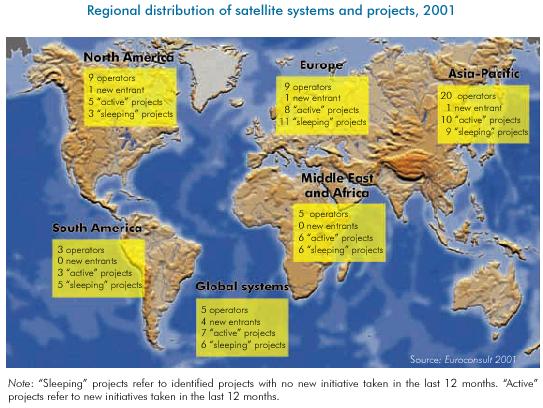
How does RRB view the situation of rampant overfiling of satellite networks? What are the implications of overfiling for the industry and for ITU's ability to serve that industry effectively? What can RRB do within its mandate to stop, or at least discourage, this proliferation of "paper satellites"?
This is a very delicate issue. So far as "paper satellites" are concerned, I do not think the Board can do much to discourage them. You have to understand that operators often need to provide for major changes to the planned network. However, the application of certain provisions in the Radio Regulations, such as the principle of administrative due diligence, combined with goodwill on the part of administrations, could no doubt go a long way towards resolving this problem, which is responsible in large measure for BR's backlog in the processing of satellite network filings.
Tell us more about the principle of administrative due diligence.
Under this procedure, information must be provided which only becomes available once a system has reached an advanced stage of development and is ready to be brought into service. The procedure requires that various items of information be made available so that the satellite system can be brought into service: the name of the satellite network, the name of the operator, the name of the satellite, the name of the firm building each spacecraft, the date on which the contract was executed, the contractual "delivery window", the number of satellites purchased, the name of the supplier of the launch vehicle, the planned delivery or orbital launch window, and the name of the launch vehicle.
Because countries have usually asked that the regulatory period allowed for bringing satellites into service be extended right up to the latest date allowed under the Radio Regulations (counted from the initial date for bringing the satellite network into service), the consequences of the administrative due diligence procedure will not be fully felt until the end of 2003. In other words, we shall perhaps still have to wait several years to see if this procedure will produce satisfactory results. In the interim, WRC-2000 concluded that remedial measures nevertheless needed to be taken to deal with the satellite processing backlog.
Let us continue on the issue of eliminating the satellite processing backlog. Could you tell our readers about Council Resolution 1182 and what it seeks to achieve?
We were already concerned about this problem, and over the course of several meetings had been discussing possible solutions with BR. We had agreed that there was a need for additional resources to be devoted to this area, but since we had not been given any specific responsibility in regard to the matter, we could not go any further than that. Thanks to Resolution 1182, which the Council adopted in June 2001 at its annual session, the Board has more room to act in this area, and so we immediately took up the issue once again. Indeed, according to the resolution, the Council recommended that RRB develop, as a matter of urgency, a set of Rules of Procedure, consistent with the Radio Regulations, intended to eliminate the backlog in the processing of satellite network filings. At our most recent meeting, held in Geneva in September, we proposed new Rules of Procedure aimed at reducing if not eliminating the backlog. These Rules of Procedure have been circulated for comment by administrations, and we shall review them in conjunction with any comments received at our next meeting, to be held in Geneva from 3 to 7 December 2001.
The Radio Regulations have been "simplified" over and over again. Yet, they seem to be made more complex at virtually every ITU World Radiocommunication Conference. How can RRB ever hope to reconcile the conflicting objectives between clarifying the application of these already complex regulatory texts and reducing their proliferation and complexity?
It is quite true that the Radio Regulations have become more and more complicated despite the work some years ago of the Voluntary Group of Experts. But this is to be expected because changes are made to the Radio Regulations at each WRC in order to make provision for new systems or new technologies, such as digital land systems, the development of non-geostationary satellites and, in recent times, the use of very high frequencies. Such changes are usually accommodated by adding some new articles or modifying others, and therein lies a key problem, for the Radio Regulations are so complex that it is virtually impossible during a WRC to review all the consequences of a change.
What role does RRB play in ensuring equitable access to the satellite orbit?
The Board focused its attention on this issue, particularly in the wake of Resolution 80 of WRC-97. That resolution asked the Board, as a matter of urgency, to develop the Rules of Procedure to be followed in applying No. S0.3 of the Radio Regulations which, following through on a provision enunciated in the ITU Constitution, sought to assure equitable access to the geostationary-satellite orbit and the rational, efficient and economical use of the frequency spectrum, all with a view to minimizing what had been the rule up to that point of "first come, first served". We have devoted several meetings to the search for a solution. We prepared an initial report for WRC-2000, which took note of it and, by modifying Resolution 80, asked the Radio Regulations Board to carry out further studies based on our proposals. We are continuing our consideration of the issue, focusing in particular on the provision of greater technical support for developing countries and seeking a more flexible application of the Regulations.
The debate on ITU reform that has been going on in the Council since 1999 has also been concerned with RRB. For example, does the fact that RRB sits only part-time reduce its effectiveness vis-à-vis the old IFRB which sat full-time? Another issue discussed is whether the Board should be expanded from its current twelve members, or whether on the contrary it should be made smaller. Even the very need for a Radio Regulations Board has been called into question. What is the view of the Board itself on these and other reform issues that are to be considered at the Plenipotentiary Conference in Marrakesh in September and October of 2002?
To us, this is a very important issue. ITU–R can be likened to a State which has a legislative branch — world radiocommunication conferences — an executive branch — the Radiocommunication Bureau — and a third branch — the Radio Regulations Board. This third branch, which is independent so as to counterbalance the executive branch, may not be a judiciary exactly, but it is nevertheless a body responsible for interpreting the rules and hearing any appeals by administrations with regard to decisions by BR.
If the Radio Regulations Board did not exist, in cases where a conflict arose between BR and an administration, the only possibility of appeal would be to a WRC — in other words, two to four years later, a delay that would have disastrous consequences for something like a satellite network.
In Minneapolis, the Plenipotentiary Conference expanded RRB from nine members to twelve. That decision came about as a compromise between some administrations that wanted the Board to have fifteen members and others that wanted it to have nine. I do not see that there is a problem here because geographical representation is very well guaranteed now.
Considering the importance of the Board, the question is how to improve its effectiveness. The fact that it sits on a part-time basis only, something that was decided when it was created, is not necessarily to be questioned, but there is a need for RRB to have more time to devote to its meetings and to preparations for them. This could be done within the statutory provisions that now govern the Board, provided that the Board's budget, which forms part of BR's budget, were increased slightly, by an amount that in proportionate terms would be very small. That would make for greater efficiency by facilitating consultations amongst members during the preparatory work prior to meetings, and would allow more than four meetings to be held each year.
To increase the Board's effectiveness still further, it should also be made an official participant in ITU's various meetings, as this would enable it to make contributions at the various conferences.
What do you see as the most important tasks for RRB over the next nine months leading up to the Plenipotentiary Conference?
I think that in the lead-up to the next Plenipotentiary Conference, and particularly to the next WRC in 2003, the Board's main tasks, in addition to its normal work on Rules of Procedure, will be the study pursuant to Council Resolution 1182, including proposals to reduce the backlog in the processing of satellite network filings, and the study pursuant to WRC Resolution 80, including proposals for equitable access to the frequency spectrum. There is also a need to work on getting provisions adopted, as I have already mentioned, that will increase the Board's efficiency. A report on the Board's work and its needs will no doubt be submitted to the Plenipotentiary Conference.