
The International Telecommunication Union is delighted to have the opportunity of staging ITU TELECOM AFRICA 2001 in South Africa.
In terms of telecommunications development, Africa is still the world's most under-served region. It is my hope, therefore, that the Africa 2001 event will enable us to take another leap forward in this most important of areas, and to continue the vital process of connecting Africa.
At the last ITU TELECOM event for the African region, AFRICA TELECOM 98, we made great strides — and since 1998 many millions of new telephone lines have been installed across the continent. Millions of people have signed up for mobile cellular service. And hundreds of thousands of users are coming to the Internet for the first time.
But access to any telecommunication services, let alone modern telecommunication services, is still far from universal in Africa. And that must remain the yardstick by which we, as an organization, as well as governments and politicians, should be measured.
Universal access to modern telecommunication services is not an unrealisable dream — it is relatively easy to achieve, given sufficient political will. Moreover, it is a tremendous investment opportunity. Let us therefore work together to make it happen, and to bridge the digital divide.
At Africa 2001 — the first ITU event of the new millennium to be staged for the African continent as a whole — participants will focus on the possibilities for growth in the region. They will examine ways of increasing access not just to basic telephony but to modern tele-communication facilities and services to the peoples of the region as well. They will also explore the best ways of exploiting the extraordinary technological advances which have been made in recent years, taking advantage of their potential to narrow the telecommunications gap.
In Johannesburg we will see the latest technologies and services at the Africa 2001 Exhibition, while at the Forum we will address the critical issues pertaining to Africa. There is also a Tele-com Development Symposium planned in conjunction with the Forum, and each developing country in the African region is being invited to send two representatives to participate in this Symposium. Finally, we are launching, at Africa 2001, a new initiative called the "Youth Forum". This will bring nearly 100 young women and men of university age to participate in the event.
Let me take this opportunity to thank President Thabo Mbeki and the Government of the Republic of South Africa once again for their kind invitation to host ITU TELECOM AFRICA 2001. I look forward to meeting you there.
I am delighted and honoured that South Africa has once again been chosen to host the International Telecommunication Union's Africa TELECOM event. It gives me great pleasure, jointly with ITU, to welcome the international telecommunications community participating in ITU TELECOM AFRICA 2001 in Johannesburg.
Telecommunication infrastructure and services play an essential role in both the modernization and social development of a nation. They have become indispensable to enabling countries to compete on equitable terms in an international community which is now governed by interdependence and by the imperatives of a global economy. They are therefore critical to the achievement of Africa's recovery.

The 56 countries comprising the Africa telecommunications region offer a diverse range of business opportunities and tremendous scope for expanding both basic and advanced telecommunication services. This unique event will be a perfect meeting point for key players from industry and governments of the region. It will be a real opportunity for us to help bridge the digital divide and to bring modern communication services within reach of all of Africa's people.
Driven by the need to extend to all South Africans access to services previously denied to the majority and to integrate our country into the world economy, South Africa has made dramatic improvements in developing a modern telecommunication infrastructure. In April 1994, when we achieved democracy, South Africa had about 3.5 million main telephone lines in operation and cellular telephony in the country was in its infancy. Just six years later, in the year 2000, we had 5.5 million main telephone lines and 5.3 million mobile sub-scribers. As Africa 2001 takes place, there are now over ten million cellular subscribers, and we have a cellular teledensity of over 25 per cent.
We are, therefore, proud to host AFRICA 2001. We are convinced that it will enhance the prospects for our continent to develop telecommunications and act as a catalyst to speed up our social and economic progress. The Exhibition will provide an ideal showcase for visitors to discover and appraise new products and services and explore the possibilities of acquiring the very latest in telecommunications technology. And the Forum will be the ultimate networking opportunity; a place to establish contacts, share ideas and give us all a clearer vision of the future.
Both South Africa and ITU are committed to making every effort to ensure the full success of this event. I would therefore like to take this opportunity to extend the warmest possible welcome to all exhibitors, Forum delegates and visitors to AFRICA 2001.
Together, let us add strength and speed to Africa's efforts to bridge the digital divide!
From 12 to 16 November, South Africa will host ITU TELECOM AFRICA 2001 for the second time within a period of three years. Indeed, the choice of our country (and continent) to host the first ITU Telecom event of the new millennium confirms that Africa is on course, and has capacity to be an important player in the development of the information and communication sector.
The event takes place at yet another critical moment in the evolution of the telecommunications policy in South
Africa. When the democratic dispensation was born, the South African economy had reached stagnation as a failure of the
apartheid policies. At the same time, the economy was characterized by structural problems arising from the
concentration of the centres of production in few provinces to benefit the minority.
To address the apartheid legacy, the government had to undertake the transformation of the economy, including the telecommunications sector. In this sector, the first step was the Telecommunications Act of 1996, which paved the way for the separation of policy, regulatory and operational functions. The Act also provided for the establishment of the Universal Service Agency to roll out infrastructure to under-serviced areas.
In January 2001, the government embarked on the process of reviewing the telecommunications policy to ensure that it is in tandem with the needs of all sectors of society. Given the need to consult with various stakeholders, the review process took about eight months to complete.
Government has opted for the managed liberal-ization of the sector instead of a "big bang". The new policy provides for the introduction of a second national operator in 2002 and a third national operator in 2005, pending a feasibility study to be conducted in 2004.
As part of the drive to allow all South Africans to participate in their country's economy, up to 30 per cent shareholding in all operators will be set aside for empowerment purposes. Women and people with disabilities will also be targeted to benefit from the empowerment.
In order to address the prevailing imbalances and diversify participation in the economy, small, medium and micro size enterprises (SMME) will be licensed to provide services in areas where teledensity is up to 5 per cent. In these areas, SMMEs will be allowed to provide voice over Internet protocol services.
The policy also requires all operators to contribute to the Universal Service Fund and to implement the universal service obligations in order to create an e-literate society. Government believes that the creation of an e-literate society is in the interest of both the private and public sectors. With the advent of electronic commerce, business and government stand to benefit a lot from a wider participation of all sectors and communities.
As part of our contribution to the African Renaissance, Sentech, the public-owned broadcast signal distributor, has been licensed to provide the international gateway and multimedia services. This means that Sentech will operate as a carrier of carriers by offering other operators access to its network. For Africa, the implication is that, for the first time, there will be an African company that links the continent and the outside world. In itself, the linking of African countries to each other will ensure that Africans communicate directly with each other without having to go via Europe.
For the first time, ITU TELECOM AFRICA 2001 will include a Youth Forum where young people from across the continent will deliberate on information and communication technology (ICT) issues from their own perspective as today's and tomorrow's leaders. In this regard, the challenge will include finding ways to extend the outcome of their deliberations to the entire youth community so that whatever is done in the future reflects the needs and interests of the majority of the African youth.
There is no doubt that ITU TELECOM AFRICA 2001 will benefit the entire African
continent as we grapple with the challenges of creating a better life for all our people. The fact that this event takes
place a few months after the adoption of the New Africa Initiative (NAI) at the OAU Summit held in July 2001, means that
we should use this opportunity to determine how our sector will contribute to the renewal of the continent.
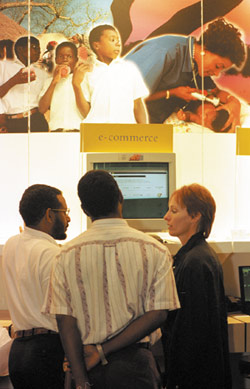
Government believes that the creation of an e-literate society is in the interest of both the private and public
sectors. With the advent of electronic commerce, business and government stand to benefit a lot from a wider
participation of all sectors and communities
(ITU 980076)
Given the cross cutting nature of the ICT sector, it has been identified as one of the priority areas of the NAI. Therefore, to ensure that the renewal plan becomes a reality, we need, as a matter of urgency, to attend to a number of issues. These include:
Addressing issues together with the resolutions and programmes of the African Telecommunications Union and those of other regional blocks will cement our drive to create a sector that addresses the needs of all the peoples of Africa.
We look forward to meeting the delegates in South Africa.
ITU TELECOM AFRICA chronicle
– Looking back

|
Contributed by Piers Letcher, Press and Public Relations Officer, ITU Telecom |
Regional ITU TELECOM events for the African continent have come a long way since the first event was held in Nairobi (Kenya) in September 1986. Technology has changed the world beyond recognition, and both Africa and the ITU TELECOM AFRICA event have changed with it.
In the intervening years since 1986, three more AFRICA TELECOM events were staged in Harare (Zimbabwe) in December 1990, in Cairo (Egypt) in April 1994, and in Johannesburg (South Africa) in May 1998. Now the world community's attention is again turned to Johannesburg where the fifth ITU TELECOM event for Africa will be staged from 12 to 16 November 2001.
African telecommunication development in the past decade and a half has certainly been impressive. Yet, the continent's fixed-line tele-phone density of just 2.5 per cent (at the beginning of 2001) and mobile cellular teledensity of only 1.5 per cent are still dwarfed by the world averages of 16.3 and 11.9 per cent respectively.
We are therefore still some way from "Bridging the missing link" — the theme of the AFRICA TELECOM 86 Forum, and the subject of Sir Donald Maitland's speech given at the opening session of that event. Sir Donald was the Chairman of the Independent Commission for World-Wide Tele-communications Development set up by the ITU Administrative Council in 1983. In December 1984, this Commission released a major report entitled the Missing Link. Often referred to as the Maitland Report, the main goal it highlights is that of "bringing virtually the whole of mankind within easy reach of a telephone" by the early part of this century.
That has not happened yet — but there is no reason to believe that the goal cannot be achieved in Africa, as it has been reached on other continents, if governments across the region have the political will and the private sector demonstrates its willingness to invest in the world's most underserved market-place.
Indeed, African governments are already liberalizing their telecommunication sector, and are encouraging the creation of partnerships both between developing and industrialized countries and between developing countries and the private sector. As a result, the telecommunication sector is evolving rapidly. With the number of cellular subscribers doubling year on year in many African countries, the prospects for the region are better than ever.
What must be done now is to follow through on Maitland's hope, and to bring modern telecommunication infrastructure within the reach of everybody. If the world is to be at all equitable, then communications must be available, accessible and affordable — and nowhere is this more true than in Africa.
Nairobi, 16 to 23 September
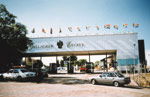
AFRICA TELECOM 86 was the first ITU regional TELECOM event for Africa, and was staged at the Kenyatta International Conference Centre in Nairobi. The event was organized jointly by ITU and what was then the Kenya Posts and Telecommunications Corporation (KP&TC), with the support of ITU's 160 Member countries, the Pan-African Telecommunications Union (PATU) — now the African Telecommunications Union — the Union of National Radio and Television Organizations of Africa (URTNA) and some 50 professional engineering societies. The AFRICA TELECOM 86 event attracted 94 exhibitors from 22 countries and featured eight national pavilions. A net total of 2500 m2 of exhibition space was allocated. During the event, 11 000 telecommunication professionals visited the Exhibition.
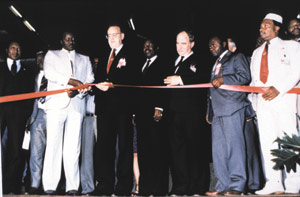
Inauguration of AFRICA TELECOM 86 in the presence of Richard Butler (third from left),
ITU Secretary-General from 1982 to 1989
(ITU 860134)

Kenyatta International Conference Centre
(ITU 860133)
AFRICA TELECOM 86 broadly focused on the Maitland Report, The Missing Link. The event provided an opportunity for a free-flowing exchange of ideas among the world telecommunication community on key issues of tele-communication development in Africa. This exchange of ideas mainly took place in a special session of the World Telecommunications Forum that was held as part of AFRICA TELECOM 86.
Some 400 delegates representing 56 countries from all five continents participated in the Forum. The various papers and discussions of the Forum centred around the fundamental questions facing policy-makers in the development of their telecommunica-tion networks in a rapidly changing environment. The Forum consequently highlighted the prerequisites of the development of telecommu-nication infrastructure which include: political will and the recognition of the important role that telecommunication plays in today's world, the need to develop appropriate technology and the consolidation of financial and human resources. It became clear, at the end of the Forum, that the advent of new technologies and closer collaboration between all the concerned parties provide new possibilities which will enhance telecommunication development and bridge the missing link between the industrialized and the developing countries.
Harare, 3 to 9 December
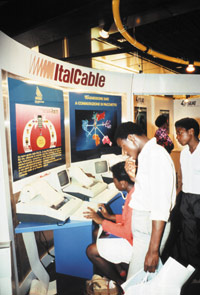
AFRICA TELECOM 90, which was jointly organized by ITU and the Posts and Telecommunications Corporation of Zimbabwe (PTC), was held at the Harare International Conference Centre and the Sheraton Hotel. The event was spectacularly successful, with inbound and outgoing flights to and from Harare being fully booked, the hotel capacity of the city being stretched to the limit, and the Conference Centre being entirely occupied by international and Zimbabwean organizations.
(ITU 910060)
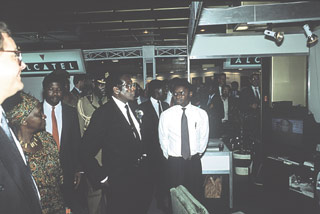
Zimbabwe's President Robert Mugabe tours the Exhibition accompanied by Victoria Chitepo, then Minister of
Information, Posts and Telecommunications
(ITU 910057)
AFRICA TELECOM 90 was the second regional telecommunication Exhibition and Forum staged by ITU at the invitation of an African country. The event was inaugurated on 4 December 1990 in the presence of Zimbabwe's President Robert Mugabe. Some 1500 people — including 29 ministers, ambassadors, 145 directors-general of telecommunication administrations and over 550 executives and engineers from 94 countries — crowded the vast Auditorium of the Harare International Conference Centre for the joint opening of AFRICA TELECOM 90 and the African Telecommunication Development Conference.
The aim of this conference was to develop strategies and plans for establishing telecommunication infrastructure for African countries as a tool for the integration of their economies.
"Mobilizing resources for development" was the theme chosen for Africa Telecom 90. This theme clearly reflected the goal that ITU and PTC had set themselves in highlighting the necessity of balanced telecommunication services geared to the needs, nature and technical requirements of developing countries.
The Exhibition was attended by some 11 000 trade visitors, and featured seven national pavilions and 124 exhibitors from 22 countries who, between them, took about 3000 m2 net of exhibition space.
The accompanying Forum attracted over 550 participants from virtually all administrations on the African continent and from the private sector worldwide. Seven ministers were among the 45 high-profile speakers who developed topics of a financial and technical nature under the overall theme of the Forum "Development Strategies for Resources, Management and Technology".
The Forum culminated in a session chaired by Victoria Chitepo, then Zimbabwe's Minister of Information, Posts and Telecommunications, who said: "The structural adjustment programmes sweeping through African states and the economic liberalization programmes being pursued leave little scape-goats to those who previously shunned investment on pretexts that the African investment climate is hostile. Opportunities abound for the establishment of joint ventures for the manufacture of appropriate equipment `on site' for a ready market. Joint ventures are the ideal vehicle for the transfer of technology."
Cairo, 25 to 29 April
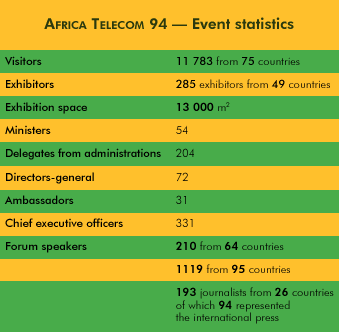
AFRICA TELECOM 94 was the third regional ITU Telecom event for the African region, and far bigger than the preceding two events. Both the Exhibition and Forum were held at the Cairo International Conference Centre.
At the opening ceremony, Egypt's President Mohamed Hosni Mubarak said: "We are meeting in Cairo to witness the birth of wider cooperation between the countries of the African continent and the Middle East. This meeting is intended to be an embodiment of the common interests of the developing countries regardless of their regional affiliation and of their legitimate right — if not their duty — to benefit from the state-of-the-art in the field of telecommunications."
The theme chosen for AFRICA TELECOM 94 was "Integrating Africa regionally and globally: a challenge for telecommunications and development". This theme reflected ITU's commitment to the challenge of reversing the growing disparity in telecommunication development between the African and Middle East region and the rest of the world.
A high level of government support was shown on the eve of the official opening when ministers and directors-general attended a private tour of the Exhibition, where 285 exhibitors from 49 countries had set up stands over some 7700 m2 of net exhibition space to display their latest products and services.
Nearly 12 000 telecommunication professionals visited the Exhibition halls.
Running in parallel with the Exhibition, the Forum sessions were addressed by over 200 leading experts from both the public and private sectors, and attracted over 1000 delegates from almost half of the ITU Member countries.
The programme included plenary sessions addressed by keynote speakers and interactive panel and workshop sessions from which extremely positive feedback was received. This new format encouraged lively debate on vital issues concerning the telecommunication infrastructure of Africa and the Middle East — including the support required and constraints involved for development and installation, healthcare telematics, user needs, private networks and applications, tariffs, low cost technical approaches, broadcasting and television coverage, regional cooperation and training.
Johannesburg, 4 to 9 May
The decision to stage AFRICA TELECOM 98 in South Africa was made following the invitation which President Nelson Mandela extended to the ITU at the opening ceremony of TELECOM 95, the world event held in Geneva in 1995.
President Mandela declared: "The ITU is a body of crucial importance for South Africa and indeed the entire
African continent. We need a vast expansion of our communication and information network. The ITU, as the principal
driving force behind international policy; technological development; cooperation; and skills transfer is an
indispensable agent in this regard."
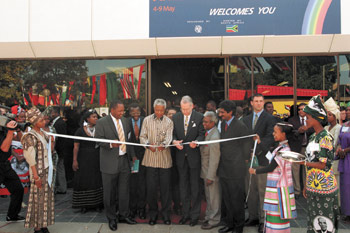
President Nelson Mandela (centre) and Pekka Tarjanne, ITU Secretary-General (November 1989 to January 1999),
inaugurate Africa Telecom 98
(ITU 980064)

Photos: A. de Ferron (ITU 980070)
He also said: "It therefore gives me great pleasure to announce that, following discussions between officials of the ITU and the South African government, we have formally invited the Union to hold its next Africa region TELECOM Exhibition and Forum in 1998 in South Africa. We would be happy and proud to host this prestigious event, and look forward to further close cooperation to make it a memorable occasion."
Three and a half years after making that speech, President Mandela opened AFRICA TELECOM 98 on 4 May 1998. The event was hailed as a triumph by many of Africa's leaders.
In a century dominated by what Jay Naidoo, then South Africa's Minister for Posts, Telecommunications and Broadcasting, described as Afro-pessimism, AFRICA TELECOM 98 was notable for the commitment and tremendous spirit of optimism expressed by government ministers, exhibitors, Forum speakers, delegates and the world's media.
Mr Mandela spoke of the huge, untapped market which Africa represents and of the need to create a dedicated African Tele-communications Development Fund. "Such a fund," he said, "would finance the infrastructure projects needed to extend technology to every village in Africa, and would certainly put the continent on the map of the global information society." WorldSpace, whose goal is to provide digital direct audio and multimedia services to over four billion listeners, was represented by its founder, Noah Samara, who said that ever since he was six years old his dream had been that one day communications would be available to all. WorldSpace sponsored the opening ceremony.
Both at the Exhibition and at the Forum there was great enthusiasm voiced for smart partnership, where the interests of investors and governments were balanced so that investors saw a good return on their capital, while governments were able to pursue their human development goals. In 1998 Africa was the world's second fastest growing region, and GDP was forecast by the International Monetary Fund (IMF) to achieve 4.7 per cent growth during that year.
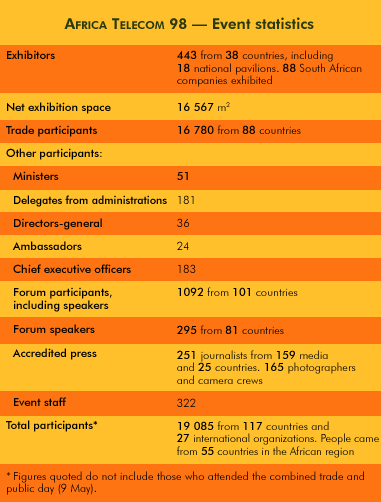
The Exhibition at AFRICA TELECOM 98 was more than twice as big as that at the previous
AFRICA TELECOM, and attracted nearly 20 000 telecommunication professionals, who came to
see the latest technology on display from 443 exhibitors from the telecommunications, information technology and
audio-visual entertainment fields. Industry leaders at the highest level, from ambassadors and government ministers, to
chief executive officers or CEOs of the front-ranked market players, participated, along with some of the most respected
industry analysts and commentators. All of Africa's 55 countries were represented on a Pan-African Renaissance stand.
The Forum
An exciting highlight at the opening session of the Forum, held on 5 May was the presentation by Craig Barrett,
President and COO of Intel Corporation. This presentation was broadcast live in the United States via webcast — a
process which used some 25 per cent of South Africa's entire dial-up capability. One of the demonstrations was a live
videoconference between Mr Barrett and a Digital Village in Soweto, where 20 multimedia personal computers had
just been connected to the Internet. When asked what difference this had made to him, Joe Mphahle, a teacher in Soweto,
said "the world is at our fingertips now."
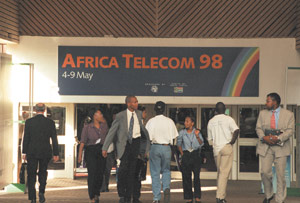
The Exhibition at AFRICA TELECOM 98 was more than twice as big as that at the previous
AFRICA TELECOM, and attracted nearly 20 000 telecommunication professionals
Photo: A. de Ferron (ITU 980066)

Graηa Machel calls for communication facilities for all
The Forum at AFRICA TELECOM 98 was especially well attended, with standing room only available at some sessions such as those concerned with financing, regulation, technology and women — a session which was opened by Mary Robinson, United Nations High Commissioner for Human Rights, speaking live via videoconference from New York. Altogether, more than one thousand people attended the Forum, which encompassed a Strategies and a Technology Summit, billed together under the single theme "Strategies for Sustainable Development." The Forum was a milestone event for ITU Telecom, in that it was telecast to Africa and around the world on the Internet.
A session on "Emergency Telecommunications" was held to address the issue of reaching an international agreement on transporting emergency communications equipment across borders without needing customs clearance or licensing. Partly as a result of the session at the Africa Telecom 98 Forum, the Intergovernmental Conference on Emergency Telecommunications (ICET-98), which was held in Tampere (Finland) from 16 to 18 June 1998, was able to adopt and ratify the Convention on the provision of telecommunication resources for disaster mitigation and relief operations.
Thabo Mbeki, then Deputy President of South Africa, in an inspiring closing address to the Forum, said: "We have the political will to put in 50 million lines in Africa in the next five years. We will connect every village, every school and every clinic in Africa, if we are determined enough to do this."
A TELECOM Development Symposium was also organized, in conjunction with the Forum, which brought 92 telecommunication specialists from 46 countries to AFRICA TELECOM 98 on a fellowship to discuss the principal factors that governments, regulatory bodies and operators need to bear in mind in order to be customer and business oriented, to provide services within their own countries and, in the case of operators, to survive in a liberalized market.
Wednesday 6 May 1998 was designated as Women's Day, and featured not only the special session on technology and the status of women but also a luncheon hosted by Graηa Machel, former First Lady of Mozambique, who is well known for her work in the fight to ban landmines. She spoke passionately and movingly about the work she had performed in refugee camps. "In one camp, in Sierra Leone," she said, "I knew that half of the children were going to die — and why? Not because there was no food or medical supplies, but because of a failure in communications." She appealed to telecommunication leaders and to ITU in particular to come up with strategies to ensure that all populations are within reach of communication facilities, especially in emergency situations.
Johannesburg, 12 to 16 November
ITU TELECOM AFRICA 2001 will be the one place this year where Africa's policy-makers, industry experts and innovators can meet and share with each other the progress they have made for the benefit of the world's people.
AFRICA 2001 is therefore your opportunity to see the future shape of telecommunications in Africa and to network with leaders in the world of telecommunications as they work to bridge the digital divide. Every country in the region will be represented, so AFRICA 2001 will be the only telecommunications event this year that is truly regional. The event comprises an Exhibition and a Forum.
Major players from the global and regional infocommunications market-place will use the Exhibition as the key venue this year to demonstrate their latest products and services and to do both local and regional business deals. A complete, continuously updated list of exhibitors at Africa 2001 is available at www.itu.int/africa2001.
At the AFRICA 2001 Forum, government and industry leaders will share their vision of 21st century telecommunications for Africa and define what must be done to bridge the digital divide. It will be the chance of a lifetime to network with the telecommunication ministers of the region and the captains of the world's info-communication companies.
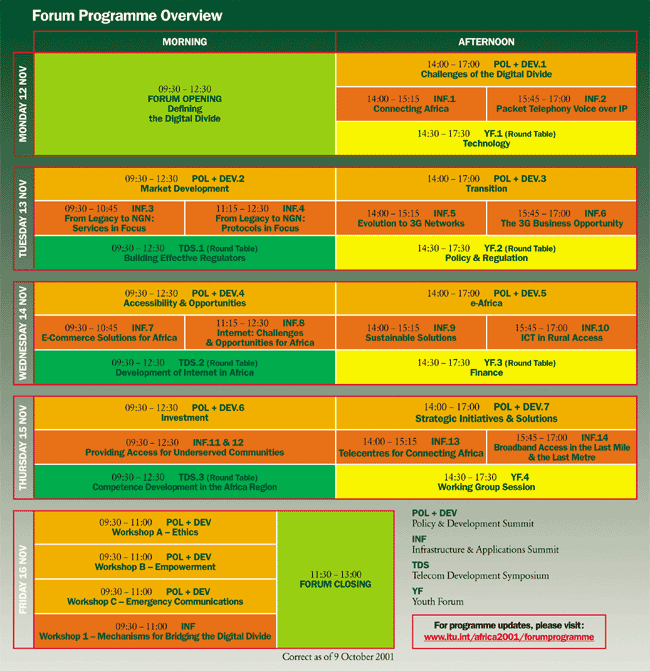
The Africa 2001 Forum will encompass a "Policy and Development Summit" and an "Infrastructure and Applications Summit", running in parallel over five days (see Forum Programme Overview).
The Policy and Development Summit will focus on strategies for harmonizing and connecting Africa to the rest of the world via telecommunications. In particular, it will examine the key challenges for bridging the digital divide.
The Infrastructure Summit will focus on the different solutions for promoting interconnectivity between African countries, and most importantly, access to, and between, rural areas.
The Forum will also include a Telecom Development Symposium (TDS) and a Youth Forum. Full details of the Forum at Africa 2001, including the programme, sessions and speakers, are available at www.itu.int/africa2001/forum.
Situated within easy reach of Johannesburg's northern suburbs, airports and major concentration of hotels, the
Gallagher Estate in Midrand is the venue for Africa 2001. The Estate is set in a stunning 19-hectare park and is
renowned as one of Africa's premier exhibition and conference venues. It features modern exhibition halls, excellent
forum facilities, secure on-site parking for up to 5000 vehicles and a number of attractive restaurants.
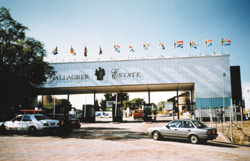
Venue for AFRICA 2001
Photo: G. Girardet (ITU 960047)
On-site and on-line services
AFRICA 2001 will feature a number of special services for visitors, ranging from on-site television and a Daily Newspaper to an online exhibition catalogue.
ITU TELECOM TV will broadcast live, each day, from INM's purpose-built studio at the heart of the Gallagher Estate. With the latest news about what is going on at the event, and regional and global news about the industry, ITU TELECOM TV will also be available in major hotels in Johannesburg as well as on-line at www.telecomtv.itu.int, which will feature both live and archived video streams.
The Official Daily Newspaper for the event is being produced by the editors of the Financial Mail and Business Day. The Daily will chart the most important events that have taken place in the telecommunications market in the last 24 hours. The Official Online News site will also carry daily news updates on the African and global telecommunications industry.
Finally, full details of all exhibitors, including company profiles and products and services indexes, are contained in the Exhibition Catalogue for Africa 2001.
The Web-based Catalogue (www.itu.int/africa2001/catalogue) was launched in October 2001 and will be continually updated until the end of the event. The catalogue will be complemented by a pocket-sized Floor Plan to help visitors find what they are looking for.
For further information, please contact the TELECOM Secretariat by telephone (+41 22 730 6161), fax (+41 22 730 6444), or see the TELECOM website at www.itu.int/itutelecom.
For media representatives, please contact the Africa 2001 Press Service by telephone (+41 22 730 5599) or fax (+41 22 730 6444).
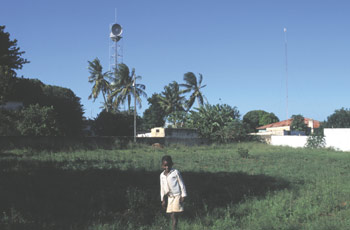
The ITU Pavilion – Connecting rural Africa
(ITU 950020)
More than 2.5 billion people, two-fifths of the world's population, live in rural and remote areas of developing countries. In Africa as in the rest of the world, these are the areas that suffer most from a lack of access to even basic telecommunication services. Indeed, rural areas are hugely underserved and providing telecommunication access presents many difficulties, not least because levels of income are lowest away from urban conurbations. Of the small fraction that has any access to telecommunications, radio broadcasts and voice telephony have traditionally been the main services provided.
Today, however, a wide variety of new telecommunication applications such as e-mail, e-commerce, tele-education and telemedicine have made access to interactive multimedia services as important for rural and remote communities as voice connectivity alone. Since each rural district or community requires a different mix of voice, text, image, video and audio communications to best meet its needs, today's telecommunication network operators must be able to support a wide range of services, applications and bandwidth levels at a reasonable cost.
The Valletta Action Plan or VAP, in short, is the ITU blueprint for telecommunication development. Adopted at ITU's World Telecommunication Development Conference in 1998, VAP includes the promotion of universal access to basic telecommunication, broadcasting and the Internet as tools for development in rural and remote areas. Last year Focus Group 7, set up to address the issue, published its findings in a 100-page report detailing the technological developments which have the potential to support telecommunication applications that are commercially viable or sustainable, through other transparent financing mechanisms, in the rural and remote areas of developing countries.
One way to provide viable services away from towns and cities is via community access. So, at AFRICA 2001, ITU will be paying particular attention to the promotion of information and communication technologies (ICT) for rural applications in the context of universal access. For the first time, ITU will showcase new technologies for rural applications in a special Pavilion to complement its report. These technologies include very small aperture terminals (VSAT), digital audio broadcasting or renewable and off-grid energy — systems that can deliver voice tele-phony, audio and multimedia services and solutions to the needs of rural areas of developing countries.
We have built a fully functional community telecentre and surrounded it with exhibitors specializing in applications and technologies for rural areas. The telecentre has been created with the intention of demonstrating ITU's real and continuing commitment to bringing modern telecommunication services within the reach of all the world's people, especially those who live and work in rural and remote areas.
Inside the ITU Pavilion itself is the ITU Stand, which has a working replica of a rural telecentre as its centrepiece. By working together with sponsors we show how a telecentre can be a viable business and also demonstrate what ITU's three Sectors (Radiocommunication, Tele-communication Standardization and Telecommunication Development) are doing to bring the benefits of ICTs to every community. The telecentre has four clusters:
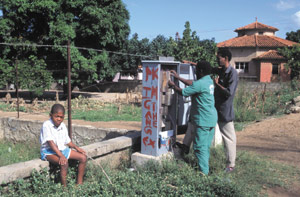
At AFRICA 2001, ITU will be paying particular attention to the promotion of information and
communication technologies for rural applications
Photo: A. de Ferron (ITU 950019)
Staff from both the ITU headquarters in Geneva and from the field will be on hand to answer any questions. They will also be happy to explain how the work of the ITU is critical in making such technologies and applications available globally.
Completing the Stand will be an ITU bookshop, where visitors can find a full range of ITU publications on telecommunication development in developing countries, as well as useful information on ITU membership and benefits.
Also within the Pavilion is a cluster of exhibitors with appropriate rural application technology to show and/or demonstrate in specific fields. These include community and small business development, telemedicine and telehealth, distance learning and tele-education, as well as emergency support and disaster relief.
With the help of our sponsors and the participation of a number of individual exhibitors, the ITU Pavilion will act
as a one-stop shop where visitors can see how all the pieces of the jigsaw fit together, before going on to other stands
to see how each piece really works.
ITU Telecentre: the benefits of partnershipDoctorAnywhere.comDoctorAnywhere.com is a business-to-business (B2B) e-commerce service that offers access to medical super-specialists in India to consult each other. Medical practitioners in their wide and varied practice at times require an expert opinion, need to validate an opinion with some senior colleagues or friends, get an opinion from a different area of specialization or simply update and enhance their practice beyond the boundaries of their community. DoctorAnywhere.com fulfils this need. For a modest fee, doctors and medical practitioners can select any super-specialist of their preference from a panel of super-specialists and consult them, thus seeking expert opinion through the Internet. At the ITU Pavilion the company is demonstrating how local health workers in rural areas, who lack Internet access in their clinics, can send diagnostic data to senior doctors on-line to seek medical opinions. The company will also be demonstrating the applicability of such services to rural telecentres and/or clinics of Africa, in particular by showing how local health workers can benefit from expert second opinion in the big city through real-time text chat. They will also show visitors the type of relevant information to the health of rural populations which can be accessed online, including the extensive source material of the World Health Organization in the area of food, nutrition, food policy and nutrition research, HIV/AIDS, as well as resources on public health for disasters and complex emergencies, essential drugs or the quality and safety of medicine. iNabling TechnologiesFounded in 1997, iNabling Technologies was created with a mission to provide high quality and affordable connectivity solutions to the masses. iNabling Technologies specializes in creating universally relevant, affordable communication solutions to bridge the digital divide and thereby `information-enable' people across the globe. Although information and communication technology is becoming increasingly pervasive in all spheres of life, there are billions of people in the world who remain untouched by the ICT revolution. Among the many possible reasons are the high costs of PCs, the complexity of using them and the limited access to the Internet particularly in rural and remote areas. In addition, with more than 80 per cent of Web pages available in English only, large tracts of the world's population face the additional constraint of language. iNabling Technologies is participating in the ITU Pavilion in order to demonstrate affordable alternatives to PCs in low-income areas. With its iStations — a first-of-its kind low-cost device providing affordable communication solutions directly through a telephone line, the need for a computer, a modem or a subscription to an Internet service provider (ISP) to access e-mail is something of the past. iNabling Technologies will be demonstrating how its iStations can provide e-mail services through Public e-mail offices, using multilingual user interfaces. OsirisThe Observatoire sur les Systθmes d'Information, les Rιseaux et les Inforoutes au Sιnιgal (Osiris) is a not-for-profit association founded in March 1998 by a group of dedicated men and women from the private sector, academia, government and non-governmental organizations to develop ICTs in Senegal. The aims of Osiris are:
At the ITU Pavilion, Osiris will be demonstrating the types of services that can be offered by telecentres and showing their potential for rural populations in developing countries. Among other demonstrations on the ITU Stand, Osiris will be showing e-mail and text messaging applications for populations not yet able to read or write. These will include the audio cassette message service offered by the Senegalese Post Office; telemedicine applications — such as telediagnosis or self-education programmes on CD-Rom; direct-to-receiver digital satellite audio broadcasting and wireless, direct delivery of digital data to personal computers, images and select Web content from the WorldSpace satellite. VITAVolunteers in Technical Assistance (VITA), an international not-for-profit organization building on over 40 years of experience delivering targeted technical information, has developed a unique, low-cost, communication and information service, VITA-Connect. Using a simple and reliable store-and-forward technology, e-mail messages are received and delivered via two low-earth orbiting satellites. VITA-Connect delivers sustainable, low-cost communications and information services to remote communities that have no access to line-based or wireless telephone services. Advanced compression technology and software allows access to Web pages using e-mail, and makes the vast information resources of the Internet available via VITA-Connect worldwide. In addition to bringing creative communication solutions to the developing world, VITA's commitment to improving the quality of life in the rural areas of developing countries embraces a wide range of services to promote appropriate technologies for the empowerment and the creation of "wealth" among the poor. With efforts to extend tele-communication systems to remote communities often hindered by the lack of electricity or conventional fossil fuels, VITA has opened new avenues of cooperation in the area of renewable energy such as solar and wind-powered electricity. At AFRICA 2001, VITA will showcase VITA-Connect in the ITU Pavilion (stand 5405.004) and renewable energy technologies at the ITU Telecentre (stand 5405.001) to demonstrate how rural communities can access ICT to make a difference to the lives of millions of people. WorldSpace CorporationWorldSpace provides digital broadcasting of audio and multimedia programmes directly from satellites to compact and low-cost portable receivers. As part of its commitment to help connecting people in developing countries, WorldSpace, along with its telecommunication partners, is exploring the market potential for information communication technologies in rural areas and villages through the provision of fully-equipped fixed and mobile telekiosks. At the ITU Stand at AFRICA 2001, WorldSpace will demonstrate some of the services offered in Mali, and under development in Senegal as part of the "radio and multimedia caravan", demonstrating how the convergence of broadcasting and telecommunications can help to bridge the digital divide. In particular, visitors will be able to experience digital satellite radio and multimedia broadcast services such as entertainment, education, news, sports, weather, business, and cultural programmes showing how, without the need for a telephone line, people can also benefit from Web-based multimedia content direct to PCs. The digital satellite radio service brings crystal clear, fade-free multilingual news programmes to people in Africa, the Middle East and Asia while Direct Media Service delivers gigabytes of popular, educational and informative Web-style content directly to a PC without the need for a telephone nor the "per-minute" telephone line charges. |
(ITU 980174)
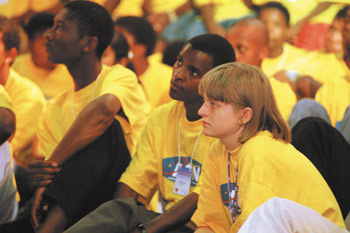
With today's youth destined to be tomorrow's leaders, ITU has launched a new initiative to coincide with the AFRICA 2001 event being held in Johannesburg in November — the Youth Forum.
The idea behind the initiative is to sustain and advance telecommunications development in the new millennium and to put the younger generation on the fast-track, while increasing their self-reliance, stirring them to action and helping them to have a clearer idea of what the telecommunication sector is all about. Ultimately, the aim is to help create potential leaders for the future information and communication technologies (ICT) workplace.
The Youth Forum will take place for the first time at Africa 2001, and will continue at forthcoming regional and world ITU TELECOM events.
All 53 of the ITU Member States in Africa were invited by the ITU Secretary-General to participate in the organization of the Youth Forum. Member States then coordinated with national universities and higher technical institutes in their countries to identify and submit candidates for competition according to the selection procedure and deadlines which had been established. They obtained the names of the various candidatures, together with their essays, and sent these to ITU for evaluation (see ITU News No. 4, May 2001, pages 20_23 and No.6, July-August 2001, pages 25–26).
Once the winning candidates had been selected, winners' ceremonies were held in a number of ITU Member States in collaboration with the United Nations Development Programme (UNDP) in order to activate media awareness and to motivate the successful fellows from each country.
The Youth Forum Steering Committee structured the Youth Forum programme into the three session groups highlighted below, whose themes are apparently simple but potentially powerful.
Roundtable Sessions will address technology, regulation and finance issues faced by African countries in the global economy. Presentations will be short and stimulating to allow maximum time for discussion, questions and comments.
Update Sessions will highlight specific technologies, such as third generation (3G) mobile communications, and rural access and applications. These Update Sessions will be held over luncheon and are sponsored by leading international telecommunication organizations: Alcatel, Siemens and WorldSpace.
Working Group Sessions will focus on outcome-oriented discussions and recommendations.
Distinguished thinkers — experts who comprise the brain trust of the Youth Forum — as well as the Youth Forum fellows themselves will participate actively in these sessions.
In conjunction with the Youth Forum, SABC will broadcast a radio debate on Friday 16 November from 14h30 to 17h30. Participants in the debate will be selected from among the Youth Forum fellows. In order to extend the debate, INTELSAT will transmit the discussions to the countries neighbouring South Africa.
Post-fellowship training will also be offered to those students who are willing to follow up and enhance their
experiences from the AFRICA 2001 Youth Forum. TELECEL has agreed to offer this opportunity to Youth Forum
fellows residing in the 15 African countries where the company operates. Details will be highlighted by TELECEL during
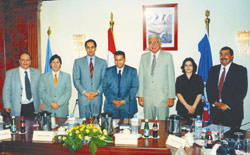
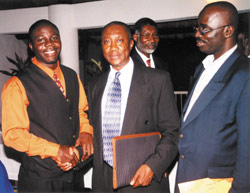
the event. These two photos from Egypt and Ghana, respectively, serve to show the general mood of the Youth Forum Fellowship
Award winners' ceremonies across Africa. Both photos also reflect the importance which all African telecommunication
leaders have given to this first ITU competition on ICT devel-opment opportunities and the role of the youth
(ITU 010082)
(ITU 010085)
ITU Member States having confirmed Youth Forum participation
Algeria, Benin, Botswana, Burkina Faso, Burundi, Cameroon, Cape Verde, Central African Republic, Chad, Comoros, Congo, Cτte d'Ivoire, Democratic Republic of the Congo, Djibouti, Egypt, Equatorial Guinea, Eritrea, Ethiopia, Gabon, Gambia, Ghana, Guinea, Guinea-Bissau, Kenya, Lesotho, Libya, Madagascar, Malawi, Mali, Mauritania, Mauritius, Morocco, Mozambique, Namibia, Niger, Nigeria, Rwanda, Sao Tome and Principe, Senegal, Seychelles, Somalia, South Africa, Sudan, Swaziland, Tanzania, Tunisia, Uganda and Zambia.
ITU is grateful to the industry partners listed below for their contributions to the success of the Youth Forum:
The number of fixed lines has nearly doubled since telecom-munication reforms were implemented, growing from
59 673 in 1996 to 140 000 by mid-2001
(ITU 950166)
|
Contributed by Susan Schorr, Regulatory Affairs Officer, ITU's Telecommunication Development Bureau. |
Botswana is the second in a series of five case studies on regulatory independence and effectiveness to be presented in ITU News. These case studies are conducted by the ITU Telecommunication Development Bureau's Sector Reform Unit. They evaluate the effectiveness of regulatory bodies by examining their organizational structure, financing, functions, powers and level of transparency.
Botswana is a landlocked Sub-Saharan African country with a population of approximately 1.6 million, and was one of the world's poorest countries at the time it achieved independence in 1966. Today, the GDP per capita is USD 3560, making it the second highest in Sub-Saharan Africa after South Africa. Since independence, Botswana has become renowned for good governance, intolerance for corruption and solid respect for legal processes. It has also favoured a free-market approach to its economy, creating State-owned companies only where the private sector has failed to enter the market.
Botswana has won a reputation as one of the first countries in the African region to establish an independent and effective regulatory body. In fact, its level of independence and effectiveness may develop as a world model. Created in 1996, Botswana Telecommunications Authority (BTA) is one of the few regulatory bodies that enjoy complete freedom in licensing operators and in establishing and financing its operational budget. Shortly after it was formed, BTA won plaudits for its mobile services licensing mechanism and successfully resolved the country's first interconnection dispute.
In addition to successfully regulating Botswana's telecommunication market, BTA has been integrally involved in the creation and on-going work of the Telecommunication Regulators' Association of Southern Africa (TRASA), one of the world's strongest regional regulatory organizations. Among its other accomplishments, TRASA has developed model legislation and regulatory guidelines for fourteen countries in the Southern African region. Our study of BTA also enabled ITU to study TRASA as a model that may serve other regional regulatory organizations.
Botswana's success can be attributed to the sequence of reform measures the government undertook (see Figure 1). Botswana first established a clear policy and an appropriate legal and regulatory framework before opening the market to competition. This level of transparency and consistency played an important role in attracting investors to the country.
In addition, Botswana owes its success to the wide public consultation it undertook during the preparation of its telecommunication policy. This public consultation served to raise citizen awareness of the merits of sector reform. The Ministry of Works, Transport and Communications (MWTC), assisted by a Swedish consultant, held public meetings in every major town inthe country. They met with local politicians, business leaders and village chiefs. People expressed dissatisfaction with the quality and availability of service provided by the incumbent and expressed clear support that competition would help to improve existing service levels and extend the network to more people.
Based on this in-depth public consultation, Botswana prepared a national telecommunication policy designed to promote
network build-out through the introduction of competition, beginning with mobile services. The Telecommunication Policy
was approved in 1995. The Telecommunication Act and the Botswana Tele-communications Corporation (Amendment) Act of 1996
were derived directly from the Telecommunication Policy. The Telecommunications Act not only set the framework for
introducing competition in the provision of telecommunication services, but also provided the legal foundation for the
creation, financing and powers of the country's telecommunications regulatory authority, BTA. The Botswana
Telecommunications Corporation (Amendment) Act of 1996 ended the incumbent operator's legal right to a monopoly in the
provision of voice telephony.
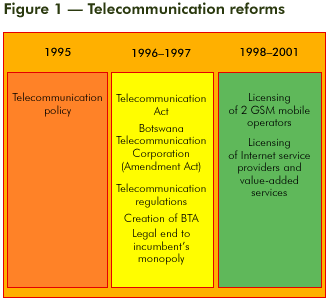
BTA's number one priority, based on the Telecommunications Policy and public consultation, was to license operators of the Global System for Mobile (GSM) communications. BTA has been given almost complete freedom to decide how many licences should be granted, for which services, and which operators receive those licences. Although BTA had only a skeleton staff at the time, it succeeded in licensing two competitive mobile operators within nine months. The licensing mechanism it used and the transparency through which the procedure took place clearly set the tone of the Authority's political autonomy, effectiveness and leadership.
BTA is also one of the most financially independent regulatory authorities in the world. Since its first year in
operation, BTA has financed its operational budget exclusively through regulatory fees and investment income. The
regulatory authority never seeks funding from MWTC or any other segment of the government. Financial independence is
widely recognized as one of the key factors enabling regulatory authorities to make decisions without political
influence. BTA is currently running a budget surplus which it plans to use to launch a universal service fund.
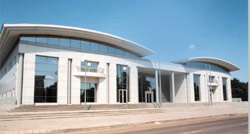
BTA Head Office in Gaborone
(ITU 010081)
BTA also recognizes the importance of developing expertise among its staff, another factor that fosters legitimacy, credibility and regulatory effectiveness. The regulatory authority supports an ambitious training programme that has created a highly qualified and well-respected professional staff. Regulatory staff should operate on a minimum qualification of a Masters Degree and the staff is given an incentive through sponsored training programmes to obtain these qualifications.
Today, the country has three major telecommunications players. The Botswana Telecommunications Corporation (BTC) is the incumbent State-owned operator, licensed to provide fixed-line voice and value-added services. Mascom Wireless (PTY) Ltd and Vista Cellular (PTY) Ltd are the two private mobile cellular operators. BTA has also licensed ten Internet service providers, including a subsidiary of BTC, and six International Data Gateway licensees that use very small aperture terminals (VSAT) for data transmission. Voice over Internet protocol (VoIP) is not authorized in Botswana, except for private networks. VSAT operators, therefore, are limited to providing data transmission.
The number of fixed lines has nearly doubled since telecommunication reforms were implemented, growing from 59 673 in
1996 to 140 000 by mid-2001 to reach almost 10 per cent of the population. The number of mobile subscribers has jumped
from 0 in 1998 to nearly 250 000 in mid 2001, reaching 16 per cent of the population. Investment in the sector increased
from USD 8.47 million to 69.2 million, according to estimates provided by BTA Executive Chairman Cuthbert Moshe
Lekaukau. Service provided by the incumbent has also improved since MWTC launched its public consultation on sector
reform. Competition has been cited as the main factor acting as an incentive to improve its performance.
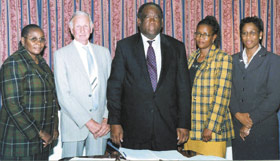
"BTA recognizes the importance of developing expertise among its staff and supports an ambitious training
programme," says BTA Executive Chairman, Cuthbert Moshe Lekaukau (in the centre)
(ITU 010080)
Despite these gains, many challenges remain. The number of Internet users in Botswana is limited for a number of reasons: only 50 per cent of all homes have access to electricity, the cost of personal computers far exceeds average monthly salaries, bandwidth costs are higher than in developed countries and there is a lack of local indigenous content. MWTC has called upon BTA to assist it in preparing an information and communication technology (ICT) policy for Botswana aimed at ensuring the nation's place in the Information Society. Botswana is also planning to privatize BTC, a move that is expected to further liberalize the market by paving the way for a second fixed-line operator.
BTA's successes can be summarized as follows:
The Telecommunication Regulators' Association of Southern Africa is a group of national telecommunication regulatory
authorities from 14 Southern African countries. These are: Angola, Botswana, Democratic Republic of Congo, Lesotho,
Malawi, Mauritius, Mozambique, Namibia, Seychelles, South Africa, Swaziland, Tanzania, Zambia and Zimbabwe. The
organization was inaugurated on 15 September 1997 and became operational on 22 April 1998. A series of concurrent
factors led to the creation of TRASA. First and foremost was the political will on the part of the 14 Member States of
the Southern Africa Development Community (SADC) to create a regional trading area that would provide a more stable and
attractive environment for potential investors in the region. TRASA organizes workshops and meetings where best
regulatory practices are exchanged informally. It also spearheads the development of model guidelines and regulations.
Through common training programmes, TRASA facilitates capacity building for its members. TRASA is likewise working to
ensure that all SADC Members align their national legislation and policy with the SADC Model Telecommunications Bill and
Telecommunications Policies (see www.trasa.org).
TRASA seeks to promote the establishment and operation of efficient telecommunication networks and services in
the Southern Africa region that meet the diverse needs of customers while being economically sustainable
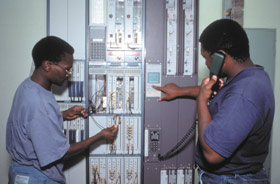
Photo: A. de Ferron (ITU 950167)
The goals and objectives of TRASA as stated in its constitution are:
A detailed analysis of BTA's effectiveness in the communications sector and TRASA's roles and functions is available
at www.itu.int/itu-d/treg/
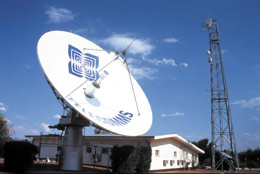
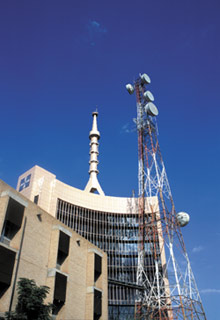
Earth station near Gaborone
(ITU 950168)