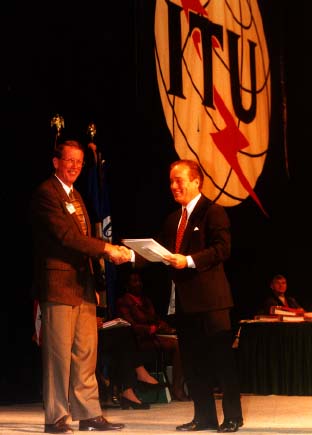
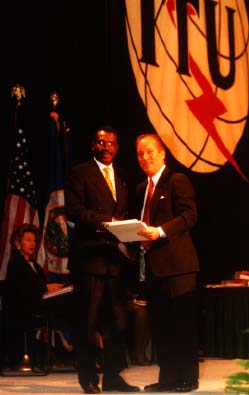
Bob Jones congratulated by Thomas L. Siebert, Chairman of the Conference, when taking the oath of office
Photo: Allen Brisson Smith (ITU 980127)

Standing as the sole candidate, Robert Jones (Canada), or Bob, as he prefers to be called, was re-elected Director of the Radiocommunication Bureau (BR) on 22 October 1998 by the Ninth Plenary Meeting of the Minneapolis Plenipotentiary Conference. Bob obtained 145 votes out of the 151 votes cast (6 ballot papers being blank). The required majority was 73.
He was first elected to this post by the 1994 Kyoto Plenipotentiary Conference and took up office in
January 1995.
As a staunch supporter of multilateralism and ITU, my vision for the new millennium is driven by three basic challenges:
In the wake of these, and other challenges, we in BR and the Radiocommunication Sector (ITU-R) as a whole have been preparing strategies for the new millennium. We have come up with nine priorities which form an integral part of the Union's Strategic Plan for 1999-2003.
As a top priority we will review and fine- tune the process for planning and agreeing agendas for World Radiocommunication Conferences, which address these challenges. We must ensure that such a process is effective and efficient. Throughout our experience in the first four years of the restructured and reformed ITU-R, I have stressed the need to improve this process.
In particular, we must ensure that the agendas developed for WRCs do not unduly burden Member States, Sector Members and the resources of BR.
We continue to see WRC agendas grow far larger than the limited agendas intended by the High Level Committee (H.L.C.) during its review in 1990-1991.
In fact, these agendas are now so large that they cover almost every radio service and every frequency range. In addition, the planning of agendas and their associated technical studies is not being conducted on a four-year basis as foreseen in the H.L.C. review but rather on a two-year (in reality even less) basis. This is posing serious problems for all those involved in preparing WRCs.
In recent times, we have seen the number of pages of documentation handled during a WRC soar from about 7 million pages at WRC-95 to some 25 million pages at WRC-97.
The delegates and the Conference Secretariat simply cannot cope with such volumes in a four-week conference. Neither can the ITU's limited budget!
Another important priority is what I call management reform. While it is true that being a specialized agency of the United Nations and part of the UN Common System gives rise to certain constraints, I believe we can be much more progressive in our management culture and systems. True, much of the reform is dictated by decisions of Member States, but management is an area where elected officials can and must push for further reform. Let me cite a few examples of what I mean.
I have pushed for greater budget delegation and transparency wherever I had the authority to do so. One example has been to give ITU-R Study Group Chairmen a real budget (in Swiss francs) to manage for the work of their Study Groups. For the first time, these Chairmen and their Study Groups were able to decide on priorities and to make trade-offs knowing, for example, the cost of translation, interpretation, and documentation. This has enabled them not only to hold more meetings, but also, to produce more with less.
I have also instituted annual operational plans for BR. Based as they are on ITU's Strategic Plan, the plans are developed each year and presented to the Radiocommunication Advisory Group (RAG) for comment and advice. This allows us to establish our priorities. The operational plans are made available to all Sector Members and Member States and can be found on our Web site under the RAG documentation. My department heads submit written reports to me every three months on the results achieved against their objectives in the operational plan. As the Minneapolis Conference has approved operational planning on an ITU-wide scale, we look forward to making further improvements and to sharing our experience.
Another key priority will be to accommodate the global and regional spectrum requirements of innovative services poised to provide communication and information services "anytime, anywhere". This is the case for global mobile personal communications by satellite (GMPCS), International Mobile Telecommunications-2000 (IMT-2000) and high altitude platform stations, all of which include innovative terrestrial and space applications. We will be looking to WRCs to give these services appropriate consideration. The Bureau for its part will continue to issue needed radiocommunication standards (Recommendations in ITU jargon) to facilitate the development and implementation of radiocommunication services.
We will continue to encourage greater participation by Member States, Sector Members and other organizations in ITU-R activities. This will include concluding formal and informal task-oriented cooperation arrangements. Such arrangements will be of strategic importance to ITU Study Groups developing standards critical to building the infrastructure needed to support the global information society. It is no secret that more and more of this standardization work is being undertaken outside ITU in various forums and groups. My approach has been to try to embrace these groups and to develop partnerships. I know of one example where a forum is seeking to quickly develop a standard for specific radiocommunication devices. While this forum is still in the process of being established, many of those who participate in its work are, in fact, also participants in ITU-R Study Group work.
I have attempted to build strong links with this forum and to develop a partnership with them which, of course, is subject to the approval of ITU Member States. Meanwhile, the forum has already joined the ITU-R as a Sector Member. I believe it is by means such as this that we can be in "win-win" situations, as initial work on some standards can sometimes take place more quickly outside ITU (and indeed will be in any event with or without ITU). Yet, the players can see the benefits of truly global standards and can be encouraged to bring their work into the ITU Study Group process for completion and approval.
We will study and apply improved international spectrum management techniques.
|
Bob Jones was born in St Catharines (Ontario, Canada) on 22 November 1943. He obtained his Bachelor and Master of Applied Science degrees from the University of Toronto in 1965 and in 1967. He holds a Master of Business Administration degree obtained from York University in 1975. He is also a registered Professional Engineer. Before joining BR on 1 January 1995 as its Director, Bob was Director-General of the Radiocommunications and Broadcasting Regulatory Branch in Industry Canada. In addition to ten years in the Canadian radiocommunication manufacturing industry and seventeen years in the Canadian Department of Communications (now Industry Canada), he was the first Director of the Frequency Management System project of the International Frequency Registration Board between 1981 and 1983. He headed Canadian delegations to the 1992 World Administrative Radio Conference, the 1992 Additional Plenipotentiary Conference, the 1993 Radiocommunication Assembly, the 1993 World Radiocommunication Conference, as well as the 1994 World Telecommunication Development Conference. In addition, he participated in World Administration Radio Conferences since 1977, in Plenipotentiary Conferences since 1982, in the High Level Committee and in two Voluntary Groups of Experts, and even chaired a third such Group. Bob's achievements are well known to regular readers of ITU News. Since 1995, he has placed great emphasis on sound management in BR and in the ITU as a whole. Transparency is a key aspect of his management style. |
Let me just list a few other priorities for the sake of completeness.
We will facilitate and seek to achieve more timely coordination between new and existing active and passive systems in both space and terrestrial environments. In addition, we will assist ITU Member States in developing spectrum regulation initiatives so as to harmonize better frequency allocations and the use of satellite orbits, while continuing work to improve the frequency coordination and planning process for satellite networks.
We will expand the assistance offered to Member States in coordinating and registering frequency assignments and in applying the Radio Regulations, with special attention to developing countries and Member States that have recently joined the Union.
We will continue to provide assistance to the Telecommunication Development Bureau (BDT) for the introduction of modern radio systems in developing countries, particularly in rural areas.
We plan to conduct information meetings and world and regional seminars to assist Member States in their preparations for WRCs.
We will increase the use of information technology for the notification and processing of frequency assignments.
Bob Jones congratulated by Thomas L. Siebert, Chairman of the Conference, when taking the oath of office
Photo: Allen Brisson Smith (ITU 980127)
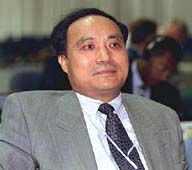
"My overall goal is to keep the leadership of the Telecommunication Standardization Sector (ITU-T) strong, more dynamic and responsive to the whole telecommunication community."
Global standards are the "conventions" that enable the many bits and pieces of the complex information and telecommunication infrastructure to be assembled and to function. Standardization therefore plays a key role in making telecommunications accessible to all and, in so doing, fosters development and growth in all domains on a global scale.
The end of the 20th century is witnessing a veritable explosion in the communication and information society: the rapid growth of the Internet and mobile telecommunications, the agreement of the World Trade Organization (WTO) on basic telecommunications, the worldwide trends of liberalization, competition, globalization, and the convergence of technology and services.
But that is not all. Another real challenge which ITU-T has to face is the increasing number of consortia, forums and regional and international organizations which have become very active in telecommunication standardization.
While ITU-T has long enjoyed worldwide recognition and competence in telecommunication standardization, in today's rapidly changing environment, it will have to grapple with new market forces. These forces require specifications or standards to be developed quickly in order to respond to growing demands for new services and products.
Today more than ever, the world needs an effective and efficient ITU-T. I will strive to exploit ITU-T's special attributes to strengthen and maintain its pre-eminent position in global telecommunication standardization as we enter the 21st century. I have set five priorities to make this vision a reality.
Fine-tune working methods · Strengthen private-sector and developing-country participation in the Sector's standardization process · Foster active cooperation with other ITU Sectors and outside bodies · Introduce new financial arrangements · Provide efficient management to TSB.
Since 1988, the Standardization Sector has fine-tuned its working methods several times, each time adopting a quicker process for the production of Recommendations (ITU's preferred term for standards). Today, with such a strong market demand, it is necessary to shorten the time required for developing and approving Recommendations, especially those of a non-regulatory nature. To meet this requirement, we in ITU-T have no alternative but to continue fine-tuning our working methods.
In particular, we have to be more pragmatic, relevant but flexible. We must endeavour to find the means to increase market share for our standards. We must find a quicker procedure for adopting Recommendations in order to keep pace with rapid technological progress and respond quickly to market demands.
We must enhance management and promote the use of electronic document handling (EDH) for faster exchange and dissemination of information for the development of, and decisions on, standards.
We must foster the study of urgent, market-driven issues within short periods of time.
We must improve coordination between TSB and the rest of the ITU to provide quality services in a timely manner.
We must continue to seek new and innovative ideas beyond the traditional approaches of developing and approving Recommendations in order to introduce faster processes.
Sector Members (the private sector) not only play the leading role in the development of Recommendations within ITU-T but also make significant financial contributions to its budget. Amid the growing deregulation and privatization, more and more new network operators, service providers, and software developers are joining ITU-T. However, if we do not respond effectively to the needs of the new environment, we could well loose new players to other consortia, forums or regional standardization bodies, which may be perceived as being better placed to meet those needs.
I will work to ensure that ITU-T remains the focal point for all those involved in developing the global information society, reflecting the view of all partners concerned: governments, regulators, manufacturers, and operators. I will support any study which seeks measures to strengthen the position of the private sector within ITU-T and to attract new players to join our Sector.
Developing countries must not be left behind. I will, in cooperation with ITU's Telecommunication Development Sector (ITU-D), define measures which allow these countries not only to participate in ITU-T's standards-setting process but also to benefit fully from the results of the process.
As a starting point, I will encourage companies from developing countries to join ITU-T. Another priority will be to
find the means to help experts from these countries participate in our Sector's activities. I will use ITU's regional
offices as focal points for information dissemination and exchange on our standardization activities. Lastly, I will
hold meetings of experts in developing countries.
Election resultsHoulin Zhao (China) was elected by the Eleventh Plenary Meeting of the Minneapolis Plenipotentiary Conference in the third ballot with 97 votes in the race with Michel Feneyrol (France), who obtained 51 votes. In all,150 votes were cast in this third and final ballot. With two ballots blank, the required majority was 75. Before this final round of voting took place, the Australian delegation announced the withdrawal of their country's candidate, Bob Horton. In the first ballot that opposed four candidates, the votes were split as follows: Mr Zhao 65, Mr Feneyrol 42, Mr Horton 25, and Pierre-André Probst (Switzerland) 19. In all, 151 votes were cast, the required majority in this round being 76. Before the second ballot took place, the Swiss delegation announced the withdrawal of their country's candidate, Mr Probst. The results of this ballot were as follows: Mr Zhao 75, Mr Feneyrol 55, and Mr Horton 20. In all, 150 votes were cast, the required majority in this round of voting being 76. Mr Zhao took up his duties on 1 February 1999. |
The ITU-T should continue to play a leading role in promoting cooperation among international and regional standardization organizations, forums and consortia concerned with telecommunications. We must make the best use of the highly qualified but limited human resources in the telecommunication research field to serve the market at a minimum cost. In order to do this, I will spare no effort in convincing other bodies to avoid duplication of work and even share work where possible.
The financial base of the Union needs to be strengthened. We have to study this issue with great care, bearing in mind the facts that ITU is a specialized agency of the United Nations mandated by governments (Member States) and that there are more and more private sector players in the telecommunication industry.
To cope with the new environment, the current financial contribution system needs to be re-evaluated. The ITU must find ways and means of attracting new Members. It should be noted that the increase of contributions from Sector Members has already led to their request for more power. However, this is not the only approach to be envisaged. The increase of contributions goes along with wider and more efficient services provided to Members. In fact, even a reduction of contributions would not attract new Members if ITU's pre-eminent role is not maintained.
For my part, I would like to see a transparent budget which incorporates financial management principles and techniques, including cost recovery and sponsorship for specific projects within the Sector. I will continue to improve ITU-T's budget transparency so that Study Groups and indeed other working groups of the Sector (such as focus groups or project teams) can organize their work with greater accountability.
In the case of cost recovery, TSB has already gained some experience in applying this new concept to the universal international freephone numbering (UIFN) registration function. We will examine other services to which cost recovery can be applied.
I will introduce a plan to support any urgent and unexpected activities demanded by the market-place.
Our role in TSB is to coordinate and organize ITU-T's work by providing appropriate services, information and support to the Sector's Study Groups and its entire membership.
The ever-increasing workload and severe resource constraints have constantly put pressure on TSB in its daily operations. With nearly half of the TSB key staff about to retire in the next few years, the situation will become even more critical. I believe that the creation of a strong team-spirit and an environment in which all the skills and potential of the entire TSB staff can be realized are fundamental elements in overcoming these difficulties and will ultimately bring maximum benefits to all ITU-T constituents. With the good relationship which I have established with my TSB colleagues during the last twelve years, I am convinced that I can create this environment.
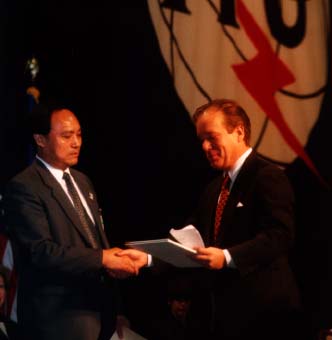
Houlin Zhao congratulated by Thomas L. Siebert, Chairman of the Conference, when taking the oath of office
Photo: Allen Brisson Smith (ITU 980128)
I will see to it that the TSB structure, working methods and staff training are kept up to date in order to respond
to the needs of our Members who operate in a constantly evolving environment. It is vital for TSB to fulfil the
ever-challenging duties required of it and maintain, at a level of excellence, the services it provides to its
constituents.
Career highlightsBorn on 7 March 1950 in Jiangsu (China), Houlin Zhao graduated from Nanjing Institute of Posts and Telecommunications in 1975. Between 1979 and 1980, he studied as a visiting scholar in Switzerland. He joined the University of Essex (United Kingdom) in 1984, where he obtained a Master of Science degree in Telematics in 1985. From 1975 to 1986, he worked as an engineer in the Designing Institute of the Chinese Ministry of Posts and Telecommunications, responsible for projects in the areas of telex, data communication, non-voice transmission, telephone switching and mobile networks. He took an active part in his country's experts meetings on national telecommunication standards. He received a second prize in 1985 for his science and technology achievements in the Ministry of Posts and Telecommunications. In addition, his work in the Departments of Planning, Capital Construction and Network Maintenance in the Ministry earned him an engineering project prize for his outstanding performance and contributions in the planning, designing and construction of a number of major national network projects. Between 1982 and 1983, he participated in CCITT Study Group meetings and joined the CCITT Secretariat (now TSB) in 1986. Since 1993, he has served as TSB Counsellor for ITU-T Study Group 7 (Data networks and open system communications) and Study Group 8 (Characteristics of telematic systems). He is ITU-T's coordinator with the International Organization for Standardization (ISO) and the International Electrotechnical Commission (IEC) and their Joint Technical Committee 1 (JTC 1). His record of maintaining excellent collaboration with these bodies, where he has combined technical expertise, diplomacy, firmness and flexibility, has ensured that ITU-T's interests are safeguarded in the development of joint standards. On the human resources front, Mr Zhao has been TSB's official representative on the Appointments and Promotions Board for posts of grade G.1 to G.7 since 1994. He served as Secretary to the IXth CCITT Plenary Assembly in Melbourne (Australia) in 1988 and to the first World Telecommunication Standardization Conference (WTSC) in Helsinki in 1993 and the second WTSC in Geneva in 1996. |
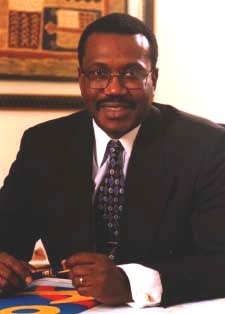
"As the new millennium beckons, BDT must play a leadership and catalytic role for development, bringing the developed and developing worlds closer together."
Watchwords: open dialogue · partnerships · transparent management
In recent times, we have witnessed the development gap narrow, albeit slightly, in terms of access to basic telephone services. At the same time, a new gap in advanced telecommunication services and access to information is growing at an alarming rate.
At the dawn of the new millennium, it is our duty to make telecommunications available to all of the world's inhabitants, at prices that are affordable to all. We must quickly embark on the road to strengthening the multilateral foundations of international telecommunications and so promote universal access and global connectivity.
Since its inception in 1865, ITU has played an important role as an honest broker seeking to achieve global, equitable and fair development of telecommunications. Today, this honest broker has to come to terms with the challenges of the new information age and the new services and new players that come with it, requiring new strategies.
In the case of ITU's Telecommunication Development Sector (ITU-D), these strategies were spelled out by the second World Telecommunication Development Conference held in Valletta in March-April 1998. They were later confirmed in the autumn by the Minneapolis Plenipotentiary Conference in the Union's Strategic Plan for 1999-2003. The Valletta Action Plan will continue to be the concrete expression of how we implement the ITU-D section of the Strategic Plan.
ITU will continue to face conflicting issues in these changing times. Its ability to solve those issues will depend on an open dialogue. For my part, I will make sure that dialogue is maintained between the developing and developed countries, between the public sector and the private sector, and between the industry and the market. To this end, I will encourage all Member States and Sector Members to take an active part in activities such as the work of ITU-D Study Groups.
In this new environment, BDT must act as a catalyst for development, bringing the developed and developing worlds closer together. The time has come to forge a strong and equitable partnership between these two worlds, for telecommunications are viable for everyone.
For my part, I will see to it that BDT responds effectively to requests for assistance from our Member States and Sector Members. That it develops and mobilizes resources for telecommunication development. That it creates and encourages partnership arrangements. That it collaborates with the private sector. That it strengthens the ITU regional presence, and that it constantly improves its working methods in order to streamline its operations.
To this end, we need an efficient BDT, which calls for a multi-tier system requiring a very rigorous approach. I propose six different strands of action to enable us to achieve our objectives, namely:
I will make every effort to ensure that BDT is more active and creative in seeking and providing resource support to help meet the growing needs of developing countries in close collaboration with global, regional and national organizations and agencies concerned with telecommunication development, the private sector and non-governmental organizations. I will encourage bilateral development and donor agencies to cooperate with ITU-D in order to increase efforts towards sustainable universal access to telecommunication services.
It is important that we in ITU-D perceive development needs as an opportunity as opposed to the traditional perception of these needs as a handicap. We must therefore seize the opportunities being created by the emerging global information society to close the gaps. We will work closely with governments so that they create a stable and transparent environment to attract investment and guarantee the rights of investors, users and operators the world over.
As a Sector, we will develop together new approaches for the provision of multilateral telecommunication assistance through partnerships, notably in the areas of restructuring, regulatory reform, finance and resource mobilization, human resources development and management, and technology applications. These applications will include: telemedicine, tele-education, electronic commerce, environmental protection, and disaster relief.
In particular, we will seek to create partnership arrangements that benefit all parties. In so doing, we will achieve sound commercial results while creating long-term relationships. I believe that the stimulating role of ITU in general and that of BDT in particular will eventually lead to the transfer of technology from developed to developing countries. I will make serious efforts to create an appreciation of genuine common interest between the industrialized and developing Member States and their corresponding industrial sectors through the promotion of genuine strategic partnerships. It is in such partnerships that the private sectors in both parts of the world economy will see themselves as having a common interest; only then can we create a proper environment conducive to global cooperation through mutual and equitable interests.
We must increase regional presence and make the regions into a driving force for the development of regional plans. We must establish more functional ties between the regions and head office. This will mean a progressive decentralization of the organization, as appropriate, and the establishment of proper channels for cooperation with regional organizations to avoid costly duplications.
There are other equally important priorities such as the gender issue that need more attention. Indeed, more and more competent women are today found in all sectors of the industry and this should be reflected in ITU's management. I will endeavour to give this issue all my attention.
For our development efforts to have a real impact on the overall progress of nations, we must be more active in
sharing information with our Member States, Sector Members and all other sectors of activity and partners in
development: government ministries, financial institutions, training institutions, regional and international
organizations, as well as the general public. Our work must also be made known and felt in rural and remote areas
through tangible projects that will change the lives of the people in those communities.
Election resultsHamadoun Touré (Mali) was elected by the Tenth Plenary Meeting of the Minneapolis Plenipotentiary Conference in the second ballot with 82 votes, against 67 obtained by the incumbent, Ahmed Laouyane (Tunisia). In all, 150 votes were cast. With one ballot blank, the required majority in this round of voting was 75. Before the second ballot took place, the Bulgarian and Sudanese delegations announced the withdrawal of Krastu Ivanov Mirski (Bulgaria) and Ahmed Mahmoud Yousif (Sudan). In the first ballot that opposed four candidates, the votes were split as follows: Mr Laouyane 61, Mr Touré 54, Mr Mirski 28 and Mr Yousif 8. In all 151 votes were cast, the majority required being 76. Mr Touré took up his duties on 1 February 1999. |
With so many priorities to implement and scarce resources available to do so, we will need to coordinate our actions better. I am committed to transparent management and will see to it that BDT, in managing these scarce resources, remains attentive to the needs of its constituents. For BDT staff, this will also mean more transparency and a mentality of shareholder-customer-client relationship.
I should like to put my long experience in the three sectors (public, international and private) to good use and make a real contribution to telecommunication development. We will have to step confidently into the new millennium, providing simple but practical solutions for the implementation of development policies and strategies geared to the new environment and focused on concrete actions.
By bringing people closer together, I am convinced that telecommunications will help forge a better world.
Hamadoun Touré congratulated by Thomas L. Siebert, Chairman of the Conference, when taking the oath of office
Photo: Allen Brisson Smith (ITU 980129)
Career highlightsHamadoun Touré has been Africa's Regional General Manager for ICO Global Communications since 1996. He has been spearheading the company's activities from its Africa Regional Office in South Africa, where he has laid the foundation to ensure the successful introduction and operation of ICO's regional operations: marketing and network distribution, coordination with service partners, regulators and operators of fixed, mobile and special services. Born on 3 September 1953, Mr Touré holds a Master of Science degree in Electrical Engineering from the Electrotechnical Institute of Telecommunications of Leningrad (now St Petersburg), where he studied from 1974 to 1979. Between 1973 and 1974, he attended the Faculty of Transmissions at Moscow State University. ManagementRegional activities for Africa and the Middle EastMr Touré joined the International Telecommunications Satellite Organization (INTELSAT) in December 1985 where he occupied several important positions. From 1986 to 1990, he was Telecommunications Officer of INTELSAT Assistance and Development Programme (IADP). In this capacity he participated in several IADP projects including the design of earth stations, feasibility studies for domestic satellite communication systems and the implementation of technologies such as time division multiple access (TDMA) and demand assignment multiple access (DAMA) in several developing countries. From 1990 to 1994, he was INTELSAT's Director for the Africa Region and later served as the Group Director for Africa and the Middle East from 1994 to 1996. During this time, he took an active part in the continental initiative launched by the Regional African Satellite Communications Organization (RASCOM) to pool transponders on the INTELSAT system. He pioneered studies for regional interconnectivity and worked closely with all African and the Middle East countries to enhance the development of their telecommunication infrastructure. In these positions he managed annual revenue budgets of more than USD 115 million. He is well known for his steadfast commitment to projects such as AFROSAT, AFSAT, PANAFTEL (Pan-African Telecommunications Network), as well as for his contributions to numerous conferences and meetings of ITU, INTELSAT, RASCOM, PATU (Pan-African Telecommunications Union), PANAFTEL and CAPTAC (Conference of Post and Telecommunication Administrations of Central Africa). On the national sceneHe was Manager of the Sulymanbougou II earth station in Bamako where he coordinated activities between the country's national Office des postes et télécommunications (OPT) and TELEMALI in 1985. Later that year, he joined OPT's Business Planning Department as Chief of the Satellite Communications Section. From 1981 to 1984, he was Engineer in charge of operation and maintenance of the Sulymanbou- gou II earth station. He interfaced with the International Switching Centre in Bamako in 1980 and with the PANAFTEL microwave terminal from October 1979. His sound operation and maintenance of satellite communications earth stations earned him the reputation of a committed manager. |
This report concludes our coverage of the Minneapolis Plenipotentiary Conference (12 October-6 November 1998). In Issue No.10/98 of ITU News, we brought you most of the conclusions of this historic Conference through the resolutions* it passed.
Many of these resolutions highlight the strategic policy of the Union and its financial management and give strategic directions to the Union's three Sectors: Radiocommunication, Telecommunication Standardization and Telecommunication Development. In so doing, they underline the need for greater transparency in the work of the Union's organs and the important roles which Member States and industry will have to play in shaping the future of telecommunications.
A few other decisions extend certain rights and obligations to Sector Members (private sector) and give greater responsibility to the Union's three advisory groups: the Radiocommunication Advisory Group (RAG), the Telecommunication Standardization Advisory Group (TSAG) and the Telecommunication Development Advisory Group (TDAG). A number of recommendations of the ITU-2000 Group provided a strong basis for some of these decisions and made it necessary to amend the Union's Constitution and Convention. The amendments will come into force on 1 January 2000.
But that was not all. As some of the resolutions covered in this report will show, the Conference also paid special attention to human resources management, yielding positive results on the subject.
All of these important decisions would not have been possible without the hard work, commitment and dedication of the Host Committee and the lead sponsors (see box). The four-day technology exhibition which opened its doors on the eve of the Conference was a constant reminder to delegations that the technology is there. What was needed was the political will and commitment to move forward together. The exhibition was organized by the United States Telecommunications Industry Association (TIA).
While some may be somewhat disappointed that despite the preparatory work, the Conference did not take all the
expected decisions, they nonetheless recognize that the steps taken are in the right direction.
Lead sponsors of the Minneapolis ConferenceThe Thomson Corporation, ADC Telecommunications, Inc., U S West, Dorsey & Whitney LLP, AT&T, State of Minnesota, Motorola, DSC Communications Corporation, QUALCOMM, Inc., MCI WorldCom, Lucent Technologies, MediaOne Group, Cisco Systems, Inc., North American GSM Alliance LLC, Telecommunications Industry Association, Xerox Corporation, SkyBridge, Brahler and Brede Exposition Services. |
|
* Editor's note: The resolutions mentioned in ITU News, No. 10/98, pages 12-23, and in this report will be renumbered in the definitive version of the Minneapolis Final Acts to be published in May 1999. In case you need details of a specific resolution after that date, remember to quote the numbering used in these two issues. |
The whole range of measures contained in the resolutions and in the amended Constitution and Convention, if well implemented, will safeguard the future of the Union. As one delegate put it: "In some ways, the Union today was like a frail person whose health could be seriously undermined by over-vigorous treatment."
Council and all other permanent organs and groups of the Union have a lot of homework between now and the next Plenipotentiary Conference in Morocco in 2002. They will all "need to display zeal, creativity, discipline and wisdom", another delegate commented.
The ITU must constantly stay on its toes in this rapidly changing environment. This resolution instructs the Directors of the Union's three Bureaux to seek advice from the advisory groups of the Sectors for more changes to improve the working methods and the way these Sectors are organized to enable ITU meet its constitutional objectives as well as those embedded in its new Strategic Plan for the period 1999-2003. The Directors are expected to report to future sessions of Council on any changes they implement, including the difficulties they may encounter in the process.
Similarly, the Secretary-General will review the workings of the General Secretariat and report to Council on the strengthening of the financial base of the Union and on the management of human resources.
These efforts will be crucial in ensuring that the Union responds effectively to the needs of its membership and that it maintains its position of leadership in world telecommunications.
The resolution further invites Council to establish an open-ended working group of Member States and Sector Members to review the management, functioning and structure of the Union. The group will also review the rights and obligations of Member States and Sector Members, based on their contributions and on the reports from ITU's top management. It will then make recommendations accordingly, and compile interim and final reports to Council for action.
Council will examine those recommendations and take decisions within the limits of its power. It will also prepare draft amendments to the Constitution and Convention and consider and circulate an interim report to Member States and Sector Members for comment. Council will ultimately consider and compile a report to the next Plenipotentiary Conference, along with its recommendations and draft texts for amendments to the Constitution and the Convention.
Meanwhile, the resolution invites conferences, assemblies and advisory groups of the Sectors to implement the changes they consider appropriate, provided that such changes are in line with the Constitution and the Convention.
The Minneapolis Conference noted that the 1997 World Radiocommunication Conference adopted Resolution 49, establishing an administrative due diligence procedure to be applied to some satellite communication services with effect from 22 November 1997.
This administrative due diligence procedure requires regular disclosure of implementation data for satellite systems, for example: the name of the spacecraft manufacturer, the name of the satellite operator, the contractual date of delivery and the number of satellites procured, the name of the launch vehicle provider, the name of the customer and the contractual launch date.
All of this is intended to minimize the number of "paper satellites" (satellite overfilings) by requiring information which becomes available when systems have reached an advanced stage of development and are soon to be deployed.
It is worthwhile recalling that WRC-97 endorsed many of the recommendations made by the Director of the Radiocommunication Bureau (BR), introducing a number of amendments to the Radio Regulations which entered into force on 1 January 1999.
By passing Resolution 49, WRC-97 was of the view that the problem of having too many notifications was a serious one and that it was likely to become more serious in the future. In particular, Resolution 49 requires the BR Director to report to WRC-2000 as well as to future WRCs, on how the administrative due diligence procedure is faring.

Minneapolis Convention Center
Photo: A. de Ferron (ITU 980130)
Against this background, the Conference has called on WRC-2000 to evaluate the effectiveness of the administrative due diligence procedure and submit its findings to the 2002 Plenipotentiary Conference, which will then take any measures it considers appropriate.
The Strategic Plan calls for action to decide on the need to review the International Telecommunication Regulations in order to take account of developments in the telecommunication environment. Indeed, the relationship between Member States and recognized operating agencies has changed significantly (for some Member States) in the ten years since the International Telecommunication Regulations were adopted in Melbourne in 1988.
Examples abound. The worldwide trends in the provision of telecommunication and information technology services have resulted in many telecommunication networks being privately owned and operated.
Many Member States have, in addition to their binding ITU commitments, made binding multilateral commitments to expand trade in telecommunication services and have adopted progressive liberalization policies as a means of promoting world economic growth and development.
This resolution calls upon the Secretary-General to undertake a number of tasks in consultation with the Director of the Telecommunication Standardization Bureau (TSB) and a group of experts appointed by Council so that appropriate action can be taken.
These tasks require the Secretary-General to:
Council will consider the Secretary-General's report and decide whether any action should be taken on these issues in the period before the 2002 Plenipotentiary Conference. This Conference is invited to consider convening, at an appropriate date, a competent conference to revise the International Telecommunication Regulations.
It is clearly in the interests of all Member States and Sector Members to maintain the finances of the Union on a sound footing. The Conference deplored the increasing level of arrears and the slow pace at which those with unpaid contributions were settling the arrears accounts. This resolution instructs Council to establish guidelines for repayment schedules. Council may also, where appropriate, take additional measures such as the temporary reduction in the class of contribution, particularly for least developed countries.
The resolution further urges all Member States in arrears, especially those for which special arrears accounts have been established, as well as Sector Members in arrears, to submit and agree upon schedules for the repayment of their debts with the Secretary-General.
From now on, any new special arrears account would only be opened after the conclusion of an agreement with the Secretary-General, establishing a specific repayment schedule.
In the case of existing special arrears accounts where no repayment schedules were agreed upon, agreement should be reached no later than 6 November 1999.
Failure to comply with the agreed terms of settlement and any associated conditions may well result in the abolition of the special arrears account.
This resolution was passed exceptionally to allow a number of Member States with outstanding contributions to transfer their arrears to a special arrears account.
This transfer shall not release the Member States concerned from the obligation to settle their unpaid contributions.
The Conference has authorized Council to write off interest on overdue payments from the Member States listed in the resolution, provided that each Member State concerned complies strictly with the agreed repayment schedule for the settlement of the unpaid contributions.
Council is expected to report to the next Plenipotentiary Conference on the results obtained in implementing this resolution.
Member States and Sector Members are free to choose their class of contribution for defraying Union expenses. The class of contribution will be chosen from the scale of classes of contribution given in Article 33 of the Union's Convention. This means that the Union's membership pays a sum equivalent to the number of units in the class of contribution they have chosen (the scale goes from 1/16 unit class to 40 unit class).
Until now, this choice was made within six months following the end of a Plenipotentiary Conference. But this will change in the future. The Conference has modified the Union's legal instruments so that Member States can announce their class of contribution at a Plenipotentiary Conference. Sector Members would be required to announce their contributory class three months from the closing date of a Plenipotentiary Conference. These measures are expected to give the Union a more sound basis for planning its activities.
But for now, the Conference has decided that each Member State and Sector Member should inform the Secretary-General before 6 May 1999 of the class of contribution it has chosen from the scale of contributions in Article 33.
The classes of contribution so chosen will be applied from 1 January 2000 to 31 December 2003.
Those who fail to make known their decision before 6 May 1999 shall retain the class of contribution chosen previously.
For nearly four years, the rights and obligations of all the Members of the Union's Sectors (Kyoto Resolution 15) and strengthening the Union's financial base (Kyoto Resolution 39) were subjects of an important review. Recognizing the need to strike a fair balance between those rights and obligations, the Conference has concluded that within the context of the free-choice system, the current ratio between the amounts of the contributory unit paid by Member States and Sector Members ought to be reviewed. This review will be conducted under the auspices of Council, which has been instructed to establish the terms of reference, general guidelines and specific procedures to that end.
Furthermore, Council will invite Member States and Sector Members to participate in the review. An important objective to bear in mind during the review will be the need to retain current participants in the activities of the Sectors of the Union, while at the same time attracting new participants.
The resolution instructs the Secretary-General to invite Member States and Sector Members to submit proposals and to take all necessary measures to provide full support and secretariat services for those undertaking the review. The Directors of the Union's three Bureaux are also instructed to lend full sup-port to the review process through their respective Bureaux.
Once the review has been completed and a report compiled, the Secretary-General, will on the basis of instructions from Council, circulate the report to all Member States and Sector Members.
Council will report its findings to the next Plenipotentiary Conference.
The Strategic Plan of the Union for the period 1999-2003 highlights, as one of the priorities, the introduction of operational planning on an ITU-wide basis. At present, this management tool is only used in the Radiocommunication Sector, where it has proved successful.
This resolution underlines the importance of linking strategic, financial and operational plans which set out the activities planned to be undertaken during any given year. Such plans could be effectively utilized to monitor and measure progress in the implementation of the programmes of the Union. The plans are also expected to enhance accountability and transparency, particularly in the application of cost recovery. Through these plans, the Union can also hope to better coordinate its activities with those of other relevant international and regional telecommunication organizations to avoid duplication of effort.
However, the introduction of operational planning and its effective linkage to strategic and financial planning call for changes to the Union's Financial Regulations.
The Conference has therefore instructed the Secretary-General and the Directors of the three Bureaux to review those Financial Regulations, taking into account the views of Member States and of the Union's advisory bodies and eventually submit proposals to Council for consideration. In addition, these officials will each prepare their consolidated plans reflecting the linkages between strategic, financial and operational planning for annual review by Council.
Council will, among other things, take the necessary action to ensure that future strategic, financial and operational plans are prepared in line with this resolution. It will compile a report, along with recommendations (if necessary) for consideration by the 2002 Plenipotentiary Conference.
This resolution invites Council to adopt, for each World Telecommunication Day (17 May), a specific theme relating to the main challenges which the changing telecommunication environment poses for both developed and developing countries.
In view of the value of the annual celebration of this Day in supporting the main strategic orientations of the Union, Council had taken a decision in May 1998 designed to give the commemoration a new focus, while using resources in a more efficient way.
Member States and Sector Members are invited to celebrate the Day annually by organizing national programmes which aim to stimulate reflection and exchange of ideas on the theme adopted by Council, debate the theme so chosen with people from all walks of society and compile and submit a report to ITU on the national debate. The ITU will consolidate these national reports into a single information document and circulate it to the entire membership.
The theme chosen for the 1999 World Telecommunication Day is "Electronic commerce". This choice was made in the closing hours of the Conference by the newly elected Council at its inaugural session chaired by Lyndall Shope-Mafole (South Africa), Special Advisor to the Minister of Posts, Telecommunications and Broadcasting.
According to this resolution, ITU's human resources management and development must be carefully directed towards achieving its goals. To this end, the Secretary-General has been instructed to prepare medium-term and long-term human resources management and development plans to respond to the needs of the Union, its membership and not least, its staff. In particular, the Secretary-General has been requested to study how best practices in human resources management might be applied within the Union and report to Council. He will also continue to pursue a recruitment policy designed to improve geographical and gender representation among appointed staff.
The Conference expressed concern over the increasing number of ad hoc measures taken by certain Member States to give additional compensation to their nationals working in the United Nations system. Those countries were doing so in order to compensate their nationals for what they believe to be a lack of competitiveness of remuneration levels in the United Nations common system.
The Conference has invited the International Civil Service Commission (ICSC) and the United Nations General Assembly to continue monitoring the situation and take steps to ensure the competitiveness of the common system compensation scheme for staff in the professional and higher categories.
These two organs are urged to continue to introduce some flexibility in the United Nations common system to enable small highly technical agencies to be competitive in the labour market from which they draw their workforce.
For its part, Council will continue to monitor carefully the question of protection of the purchasing power of pensions and the competitiveness of the compensation scheme for staff in all categories.
Similarly, Council will monitor the responsiveness of ICSC and the United Nations General Assembly and take steps to ensure that the specific needs of the International Telecommunication Union, as expressed in this resolution, are met.
The Conference recognized that provisions in the ITU Staff Regulations and Staff Rules regarding safety, health and environmental standards were inadequate. Similarly, provisions regarding compensation for work-related illness, death, injury or disability attributable to service occurring after the end of service are also inadequate. This resolution instructs the Secretary-General to take the necessary steps to ensure compliance with accepted safety, health and environmental standards in force in the country of the seat of the Union (Switzerland). He will also determine if the current insurance coverage would be applicable and effective in the event of an illness occurring after end of service by reason of prior employment with ITU. If such is not the case, he will evaluate the cost of appropriate coverage.
Morocco's Secretary of State of Posts and Information Technologies, Larbi Ajjoul, in a general policy statement to the Plenipotentiary Conference, extended an invitation to hold the next Plenipotentiary Conference in Morocco. The venue of the conference is likely to be Marrakech.
Speaking as head of the Moroccan delegation, Mr Ajjoul, underscored the need for the Union to reposition itself and reinforce its world leadership in order to remain a focal point for strategic decisions in telecommunication matters. "It is also important that ITU be more involved in finding concrete solutions to problems inherent to the information society, including the privacy, protection of intellectual property and security of electronic transactions", he said.
The Conference, planned for 2002, will be the first ITU Plenipotentiary Conference to be held in the new millennium. "In Morocco, by virtue of the country's dual African and Arab heritage, the international telecommunication community will be welcomed as guests of both the African continent and the Arab world", concluded Mr Ajjoul.
During the Minneapolis Plenipotentiary Conference, an agreement was signed by ITU Secretary-General, Pekka Tarjanne, and Renato Navarro Guerreiro, President of Brazil's regulatory authority, the Agência Nacional de Telecomunicações (ANATEL), to hold an international telecommunications exhibition and forum in Rio de Janeiro in the year 2000.
Dubbed "Americas TELECOM 2000", the event will be held in the spring of 2000 at the Riocentro Exhibition and Conference Centre. The event will be the fourth to be organized by ITU in the Americas Region, with Rio de Janeiro being the venue for Americas TELECOM 88 and Americas TELECOM 96, and Acapulco, Mexico being the venue for Americas TELECOM 92.
The ITU received invitations with very attractive conditions from several countries in the region to host Americas TELECOM 2000. After many consultations and a series of negotiations, and taking into account the questions of infrastructure, accommodation, transport and conference and exhibition facilities, Brazil's offer to host the event was accepted.
Americas TELECOM 2000 promises to be the biggest telecommunications event ever held in the region. With the addition of two new exhibition halls, Riocentro now boasts a total of more than 35 000 m2 of net exhibition space, making it the largest venue of its kind in Latin America. Americas TELECOM 2000 is expected to attract over 400 companies from more than 30 countries.
Nearly 30% of the world's main telephone lines are to be found in the Americas Region, but the vast majority are in the United States and Canada; the other 500 million people in the Americas Region have only 51 million telephone lines between them. Even though growth across the region has been spectacular, particularly in the wireless and cellular markets, the potential is still vast, with a huge pent up demand for all telecommunication services.
Brazil itself has just witnessed Latin America's biggest-ever privatization; with three fixed line operators, eight
cellular companies and the international long-distance carrier being sold to the highest bidders and generating enormous
inward investment for the country, and indeed the whole of the region (see ITU News, No. 8/98, pages 32-37
and No. 9/98, pages 26-32). Meanwhile, Argentina, Peru and Venezuela have plans to open up their markets to further
competition.
|
For more information about Americas TELECOM 2000, please contact: "Thomas Frankl, TELECOM Press Officer. E-mail: thomas.frankl@itu.int. Tel.: +41 22 730 6345. Fax: +41 22 730 6444. Web site: http://www.itu.int/TELECOM". |
Governments and industry reached new milestones at the first official Annual Review Meeting (Geneva, 3-4 December 1998) of signatories to the Memorandum of Understanding on global mobile personal communications by satellite (GMPCS-MoU). This MoU is an international framework designed to promote the introduction of new GMPCS services and had been signed by 120 signatories (56 of which are administrations) at the time of the meeting. The two-day event, which was attended by nearly 100 representatives of administrations and the GMPCS industry, took place barely a month after the launch of the first commercial GMPCS service on 1 November 1998 by Iridium LLC.
Speaking to the participants, ITU's outgoing Secretary-General, Pekka Tarjanne, stressed the importance of the work of the first review meeting and concluded: "with the launch of commercial services by Iridium, two years after the first World Telecommunication Policy Forum when the draft GMPCS-MoU was adopted, GMPCS is being rightly hailed as a truly global telecommunications industry — an industry well on its way to proving that its products and services will finally make universal access to basic communication services a reality".
The GMPCS-MoU requires its signatories to meet annually to review their cooperation as well as the progress in implementing the MoU, its related Arrangements and their Annex. Review meetings also have the mandate to consider and amend those three instruments, if necessary. The December meeting did not find it necessary to make any changes at this stage and quickly turned its attention to questions of membership, finance and management of the GMPCS-MoU process (see the decisions on page 24).
Several resolutions passed by ITU's permanent organs served as a basis for the meeting's review and decisions. Of particular importance was Resolution 1116 (ITU's role in the implementation of the GMPCS-MoU Arrangements), passed by Council at its session in May 1998. This resolution approves the depositary role of the Union in the implementation of the GMPCS-MoU Arrangements and recognizes and grants permission to use the "GMPCS-MoU ITU Registry" mark. The mark provides a means for national authorities to recognize that the terminals in circulation comply with national and international standards. As such, the mark promotes the unrestricted circulation of GMPCS terminals across borders.
Also under review were Resolutions COM5/13 (Role of the Secretary-General of the ITU as depositary for Memoranda of Understanding) and PLEN/4 (Cost recovery for some ITU products and services). Both resolutions were passed by the Minneapolis Plenipotentiary Conference (see ITU News, No. 10/98, pages 17 and 19) as further steps to speed up the introduction of GMPCS services.
The meeting noted that one GMPCS system operator, Iridium LLC, and two GMPCS terminal manufacturers, Motorola, Inc. and Kyocera Corporation, had already completed the steps required under the GMPCS-MoU for their terminals to be authorized to bear the GMPCS-MoU ITU Registry mark. Iridium terminals are manufactured by Motorola and Kyocera and were, in fact, the first GMPCS terminal types to receive authorization from the Union to use the abbreviation "ITU" in the GMPCS-MoU mark.
"The fact that our terminals will carry this mark certainly enhances our ability to deliver on Iridium's promise to provide truly global communications", said Francis Latapie, Iridium LLC Vice-President of Government Affairs. "This important achievement represents an important milestone for Iridium and the GMPCS community as a whole. This GMPCS-MoU demonstrates a new level of cooperation among national governments, industry and the ITU. The ITU has been a leader in developing and implementing the GMPCS-MoU, in conjunction with the private sector and administrations, and we applaud their efforts", Mr Latapie added.
Apart from the Iridium system, other systems likely to be brought into operation within the next two years and expected to be notified to the ITU in accordance with the GMPCS-MoU Arrangements are: ICO, Globalstar, Ellipso, Thuraya, Final Analysis, Orbcomm (in service) and Leo One.
Another highlight at the meeting was the presentation by the ITU Secretariat of its new GMPCS-MoU Web site (http://dmsprod.itu.int/gmpcs/) where administrations, industry, and consumers can find information on type approval and GMPCS terminals. To date, the ITU Registry has information on the Iridium system, the Motorola and Kyocera terminals, the administrations and/or competent authorities that have issued type approvals and other equipment authorizations, and the technical standards met by those terminals.
This first Annual Review Meeting was convened by the GMPCS-MoU Group which functions under the leadership of a Chairman and three Vice-Chairmen (see box).
Mr Al-Jarwan remarked that the GMPCS-MoU Group had, under the auspices of the ITU, made significant strides in finalizing and establishing a framework for the smooth worldwide deployment of GMPCS services. "We are looking forward to achieving greater coordination among regulatory and customs bodies, service providers, manufacturers and other important parties which will facilitate the introduction and development of GMPCS services regionally and globally", he added.
Edward Staiano, CEO of Iridium LLC, stated that he was pleased with the outcome of the First Annual Review Meeting and with the progress being made in the implementation of the GMPCS-MoU. "I am particularly impressed by the number of administrations that participated in the meeting and that have devoted time and efforts to achieving the objectives of the GMPCS-MoU", Mr Staiano noted.
Stephen Jones (United Kingdom), Head of Mobile Satellite Services at the UK Radiocommunications Agency, Department of
Trade and Industry said that he was pleased to see so many signatories to the GMPCS-MoU. "The agreement is a
significant step forward in the globalization of telecommunications and we would encourage those administrations and
authorities that have not yet implemented the GMPCS-MoU Arrangements to consider doing so in the near future", Mr
Jones added.
Leadership of the GMPCS-MoU GroupChairman: Emmanuel OleKambainei (Tanzania), Senior Principal Executive Engineer, Ministry of Communications and Transport Vice-Chairman for the Middle East: Jamal Al-Jarwan (United Arab Emirates), Executive Manager of Business Development, Thuraya Satellite Telecom Company Vice-Chairman for Asia-Pacific: Hong-Lim Lee (Republic of Korea), Director, Geneva Liaison Office, Korea Telecom Vice-Chairman for the Americas: Richard Parlow (United States), Director, International Government Affairs, Iridium LLC Vice-Chairman for Europe: Bob Phillips (United Kingdom), Vice-President of Regulatory Affairs, ICO Global Communications (London) |
The Group's membership is diverse:
A Finance Committee has been set up and comprises all members that have made a financial contribution to the GMPCS-MoU process. Administrations and competent authorities can also participate in the work of the Committee, which will involve implementing financial and budgetary decisions.
The current fee structure encompasses an annual membership fee of USD 3500, a system operator notification fee of USD 75 000, and a manufacturer notification fee of USD 5000 per terminal type. Equipment manufacturers will only be required to pay for the terminal types which they choose to notify to the ITU. The Finance Committee will review the fee structure periodically.
Manufacturers or system operators which request ITU to carry out additional activities beyond those foreseen in the GMPCS-MoU Arrangements will be required to pay for them on a full cost-recovery basis.
A Management Team has been set up to oversee the GMPCS-MoU process. The team is composed of the Chairman and the Vice-Chairmen of the GMPCS-MoU Group, and the ITU Secretariat. It will work closely with the rest of the GMPCS-MoU Group and the World Customs Organization (WCO) in Brussels. Mr Phillips has been appointed to serve as the Group's coordinator with WCO.
The team is expected to find ways of popularizing the GMPCS venture and its MoU and Arrangements among administrations, particularly in the developing countries. In this endeavour, the team will constantly consult ITU's Telecommunication Development Bureau (BDT) as it implements the decisions taken on the GMPCS by the World Telecommunication Development Conference (Valletta, March-April 1998).
Another top priority for the team will be to manage, with the help of volunteers, an "outreach" programme consistent with the opinions of the first World Telecommunication Policy Forum and the report of the BDT Group of Experts on GMPCS.
The Management Team will keep other members fully informed of the agenda of planned meetings and on decisions taken. It will also contribute to the Secretary-General's progress report to Council on the GMPCS-MoU process. Both the Management Team and the Finance Committee will report on their activities to the annual meeting.
After twenty-four years of service with the International Telecommunication Union, of which fifteen were spent at the helm of the Information Services (IS) Department, it is time to say goodbye. I have reached the United Nations mandatory retirement age.
As I look forward to new challenges, it is natural to reflect on the past.
My first project at the ITU was the introduction of electronic text processing back in 1974-1975 — six years before the invention of the personal computer (PC). We developed our own word processing software that ran on what was then the state-of-the-art Zentec machines, with their 4K of memory! This step marked a quantum leap in the Union's productivity. Indeed, for the first time, texts which were revised heavily did not have to be retyped. Within no time, ITU's office automation got well under way.
Soon, events outside ITU demonstrated that we were already part of a computing revolution: in 1981 the PC was introduced. As we embarked on a major effort to modernize our working methods, we understood that computers alone would not increase our productivity. Fortunately, with a staff that was ready to learn new skills and adapt to new tools and more effective ways of working together, our efforts quickly bore fruit.
In 1987, we introduced local area networks (LAN) for computer connections on an ITU-wide basis (before then, LANs were only used in the Union's departments), allowing information to be shared throughout the organization. LANs, especially their E-mail application, paved the way to more rapid and effective collaboration among staff and access to ITU's immense text repository.
We have since upgraded LANs with the asynchronous transfer mode (ATM) technology to support a new generation of applications (for example, real time video-conferencing) that require high bandwidth. It has been interesting to watch ITU's working culture change with the introduction of new office tools. Many matters which, in the past, would have been resolved through the exchange of formal memoranda are now dealt with more rapidly by simply exchanging E-mail messages. Today we also see more coordination among the Union's departments and more information sharing at all staff levels.
The encouragement we received from Sector Members helped us extend the use of electronic information exchange to ITU's membership. In 1989, we launched the Telecom Information Exchange Services (TIES), with initial support for direct dial-up and X.25 access to ITU headquarters using a simple terminal interface. As is still true today, we focused in those early days on providing the Union's membership core services such as E-mail and electronic document handling (EDH).
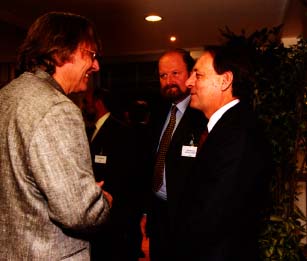
L. Goelzer (right) together with his successor W. Wohlleber receiving his guests during his farewell cocktail party
Photo: A. de Ferron (ITU 980131)
In early 1992, the Union was one of the first international organizations to provide a purely Internet-based service using the standard Gopher interface. In 1995, we quickly adopted the World Wide Web and have never looked back.
Today, more than 12000 TIES subscribers and the general public depend daily upon the International Telecommunication Union online services. The ITU now maintains one of the largest and most comprehensive Web sites on the Internet, representing more than 100000 documents and 40 gigabytes of files. In October 1998 alone, ITU delivered over 110 gigabytes of data to Internet users around the world.
I am pleased that the Minneapolis Plenipotentiary Conference held in October-November 1998, gave ITU a very clear mandate for a role in questions of Internet governance (see ITU News, No. 10/98, pages 17-18). The need for an impartial international organization to be involved in Internet governance was clear nearly four years ago. I recall underlining this need at the Internet Days event, which we organized in April 1995.
The IS Department has participated very actively, on ITU's behalf, in key Internet governance forums, notably the International Ad Hoc Committee (IAHC) for domain name issues and the Memorandum of Understanding on Internet generic Top Level Domain names (gTLD-MoU), for which ITU is the depositary.
Leading the way again, ITU was the first among standards bodies and international organizations to introduce an online paying service for its publications in 1995.
The general public can purchase, 24 hours a day, online ITU publications with a credit card; a service which has proved to be immensely popular for those who need an ITU standard immediately.
Now it is easy to predict that the online sales of ITU publications will soon surpass those of the printed copy. It is also interesting to look at how TIES is used each day:
We continue to be pioneers in electronic commerce applications with our Electronic Bookshop and the electronic commerce for developing countries (EC-DC) project that is creating new opportunities for the developing world to reach global markets.
We have often been early adopters of new technologies (ATM), system software (Windows NT) and applications. Our choice of "SAP" for financial management in 1985 is a good example of an early adoption of a solution that will cope with changing requirements. Similarly, the decision to introduce "Documentum" as the foundation for document management applications in the ITU will have major implications in the future. SAP and Documentum, both Web-enabled, will constitute central poles around which many new ITU business applications will flow.
Our choice of Windows NT in 1995 was not easy because it coincided with Microsoft's aggressive marketing and hype in favour of Windows 95: now widely recognized as a dead-end for networked environments.
Someone once said: "good communication is as stimulating as black coffee, and just as hard to sleep after". The computer professionals of the IS Department have spent many a late and sleepless night in their dedication to deal with the rapid change in new communication technologies and applications. They have been able to accomplish near-miracles in implementing so many new TIES.
I am confident that my successor, Wolfgang Wohlleber, will not only continue the policies that have made the International Telecommunication Union a leader in the effective use of networked computer systems but will also bring a fresh vision to the task.
As I move on to new opportunities, I am proud that ITU has recognized information technology and services as key
components in meeting the organization's strategic goals. I am also proud that we have built an information services
infrastructure, which is the envy of most other international organizations. Finally, I am very lucky that what I have
helped build at ITU will allow me to stay in touch with my many friends and collaborators who have all played an
important part in making TIES the success it is today.
Lucio Goelzer
lucio@goelzer.net
The Government of Nicaragua has acceded to the above-mentioned Constitution and Convention.
The Governments of the Republic of Botswana, the Federative Republic of Brazil and Ghana have ratified the above-mentioned Constitution and Convention.
The instruments of accession and ratification were deposited with the General Secretariat of the Union on 12, 12, 19 and 16 October 1998, respectively.
ON THE COMPULSORY SETTLEMENT OF DISPUTES RELATING TO THE CONSTITUTION AND CONVENTION OF THE ITU AND TO THE ADMINISTRATIVE REGULATIONS (GENEVA, 1992)
The Government of the Republic of Botswana has ratified the above-mentioned Protocol.
The instrument of ratification was deposited with the General Secretariat of the Union on 12 October 1998.
The Government of the Republic of Vanuatu has acceded to the above-mentioned Constitution and Convention as well as the amended Instruments.
The Government of the Republic of Yemen has approved the above-mentioned Constitution and Convention as well as the amended Instruments.
The Governments of the Republic of Burundi, the Republic of Fiji, Jamaica, the State of Qatar, the Kingdom of Swaziland and the Republic of Zambia have ratified the above-mentioned Constitution and Convention as well as the amended Instruments.
The instruments of accession, approval and ratification were deposited with the General Secretariat of the Union on 13 and 5 October, 9 November, 11, 20, 13, 5 and 12 October 1998, respectively.
The Government of Nicaragua has acceded to the above-mentioned Instruments amending the Constitution and the Convention.
The Governments of the Republic of Botswana, the Federative Republic of Brazil and Ghana have ratified the above-mentioned Instruments amending the Constitution and the Convention.
The instruments of accession and ratification were deposited with the General Secretariat of the Union on 12, 12, 19 and 16 October 1998, respectively.
The Government of Mexico has ratified the above-mentioned Acts.
AsiaSpace Limited (Melbourne, Australia), CaTEL Carrier- und Telekommunikationsbörse Frankfurt AG (Frankfurt, Germany), SONATEL (Dakar) and Startec Global Communications Corporation (Bethesda, MD) have been admitted to take part in the work of this Sector.
QUALCOMM, Inc. (San Diego, CA), SONATEL (Dakar), Teledesic Communications Spain, S.L. (Madrid) and WinStar Communications, Inc. (Washington, D.C.) have been admitted to take part in the work of this Sector.
Hitachi Telecom (USA), Inc. (Richardson, TX) and SONATEL (Dakar) have been admitted to take part in the work of this Sector.
Cable Television Laboratories Inc. (Louisville, CO), has been admitted to transfer its membership from the Radiocommunication Sector to the Standardization Sector.
Elsag Bailey Company (Genoa, Italy) which participates in the work of the Standardization Sector has changed its name. The new denomination is: ELSAG spa.
International Association of Lighthouse Authorities (IALA) (Saint-Germain-en-Laye, France) (English version only) which participates in the work of the Radiocommunication Sector has changed its name. The new denomination is: International Association of Marine Aids to Navigation and Lighthouse Authorities (IALA).
MATRA Communications (Bois-d'Arcy, France) which participates in the work of the Standardization Sector has changed its name. The new denomination is: MATRA NORTEL Communications.
Optus Communications Pty Limited (North Sydney, Australia) which participates in the work of the Radiocommunication and Standardization Sectors has changed its name. The new denomination is: Cable and Wireless Optus Limited.
Post und Telekom Austria AG (PTA) (Vienna) which participates in the work of the Development, Radiocommunication and Standardization Sectors has changed its name. The new denomination is: Telekom Austria Aktiengesellschaft.
Teledesic Corporation (USA) (Washington, D.C.) which participates in the work of the Development, Radiocommunication and Standardization Sectors has changed its name. The new denomination is: Teledesic LLC (USA).
Circular letters (via facsimile) which have been sent to all Member States and Sector Members of the Union announce the following vacancies:
Detailed applications with ITU personal history form should be submitted to the General Secretariat of the ITU, Place des Nations, CH-1211 Geneva 20 (Switzerland), not later than the final dates mentioned above.
Vacancy notices and personal history forms are available on the ITU Web site, under the "ITU General Secretariat" section: http://www.itu.int/.
|
The following letters indicate the languages in which documents are published: F for French E for English S for Spanish R for Russian C for Chinese A for Arabic Prices are in Swiss francs (CHF). A comprehensive list of all the publications of the Union will be supplied, free of charge, from the ITU Sales and Marketing Service, Place des Nations, CH-1211 Geneva 20 (Switzerland). Fax: +41 22 730 5194. |
ITU-T Recommendation G.511 (02/98)
Test methodology for Group 3 facsimile processing equipment in the Public Switched Telephone Network
Separate editions in F, E, S (CHF 22)
ITU-T Recommendation G.651 (02/98)
Characteristics of a 50/125 µm multimode graded index optical fibre cable
Separate editions in F, E, S (CHF 22)
ITU-T Recommendation G.774.9 (02/98)
Synchronous Digital Hierarchy (SDH) configuration of linear multiplex section protection for the network element view
Separate editions in F, E, S (CHF 12)
ITU-T Recommendation G.804 (02/98)
ATM cell mapping into Plesiochronous Digital Hierarchy (PDH)
Separate editions in F, E, S (CHF 12)
ITU-T Recommendation G.812 (06/98)
Timing requirements of slave clocks suitable for use as node clocks in synchronization networks
Separate editions in F, E, S (CHF 22)
ITU-T Recommendation H.323 (02/98)
Packet-based multimedia communications systems
Separate editions in F, E, S (CHF 55)
ITU-T Recommendation H.450.2 (02/98)
Call transfer supplementary service for H.323
Separate editions in F, E, S (CHF 22)
ITU-T Recommendation H.450.3 (02/98)
Call diversion supplementary service for H.323
Separate editions in F, E, S (CHF 34)
ITU-T Recommendation J.2 (03/98)
Guidelines on the use of ITU-T Recommendations in the J series
Separate editions in F, E, S (CHF 9)
ITU-T Recommendation J.81 Amendment 2 (03/98)
Transmission of component-codec digital television signals for contribution-quality applications at the third hierarchical level of ITU-T Recommendation G.702
Amendment 2: Appendix IV to Annex A — Results of 34 Mbit/s codec interworking tests (February 1996)
Separate editions in F, E, S (CHF 9)
ITU-T Recommendation J.87 (03/98)
Use of hybrid cable television links for the secondary distribution of television into the user's premises
Separate editions in F, E, S (CHF 9)
ITU-T Recommendation J.93 (03/98)
Requirements for conditional access in the secondary distribution of digital television on cable television systems
Separate editions in F, E, S (CHF 9)
ITU-T Recommendation J.111 (03/98)
Network independent protocols for interactive systems
Separate editions in F, E, S (CHF 12)
ITU-T Recommendation E.154 (03/98)
International shared cost service
Separate editions in F, E, S (CHF 17)
ITU-T Recommendation E.155 (03/98)
International premium rate service
Separate editions in F, E, S (CHF 17)
ITU-T Recommendation E.164 Supplement 1 (03/98)
Alternatives for carrier saelection and network identification
Separate editions in F, E, S (CHF 12)
ITU-T Recommendation J.113 (03/98)
Digital video broadcasting interaction channel through the PSTN/ISDN
Separate editions in F, E, S (CHF 9)
ITU-T Recommendation J.131 (03/98)
Transport of MPEG-2 signals in PDH networks Separate editions in F, E, S (CHF 17)
ITU-T Recommendation J.140 (03/98)
Subjective picture quality assessment for digital cable television systems
Separate editions in F, E, S (CHF 9)
ITU-T Recommendation L.30 (10/96)
Markers on marinized terrestrial cables
Separate editions in F, E, S (CHF 9)
ITU-T Recommendation Q.751.4 (05/98)
Network element information model for SCCP accounting and accounting verification
Separate editions in F, E, S (CHF 17)
ITU-T Recommendation Q.755.1 (05/98)
MTP Protocol Tester
Separate editions in F, E, S (CHF 22)
ITU-T Recommendation Q.1224 Fascicle 1/3 (09/97)
Distributed functional plane for intelligent network Capability Set 2: Part 1
Fascicle 2/3 (09/97)
Distributed functional plane for intelligent network Capability Set 2: Part 2
Fascicle 3/3 (09/97)
Distributed functional plane for intelligent network Capability Set 2: Parts 3 and 4
Separate editions in F, E, S (CHF 288)
ITU-T Recommendation Q.2962 (05/98)
Digital Subscriber Signalling System No. 2 — Connection characteristics negotiation during call/connection establishment phase
Separate editions in F, E, S (CHF 12)
ITU-T Recommendation X.419 Amendment 1 (12/97)
Information technology — Message Handling Systems (MHS): Protocol specifications
Amendment 1: Use of ISO/IEC 10646 characters in OR-addresses
Separate editions in F, E, S (CHF 9)
ITU-T Recommendation X.701 (08/97)
Information technology — Open Systems Interconnection — Systems management overview
Separate editions in F, E, S (CHF 17)
ITU-T Recommendation X.703 (10/97)
Information technology — Open Distributed Management Architecture
Separate editions in F, E, S (CHF 29)
ITU-T Recommendation X.710 (10/97)
Information technology — Open Systems Interconnection — Common Management Information Service
Separate editions in F, E, S (CHF 22)
ITU-T Recommendation X.722 Amendment 2 (08/97)
Information technology — Open Systems Interconnection — Structure of management information: Guidelines for the definition of managed objects
Amendment 2: Addition of the NO-MODIFY syntax element and guidelines extension
Separate editions in F, E, S (CHF 12)
ITU-T Recommendation X.722 Amendment 3 (08/97)
Information technology — Open Systems Interconnection — Structure of management information: Guidelines for the definition of managed objects
Amendment 3: Guidelines for the use of Z in formalizing the behaviour of managed objects
Separate editions in F, E, S (CHF 17)
ITU-T Recommendation X.860 (12/97)
Open Systems Interconnection — Distributed transaction processing: Model
Separate editions in F, E, S (CHF 22)
ITU-T Recommendation X.861 (12/97)
Open Systems Interconnection — Distributed transaction processing: Service definition
Separate editions in F, E, S (CHF 55)
|
CONDITIONS OF SALE The ITU sells its publications on a non-profit basis. The prices quoted include packing costs and carriage by surface mail. All publications ordered from the ITU must be paid for in advance. Methods of payment Payments should be made in CHF:
Payments may also be made in other currencies, freely convertible into CHF, provided that, when converted by the bank, the price of the service in CHF is covered. The ITU does not accept letters of credit. Orders and cheques should be made to: International Telecommunication Union, Tel.: +41 22 730 61 41. A bookstall is open at ITU headquarters in Geneva from 08h30 to 12h00 and from 13h30 to 17h00. |